

On rare occasions, ski area personnel face similar decisive periods in providing emergency care for critically ill or injured people. Again, helicopters are the life-saving vehicles to move victims from remote mountain locations to fully-equipped trauma centers during that “golden hour.”
But using helicopters for evacuations with necessary safety precautions requires training of the ground staff — usually the ski patrol. Because speed is essential to such an operation, pre-planned communication protocols are essential for organizing helicopter evacuations. Ground crews need to know what helicopters can and cannot do, what kind of space they require for landing, how to handle crowd control and, most important, when and how victims can safely be transported by helicopters.
Initially, it is important to know what type of helicopters are available. Many ski areas are not within the jurisdiction of a dedicated helicopter air-ambulance service that can provide a machine fully equipped with stretchers, equipment and paramedics. Even if this type of service is available, such machines often serve large regions and may not be available when needed. Crews must then be familiar with backup machines used by police services, forestry groups, parks service, military or private contractors.
Wherever the helicopter is coming from, it is important to know the capabilities of both the machines and the pilots. Is the machine equipped, or can it be rapidly adjusted, to carry a patient on a stretcher? Is it capable of operating at your altitude? Are the helicopter pilots trained in mountain flying, especially in poor weather conditions and limited or confined landing sites? This kind of information should be gathered before an emergency occurs.
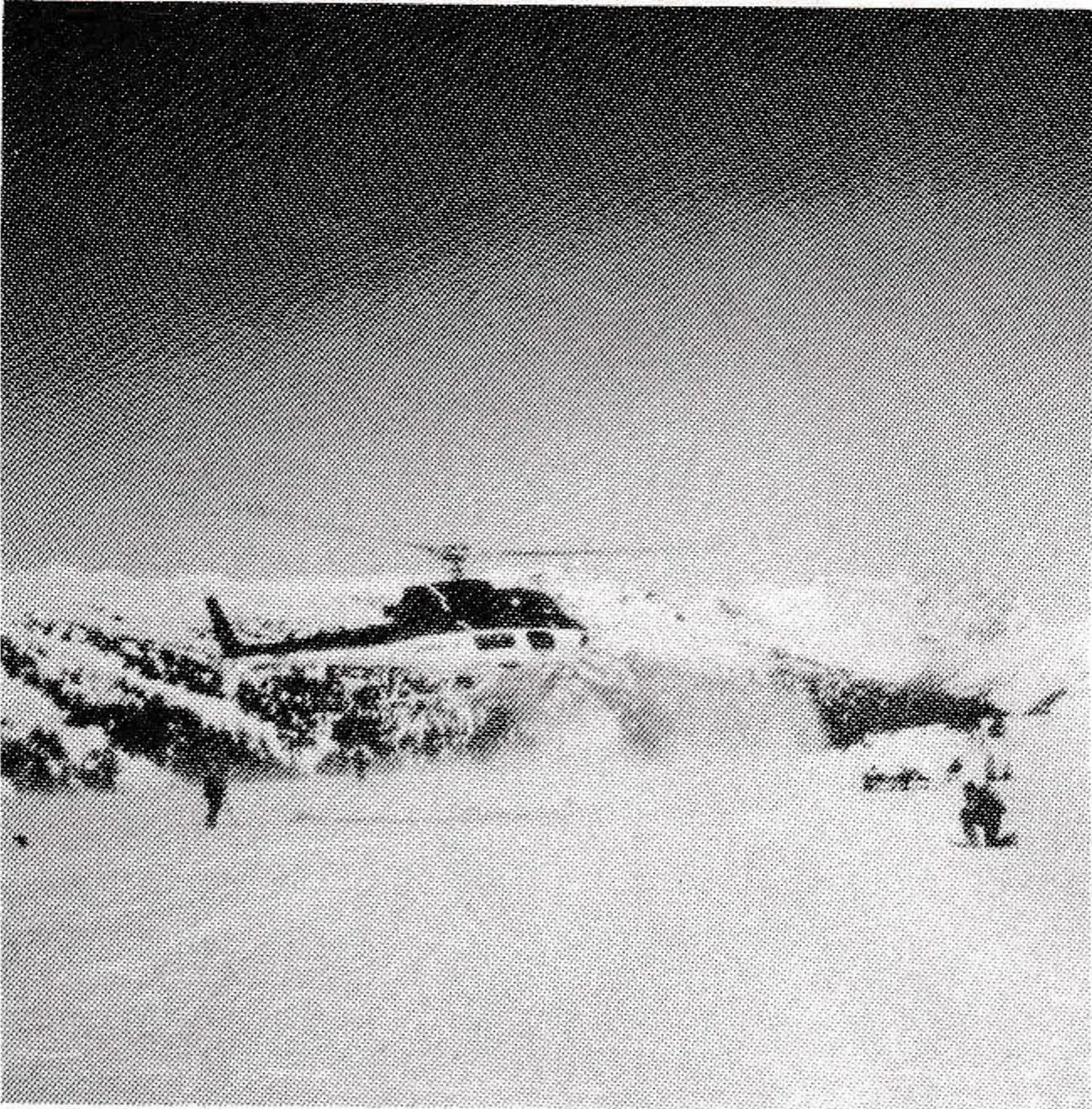
The next step is to organize a secure, standard, designated landing site that pilots and the ski area staff can become familiar with. The area should have a well marked perimeter for reference, because blowing snow can mask the ground surface immediately under the machine, and a permanent wind sock should be in place. While often difficult at a ski area, the best location for a landing is well out of public traffic areas, clear of overhead wires or ski lifts and easily secured by minimum staff. With a designated site like this, pilots can land helicopters the same way every time and know exactly where the patient and staff are located.
Landing a helicopter directly at an accident site on the slopes greatly reduces transport time, but is a much more dangerous operation. In such a situation, the ski patroller must provide a description of the landing site and an indication of current weather conditions and visibility. The next important step is to mark the site for easy visibility. This can be done rapidly by marking a large “H” on the snow with a can of spray paint or dye. Heavy packs or snowmobiles can indicate a perimeter in which the helicopter should land. Wind activity at the site can be indicated with an improvised windsock and appropriate hand signals to the pilot. Before the helicopter lands, ground personnel must insure that there are no small objects, such as ski poles or clothing, within 50 meters of the landing site. The powerful force of the rotor down-wash can blow loose objects around and cause injury or damage. The landing site must be surrounded with sufficient staff to insure that no one can accidentally walk or ski into the site while the helicopter is in operation. Security staff must concentrate on looking outwards from the landing site at all times to insure that no unauthorized personnel approach the helicopter.
As these procedures show, sufficient staff must be available to properly secure the area and attend to patient loading. Staff training must extend to the safe operating procedures of all types of helicopters that may be responding to an emergency as well as the loading methods used. Helicopters often need to have doors removed and seats modified to accommodate a stretcher. For quick and safe transport, all ski patrol personnel who may be involved in helicopter evacuation should be familiar with the different features of each type of helicopter.
Although helicopters can provide rapid transport, they are not suited for all situations. The condition of the skier, and the type of injuries he has sustained, may dictate whether the use of a helicopter is appropriate treatment.

To make this decision, the patroller must first look at the practicalities of the helicopter transport. Is there a machine available, what is the flight time, are the weather conditions suitable and is there sufficient daylight? Then, if helicopter evacuation is possible, is it appropriate for the condition of the injured skier?
Most types of helicopters are small and allow only one attendant to accompany the patient. The cramped quarters in the helicopter, the noise level and the lack of accessibility to the patient may limit any labor intensive treatment once the flight is underway. There is little chance of meaningful assessment or treatment by the attendant in most helicopters, other than those specifically designed and equipped as an air-ambulance. This means that a patient who requires CPR may be better served in a well-equipped ground ambulance where there is sufficient space and personnel.
For these reasons, it is important for the ski patrollers to complete patient assessment and initiate necessary treatment before the patient is loaded into the helicopter. Trauma patients, especially patients with head injuries, often vomit after the accident. Vomiting may also occur as a result of a turbulent helicopter flight. It is standard first aid procedure to immobilize a trauma patient on a spineboard, for transport and in many helicopters it is impossible to turn or roll such a patient during the flight. A patient in this condition should be placed on his side on the backboard or stretcher, to allow airway drainage by gravity in the case of vomiting or in case of continued bleeding into the airway from facial injuries.
The patroller must also consider whether or not the patient’s condition is likely to change significantly during the flight. For example, a patient complaining of chest pain who may be suffering a heart attack may not be a good candidate for helicopter evacuation. He is likely to be better off in a ground ambulance where he can be properly treated if his condition deteriorates rapidly into cardiac arrest.
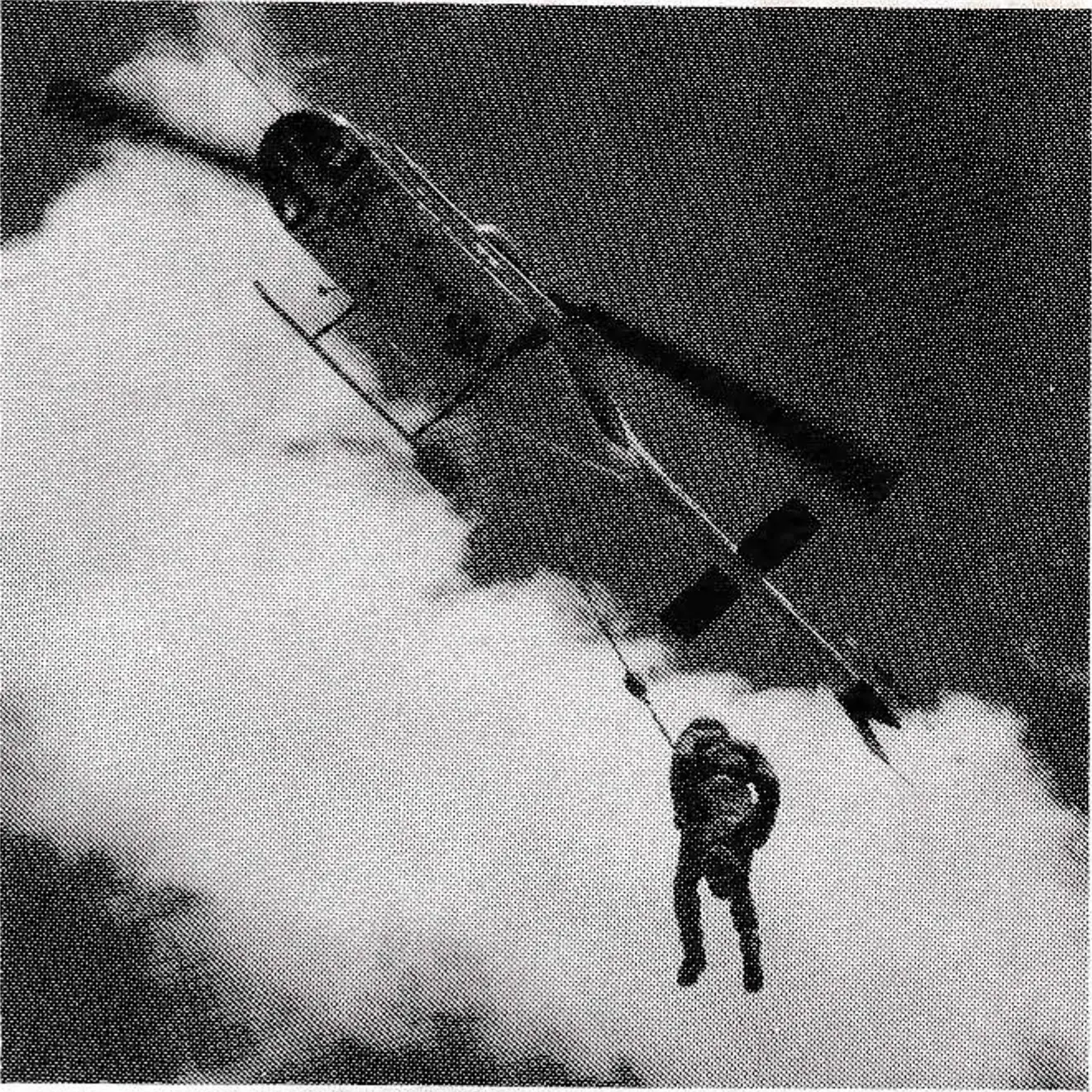
There is also the consideration of patients whose condition could be severely worsened by air evacuation. An example of this would be a skier whose injuries have resulted in a pneumo-thorax, in which air is leaking into the chest cavity. Any increase in altitude during an air evacuation will mean a reduction of atmospheric pressure, which could cause expansion of air in the chest cavity and result in rapid deterioration of the patient’s condition.
Helicopters are excellent at providing site accessibility and rapid patient transport. However, ski patrollers must weigh the advantages of rapid air evacuation against the limitations of helicopter use to arrive at the decision which will provide the best overall care for the patient.