I think deep in her subconscious, my wife, Shirley, believed I was determined to follow in the footsteps of my mentor, Sherman Adams. When he called me to come work for him at Loon in 1977, he said, “It’s time I look for a successor, I’m going to be 80 soon and I ought to probably find a rocking chair in the Caribbean.” Six years later he was still sitting in his corner office, but I was happily only one door away.
On an October evening in 1997, I came home from my corner office at Attitash Bear Peak, N.H. As we sat down to dinner, Shirley asked, “So, what are you going to be doing in January 2000?” I replied, “Well, I’ll probably be working. I don’t even turn 65 until next spring.” With that she laid out a rather sizeable brochure entitled, “ODYSSEY 2000, A Bike Trip Around the World, One Year, Six Continents, Forty-Eight Countries,” or O2K. Shirley confessed that she had contacted the organizers and since there were only a few slots left, had sent them $1,000. OK, now what?
We owned a couple of 15-year-old hybrid bikes that we occasionally used on a bike path—the flatter the better—or to make the three-mile trek to Dunkin’ Donuts. We considered ourselves casual cyclists. As we began to anticipate the year 2000, our excitement grew, which surprised and encouraged us both. We dug out our atlas and started reading everything we could find about world travel and long-distance biking. We bought new bikes. We rode 3,500 miles in the summer of 1998, including a week along the B.C./Washington coast with TK&A, the organizers of O2K. In 1999, we logged 5,500 miles. We were enjoying an amazing transformation and reordering of priorities.
In February of 1999, we would pass the point of no return. The last serious payment to TK&A (the trip cost $35,000 per person) was due, I had to let Les Otten know that I would be leaving that summer, and it was time to begin a major series of inoculations against every exotic disease of the Third World. Don’t ask which one caused the greatest apprehension. We put into practice what I had often advised my employees to do when they were facing a major opportunity or decision. Take out the yellow pad, write down a page full of every pro and con that you can think of. Two days later, revise the list and put them in order from very important to frivolous. Ask a trusted family member or friend to evaluate the pros and cons, not the decision. Now start crossing out both lists from the bottom up until you get to a subject that really makes a difference. The right decision will jump off the page.
We took it one step further. Shirley and I each went through the process without revealing our cross-outs to each other. We each wrote a note to the other and went to our favorite restaurant. After the first glass of wine we opened the notes. They both said, “Go for it!”
One of our big pros was that we each decided to ride for a cause. Shirley would ride for Northeast Passage, a recreation-based organization for people with spinal cord injuries directed by our daughter Jill. I would ride for the New England Ski Museum, perhaps as a way to give back a little to an industry that had been very good to us for 36 years. Thanks to some of you readers and many others who pledged a cent or two per mile, we have now collected more than $62,000 for our causes.
So, on December 28, 1999, 246 riders from 11 countries and a staff of 24 met in Burbank, Calif., for the first time. We would spend the next three days getting to know each other and preparing to ride in the Rose Parade on New Year’s Day. The goal was to ride around the world, so to speak, and finish in the same parade a year later. Only 80-plus riders would be back.
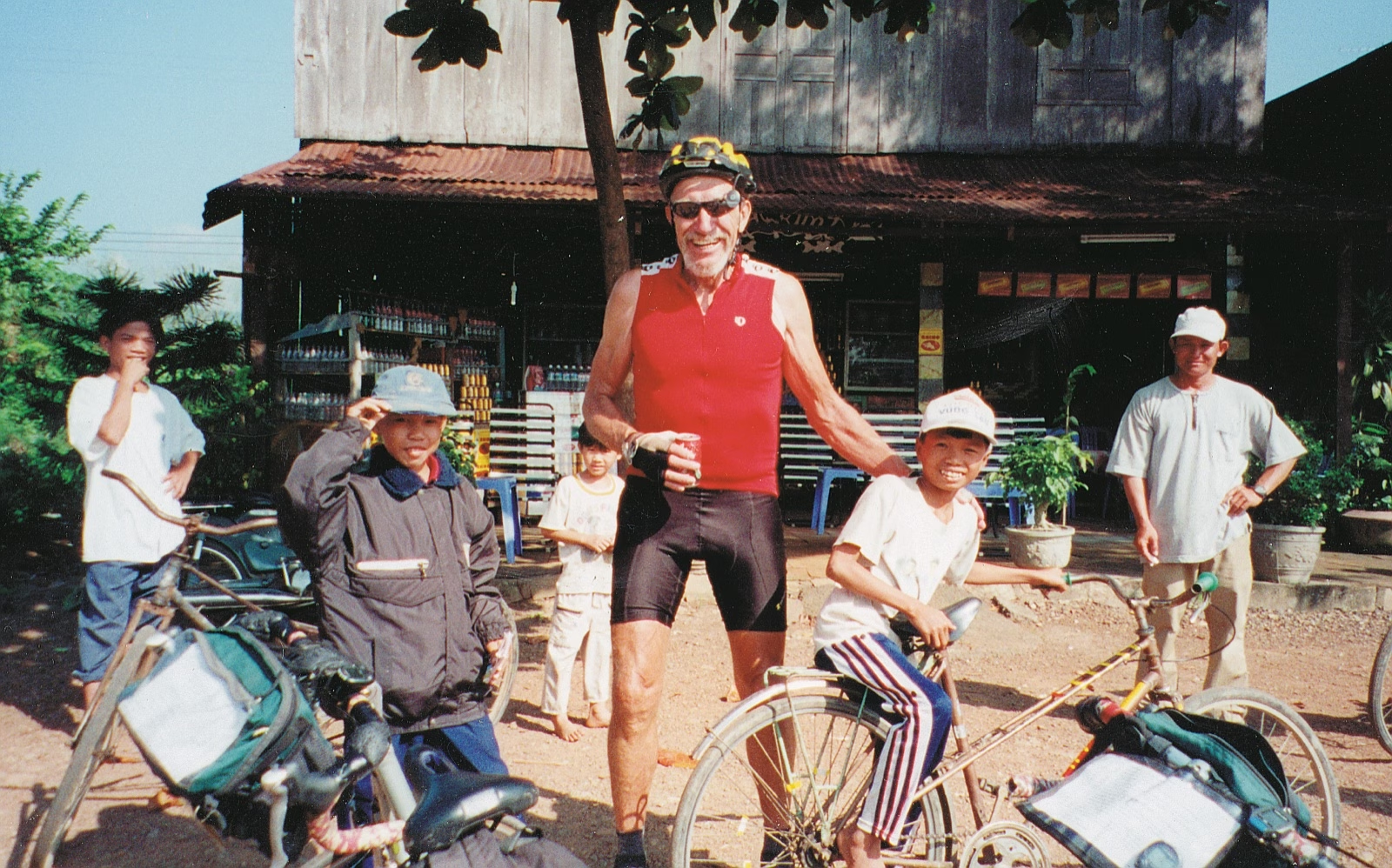
All told, we stayed at 285 different places ranging from camp sites to dorm rooms to hotels. All our worldly possessions, including our camping gear, were kept in a 34-inch by 17-inch duffel bag. Each morning we received a route guide that took us an average of 85 miles. We biked in small groups, usually less than five. We found our noon meal and satisfied other needs along the way. We soon learned to allow our curiosity to lead us down side alleys and country lanes. Sign language and smiles were fun and amazing communication devices, though we found that most of the world’s people know a few words of English.
We quickly became a functioning gypsy community. We had a library with about 50 pounds of paperbacks and a librarian who oversaw it. There were a couple of riders who would give haircuts. The price was a roll of film, a bottle of local wine or a spare inner tube. Others would repair bikes, give massages or let you use their pocket mail to get in touch with a travel agent. Borrowing and lending became a normal and expected practice. “How many lira do you have left? I’m out and we are crossing the border tomorrow. I’ll hit the first ATM and pay you back in francs.” We had riders who were doctors, chiropractors and druggists and all became good Samaritans on several occasions. We even had a choir with a great director. With three-part harmony and twenty-plus voices we learned and sang a traditional song from most every country we were in. Then we started composing our own songs, such as, “There Must be 50 Ways to Use A Toilet,” and by the time we left China, “How Much is That Doggie in the Hotpot?”

No matter how much you read National Geographic, the world is different from what you have envisioned. It’s more beautiful, more diverse, and there are more mountain ranges than you learned about in school. There is one statistic of the trip that, had we known about ahead of time, might have scared us off. Several bikers carried climbing altimeters that measure every foot of elevation gain. We climbed over 600,000 vertical feet, the equivalent of 20 treks from the sea to the top of Mount Everest.
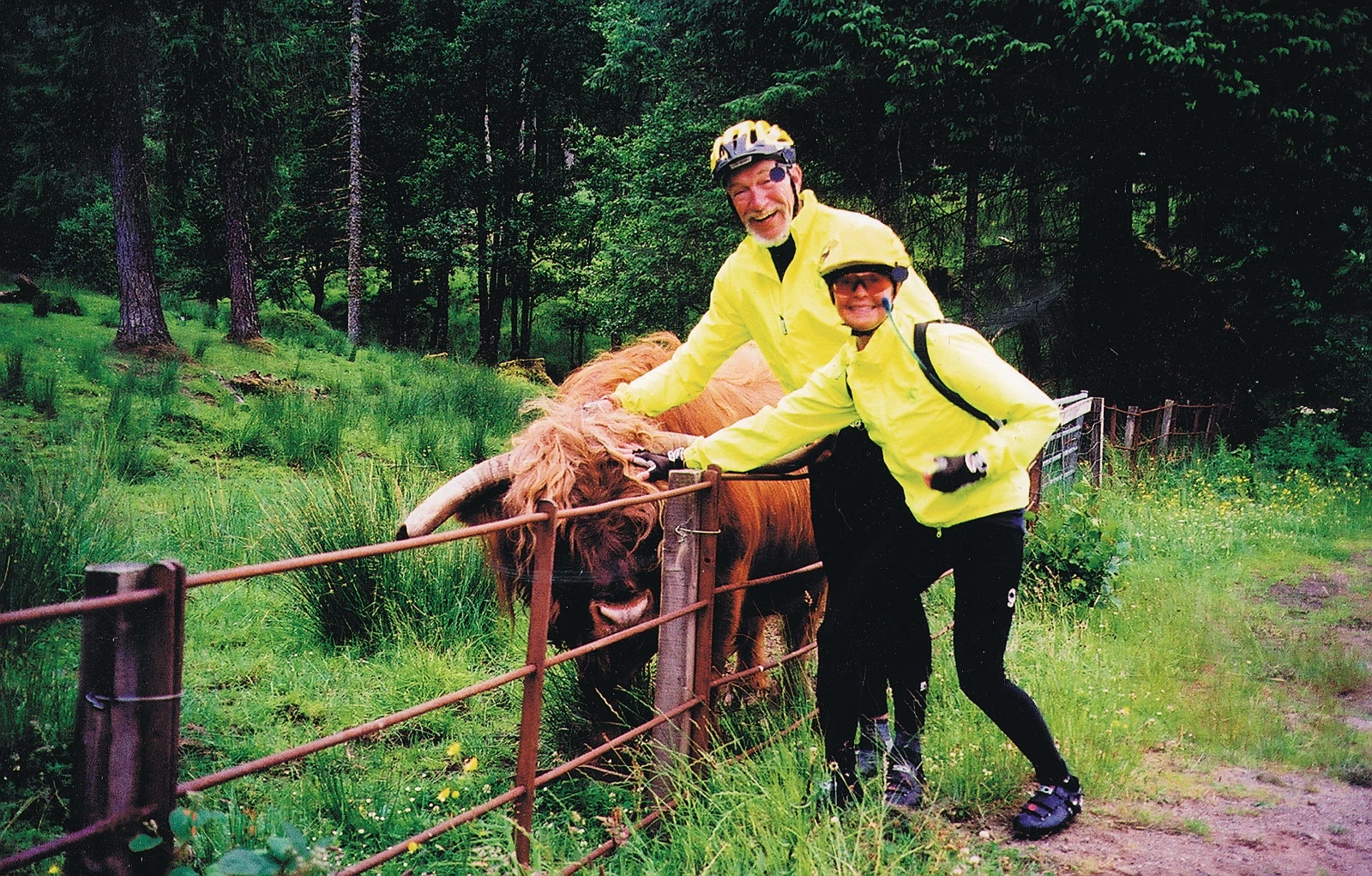
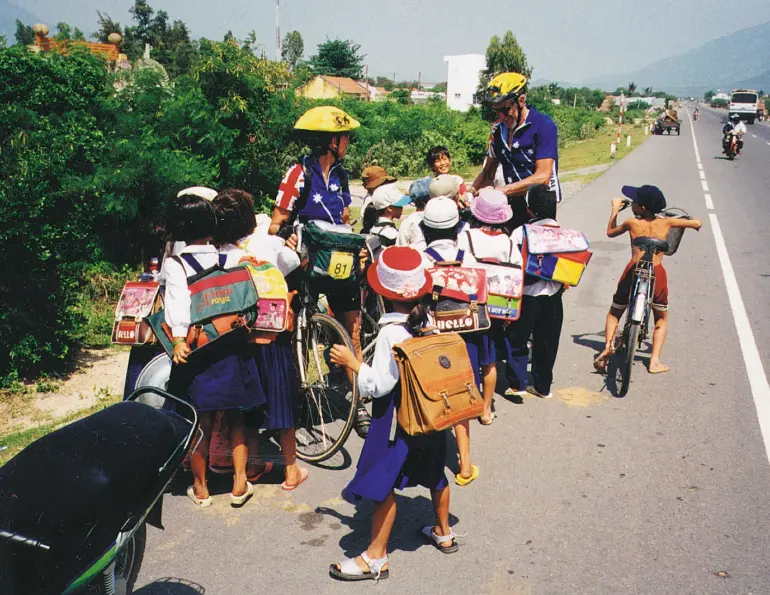
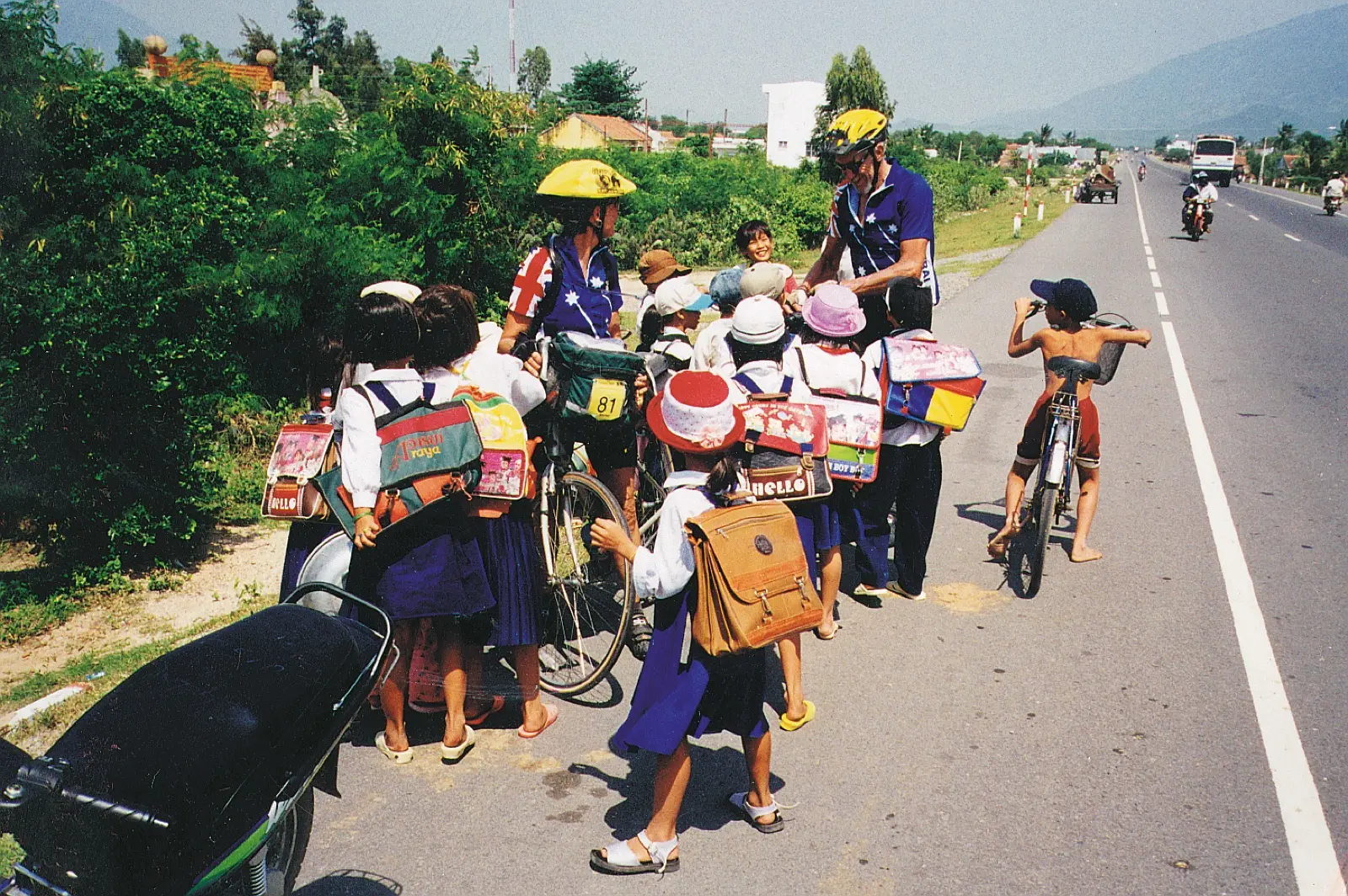
In China, Vietnam, South Africa and Swaziland, it seems that all of the communities live on the edge of the road. Crops are dried, produce and animals are sold, adults sit and visit and children play. We waved and said “Hello” or the local equivalent a hundred times a day. We dodged and weaved among it all, including animals, bikes and jitneys of every sort. They found our yellow helmets, high-tech bikes, spandex clothing and light complexions very interesting. Whole schools recessed to the road’s edge to shout the English words they learned: “Hello,” “What’s your name?” “I love you” as they lined up to give us high fives down the line. Of all the lasting memories, this is probably the most intense.
One of the toughest days came only 20 days into the trip when darkness overtook us 10 miles from camp and we had to face the reality that we would not complete every mile of the year’s planned route. (As it turned out, only six of the group did.) Accepting this reality allowed the adventure to become more fun. We created what we called “jail breaks” and rented a car and found lodging for two days in the high Andes, joined a safari for four days in South Africa, hopped a train ahead for an extra day in Capetown or Rome. Shirley and I each biked 14,200 miles out of a potential 17,000, but we feel we added a lot to what we saw and learned, to say nothing of the recovery time that the jail breaks provided us.
Like the show, “Survivor,” our community got smaller as the year went on. Some found it too grueling, others tired of the somewhat spartan routine, a few were injured or became ill and went home to recover. And there were the unavoidable problems back home with family or business. However, the largest exodus came in late November in Singapore when TK&A ran out of money. We were faced with three choices: Put up an extra $3,000 to finish the planned itinerary through New Zealand and Hawaii, accept a ticket home to L.A. or invent our own self-supported tour through the Pacific and rejoin TK&A in San Diego for a final two-day ride back to Pasadena. Shirley and I chose the latter,spending three weeks on the South Island of New Zealand and Christmas in Tahiti.
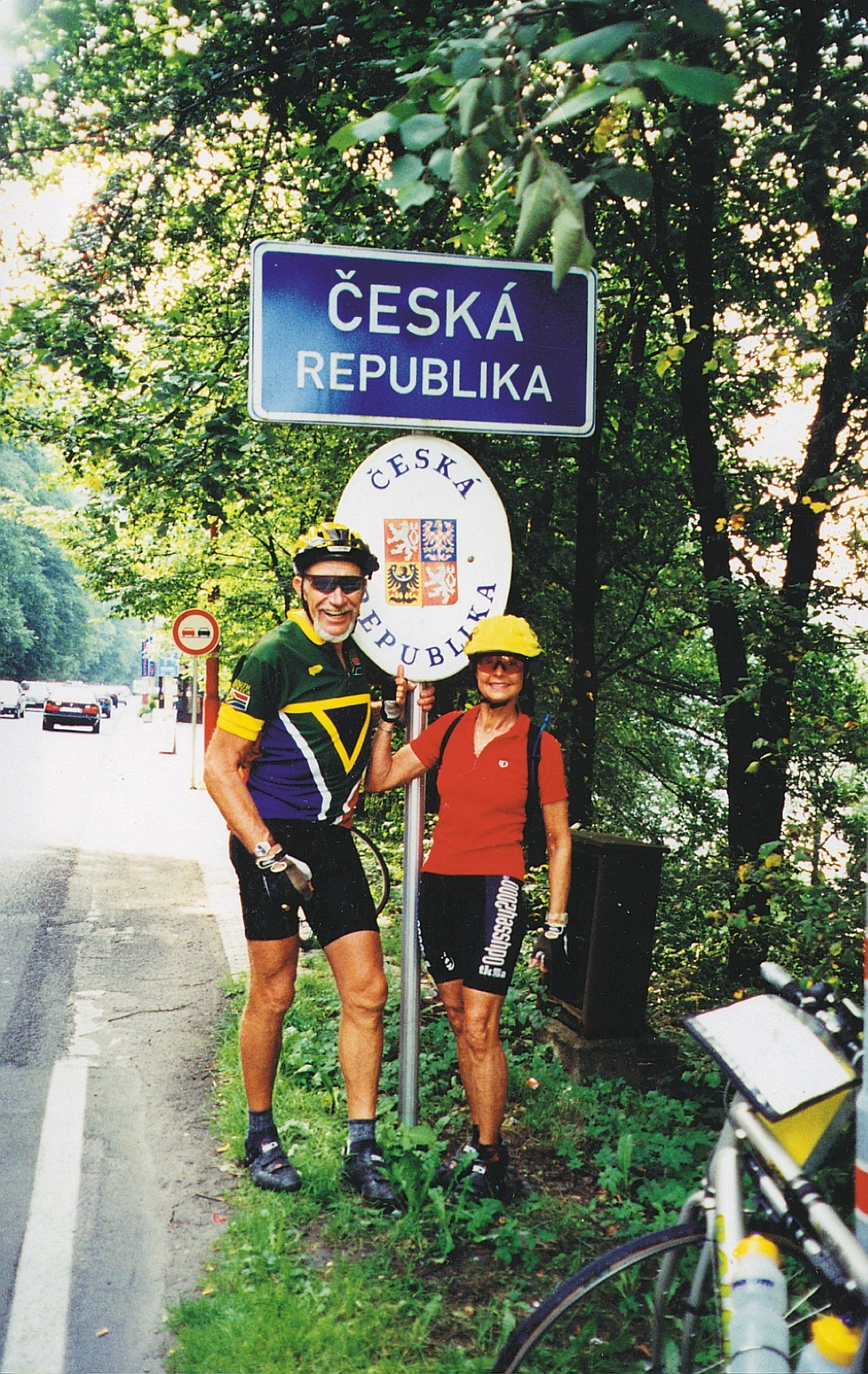
So, how differently do we see the world and ourselves with our odyssey behind us? Here are a few observations. The family is first in every culture. If you acknowledge the children, the parents welcome you. The world is more willing to forgive and forget than we expected. We visited St. Petersburg, Berlin, Dresden, Hiroshima, China, Hanoi, Ho Chi Min City, Saigon and more, but never once encountered an anti-American sentiment. Happiness has very little to do with wealth or possessions. At road level, happiness was more often apparent in the third-world countries. We also learned that living with just two wheels and one duffel bag for a year can be quite gratifying. Finally, as a famous man once said, “Happiness is a journey, not a destination.”
The Route
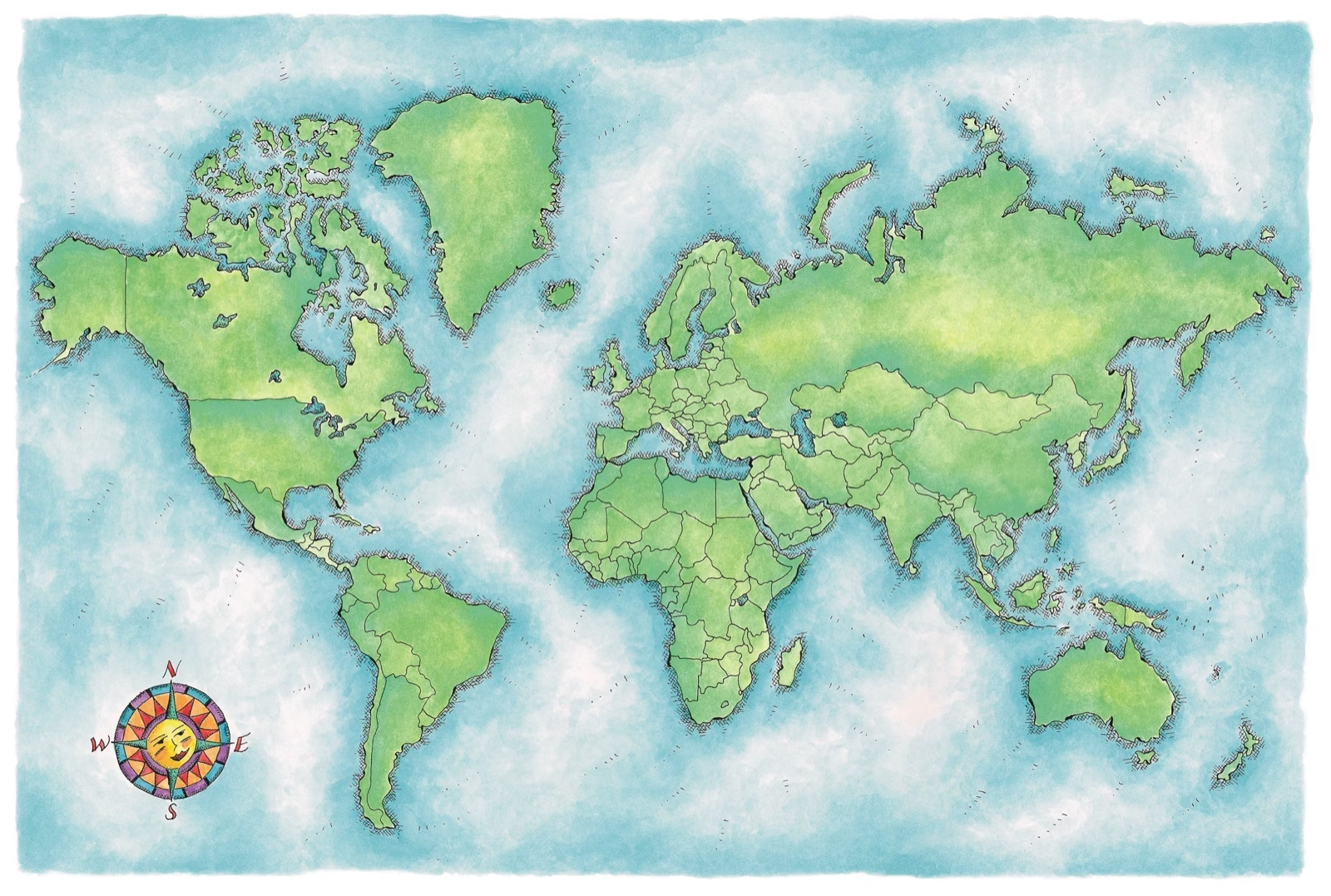
Starting in California, the route led the cyclists down Baja, over to Costa Rica and Panama and down to Chile and Argentina. From there, they spent a month in South Africa and Swaziland. Next stop was Greece and then west through Italy, France, Andorra, Spain, Gibraltar and Portugal. From there, they flew to Washington, D.C., and cycled up through Canada. From Canada, the group headed back to France and then through all of Britain and into all four Scandinavian countries. They made a quick trip into Russia then back down eastern Europe then west through Austria and Switzerland and north to the low countries. On September 15, 2000, the group headed east to Australia. From there, they worked their way through Japan, southeast China, Vietnam, Thailand, Malaysia, Singapore, New Zealand, Tahiti and back to where it all started a year prior—Pasadena.