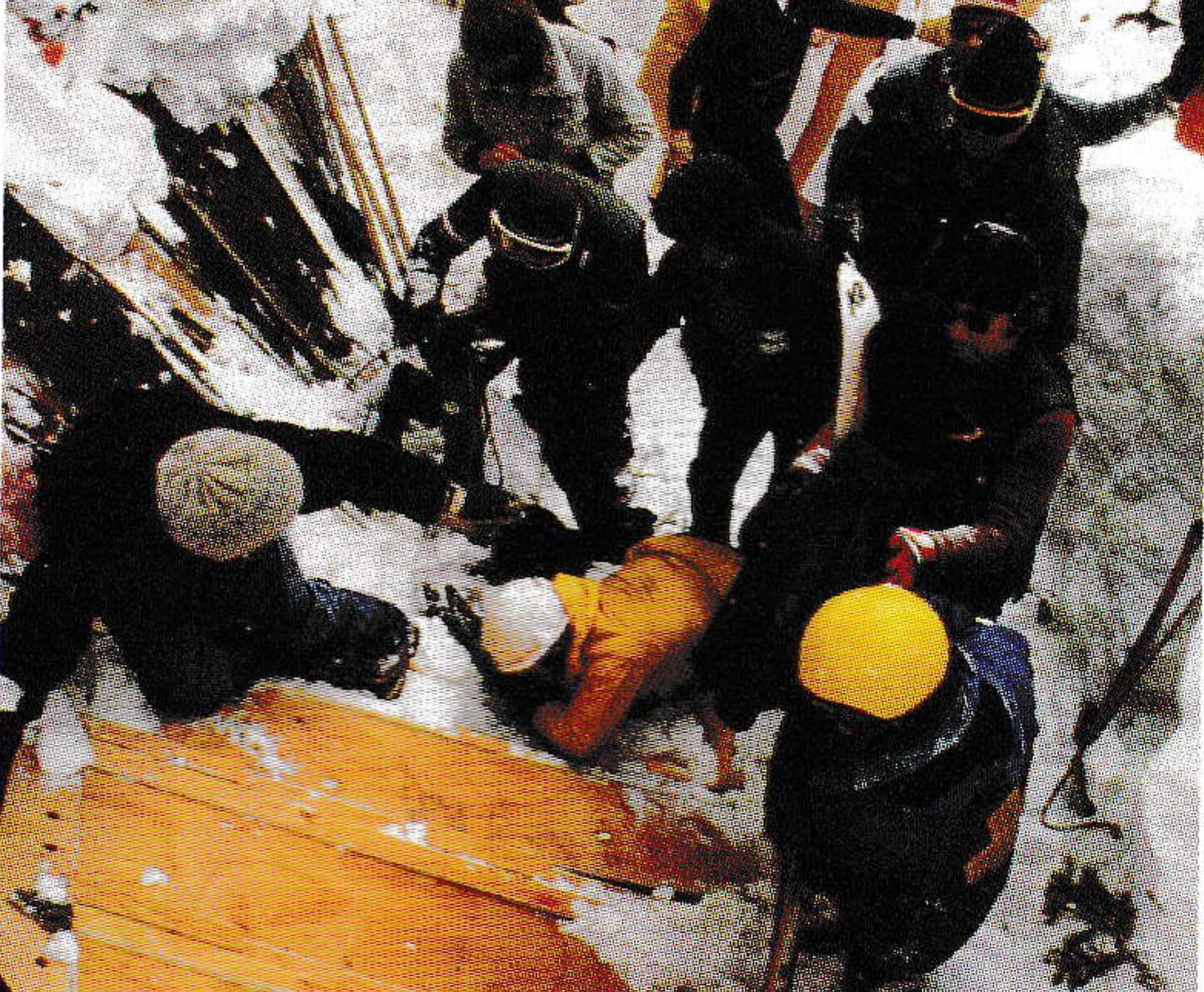
“This hand came out between all this debris. Then we saw the hand pull back in. As it turns out she was trying to grab snow to eat,” recalls Jones. “We stared almost in disbelief. We had found her boyfriend dead just nearby. Lanny (Johnson), a fellow patrolman, said, ‘Anna, is that you?’ She said back, ‘Yes, it’s me.’”
Finding Anna Conrad alive was one of the few things to restore sense and a bit of relief during one of North America’s most fatal ski area disasters.
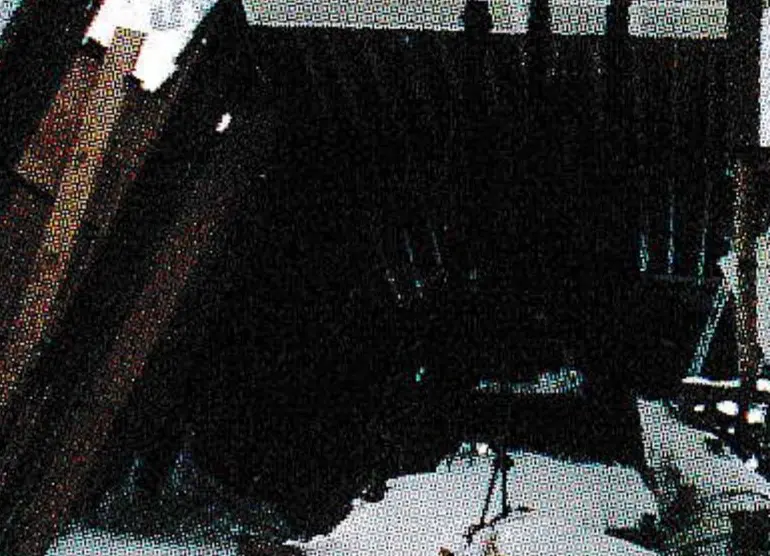
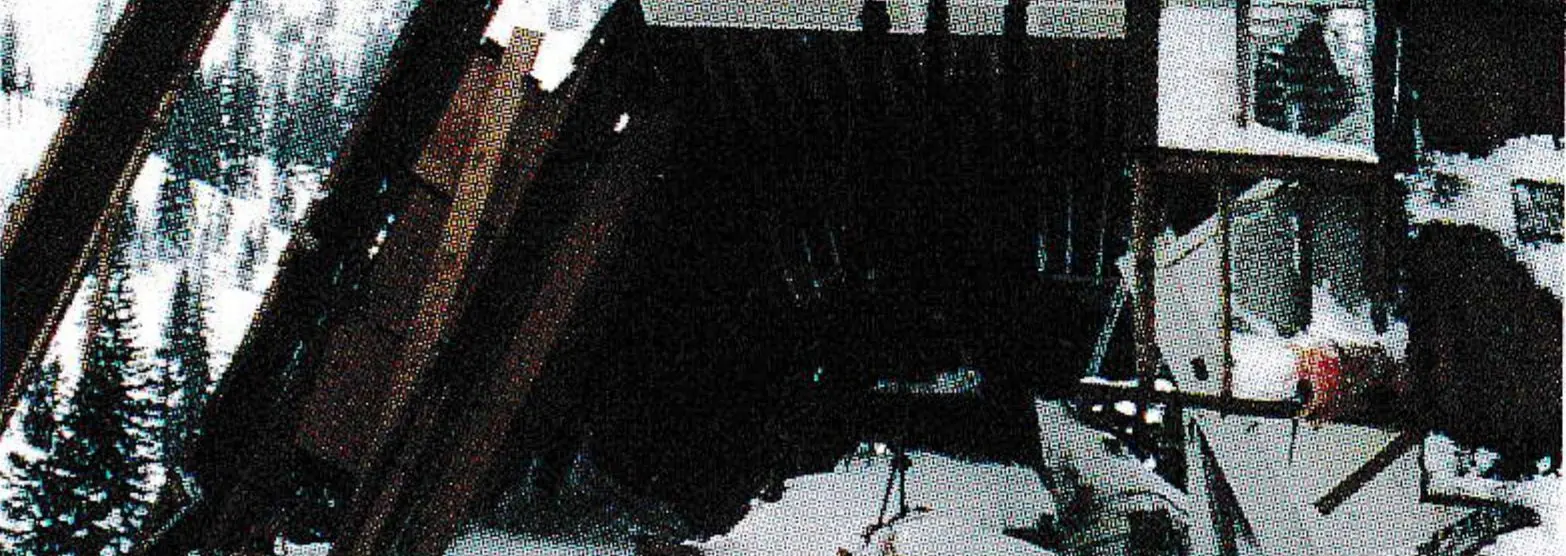
Five days before, on March 31, 1982, at approximately 3:45 p.m., a series of massive avalanches released along a 3,200-foot front on the Poma Rocks, Buttress and Don’s Nose terrain, high above the northeastern portion of the Alpine Meadows ski area. Uncorking a monstrous slide, the mass of snow swept 800 feet down, snapping 100-year-old trees like toothpicks.
Courtesy of Larry Heywood
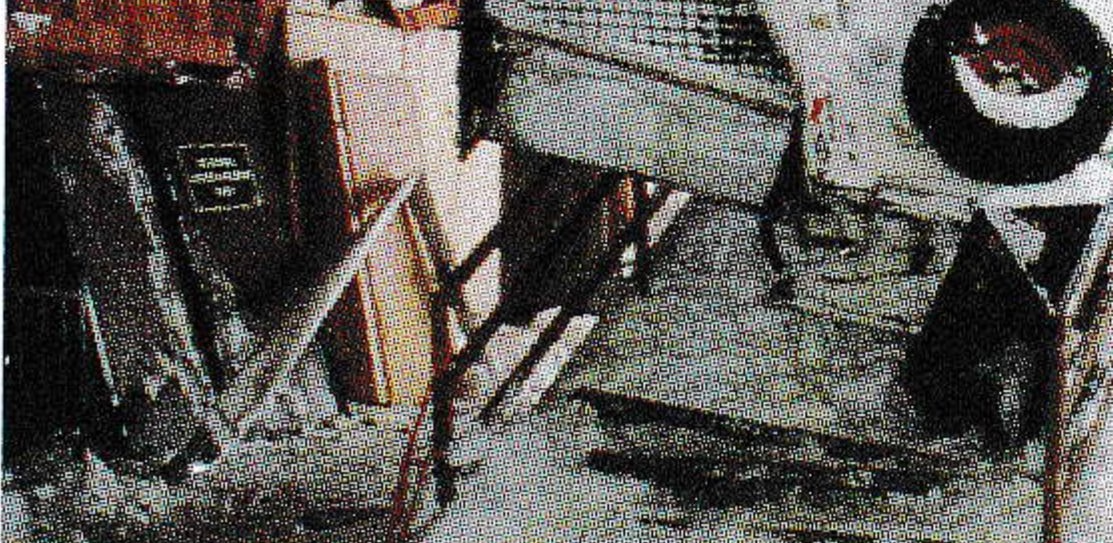
The avalanche hit the Summit Terminal Building, the base lodge, several small buildings, the parking lot, the access road and two chairlifts. The Summit Lift Terminal Building was completely destroyed. Seven people were in the building at the time. The mass of destruction came to rest inside the base lodge. The chairlifts were critically damaged and several other buildings were destroyed along with several snowcats.
“To this day, unless you witnessed the results of that avalanche, it’s hard to describe just how monstrous it was,” explains Larry Heywood, director of mountain operations at Alpine Meadows, who was assistant patrol leader at the time. “This was a once-a-century event, an event of geological time.”
Heywood, a ski patroller since 1970, would afterwards direct Alpine’s patrol for 17 years. He became a charter member of the American Avalanche Association, and is an avalanche consultant for resorts throughout North America. In his thirty-odd years of work, no other experience hits closer to home or elicits such emotion.
“Finding Anna, the commotion of pulling her out alive,” says Heywood quietly. “There were probably 100 searchers in the vicinity at the time and each one stopped and watched her get loaded into a helicopter. You could feel this incredible release and exhilaration from everyone. It was a very powerful moment.”
The 22-year-old U.C. Davis graduate would eventually lose her right leg below the knee and all the toes on her left foot from frostbite. Nonetheless, she was one of the lucky ones.
When the slide hit Conrad, the lift operator had been with her boyfriend, Frank Yeatman, gathering some clothes in the locker room on the second floor of the Summit building that housed the ski patrol, lift operations and ski school. She stayed alive because the wall of the locker room fell on a bench and its strength supported the snow load that filled the area above her, creating air space.
Her boyfriend and six others weren’t so fortunate, including Alpine Meadows Mountain Manager Bernie Kingery.
Kingery, 52, an avalanche expert since 1959 and an Alpine employee since 1964, had been in Base 4 Room, headquarters for avalanche control, which was located on the bottom floor. With him were employees Randy Buck, Tad DeFelice, Jeff Skover and Beth Morrow.
The spring storm that led to the fatal slide began on March 27. By 7 a.m. on March 31, nearly 90 inches of new snow had fallen on an already 87-inch base. Despite the storm’s intensity, the ski patrol covered most of their control routes each day, and none noticed any alarmingly large buildups. The 75mm recoilless and howitzer were used on areas that the ski patrol could not access, including the Buttress area.
Courtesy of Larry Heywood
Controls continued until midday on the 31st. The resort had been partially closed to skiing on Tuesday, the day before. Kingery had made the decision to completely close the area on Wednesday and by noon had sent the majority of employees home, including most of the ski patrol. Winds of over 100 mph made riding chairlifts impossible. By mid-afternoon the ski area was deserted with only a handful of employees in the lodge area.
At 3:45 p.m. Kingery received a message from employee Jake Smith in the lower parking lot. Smith, on a snowmobile, had left Base 4 earlier to stop motorists from using the road.
“Avalanche!” was all that was made out from Smith’s garbled message.
“About five seconds later the avalanche hit us,” Buck described in Sports Illustrated. “You could hear a rumble and almost immediately the building started to shake violently. Then there was a powerful air blast.”
Buck remembers hitting the floor and curling up in a ball before being completely engulfed in snow, which dragged him across the floor.
“When the snow stopped moving, I was about one and a half feet under it,” said Buck who suffered broken ribs and a fractured vertebra. “I heaved and got my head and shoulders out of the snow. I realized Tad was next to me and his head and shoulders were also out. I looked around. I was still in the same room I was before, but it no longer had any walls.”
Besides destroying the three-story building, the torrent of snow had swept across the parking lot, killing Jake Smith and three others: Dr. Leroy Nelson, his daughter Laura and David Hahn. The three tourists had left their snowbound home hoping to find a restaurant open at the resort and had been walking toward the lodge.
Buck and DeFelice spotted Jeff Skover’s hand sticking out of the snow and, with the help of others who soon arrived, safely dug him out.
Within a short time, Alpine patrol and local rescuers returned to the resort. In the dark, Jones and several other patrolmen found Smith’s lifeless body in a creek bed. Later in the evening, searchers found the bodies of David Hahn and Leroy Nelson.
The following day the weather turned bright and clear. Three more bodies were discovered by searchers. Kingery, Morrow and Conrad were still missing. More than 90 people continued searching the remains of what had once been the Summit Terminal building that was nothing more than naked I-beams, twisted wreckage and a derailed bullwheel.
“We were now digging trenches by hand,” recalls Belli, one of the first patrollers to arrive on the scene and today the director of the patrol at the resort. “There was so much debris and material littering the area. After clearing a bunch of plywood we finally picked up a Skadi signal and found Beth’s body.”

More winter weather hit the area on Friday, yet despite high winds and snowfall, searchers continued to probe and their diligence paid off. Along with the missing had also been an avalanche search dog belonging to Alpine’s avalanche forecaster, Jim Plehn. It was Plehn himself, while probing a hollow amid the wreckage, who found his German shepherd banged up but alive.
Everyone’s elation was short-lived as heavy snowfall continued the next three days, dropping close to 40 more inches, and forcing a stoppage to the search because of the avalanche danger.
Monday, April 5, the weather subsided enough to control the area and clear roadways. By midday over 100 workers returned to the Summit building and began a methodical search. At 1:10 p.m., Bridget, Roberta Huber’s avalanche rescue dog, began wagging her tail and led rescue workers to a spot amid the debris where Jones and Johnson spotted Conrad’s hand. She was conscious, talking and alert. Conrad hadn’t known she’d been buried alive for five days. She thought it was an explosion, not an avalanche that had trapped her.
Courtesy of Larry Heywood
“I had absolutely no idea what had happened, it was so instantaneous,” admits Anna. “I did a lot of sleeping and thinking about friends. I just kept telling myself I could do it, I could do it.”
She’d eaten nothing except snow. A little bit of light provided her with some comfort, but she couldn’t tell where she was until about the third day.
She’d heard rescuers through the snow on Friday, but no one had responded to her screams. Luckily, she had been wearing two sweaters, a jacket and powder pants when the slide hit. She had a cross-country ski boot on her right foot and a woolen sock on her left. Both feet were frostbitten. She also suffered from dehydration and a black eye.
At 3:30 p.m., the body of Bernie Kingery was found by shovelers 100 feet from the Summit Terminal building. He was under six feet of snow. With all victims accounted for, the rescue, and the nightmare, was over.
Alpine Meadows, located on the eastern side of the Sierra Nevada, four miles from Lake Tahoe at the top of Bear Creek Canyon, opened on December 28, 1961. The resort shares its northern ridge with Squaw Valley. The resort’s high valley floor (6,835 feet) guarantees abundant snowfall. Even better than the snow is the terrain it covers: 2,000 acres of glades, bowls and eye-popping steeps. Its multitude of fall lines offer views of Lake Tahoe from nearly every run.
The resort continues to be classified as one of North America’s few “A” avalanche areas by annually recording the largest number of avalanches of any ski resort in the United States. Some 300 in-bounds avalanche paths are battled during storm cycles by patrollers tossing hand charges over 24 routes. Also used are military cannons and Avalaunchers. These safeguards are necessary, for few resorts in North America need to use control measures to protect its core facilities—base lodge, parking lot, and main road—besides its slopes.
But even with such weapons, snow expertise and diligence, nothing prepared or protected the resort from the titanic avalanche that swept down from upper reaches into the base area to kill seven people and cause millions of dollars of damage to its base facilities.
In the subsequent lawsuits, Alpine Meadows was vindicated after a five-month jury trial in 1985 from any negligence. […]
“They fired in the Poma Rocks, Pond and Buttress direction twice a day on the prior days. They fired nine rounds each time, 18 a day. They fired a dozen more rounds Wednesday morning. They didn’t see anything in the storm up there,” avalanche expert Norm Wilson told Avalanche magazine in 1982. “It seemed like they were getting results down below. There was avalanche rubble on the road. They had no reason to think it was building up so big.”
The impact of the case was that it was found that the use of explosives programs cannot be tied to ultra hazardous, post-control releases.
“There was certainly some sentiment throughout the industry at first that somehow we had messed up,” says Heywood. “Until people learned just how unusual this was. Our mindset was that we controlled it.”
Today, Alpine Meadows employs a 106mm recoilless rifle to control the heights above its parking lot. The gun throws a 7.7-pound bomb versus the 2-pound payload of the 75mm.
“The 106mm wasn’t available back then. Who knows what would have happened if we’d had it,” says Murphy. “No one to this day knows what really happened, where it started and what triggered it. We’ve yet to ever see a storm cycle like that one even though we receive big storms each season. All I know is that it’s a lesson we should never forget.”
Anna Conrad started skiing again in December of 1982. After teaching high school science in the Bay Area she returned to the mountains, moving to Mammoth Lakes. Now 42, she skis as much as she can in between working for Mammoth Mountain as head of their Mountain Host program and spending time with her husband Brent, a local contractor, and her two children Keith, 12, and Carissa, 9.
“It certainly was a life-altering incident and at first overwhelming,” she says. “But I was always a positive person and believe you have to move forward. The other day I was coming home with the kids from skiing. The sun was shining on the white mountains all coated with new snow. It was incredibly beautiful and impressive. I smiled the whole way home. Sometimes I feel like the luckiest person in the world.”