


The handbook, which is the result of a questionnaire sent to member resorts, can be viewed as an idea book that showcases the successes of close to 40 ski and snowboard areas from around the country. The handbook will be distributed at the May convention and through the mail to all member resorts. The NSAA has put the book together with the intention that the ideas and programs featured become copied, improved upon and that they act as inspiration for other resorts to begin developing long-term growth to realize the potential found in the model.
The model, which envisions a 29.3 percent increase in skier visits by 2015 if first-timer rates increase by six percent a year and conversion rates of beginners to “core” skiers increase one percent a year, was unveiled a year ago at the NSAA’s annual convention in Orlando. The message was that some kind of intervention must take place because inaction will almost certainly lead to total skier visits declining dramatically over the next 15 years.
Following is a look at what three ski areas in the U.S. are doing to combat the decline. All three are featured in “Trial and Conversion Best Practices.”
Lift Tickets, Aisle 12
A good example is a marketing program at Mountain High Resort, Calif. Though distributing ticket vouchers at supermarkets is not new, this program offers potential guests the opportunity to purchase a live lift ticket at their neighborhood store. And the real benefit to Mountain High is that the store in question is Ralph Supermarkets, which has more than 380 stores, making it the largest supermarket chain in Southern California.
The three-year-old program works like this: Ralph Supermarkets buys tickets from Mountain High and sells them for a slight markup to shoppers who have Ralph Club Cards. (90 percent of buyers already have one, so the program drives some new customers to the stores.) The $29 tickets are good for a day of skiing on Mountain High’s lower novice slopes, or can be supplemented with an extra $10 to purchase a learn-to-ski or snowboard package that includes a two-hour lesson and rentals. Buyers save $10 on the regular lift ticket and an equal amount on a learn-to package.
The payoff for Mountain High is significant. At the beginning of the season, Ralph Supermarkets advertises the special deal in Los Angeles area newspapers with full-page ads. It also mails a weekly circular to six million homes a week for 13 weeks with a display ad explaining the deal. According to Brad Wilson, Mountain High’s marketing director, the effort probably reaches 20 million people who are far removed from the mountain environment in their daily lives in an advertising campaign worth well over $1 million.
Through the end of March, Ralph Supermarkets had sold 100,700 tickets, of which 20,000 were turned into learn-to-ski or snowboard packages. The resort was also in the second season of offering the Three-Pack, a $99, three-lesson deal that rewards people who complete the three days with a free full-day ticket. Mountain High sold a little less than 2,000 of them through local ski and snowboard shops and still considers it an experimental program.
Riding the Golden Arches
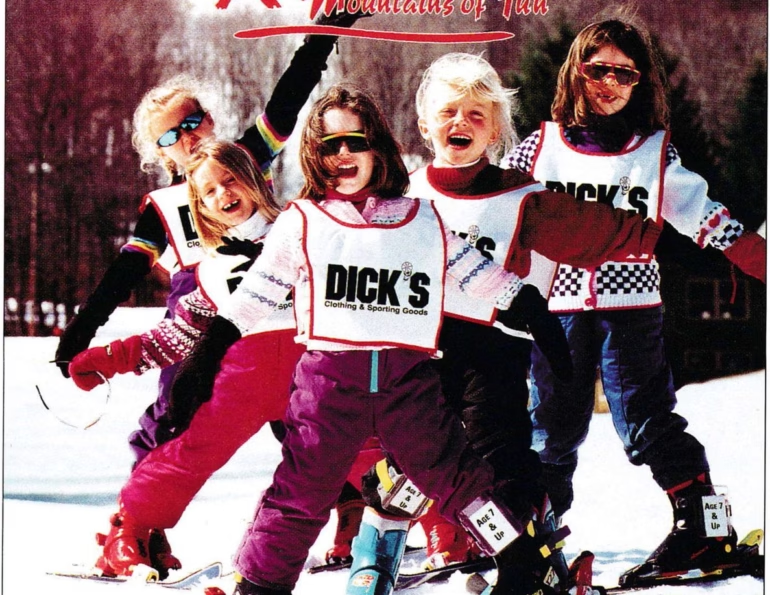
A well-received—and well-publicized—first-timer program initiated by Greek Peak Ski Resort, NY., is called Mountains of Fun. Gayle Kryger, the resort’s marketing director, credits former Greek Peak employee Mike Cobb—now the VP of marketing at Stratton Mountain, Vt—with planting the seed that became the program. It debuted in 1993 and has seen 60,000 people introduced to skiing and snowboarding at Greek Peak. Each year, 10 to 20 percent of the participants buy season passes and of the current pass holders, a full 70 percent were Mountains of Fun participants at one time.
It’s a pay-as-you-go program that has also run at Labrador Mountain and Toggenburg Ski and Board Center for the past two seasons. The program includes rentals and costs participants $20 for a first lesson, $20 for the next and $25 for a third. (If a guest is not confident they gained enough from a lesson, their ticket is good for another that same day.) After the three lessons, a participant’s name is entered into a drawing for a week at Stratton. Participants are also given a disposable Kodak camera and ski instructors make a point to take a few close-up pictures of each student—preferably smiling.
After one lesson, each person receives a letter from the resort offering a $5 discount on the return visit, then there’s a subsequent letter and discount offer. Finally, a Stratton card shows up in the mail (a discount card good at the Vermont resort) and a choice of a discounted season pass at Greek Peak or 50 percent off lift and rentals on another visit to the area.
The catch is that in order to get a coupon to enter the program, would-be skiers and riders have to go to McDonalds or a Dick’s Clothing and Sporting Goods store. And that gives the program some pretty heavy marketing muscle in central New York. There are 97 McDonalds restaurants from Lake Ontario to Waverly, Penn., that advertise the deal in a window poster. As part of the deal, the franchises involved must spend $74,000 a year on radio ads. Dick’s Clothing and Sporting Goods, an area chain, spends an additional $37,000 in print advertising. The resorts, of course, include partner logos and listings in their literature.
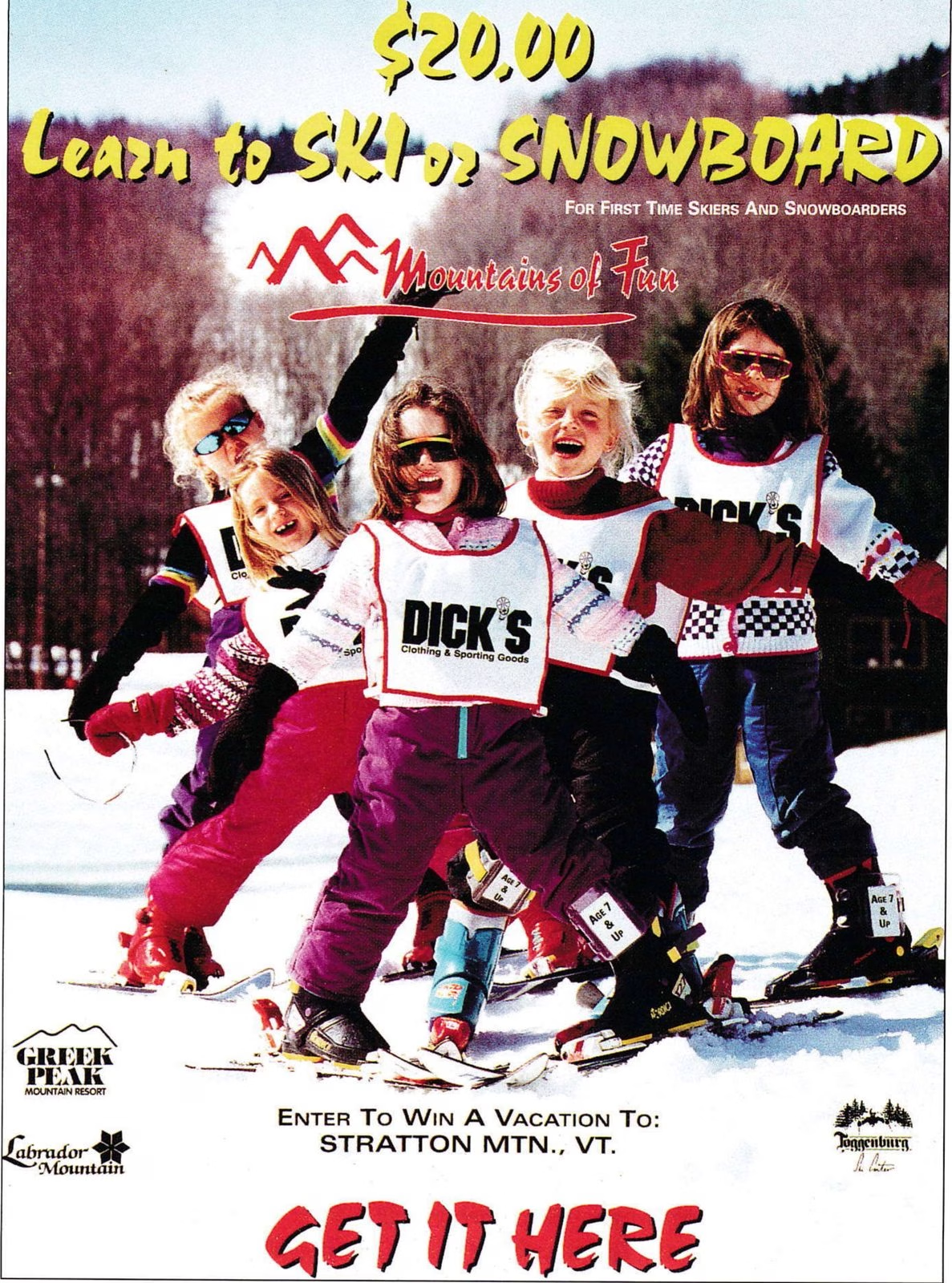
“A partner resort is very important for help,” says Kryger, pointing out that she approached Mike Cobb with the program at an NSAA convention. As a result, Stratton, which sees the new skiers as a significant potential market, pays roughly $20,000 for printing the flyer and coupons. “Who are you generating these skiers for anyway?” asks Kryger, explaining the deal is good every day and night of the season except President’s Day and Martin Luther King Jr. Day.

Too Good to Refuse
Have you ever bought something because the deal was too good to pass up? That’s essentially what Bogus Basin Ski Resort, Idaho, is banking on with their Learn to Ski or Ride Passport program.
The passport costs $199 and entitles the guest to four days of lift tickets, lessons and equipment rental. After completing the fourth lesson, they get a graduation gift of a season pass for the balance of the season and rentals for the same period at no additional cost. Guests who purchase the program and take lessons in February and March get the pass and rental privileges the following season as well.
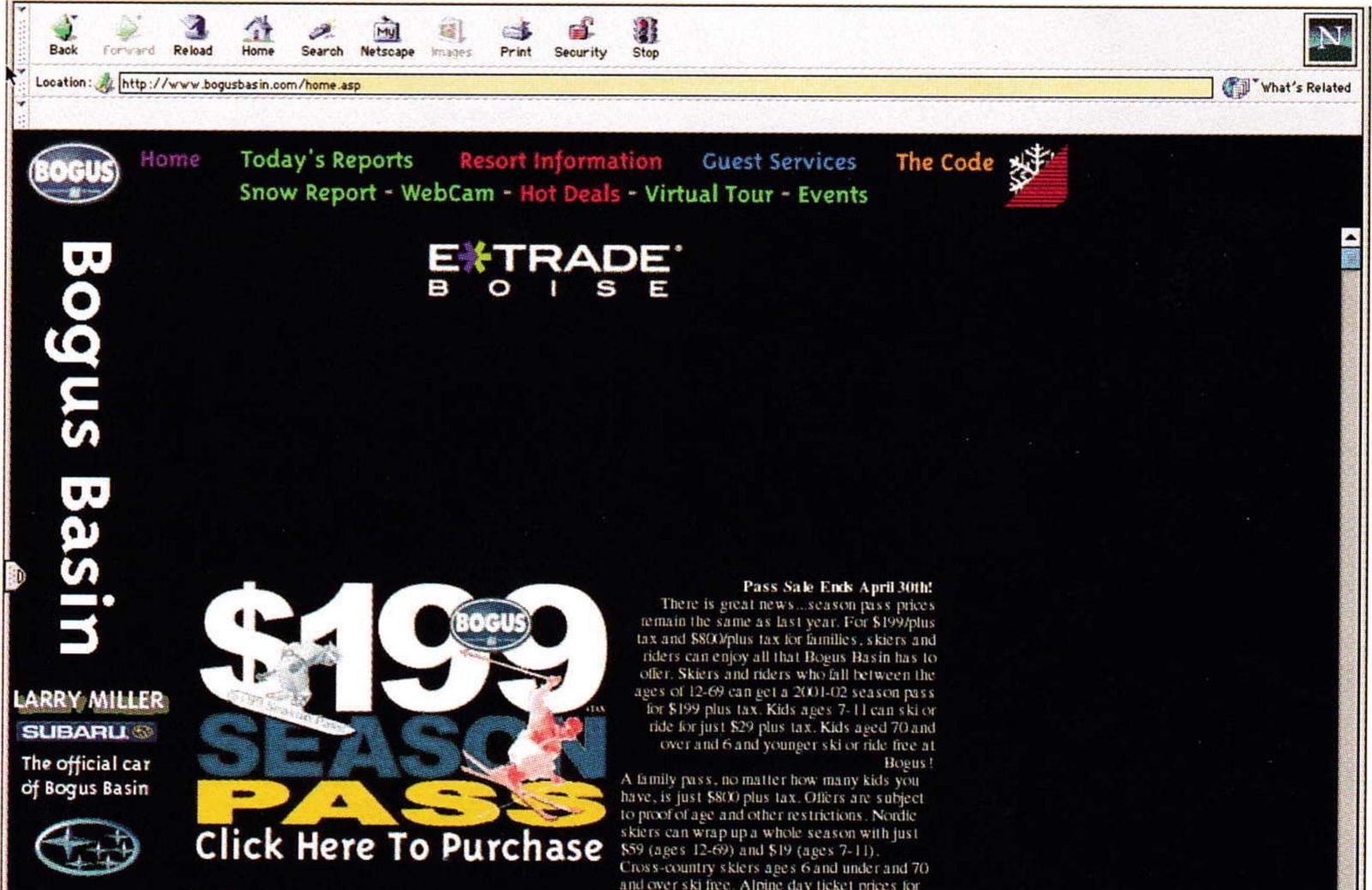
“It’s really kind of a simple-minded program,” says Mike Shirley, GM and president of Bogus Basin, “but aimed right at the problem: trying to convert never-evers to core riders and skiers. We give them no excuse for not coming back and sticking with it.”
After explaining the program to its staff, management left the marketing up to the public relations department. And while PR kept the program in front of media, the media picked up and ran with the story in the greater Boise market.
When the ski area started selling the packages last October, the first few sessions were almost immediately filled. Shirley says the real problem was taking care of excess demand. “We maxed out our ski school beginner teaching capacity and led this effort with our best, veteran instructors.”
When season pass sales for next season wrap up, Bogus Basin will be able to match that list against the list of passport participants to gauge how well the program did. Next year, management is looking at rewarding previous graduates with a season-long mid-level equipment lease package for an additional $199 “so they don’t have to jump into that $1,500 hole,” says Shirley, explaining the snowboard and ski gear will most likely come from Rossignol.
This season, the passport program was used by 1,600 people and while no hard retention numbers were available at presstime, Shirley says evidence at the rental shop pointed to an obvious increase as the season continued. What is known is that sales of the passport netted $300,000 in revenue this year, and not a dime was spent on advertising.
“That revenue will be split between the rental shop and ski school because that’s where all the variable cost is going to be,” says Shirley. “It’s as good as we could have hoped for. It really kept the rental shop hopping.”
All three of these programs, as well as those submitted to the NSAA Sales and Marketing Awards dealing with increasing skier visits and converting novices to core skiers, will be included in the handbook. The handbook will also have sections on ski and snowboard instruction for novices from the Professional Ski Instructors of America and discussions of facility design from the SE Group. It’s all aimed at an attempt toward 67 million skier and snowboarder visits by 2015. NSAA President Michael Berry calls it a compendium of ideas to help individual resorts focus on medium- and long-term methods for making the entry into the sports of skiing and snowboarding better, more friendly and more efficient.

