


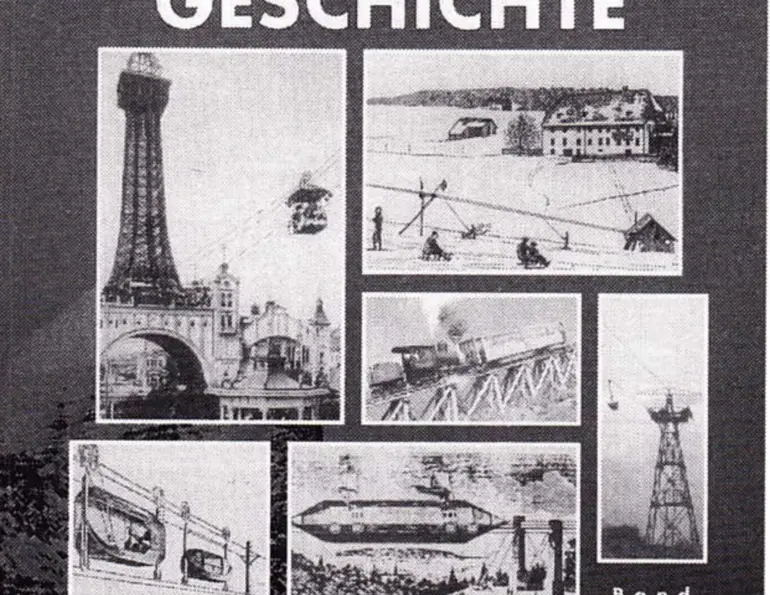
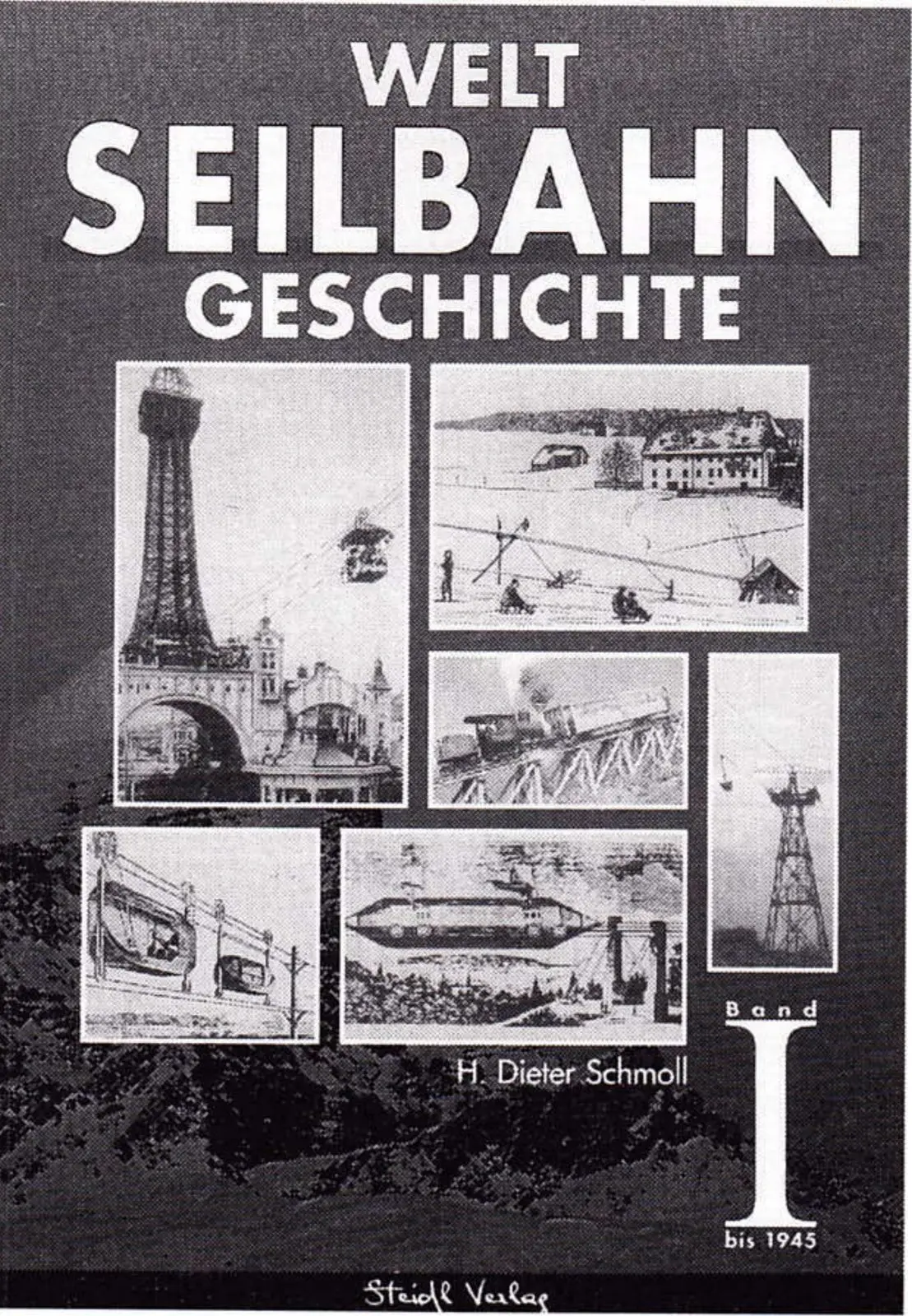
So it comes as no surprise that my old friend and colleague, Hans Dieter Schmoll, long-time editor of the German equivalent of this publication, Motor im Schnee, has compiled a two-volume treatise on the origins and development of ropeway transportation. Volume I (188 pages) takes the reader from Chinese ropeway developments in 250 B.C. to 1944, while Volume II 140 pages) picks up in 1945 and continues up through 2000. The text is all in German.
Schmoll’s books cover not only the development of the various technologies involved in ropeway transportation, but also the oddball experimentations and fantasies that went nowhere. Some of this stuff is mind-boggling, and the author has been at pains to provide plenty of illustrations.
Schmoll covers the beginnings of all the great names in ropeway transportation, including Pomagalski, Doppelmayr and other pioneers. He covers every type of ropeway configuration, from cog railways (Mt. Washington is included), cable cars (naturally including San Francisco), gondolas, chairlifts, surface lifts, ropetows and everything in-between. Again, everything is copiously illustrated with vintage photos and drawings. In assembling the illustrations alone there has to have been a mountain of work.
At the end of the second volume, Schmoll includes brief chapters on the beginnings of both snowmaking and over-snow vehicles.
A chapter for settling arguments is headed “What Guiness Didn’t Measure,” and shows the worldwide leaders in 14 categories, such as highest top station, longest span, steepest, greatest capacity, largest diameter rope and so forth. The listings are interesting, though I have a slight quibble with his including (or at least not footnoting) installations that no longer exist, such as Poma’s trans-Mississippi installation in New Orleans in the highest support tower category.
All in all, Schmoll has produced an amazing compendium. In the interest of full disclosure, I am proud to have been listed as one of his sources.

