
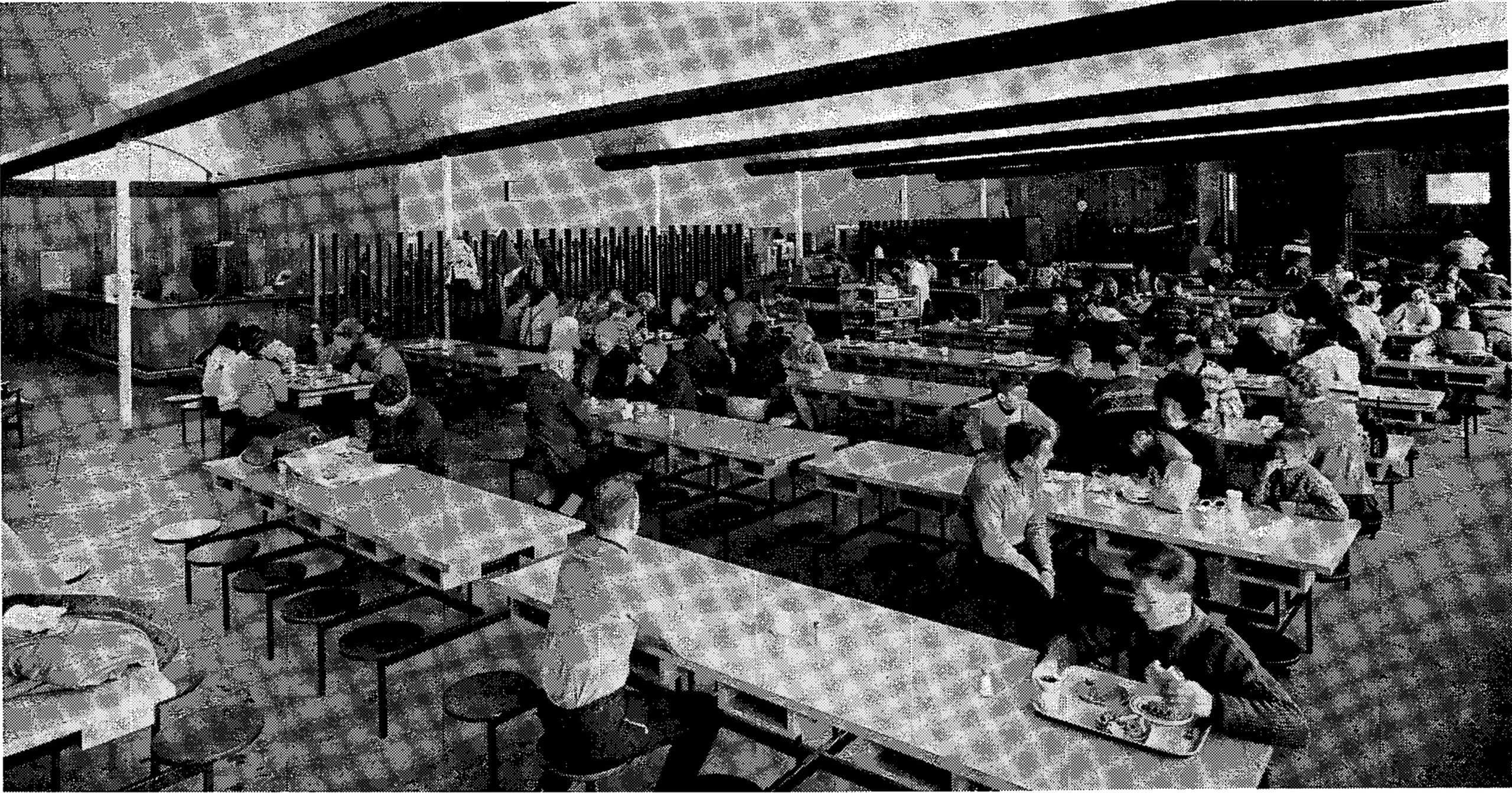
Feeding hungry skiers has become big business. Today’s complex food service facility is the outgrowth of the relatively simple and uncomplicated coffee/donut and light lunch service counter. Now the food service operation at ski resorts must be recognized as a money making operation and treated as any other commercially operated feeding establishment.
Cafeteria experimentation opens new ways to handle more traffic in less time than ever before. When you have to serve more than 4,000 skiers a day, as in the case of the newly opened Gore Mountain Ski Lodge in upstate New York, serving plans and new equipment must be periodically appraised for a more efficient operation.
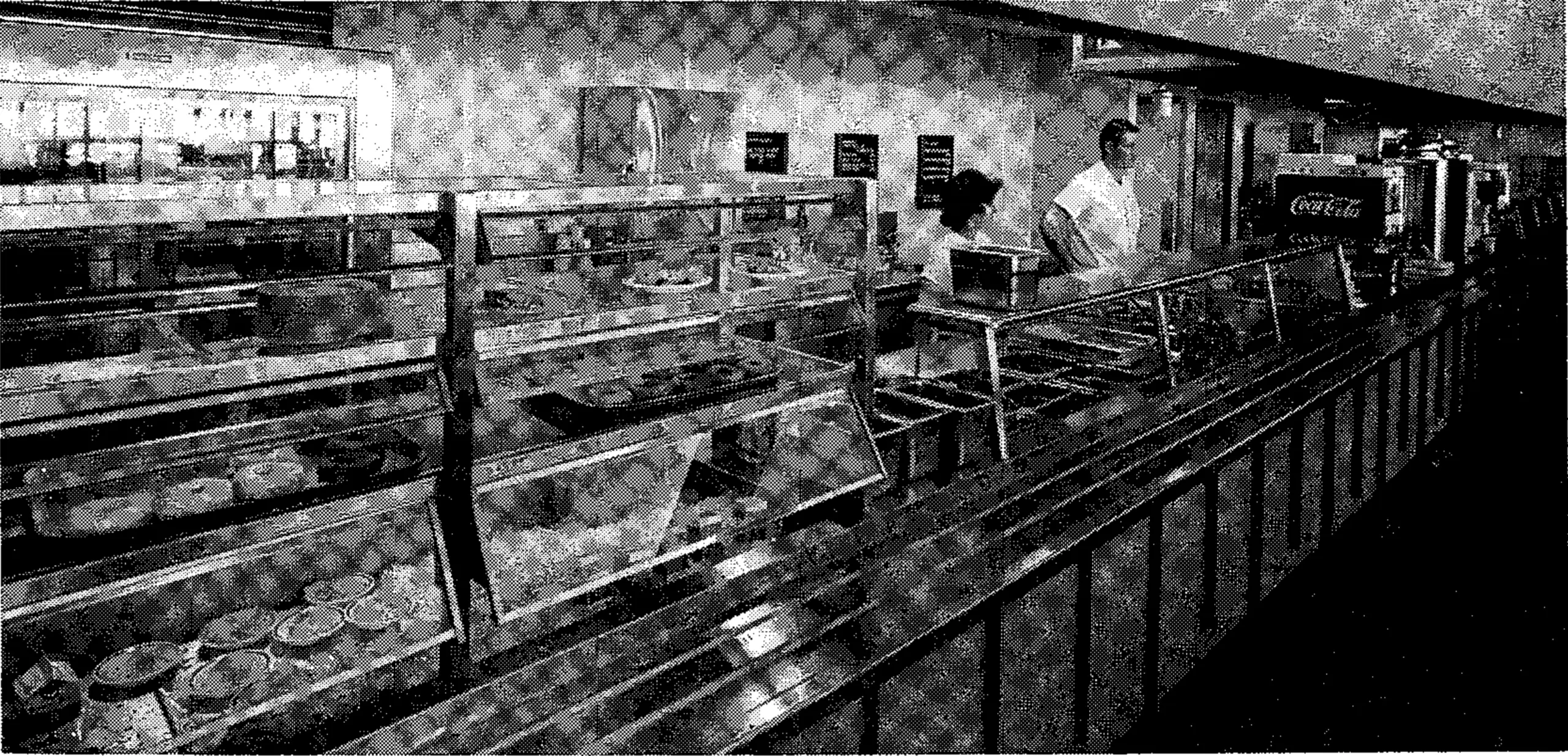
First, what is happening to the resort cafeteria? Till now, the basic serving plan has been extensively the straight-line method. This serving plan utilizes the straight counter. About seven people being served per minute on a straight line is the best that can be usually hoped for from any one counter. When necessary to serve more than that number per minute, modification of this line method is utilized. Usually, either another line is added or the free standing unit, which can serve from both sides, is used. Serving more than seven persons per minute is seldom justified. In many cases, especially where a wide menu selection is made available, the service rate drops to a low of five persons per minute. When more than a thousand meals are contemplated per hour, other serving plans must be considered such as the shopping center layout. This plan has many variations and names but the object is still the same; to diffuse the patrons to all sections of the serving line and eliminate the ‘follow the leader’ pattern and eliminate bottlenecks.
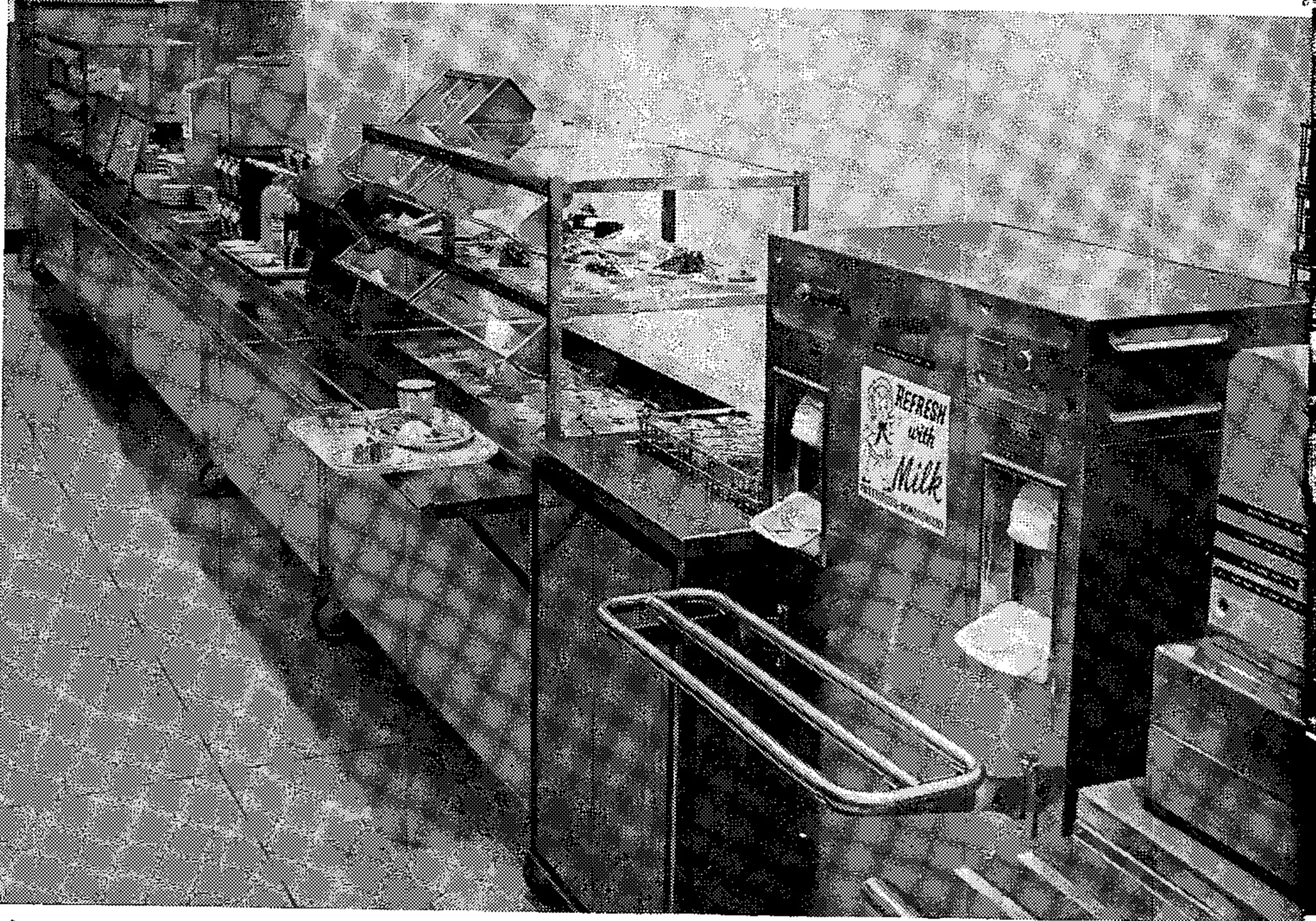
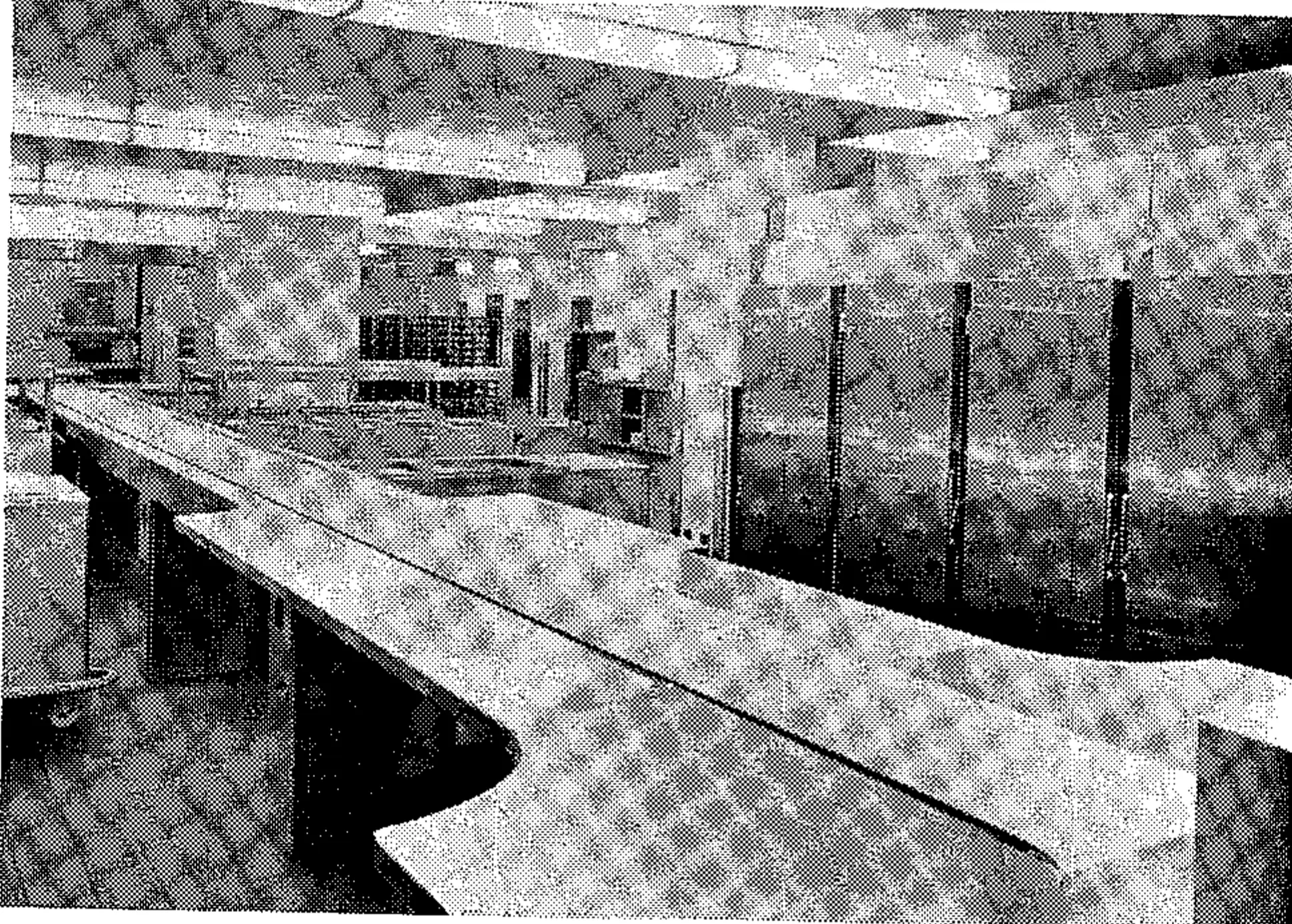
One of the variations of the shopping center approach is the scramble system. This system operates whereby the skier is free to roam in the selection of his meal. With this system, huge numbers can be served in a relatively short period of time. It conserves space, yet retains the advantages of fast patron flow. Patrons choose between the flow lines, one for hot items and one for cold items. A center counter contains ice cream, beverages, pastry and other desserts and is common for both lines.
Here is how the scramble system works: The skier enters through a single door from the dining room. He quickly selects either the hot or cold serving line and begins food selection. Wide aisle between counters, without railings, accelerates traffic. Diners usually select prepared-to-order items first, such as a sandwich, hot meat plate or char-broiled items. While it is being prepared, they freely walk across the five-foot aisle to pick up their dessert and beverage and return to their tray where their prepared item presumably is ready. With this plan, a staff of about seven persons can serve, with ease, more than three hundred patrons in less than a half hour.
Labor saving equipment is in great demand by the ski resort operator. A good example is the rotary oven. This is a prime example of equipment utilization. One large volume operator schedules the oven into bake periods. From 8 a.m. to 4 p.m. it is used by the bakery. From 4 to 10 p.m. it turns out batches of baked potatoes. From 10 p.m. to 2 a.m. it roasts beef and turkeys for its several operations. All these operations performed on one piece of equipment.
There are ovens available in which a fan creates a whirlwind air turbulence. In these ovens the cooking time for any item is substantially reduced. This is called a convection oven. It has multi-uses and should be investigated by every resort food operator. These ovens can be utilized for many purposes such as the rotary oven described above, and usually cost substantially less.
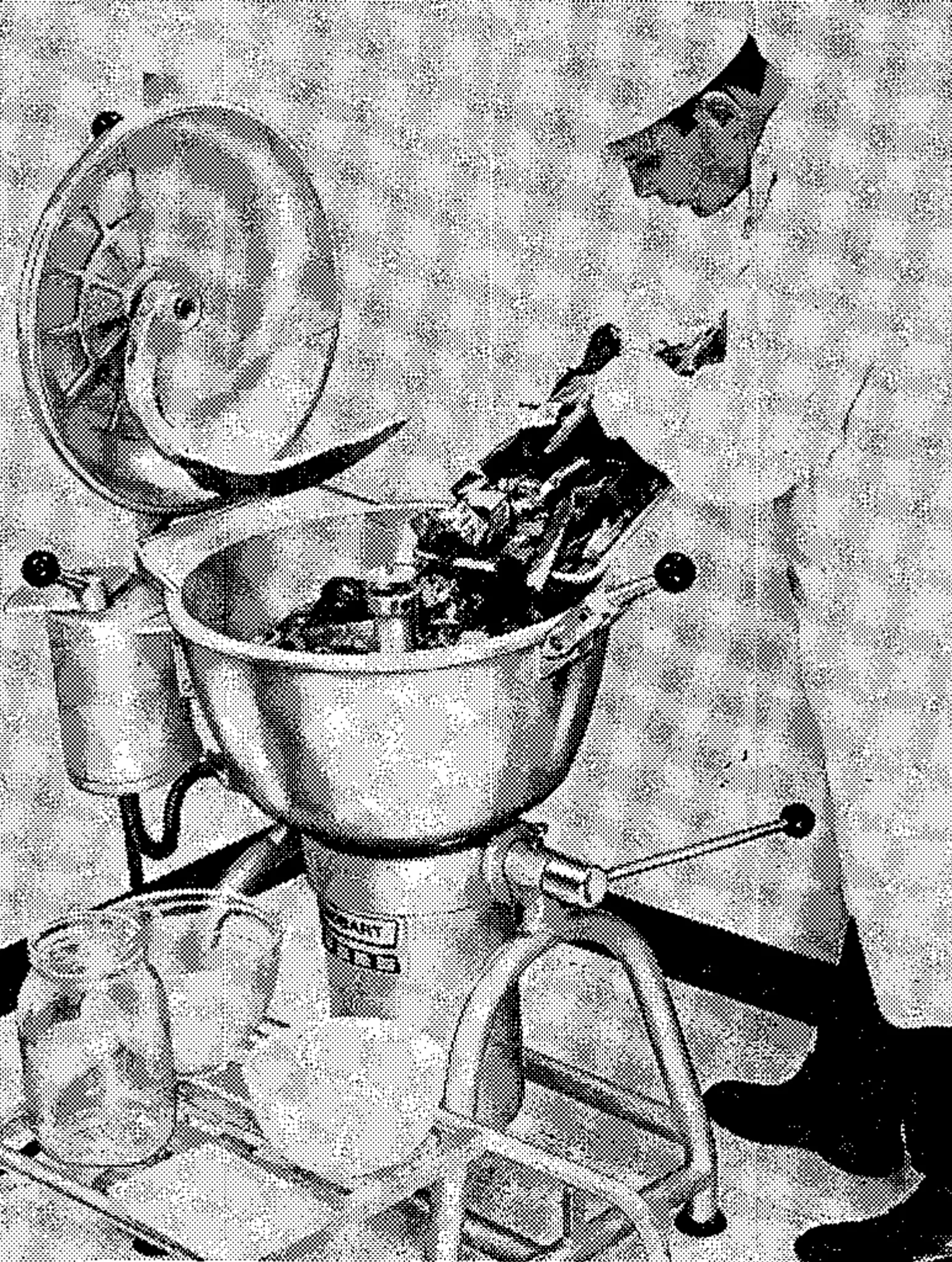
Another piece of equipment that can speed service, cut labor costs and save space and improve foods in appearance and nutritional value is a ‘cook center’ marketed by one manufacturer. It consists of a steam cooking compartment, a high speed defroster compartment and a 20-quart tilting kettle. The steaming compartment is for steam cooking fresh vegetables, meats, fish and puddings. The defroster reconstitutes and cooks frozen foods in just minutes. The kettle cooks soups, stews or sauces. This piece of equipment of many uses has proved ideal for many kitchens.
Other new and improved kitchen equipment which has found favor with operators include the steam jacketed kettles. They are versatile since they can prepare large portions of foods including solids and liquids. New deep fat fryers are now available that produce more pounds of foods per hour in less floor space than ever before. Newly developed heating elements account for speed cookery.

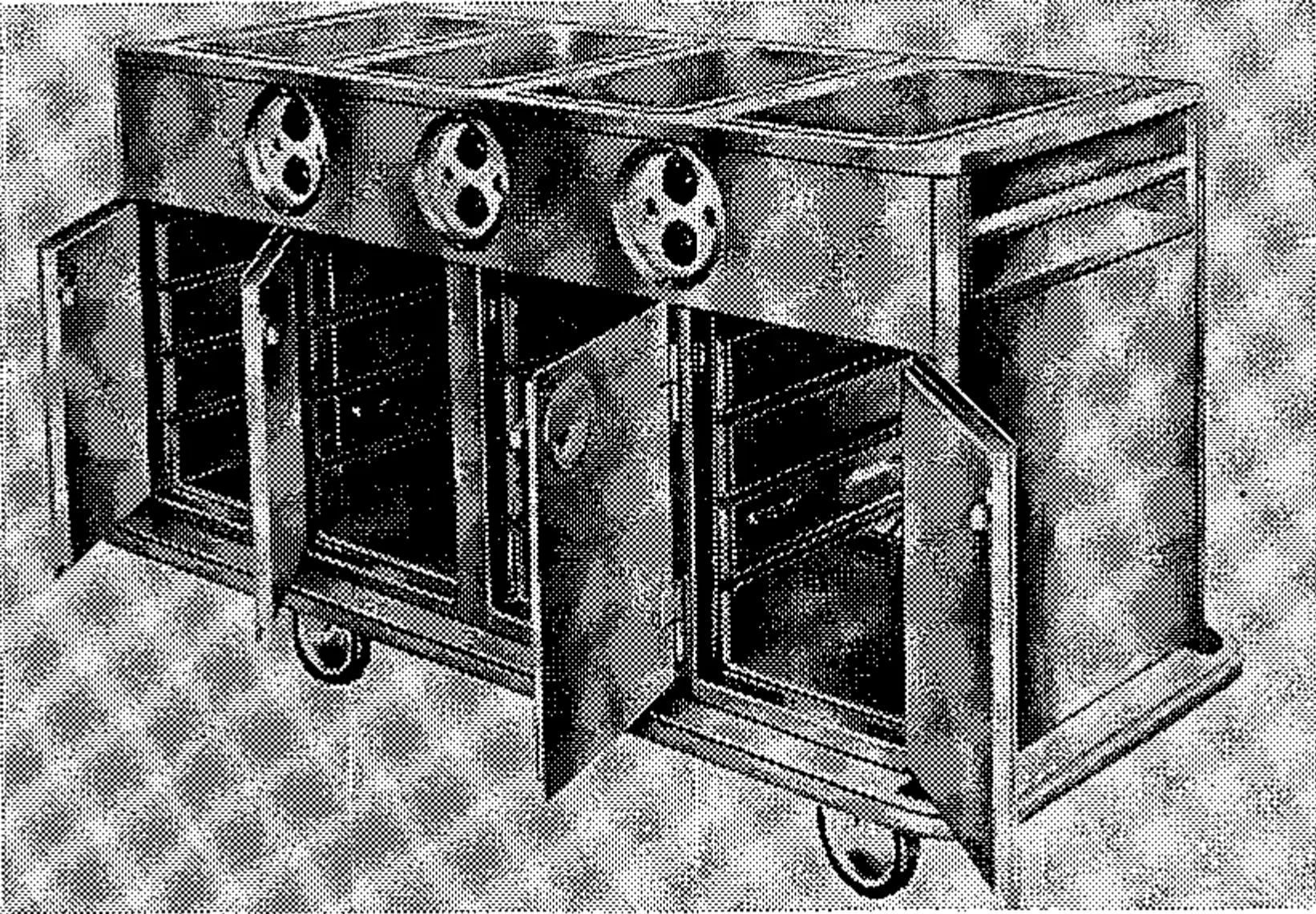
Mobile equipment is gaining in usage. Put a piece of equipment on wheels and you can move it to the serving line from the kitchen and back again saving in labor time.
One of the most important and often overlooked areas in which general costs involved in the operation of the ski food facility operation can be significantly reduced is in the warewashing department. Called by many names: scullery, pandora’s box, dish pantry warewashing area or what have you, the basic objective is the same—the efficiency and speed with which tableware can be washed and returned to service.
There exists on the market today a wide variety of dishwashing machines varying in capacity, type and physical size. Each is designed to meet certain particular requirements. The primary consideration is that of capacity. What is the maximum number of pieces and are there any peculiar sized pieces involved? Then the determination of peak loads must be established and then the type of machine must be selected. Here a reliable equipment dealer or consultant should be consulted. Since each operation is different, no one machine or system is best for all operations.
Conveyor systems are used both between the kitchen and serving line and between the dining room and the dishwashing area. It is said that conveyor systems cut the cost of walking in the average kitchen to line operation and will pay for itself if it saves between 100 and 200 trips per day on the floor. Also, serving the line from the kitchen with efficiency relieves bottlenecks at the line so more skiers can be served per given time period.
Other conveyor systems can be utilized in your operation. A good example of utility is the Rotaveyor. It is a new tool for the dishwashing room, representing link or bridge between scrapping table and the flight-type dishwasher. Rotating table is designed to hold stacks of dinnerware and trays and performs several useful functions. Another conveyor system gaining usage is the telescoping conveyor. Flexibility of facility is achieved through such a device which slides into itself for storage in the dish washing room. It is caster-mounted and can be wheeled out of the way in a few minutes to provide completely unobstructed space in the dining area. When it is needed again to transport soiled trays and dishes from the cafeteria to the dish-washing room for instance, the conveyor is simply pulled out to full length, secured by vertical bolts in the floor.
Some of the smaller ski resorts that cannot afford, or run economically, a complex food facility have experimented with the meal vending system of food service. Several vending machines line a wall containing a variety of refrigerated and frozen snacks and meals. An auxiliary microwave oven is used as a warming device which enables the foods to be ‘cooked’ in a matter of a few seconds. With this system, you offer the skier a food facility at a minimum cost to the operator. A minimum work force is needed to support such an operation. Some ‘back room’ food preparation is needed and the machines must be replenished.
With the current interest and enthusiasm in resort food facilities and food service, it is an area for a continuing flow of new trends and ideas and innovations in food service.