


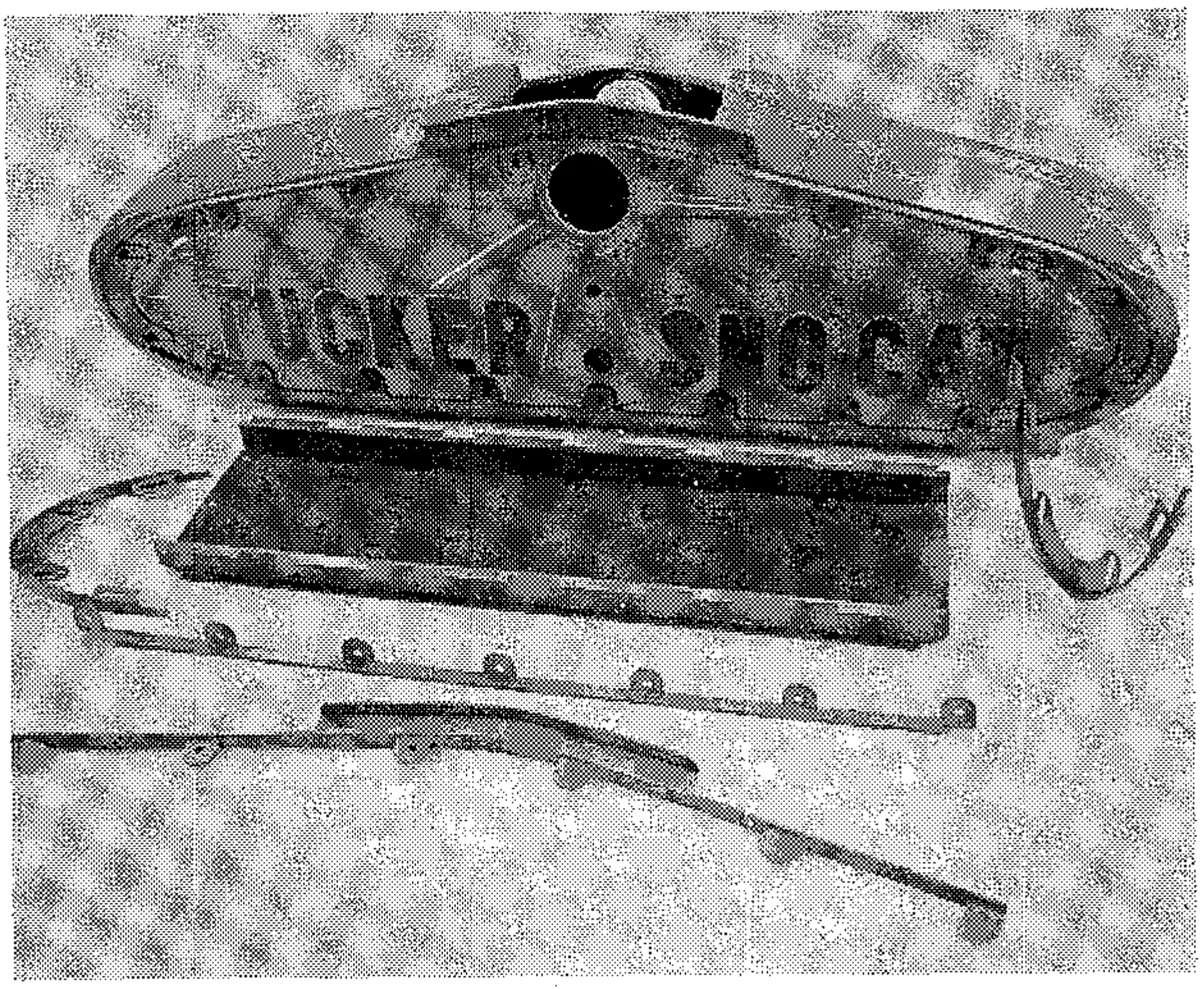
Tucker Sno-Cat Corp. has developed a fiberglass pontoon for their 300, 400 and 500 models. Made of a polyester resin and fiberglass combination, the new pontoons feature a sunburst rib design from the axle stress point for added strength. The design allows the top and bottom rails and the end tracks to be replaced without removing the pontoons from the Cat. Tucker says by using the glass pontoon as a “spare tire,” any metal pontoon requiring in-season repair can be replaced, “virtually eliminating down time.”
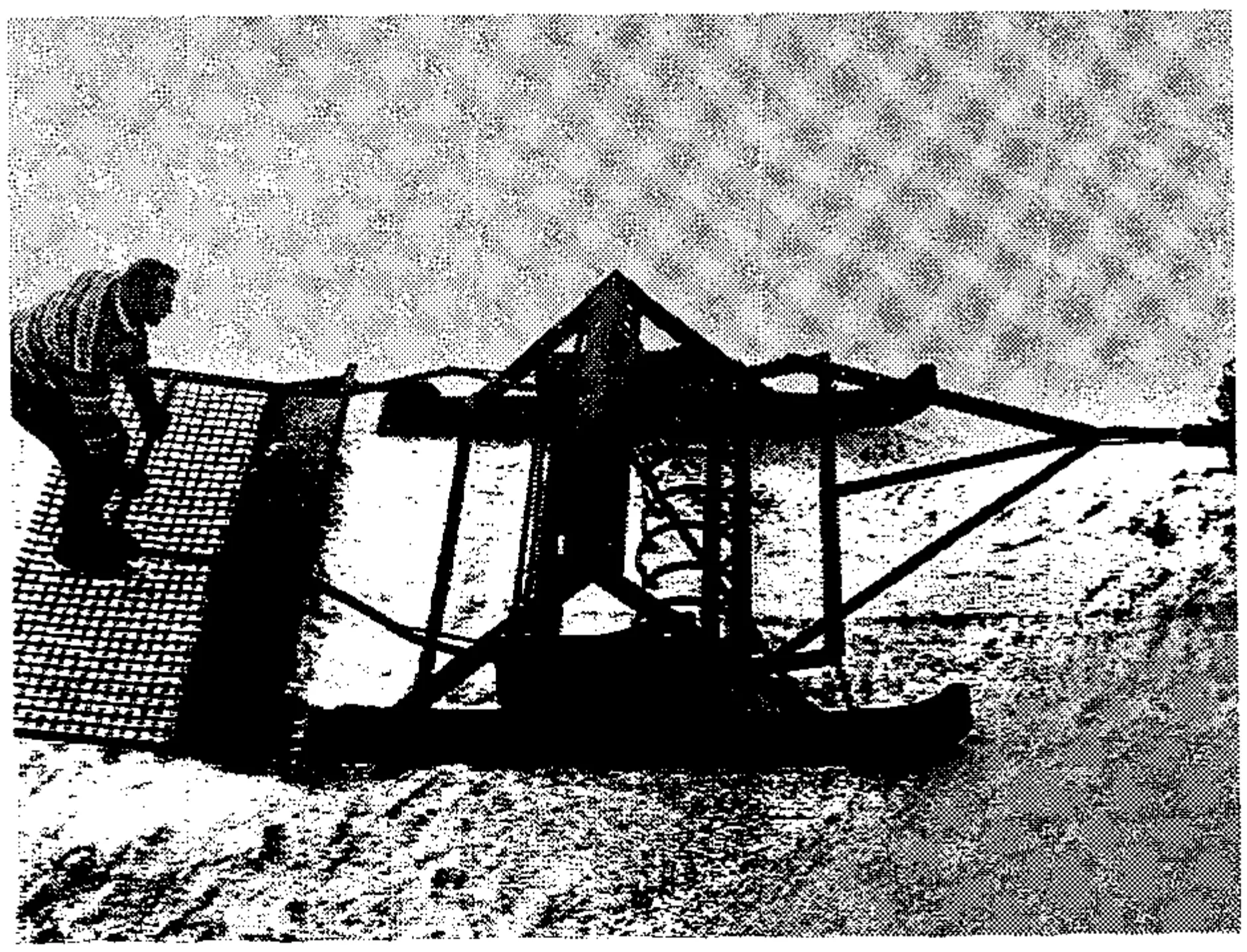
If you can’t find what you want, you can always make it yourself. Howard Srigley of Jasper, Alberta, Canada, is with the Highway Department and is a Certified Canadian instructor. When he was unable to find exactly what he wanted in the way of snow grooming equipment, he put together the first Miracle Mogul Mover out of old farm implements with certain modifications. The device is basically a set of ripper teeth which chew up the bump; an attached blade scoops up the loosened snow and ice. Snow from the trimmed mogul may be transported to fill in hollows or carried away at the discretion of the operator. The unit can be operated without a “steersman” riding the MM, but best results are obtained when the unit is guided. Srigley is currently in negotiation with Tucker Sno-Cat for commercial production of the snow mover.
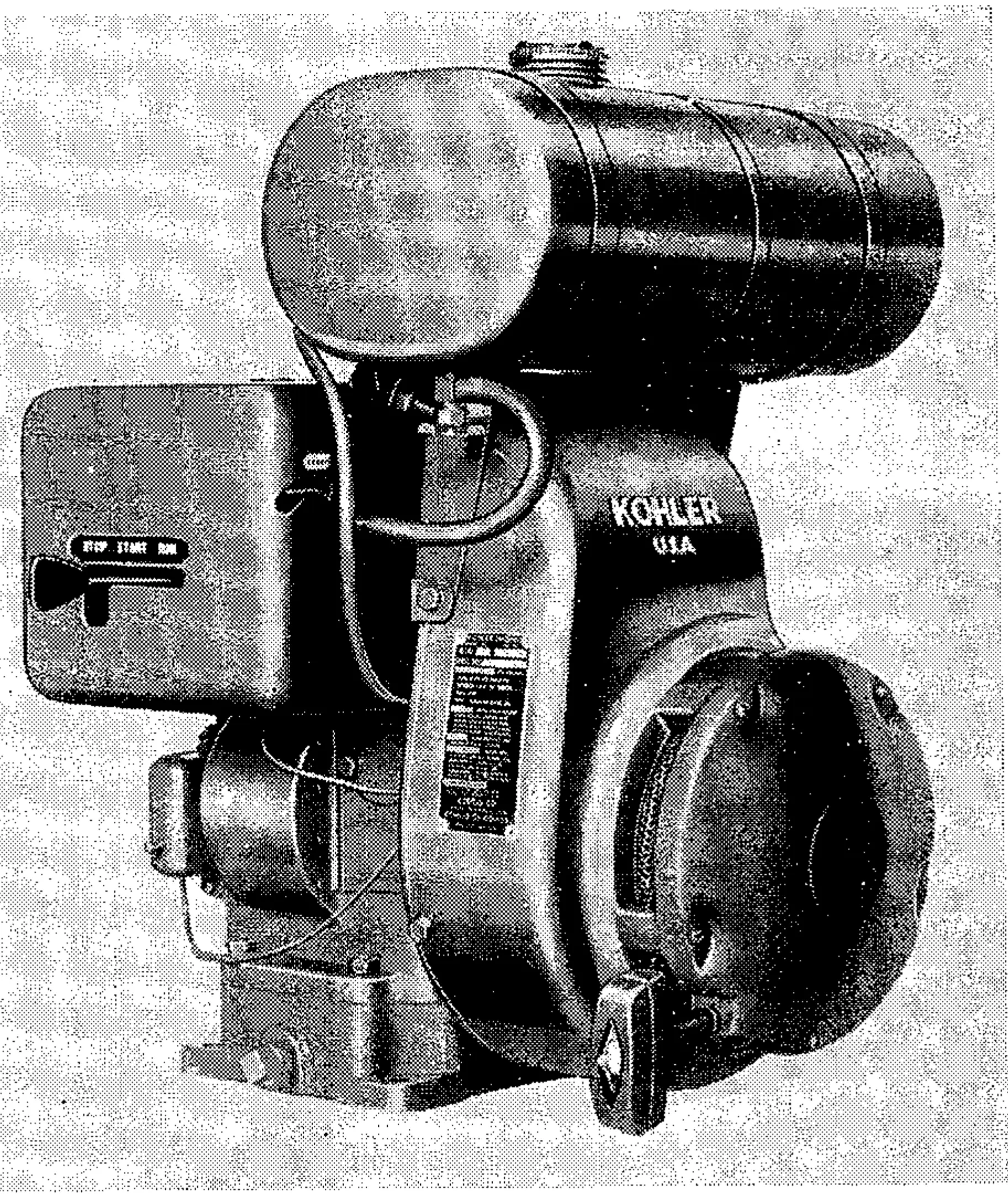
A line of small hp. gasoline engines designed especially for operations in extremely cold areas is now on the market from the Kohler Co. The Polar Kohler comes in 6¼, 7 and 8 hp. sizes and will start readily at 25 below and run through the severest blizzard, according to the manufacturer. Design features include: a housing that directs warm air from the cylinder head into the carburetor intake and over all external linkages; a push-button compression release which closes automatically when the engine starts; a spark system that automatically retards spark for starting and advances with engine speed; and oversize choke and throttle controls for easy operation with mittens.
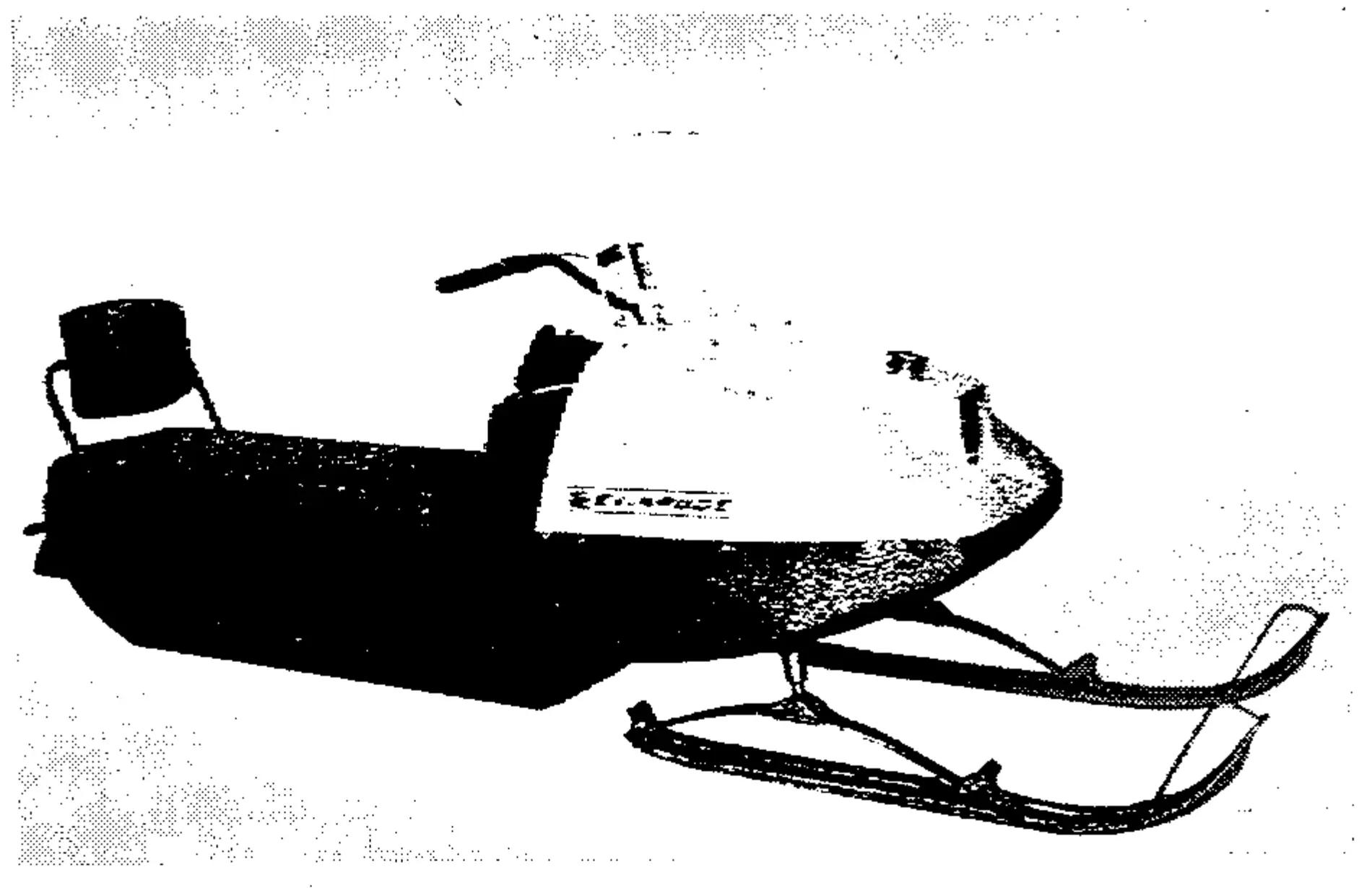
Evinrude Motors is producing an over-the-snow vehicle which will transport two persons at speeds up to 30 mph. Evinrude’s Skeeter is one of a group of light-drive tracked vehicles originally designed for sport but finding increased use at ski areas as light haulers and for towing rescue sleds. This model has a single broad track at the rear which is powered by a 14 hp., two-cycle engine. A belt drive connects the engine to the track’s drive wheel. The unit is steered by a handle-bar arrangement attached to two ski-like runners at the front. Features include a disk brake system; fiber glass cab; and 12 v. alternator for headlight and tailights.