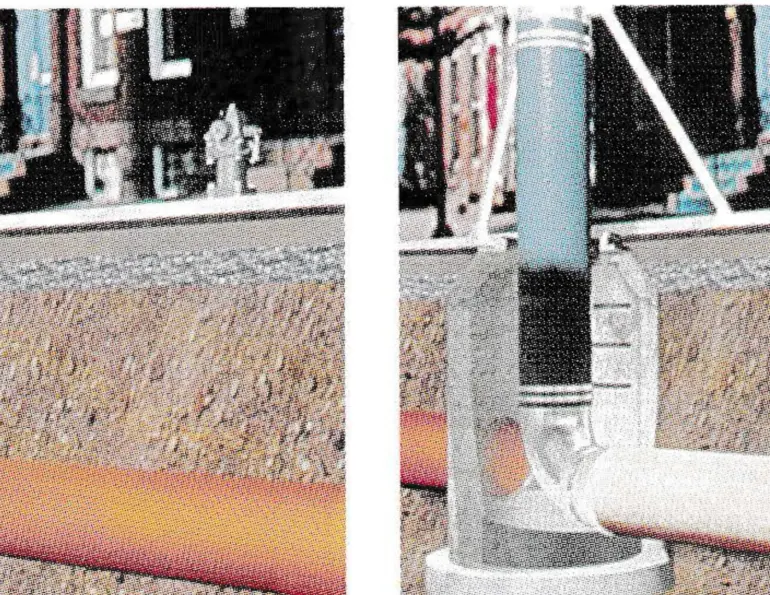
Underground pipeline repair can be a huge headache for maintenance engineers. Ruptures of weakened underground pipes may cause floods, loss of water services or sewage backups. But the remedy is often as disruptive as the problem. Excavation is unsightly and problematic, especially when pipes run under roads, ski trails or buildings. Plus, there are environmental concerns associated with bringing in heavy equipment and digging, especially if an area is a national park or has other special designation.
This is the situation Purgatory, Colo., faced last summer when the area’s snowmaking reservoir began leaking. Rather than breach the dam and carry out major excavation, however, management opted for a non-disruptive repair process. The process, developed by Memphis-based Insituform Technologies originally for use in municipal sewer systems, makes it possible to rehabilitate aging and deteriorating pipes without excavation of underground infrastructure.
Leaks had developed in an outfall line at Duncan Dam. “The culvert had deteriorated to the point that a piece in the water collapsed,” said Rich Landreth, the area’s snowmaking supervisor. “The reservoir had started draining and was already two to three feet below normal.”
The outlet works at the dam consisted of a slide gate at the upstream end, 25 feet of 12-inch corrugated metal pipe (with a 60-degree vertical bend) and a 100-foot length of 15-inch corrugated metal pipe. A video camera run inside the pipes showed extensive internal corrosion, for which the traditional solution would have been to breach the dam, excavate the pipe and replace the entire line. Such a repair would have taken an estimated month to six weeks to complete.
Graphics copyright Insituform Technologies
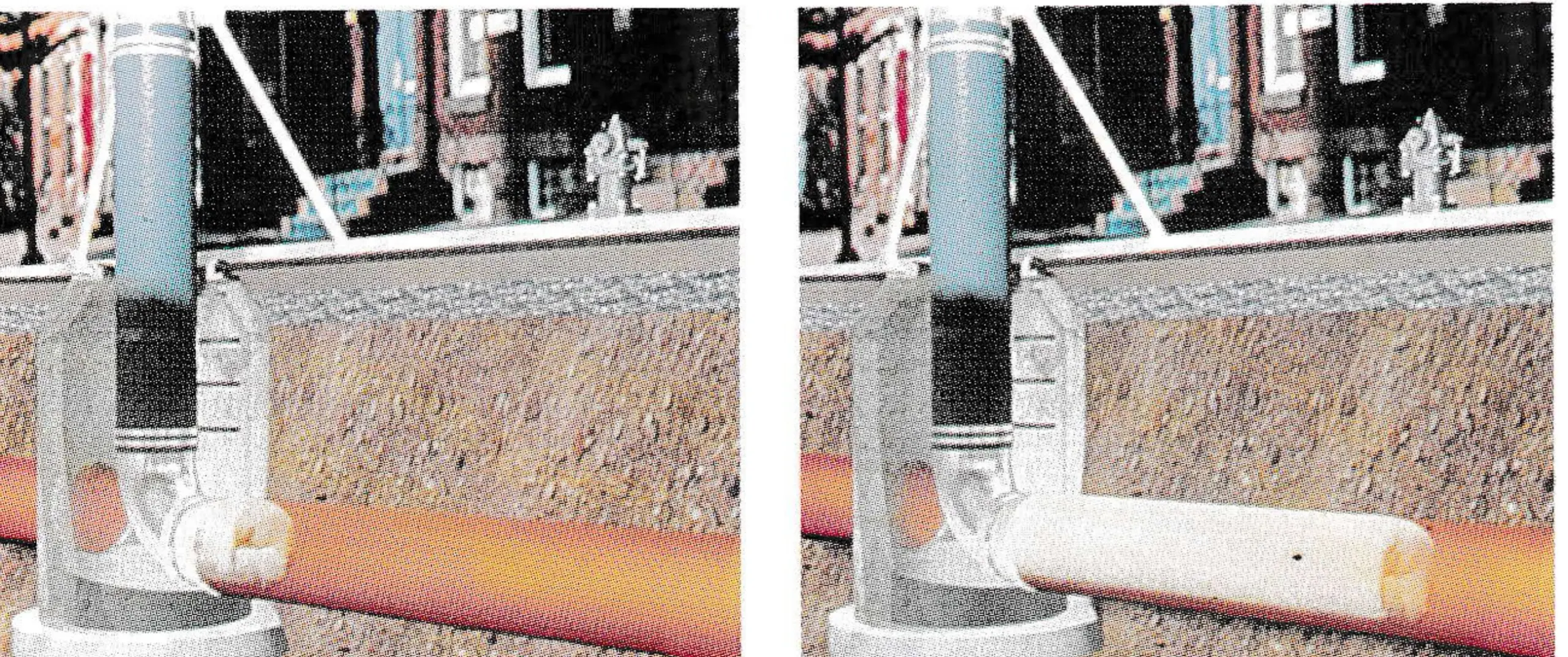
Instead, over a period of two weeks, the reservoir was drained, minor excavation was performed to create a path in the reservoir bottom for heavy equipment, and Insituform installers performed the actual pipe repair in just one day. They inserted into the damaged line a polyester fiber felt tube that had been serial vacuum impregnated with a liquid thermosetting resin. The tube’s resin levels and felt thickness were custom-tailored to Purgatory’s specific corrosion resistance and capacity needs: the 12-inch pipe called for tubing with .37 inches of wall thickness while the 15-inch pipe required a wall thickness of .42 inches.
The tube was inserted by an inversion process in which water pressure turned it inside out. The water pressure pushed the tube through the pipe, unfolding it and pressing it tightly against the pipe wall. When the tube reached the termination point, the water inside was heated with a mobile heat exchanger, causing the thermosetting resin to cure. After the liner hardened, the end was cut flush with the existing pipe, resulting in a jointless pipe-within-a-pipe that restored the structural integrity of the line. Landreth said the process reduced the diameter of the pipes, but “within an acceptable range.”

Insituform lists a wide range of applications for this process: rehabilitating lateral connections, completing isolated spot repairs inside pipes and rehabilitating pressurized or gravity lines from four inches to nine feet in diameter, including round, catenary or other less conventionally-shaped pipes. The felt tube, which negotiated a 60 degree bend at Purgatory, is said to be flexible enough to round 90 degree bends as well as “jump” offset joints.
Though Purgatory drained the reservoir for the repair, installations listed by Insituform have been performed under bodies of water, including Florida’s Biscayne Bay, with single inversions as long as 2,400 feet. Insituform engineers say the process is certified for use in drinking water systems, and that U.S.-government funded testing has established the service life of repairs performed by this process to be at least 50 years.
“This is an excellent option to replacing entire pipelines, even for older snowmaking systems,” said Landreth. For Purgatory, the cost of $26,750 was roughly a third of the estimated cost of the traditional alternative, and downtime was kept to a minimum—a critical point for ski towns as summer tourism becomes more and more important.
“Best of all, it didn’t disturb the environment,” said Don Miller, Purgatory’s director of trails. “Our priority is to maintain a top-notch, environmentally responsible ski area, and when we can save money on infrastructure repairs at the same time, everybody wins.”