


Finances
AMF eyes takeover of Aspen Skiing Corp.
According to ASC vice president Tom Richardson, “They’re looking at us, but as yet no offer has been made.” At this writing, Richardson expected that some form of announcement would be coming within a matter of weeks.
Joseph Schoenberg, manager of corporate programs for AMF, said, “There’s not much we can say at this point, other than we have talked with ASC and are continuing to talk to them.”
Several ASC directors and stockholders are anxious for the acquisition, providing the deal is a no-cash, tax-free exchange. At this point, it is anticipated that the agreement would take the form of a stock swap with AMF and ASC holdings traded off at a predetermined ratio of exchange.
Local reaction has been mixed. William Dunaway, editor-publisher of the Aspen Times, is concerned over the proposed acquisition’s impact on the city and has suggested that Aspenites buy ASC rather than let it fall into outside hands. In an April editorial, he opted for purchase of the ASC by using bonds as currency. Said Dunaway, “Interest [on the bonds] would be tax-free, thus effectively earning their owners more yearly income than most common stocks. Such a transaction could be of benefit to ASC stockholders and would definitely benefit Aspen.”
Whoever the new owner, a profitable property stands in the balance. This year, despite legal wrangles with area ski patrolmen over work assignments earlier in the season, revenue was up 29 percent on lifts alone. (All Aspen areas, in fact, report lift-ticket sales ahead this year, with Breckenridge up 42.5 percent and Snowmass up 43 percent.) In dollar terms, gross receipts—again, from lifts and not including land sales and restaurant concessions—will top $6 million this year, according to Richardson. ASC’s corporate assets, at the end of February, totaled $10,758,141.
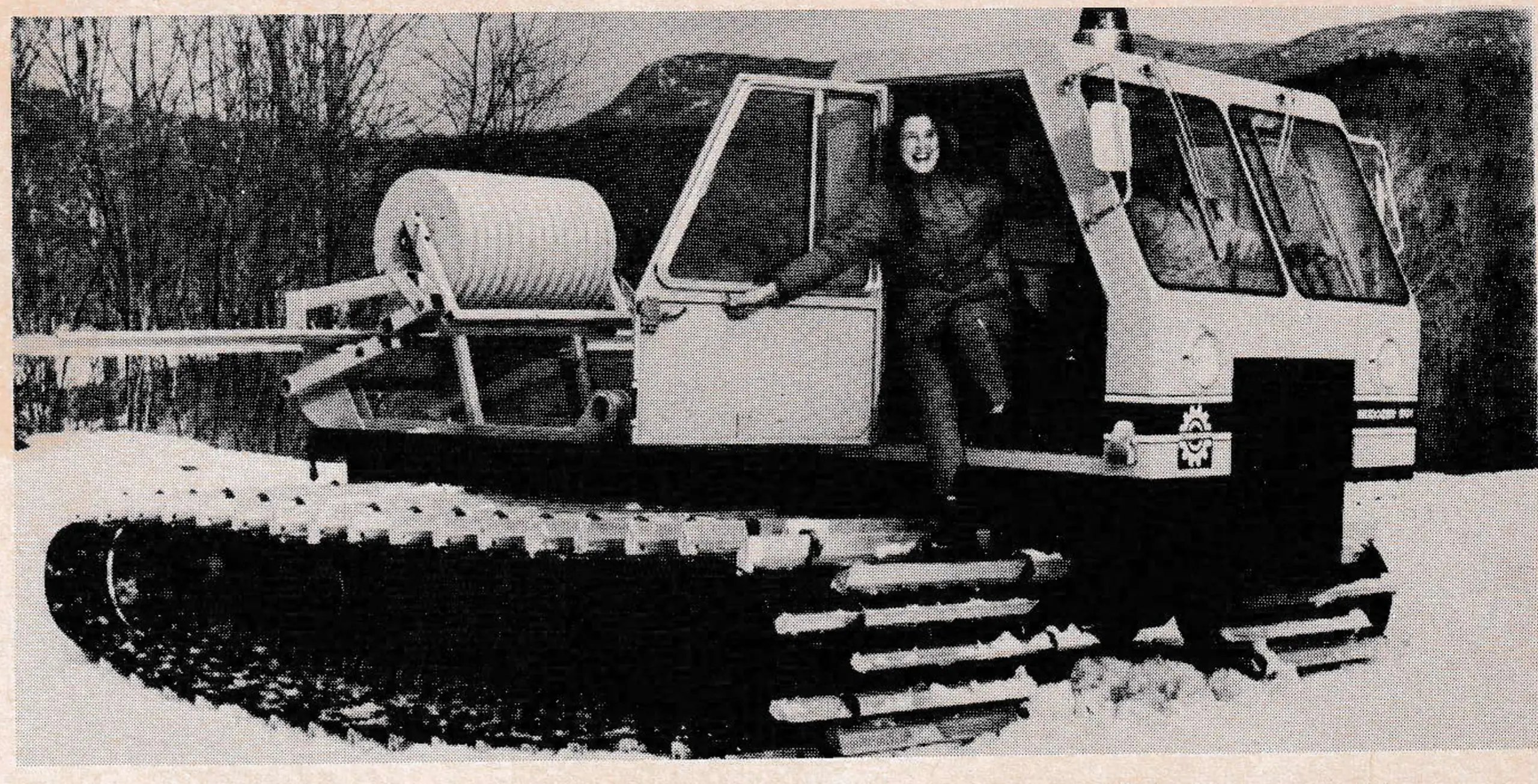
Area finances healthy says NSAA study
It’s all a matter of record now, but for those who haven’t yet examined NSAA’s “Economic Analysis of the Skiing Industry,” a 110-page report prepared jointly with the United Bank of Denver, the financial health of the nation’s ski areas is good and the outlook even brighter.
Comparative income statements gathered from 130 U.S. ski areas showed that average area income more than doubled from $338,000 to $842,000 during the period between the 1967-68 and 1970-71 seasons. Ski areas also did a better job of controlling expenses in 1970-71 as direct expenses accounted for only 48.8 per cent of revenue compared with 59.2 per cent for 1967-68.
The net result, reports the study, is that pre-tax profits in 1970-71 were $88,000 or 10.5 per cent on income as compared to $4,000 or 1.2 per cent in 1967-68. Another promising sign: all profitability measures—return on equity, fixed assets, capital, income—showed an approximate eightfold increase during the three-year period.
The report concludes, “During the three-year period the industry has undergone a financial metamorphosis. For the first time the industry looks reasonably healthy . . . These findings suggest that under the right circumstances, skis areas can represent an attractive investment.”
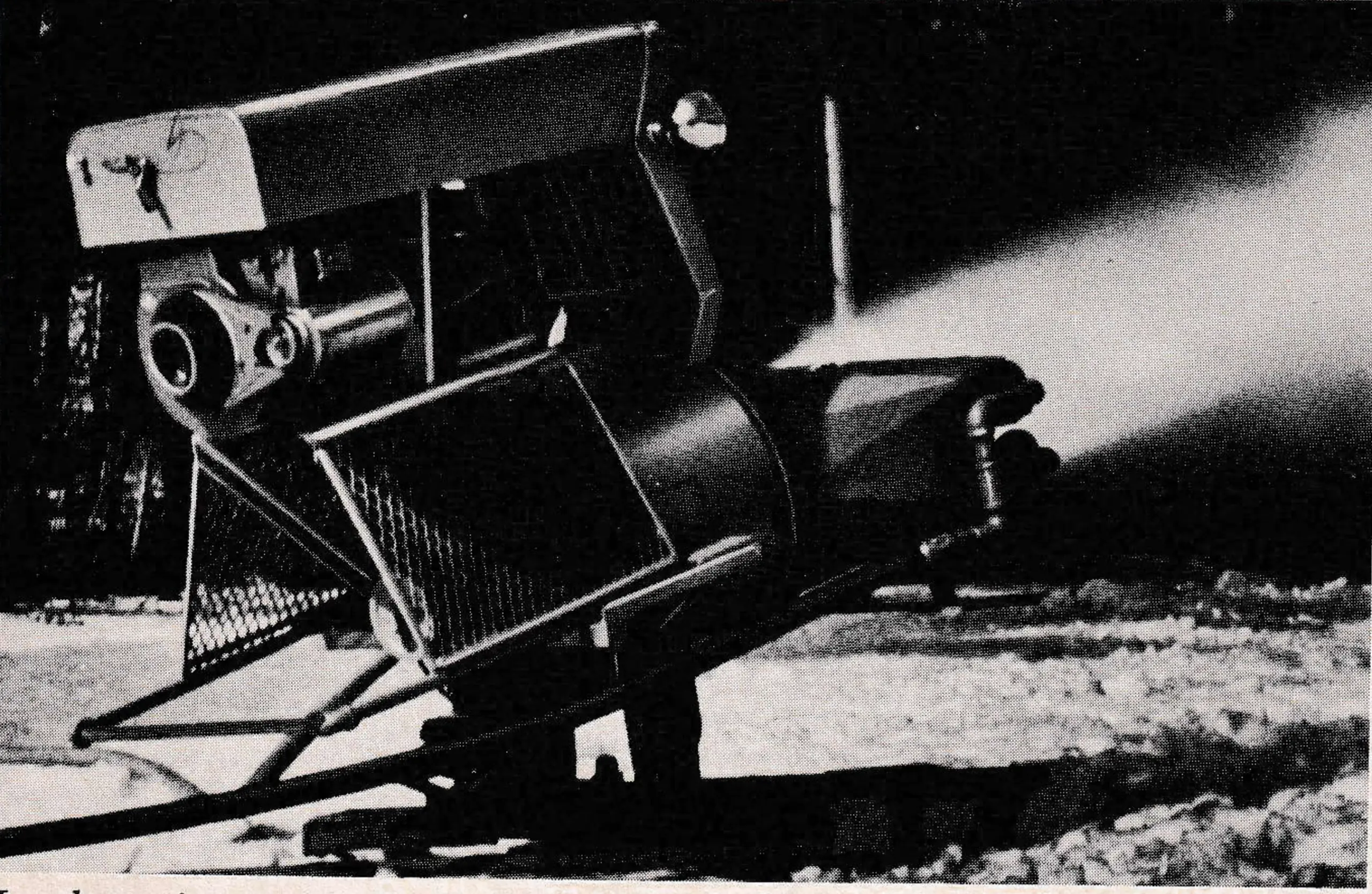
Olympics
Denverites still astir over ’76 Olympics; staging costs spiral
The 1976 Winter Olympic Games continue to be a subject of controversy in Denver as citizens seek names on petitions calling for a referendum election on the games and the governor appoints a “Committee of ’76” to promote them.
The cost of staging the games also climbs upward while a state representative asks for the resignation of the entire Denver Olympic Committee (DOC). And members of Citizens for Colorado’s Future (CCF) are seeking 51,000 signatures on petitions calling for a change in the state constitution which would prevent the allocation of further state funds for the games. If CCF obtains the required number of signatures, the issue will be put on the November ballot.
In January, CCF collected 25,000 signatures in three weeks on petitions opposing the Olympics in Colorado and the petitions were presented to the International Olympic Committee in Tokyo, Japan just before the 1972 Winter Olympics.
The cost of the Olympics now has risen from the $35 million set by Carl DeTemple, DOC president and general secretary, two months ago to $77 million. It has been going up slowly. Under grilling from the State Legislature’s Joint Budget Committee earlier, the cost estimate for the Games rose to $65 million.
The grilling came after the DOC appeared before the committee to support its request of $896,400 in state funds for operations during the fiscal year that starts July 1. After listening to DOC members present their request, committee chairman Don Friedman said he was confused over how much the Olympics would cost. He then directed De Temple to write a series of cost figures on the blackboard. Friedman said he then believed the cost of the games to be closer to $65 million than $35 million.
Friedman also questioned the DOC’s plan to increase its number of employees from 16 now to 500 in 1976. The chairman also accused the DOC of having no plan for preparation of the games and no way of “covering the state” should federal and city funds fall through. De Temple admitted that the plan made by the Denver Research Institute in 1970 was out-of-date.
Later Friedman said he wasn’t against the games, but called for the resignation of the entire DOC because he claims the DOC has lost the public confidence. “I believe there will be a vote on the Olympics in November,” he said “and unless a major change in personnel is made, I believe the Olympics will be voted down. This will be sad for the people of Colorado.”
The House of Representatives, after considerable debate, allocated $739,000 for the Olympics. The joint budget committee had recommended only $268,270 for the next fiscal year.
Meanwhile Denver mayor Bill McNichols, at a press conference after meetings with federal officials in Washington, D.C., acknowledged that the cost of the games was now estimated at $77 million.
In other Olympics action, Steamboat Springs, site of the Nordic events, has told the DOC it wants a new 90-meter ski jump or else the town would reconsider its role in hosting the cross-country biathalon and Nordic combined events.
The Steamboat delegation told the DOC that the construction of a 70-meter jump on Howelsen Hill above the town, scene of many international jumping events, would necessitate the destruction of the existing 90-meter jump.—Lois Barr
Development
Sierra Club to continue Mineral King action
Michael McCloskey, executive director of the Sierra Club, has told SAM that the San Francisco-based conservationist group will continue to press its case to block development of the Mineral King area in California’s Sierra Nevada.
His statement came in the wake of the U.S. Supreme Court’s April 19 decision to set aside the organization’s suit because of the group’s failure to show that it or its members would be harmed by development of the resort, a $35 million venture whose development was halted by a Sierra Club injunction in 1969. The case had undergone a series of appeals before reaching the Supreme Court.
“The case,” said McCloskey, “made it clear that we could amend our complaint to say that we are users of the area, which indeed we are. We also have the option of moving for a reconsideration and we have 25 days from the date of the decision to do that. During this period, the injunction will remain in force.”
The Sierra Club, 140,000 members strong, is also involved in another ski area action, this one to halt development of Kirkwood Meadows’ Thimble Bowl basin at Carson Pass, Calif. “The case has not gone to trial yet,” said McCloskey, “but papers have been filed.”
McCloskey added that the Sierra Club was not “singling out ski areas for special treatment. We’re involved in about 70 pieces of litigation now and only two of these lawsuits involve ski interests.”
In the meantime, the Forest Service and Walt Disney Productions have rekindled efforts to get Mineral King underway. Said Douglas Leisz, USFS regional forester for California, “We’ll pick up the development program where it had to be shelved three years ago. We only regret that the area could not have been available three years earlier.” Estimates now are that the year-round resort will be operational for skiing by 1978.
USSA president Charles Gibson was optimistic over the Court’s decision but warned that more organized opposition is in store for potential ski area developers. The USSA entered the Mineral King dispute three years ago as a “friend of the court,” contending that a set back on Mineral King would set a precedent against development of ski areas elsewhere.
Loveland Skiing Corp. bought by Texas group
Loveland Skiing Corp., owner and operator of Loveland Basin and Loveland Valley, Colo., has been purchased by Clear Creek Ski Corp., a Texas company recently formed by Chet R. Upham Jr. of Mineral Wells, Texas, a founding stockholder of LSC.
Upham, with LSC when it was founded in 1956, took over ownership after purchasing all the outstanding stock of five other investors. He said there would be no change in management. Otto Werlin is presently manager of LSC and Buff Rutherford is his assistant.
There had been some speculation this season that the United States Ski Association would purchase Loveland Valley for use as a training site for the U.S. Ski Team.
Charles Gibson, USSA president, told SAM recently, “Loveland was only a partial solution. The team should really have three training sites—in the West, Midwest and the East.
“We’re still interested in finding facilities. However, it’s not necessary that we buy an entire area. A few lifts and a good hill would do.
“The Eastern team trained at Burke Mountain, Mass., this season—it’s a good area for our needs. If we had enough of these facilities, we’d fulfill our requirements.”
Canadian Ski Assn. fights for racing in national parks
In a bid to keep international competition alive in Canada, the Canadian Ski Association has appealed to the federal government to reverse its eviction notice.
The stand was taken in response to a recent policy change by the National and Historic Parks Branch, Department of Indian Affairs and Northern Development, who are threatening to keep competitive skiing out of Canada’s national parks.
“Parks officials claim they are preserving the lands for the basic purpose of recreation, and that competitive skiing isn’t consistent with this policy,” said Gavin Young, President of the C.S.A.
“There are nearly one million skiers in Canada who want to keep the sport viable, and competition is an essential part of the whole skiing picture,” Young added. “It would be equally inconsistent to suggest that we foster peewee hockey in Canada but disallow major league games that stimulate the interest.”
In a brief to the Parks Branch, the C.S.A. expressed complete sympathy with the philosophy of keeping Canada’s wilderness areas protected. The brief suggested a compromise that would allow competitions to be staged on an occasional basis in already developed ski areas while still preserving the recreational aspects of the parks.
Officials pointed out that less than 1 per cent of the entire parks area of 26,000 square miles would be involved in competitive ski events.
Rocky Mt. study cites key factors in area profitability
What factors most influence an area’s profitability? According to Dr. Dan Bechter, who addressed himself to this subject in the Federal Reserve Bank of Kansas City’s “Monthly Review,” they are: 1) age; 2) favorable weather; and 3) lift facilities that are run close to capacity.
Bechter, who surveyed a sample of Rocky Mountain ski areas during the 1970-71 season, found that older areas tended to be more profitable, reflecting, among other things, that it takes time to build a market.
Areas that were open more days during the season were also found to be more profitable, pointing to the obvious importance of weather in the ski resort business.
Finally, Bechter found that areas using their lift facilities close to capacity generally earned higher rates of return.
Addendum: Bechter’s findings largely paralleled those of the NSAA/United Bank of Denver Study “Economic Analysis of the Skiing Industry,” which pointed to location (length of season being a major factor), maturity (age), economies of scale and managerial performance as being among the chief determinants of area profitability.
Investment group buys Mad River; changes in store
The McCullough Corporation, a newly formed investment company, has bought more than 92 per cent of the stock of the Mad River Corporation at $16.50 a share.
Among McCullough’s investors are Bradford N. Swett, who now becomes Mad River’s president, and Truxton Pratt who will serve as chairman of the board. The area’s founder, Roland Palmedo, has been named president emeritus of the new company. Kenneth Quaekenbush, a vice president, will continue as general manager of the area.

Some of the changes in store for Mad River include a new chair, replacing the T-Bar, and a service restaurant. Night skiing will also be introduced next season.
Said Swett, “We’d like to encourage racing and most of the racers can only practice on weekends. With our night skiing program, they’ll have time to prepare for a Saturday race.” The area will also be sponsoring more races in the coming season.
In an effort to attract skiers who hold passes elsewhere, Mad River offered day passes this spring at half-price to season-ticket holders from other areas. “Skiers,” said Swett, “tend to get locked into one area just because they have a pass there.” Swett reports that initial response to the program, which was introduced April 3, has been good.
Hoodoo Inc. signs for Willamette Pass
Hoodoo Ski Bowl Developers, Inc. have signed an agreement for purchase of the Willamette Pass ski area in Eugene, Ore. Hoodoo manager Lee Foster will be general manager of both developments and a mountain manager will be appointed at Willamette. Hoodoo will operate Willamette as a wholly-owned but independent subsidiary.
Snowmaking
Snowmaker magic in New Mexico spectacular flop
Indians in New Mexico claim they can bring moisture from the skies during the summer by doing a little jig they call the rain dance, but their repertoire lacks a winter version to bring on snow.
So with local help out of the question, the Chamber of Commerce of Red River, a northern New Mexico ski community, had to look outside the state to find someone with magical or scientific powers to bring much needed snow to local slopes. They picked most unlikely places to find snowmakers—Arkansas and Texas.
Homer Berry, a retired Air Force major, and his agent, Charles Abernathy of Aspermont, Tex., pulled into Red River January 7 and upon signing a $4,000 contract with the Chamber of Commerce, set about their work to make it snow no later than February 4.
Day and sometimes night, Berry and Abernathy drove through the streets of Red River in a truck pulling a trailer which spewed what they said were snow-making chemicals into the air.
When the contract deadline rolled around, Red River had found the results spectacularly unsuccessful. Only two inches had fallen during the month, one of the worst snowfall months for the area on record.—Patrick Lamb
People
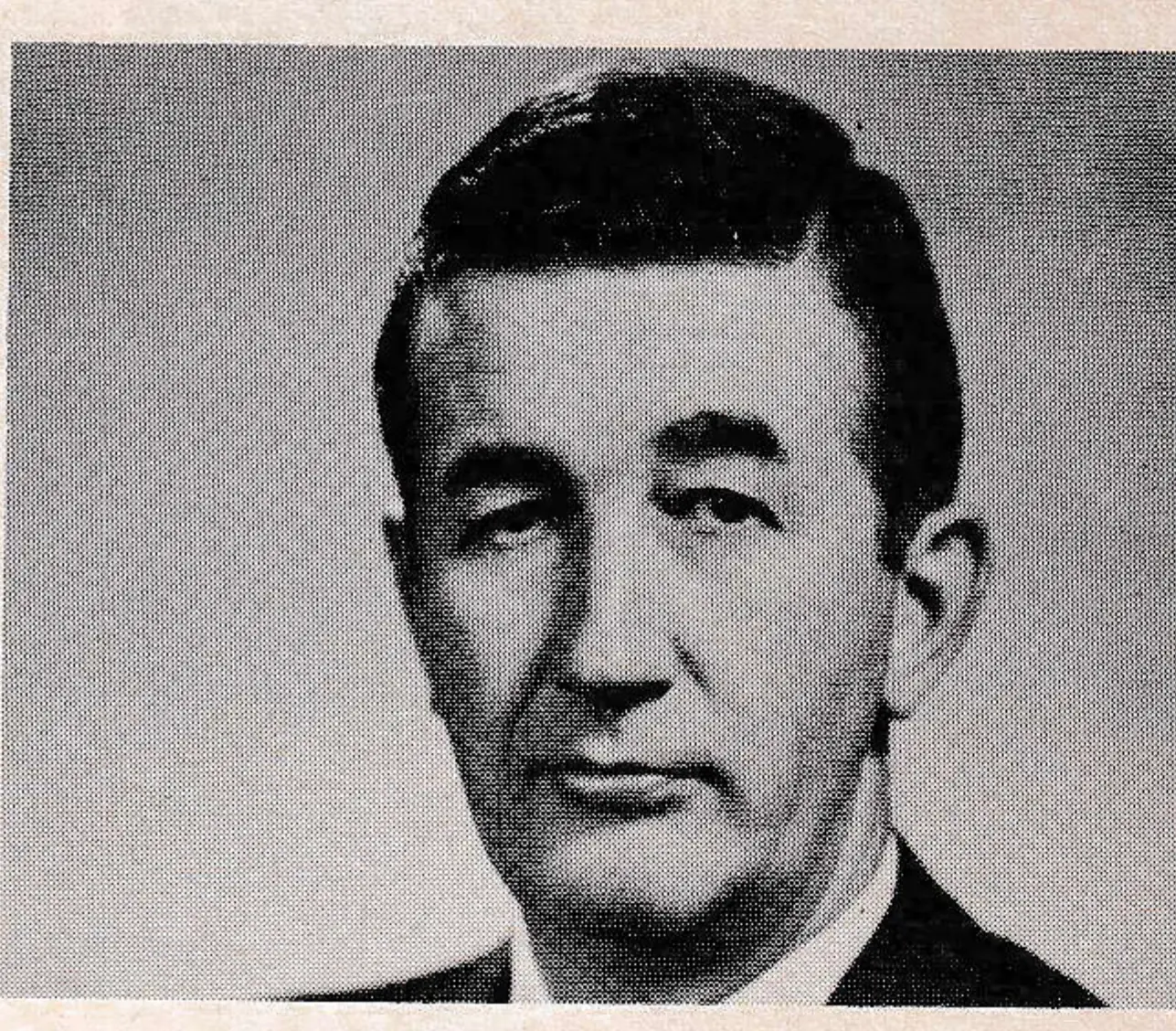
McGuire named Forest Service chief; Cliff retires
John R. McGuire has been named successor to Forest Service chief Edward P. Cliff, who has just retired.
Cliff was at his post for a decade. He had started with the Forest Service in the depression years as an assistant ranger. During his term, Congress created a National Wilderness Preservation System (made up in part of National Forest lands), forest and land management research was expanded and the multiple use concept of forestry developed. Under the multiple-use plan equal emphasis is placed on non-commodity values of the forest, such as recreation and wildlife, along with the commodity aspects, such as timber and minerals.
McGuire started with the Forest Service while in college as a junior field assistant at Columbus, Ohio. Prior to his appointment he was associate chief.
- William Walsh, snowmaking systems designer and consultant, has entered into an agreement with Dufresne-Henry Engineering Corporation to collaborate on ski area engineering services. Dufresne-Henry has worked for ski area clients since 1955 on problems of water supply, sewage disposal, highway and airport design, master planning and other engineering services.
- Andrea Mead Lawrence, two time gold medal winner in the 1952 Winter Olympics, has been appointed hill manager of June Mountain in the Sierras.
- After a year’s absence, Hugo Bohm has rejoined the Boyne Country organization as public relations manager. Previously he served as manager of resort operations for Traverse City and as sales representative with Wolverine World Wide, the ski equipment supplier.
- Former Olympic skier Suzy Chaffee has been named director of creative skiing at Mount Snow, Vt. Miss Chaffee will represent the area at various freestyle skiing events as well as work with Ruedi Wyrsch in coordinating freestyle training camps and freestyle competitions at the Vermont ski area.
- Park West president and general manager Don Redmon has been appointed president of the Utah Ski Association. Bill Leavitt of Alta succeeded him as vice president and Welden Daines of Park City was named secretary-treasurer.
- Douglas A. Geiger has been named general manager of the Inn-at-the-Peak by Peek ‘n Peak Recreation Inc. of Chataugua County, New York. During construction of the inn, Geiger will serve as project manager.
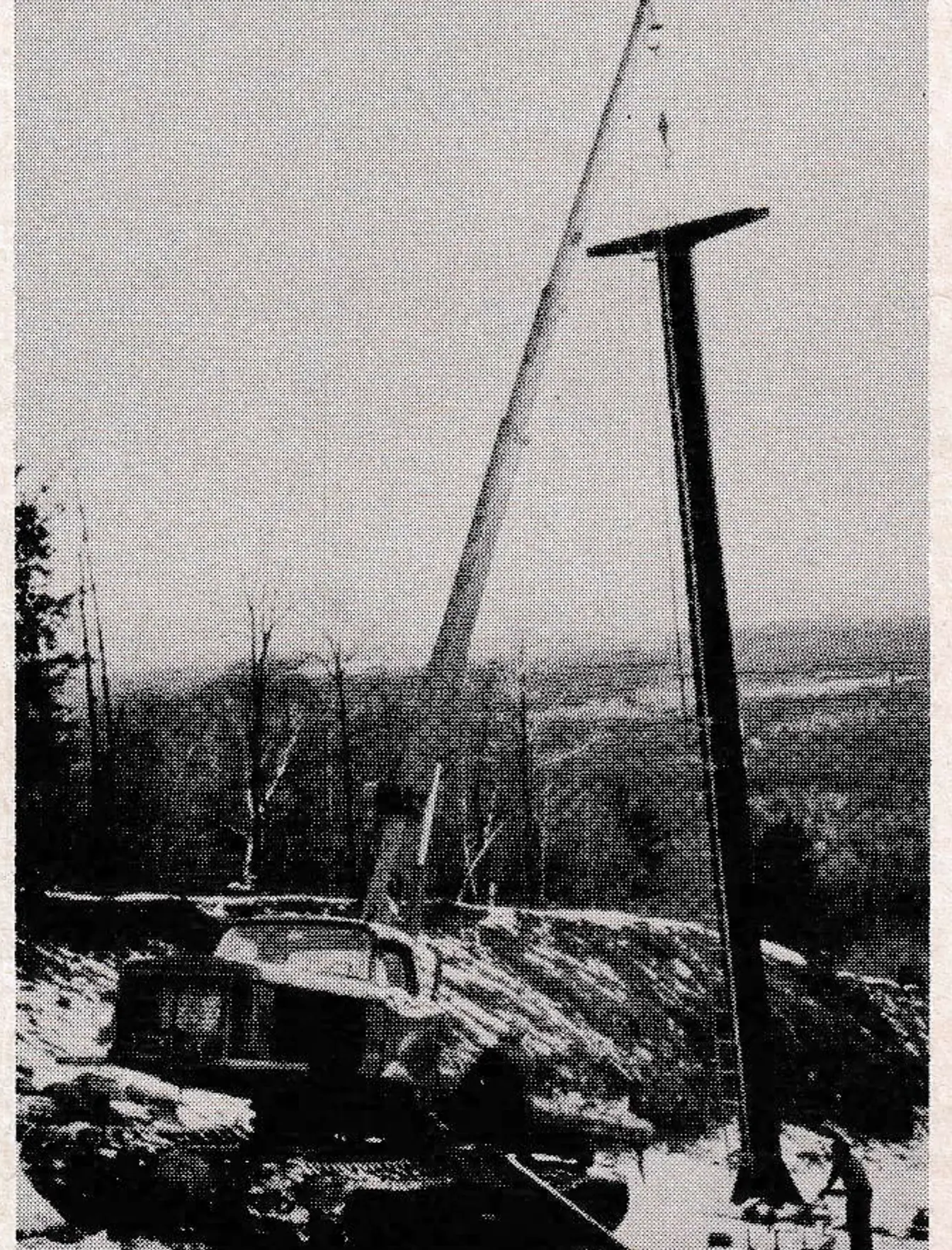
Slope Grooming
Bombardier wins four firsts at NSAA meet
Bombardier Limited of Valcourt, Quebec, picked up the lion’s share of the trophies at the NSAA Mid-Winter Meeting at Waterville Valley, N.H., winning four out of seven divisions. Thiokol followed strong with two first place awards.
In the engineering design event the Bombardier 300 placed first, Kassbohrer (Diesel) second and the Thiokol 2100 third. In the driver comfort division the Bombardier 501 placed first, Thiokol XT 2500 second and Kassbohrer was third. The Bombardier 501 won again for draw bar pulling power, but the second through fifth places were scooped up by Thiokol models 391 V-8, 2100-D Hydro., XT 2500 and 1201 respectively.
Tucker won a first for mogul planing and Dressing with the Tucker with Mogul Planer; the Thiokol 2100 V-8 with Mogul Planer took second and the Thiokol 2100 6 Blade & Dresser bar took third.
Thiokol won its two first places in the hill climbing contest, followed by the Bombardier 501 and Tucker V-8, and in hard snow preparation with the Thiokol 2100 V-8 12-foot powdermaker followed by the Tucker V-8 Catamount and the Bombardier 501 12-foot powdermaker.
Bombardier’s Skidozer 501 was named the best overall vehicle at the show.
Promotion
“Ski New England” promo slated for fall ski shows
Five New England ski areas are planning to give the Western and European resorts some competition in the race for vacation skiers. Representatives from Waterville Valley, N.H., Sugarloaf, Me., and Stowe, Killington and Mt. Snow in Vermont have plans underway for a “Ski New England” promotion that will be introduced at ski and travel shows next fall.
Sugarloaf general manager Harry Baxter says that the thrust of the promotion will be to highlight the excellent instruction available in the East, accessibility, the opportunity to learn GLM on well groomed slopes and lower rates. Advertising will be aimed at the East Coast as far south as Miami and as far west as Chicago.
The group is now in the process of making agreements for tie-ins with rental car agencies and the airlines.
Chicago areas pitch skiers through ad combine
Taking a lesson from the pages of Ski 93 and Ski the Rockies, two area marketing consortiums organized to promote skiing in New Hampshire and in the West, five Chicago ski areas this season combined their advertising to stem the flow of skier traffic away from the windy city.
Concerned over the ever-mushrooming growth of new areas to the north that were threatening to siphon off business, the Playboy Club at Lake Geneva, Wilmot, Fox Trails, Villa Olivia and Four Lakes combined their efforts into “Ski Chicagoland.”
The group ran a series of map-illustrated ads in local media pointing out that there were “five fun-filled areas, all close by.” Results proved once again the marketing axiom that when it comes to promotion, there’s nothing like numbers.—Shirley Rose Higgins
Japanese skiers flock to Mt. Alyeska
Strange as it seems to travel 4,000 miles across the Pacific Ocean just to powder hounds are doing just that and thousands more may be following suit.
With her own slopes and resorts overloaded and a long way on crowded trains and buses from downtown Tokyo, Japan’s skiers are taking advantage of group and bulk fare packages to the slopes of Alaska’s Mt. Alyeska, the state’s largest ski resort, just 40 miles from Anchorage in Girdwood.
“Many of our Japanese visitors are reaching snow faster by coming here go skiing, hundreds of Japanese on a seven-hour nonstop flight than by skiing at home in Japan,” says Alyeska resort general manager Chris von Imhof.
Alyeska first instituted the program last winter through Alaska Airline’s ticket office in Tokyo, and prospects for area growth are now even brighter since Japan Air Lines has received traffic rights to carry passengers between Tokyo and Anchorage.—Steve Burseth
Racing
U.S.-Canadian World Cup races in doubt
Despite the dramatic finale to the 1972 men’s World Cup circuit, tired race officials and coaches, complaining racers and severe criticism in the European press may bring about drastic changes in the schedule of ski competition’s leading world trophy.
The new schedule to be discussed at an FIS World Cup Commission meeting at the end of April in Berne, Switzerland. The pretext for the discussion is the pressured situation which arose during the final week of the World Cup when five men’s meets took place in five days at three different resorts, all within several hours drive of each other—a situation due to a great extent to the problems on the North American World Cup circuit.
The Lauberhorn-Wengen downhill, slated for January, was cancelled and rescheduled for Val Gardena and a slalom was added at Pra Loup when a Heavenly Valley slalom was cancelled reportedly because the course had not been prepared for warm weather.
The downhill scheduled for Heavenly Valley had to be cancelled due to problems with the Forest Service. It was held at Crystal Mountain, a less than perfect alternative since the course at 1½ minutes was too short. The housing conditions for European racers and coaches at Crystal Mountain were equally disappointing since 275 competitors and officials showed up instead of the 100 expected. Finally, the men’s giant slalom course at Banff, Alberta, was poor because of heavy snowfall.
Thus the European traditionalists, sharp opponents of using any area outside the Alps, were given an opportunity to attack.
Strong voices in the FIS are pleading in favor of cutting down drastically the North American World Cup circuit—to one meet in the U.S. and one in Canada.
It’s expected that the World Cup Commission will pay much greater attention to the choice of North American resorts, and will ask for solid guarantees from those who have no experience in holding such races.
In addition to affecting the North American circuit, the outcome of this year’s meeting may eventually change the format of traditional European meets.
In order to give competitors a better chance to recover, two downhills could be scheduled for one meet and two slaloms or a slalom and GS for another, with a four-to-five-day rest period in between.
The scoring system could also be reworked so that World Cup points are based on a proportion of the best results during a specific period of the season. Under the present system out of seven to nine races held in each of the three Alpine contests, only the five best results in each category count toward World Cup points.—Serge Lange