


DEVELOPMENT
Christie buys Saddleback, plans expansion
John Christie, through his newly formed firm Big Rangely Corp., has purchased the Saddleback Ski Area in Rangely, Me. from the Gannett Publishing Co. at a reported price of $500,000. The former vice president and general manager of Mt. Snow Development Corp. left his duties at Mt. Snow at the beginning of October to be succeeded by Lee Jorgensen, former director of the Utah Travel Council.
Christie emphasized that he was and continues to be on good terms with Marc Fleischman, president of Davos. Corp., which recently acquired Mt. Snow, and Walt Schoenkenecht, developer and president of the area. Schoenkenect will, in fact, serve as one of five directors of Big Rangely and Christie will remain on the board of Mt. Snow.
In discussing his motives for the move Christie, who will be owner and president at Saddleback, said “This is a business I’m committed to, and like everyone else, I’ve always looked forward to the opportunity of running an area of my own.”
Through the sale, Christie acquired all of the area’s assets as well as a lease on the 1,700 acres of land which the ski complex occupies. A purchase agreement was recently completed with the Hudson Pulp and Paper Co. which transferred the lease from Gannett to Christie to purchase 20 acres of land at the base of the ski area for the development of an integrated commercial and residential village.
Other plans for expansion include the opening of the area to the east of the existing lift and trail facilities where Christie plans a 7,000-foot chairlift on the 2,000-foot vertical.
Aspen Skiing Corp.’s million skier visits sets record
The Aspen Skiing Corporation became the first area operator ever to surpass 1 million skier visits when it recorded a whopping 1,009,326 in skier attendance last season.
Skier visits on the 21 lifts operated by ASC in the Aspen complex (Aspen Mountain, Buttermilk/Tiehack and Snowmass) last year totaled 797,128. The 222,198 skier visits at Breckenridge, Colo., also operated by ASC, brought total skier attendance to the record figure.
ASC’s phenomenal season was underscored further by the fact that its volume during 1971-72 amounted to 30.5 per cent of all skier visits recorded in the entire state.
Stagecoach area, Steamboat neighbor, opens this year
Stagecoach, a new ski area, will open this winter 18 miles south of Steamboat Springs, Colo., along the Yampa River. A four-season development with a 36-hole golf course and 800-acre lake is planned, according to George MacDonald of Mountain Research Associates, the ski area consultant company which is heading up the planning of the area.
Three Heron chairlifts are scheduled this season, though it is estimated only two lifts will be ready when the area opens. Stagecoach will have a vertical of 1,700 feet (in the first phase of its development) with 10 trails stretching over 7½ miles.
Jim Prendergast, formerly director of racing at Mt. Werner, Colo. will be area manager and Dave Tripp, formerly of Waterville Valley, N.H., will be mountain manager.
Canada kills plan for Lake Louise development
The Canadian government killed a plan advanced by Village Lake Louise to build a $30 million year-round recreation complex at Lake Louise, Alberta.
The plan, which began forming in 1968 in response to a call by the federal government for more year-round facilities at the Canadian Rockies resort, would have turned the area into Canada’s foremost ski resort, according to company officials. In addition to new lifts and trails, the development would have meant vast hotel, motel and condominium accommodations at the foot of the existing Whitehorn ski runs.
In turning down the venture, Jean Chretien, minister of northern development, said the plan was “too large and could result in an undue concentration of visitors and residents in the area.”
Main opponents of the plan were conservationist groups who said that the plan did not conform to the National Park concept. Opposition also came from a minority of Canadian nationalists, who regarded the plan—a joint venture of Imperial Oil (a subsidiary of Standard Oil of New Jersey which reportedly spent $300,000 in surveys and plans on the proposal) and Lake Louise Lifts—as a sell-out to U.S. interests.—Peter Cooper
Ontario grants loan assist for Thunder Bay areas
The Ontario Provincial government has announced that Thunder Bay’s five major ski areas, combined under the banner “Ski Thunder Country,” will receive a loan of $1.35 million, to be matched by the ski areas on a dollar-for-dollar basis thus making $2.7 million available for improvements and expansion.
The areas involved are Candy Mountain, Loch Lomond, Mount Baldy and Pine Top, Mount McKay and Mount Norway, all of which will soon be involved in new projects—new lifts and trails, lodging additions, expanded snowmaking—for the 1972-73 ski season.
USFS scouts investors for Washington area
The Forest Service is looking for investors for a potential winter sports area within the Wenatchee National Forest 16 miles northwest of Chelan, Wash. The site is at Stormy Mountain overlooking Lake Chelan.
“An opportunity exists,” says the Forest Service, “to develop, under conditions of a term special-use permit, a winter sports resort including a day lodge, parking areas, water and sewerage systems, power and communications systems, ski lifts and tows, ski slopes and runs and an aerial passenger tramway to provide public access to the area.”
Investment required for Phase I development of the resort, including the access tramway, is estimated at $3.6 million. In addition, 3.5 miles of access road would be required.
The Forest Service, which has published a public notice on the area, hopes to determine the extent of interest in the development. If interest in the area is shown, says the Forest Service, an environmental analysis is the next step, this ultimately leading to the issuance of a prospectus inviting development proposals.
MARKETING
Eight Sierra areas in new promo group
California and Nevada resorts, long considered the step-children of western American skiing, have gained a measure of equality with the more favored areas of Utah and the Rocky Mountains. At least in the eyes of United Airlines.
The newly-formed “Ski the High Sierra Association” has been included in the airline’s promotional plans for the 1972-73 season, along with Utah and the “Ski the Rockies” group. United will concentrate all of its ski activity in the west, spending a total of $800,000 on luring eastern and midwestern skiers to the three regions.
The new association includes eight resorts: Squaw Valley, Alpine Meadows, Northstar, Heavenly Valley, Kirkwood Meadows, Bear Valley (all in California), Mt. Rose and Ski Incline (both on the Nevada side of Lake Tahoe).
Negotiations are also underway with Hertz and Avis to include car rentals in the packages which would be designed to fly skiers into San Francisco for the weekend, when Sierra slopes are saturated with skiers from the Bay Area, then send them up by rent-a-car for five days of midweek skiing.
Interchangeable lift tickets will be sold good for eight areas on any seven consecutive days for $50, or for five consecutive days Monday through Friday for $37.50.—Robert Lochner
Nastar changes in store this season
Changes in the NASTAR program aimed at strengthening ski area identification and increasing skier participation have been made based on recommendations made by the Nastar Ski Area Council in Sun Valley last Spring.
The medals will be larger this season and each will have the name of the area imprinted on it as well as the words “gold”, “silver” or “bronze.” Each area will purchase its own supply of medals at a cost of 40¢ each, and they will be awarded at the end of every race. The council felt that the increase in price was compensated for by the immediacy of being able to present the medals directly after the race and having the area name included.
As an incentive to increasing skier participation, the council also recommended that the winning percentages be increased to allow 10 per cent of the field to win a gold, 15 per cent a silver and 25 per cent a bronze.
Bibs will again be supplied at no cost to the area and they will be of the disposable variety used two years ago. There will also be a new Nastar poster and brochure as well as a continuation of area advertising in SKI Magazine.
The Nastar staff is also working up a new computer program to trim the time in mailing out handicap cards. A Nastar guide on running a race, publicizing Nastar and ski school tie-ins is also underway.

ENVIRONMENT
Area development: The tug of war goes on . . . and on
The ski area/environmentalist struggle continues, and it is questionable at this point which side, if either, is ahead.
Recent developments include the modification of an injunction obtained by the Sierra Club which temporarily halted development of new ski areas in wilderness sections of national forests; court approval for Kirkwood Meadows to continue with construction near Carson Pass in the California Sierra; and a U.S. Forest Servire order halting construction of a major ski resort, Trail Peak-Horseshoe Meadow, also in the Sierra.
The Sierra Club injunction, obtained in a suit filed in June of 1972, enjoined any activities in any “de facto wilderness” which would affect their character as wilderness prior to a determination of the suitability for preservation under the National Environmental Policy Act (NEPA).
The modification obtained by the USSA, acting in the skier interest, permits the development of new ski areas, ski touring trails and mountain huts as long as the U.S. Forest Service complies with the NEPA. Speaking for the USSA, recently-appointed president William F. McClure said, “The USSA has always supported full compliance with NEPA,” but added that what the USSA did object to was the Sierra Club effort to hold up all new ski area development pending a decision on the club’s challenge to the Forest Service’s on-going study of potential additions to the wilderness system.
In the Kirkwood Meadows action, the Sierra Club had claimed that the U.S. Forest Service had not filed an environmental report as required by the NEPA. Stating that it would be a “monumental injustice” to halt construction at Kirkwood at this point, U.S. District Court Judge Philip C. Wilkins gave Kirkwood the go-ahead on the grounds that Kirkwood had cooperated fully with the Forest Service in meeting all environmental requirements.
The Forest Service halt to construction of the Trail Peak-Horseshoe Meadow area of the Sierras was also triggered by environmental issues. Conservationists claimed that the lodges and other facilities built for skiers would create a crushing summer use that would threaten the golden trout and fragile vegetation in the Cottonwood Lakes area.
In ruling out the development, Inyo National Forest supervisor Everett L. Towle said that “environmental constraints, associated high costs of development and present unavailabiity of Los Angeles Department of Water and Power lands in the area made a major ski area unfeasible at this time.”
The Forest Service did, however, grant Trail Peak one concession—the nod was given to cross country skiing at the area.
MEETINGS
Lift engineers form professional group
The Society of Aerial Tramway Engineers, a group of registered engineers involved in the design, construction and operation of aerial passenger tramways, was formed at an organizational meeting held in Sun Valley, Idaho, this summer.
Elected as interim officers were: Robert Kinney, chairman, David Fleming, vice chairman, Charles Dwyer, secretary-treasurer; Victor Hall, membership chairman; Samuel Bomasso, constitution and by-laws chairman.
Vail symposium draws panel fire; overdevelopment hit
Vail took a thrashing in early August, as a lot of big guns zeroed in on the famed Colorado resort. Yet the battering was incurred at the ski area’s own request, and the net result was one of the most far-reaching and creative growth programs ever hatched at a public conference.
Entitled “The Second Vail Symposium—Agenda for Tomorrow: A New Growth Ethic,” the two-day session lured several hundred to hear former Secretary of the Interior Stewart Udall keynote a panel discussion about the growth problems of ski areas and their adjoining valleys.
But despite the generally polite tone of the first morning’s session and the national scope of the discussion, by the first afternoon the dialogue had become heated, often angry, and the target narrowed to Vail and Eagle County: What could Vail Associates and the Town of Vail do to halt the erratic overdevelopment of the valley outside the town’s corporate limits? And when was it going to get around to doing it?
Although the federal and state governments were attacked for failing to help solve these problems, the panelists agreed that the only effective answer was immediate local action: that Vail, through a program of both extensive regional planning (including environmental inventory) and active countywide citizen involvement at all stages, had to take the initiative—including providing the initial front-money.
Other suggestions included an increase in and reallocation of town and county taxes; a moratorium in development until a program is created; compensating land-owners subsequently not allowed to develop their property commercially; and developing a public-relations program to reduce the conflict between town and county and to get county residents interested in attacking the problem.
Panelists included Assistant Secretary of the Interior John W. Larson and Forest Service chief John McGuire for the government; planner-architects George B. Beardsley, Frederick A. Benedict, Desmond Muirhead, George T. Rockrise and Robert Royston; journalists I. William Berry and Merrill G. Hastings, Jr., and educator Daniel J. Schler. Vail Associates president Richard L. Peterson was also among the speakers.
Students, area men join in Ascutney management seminar
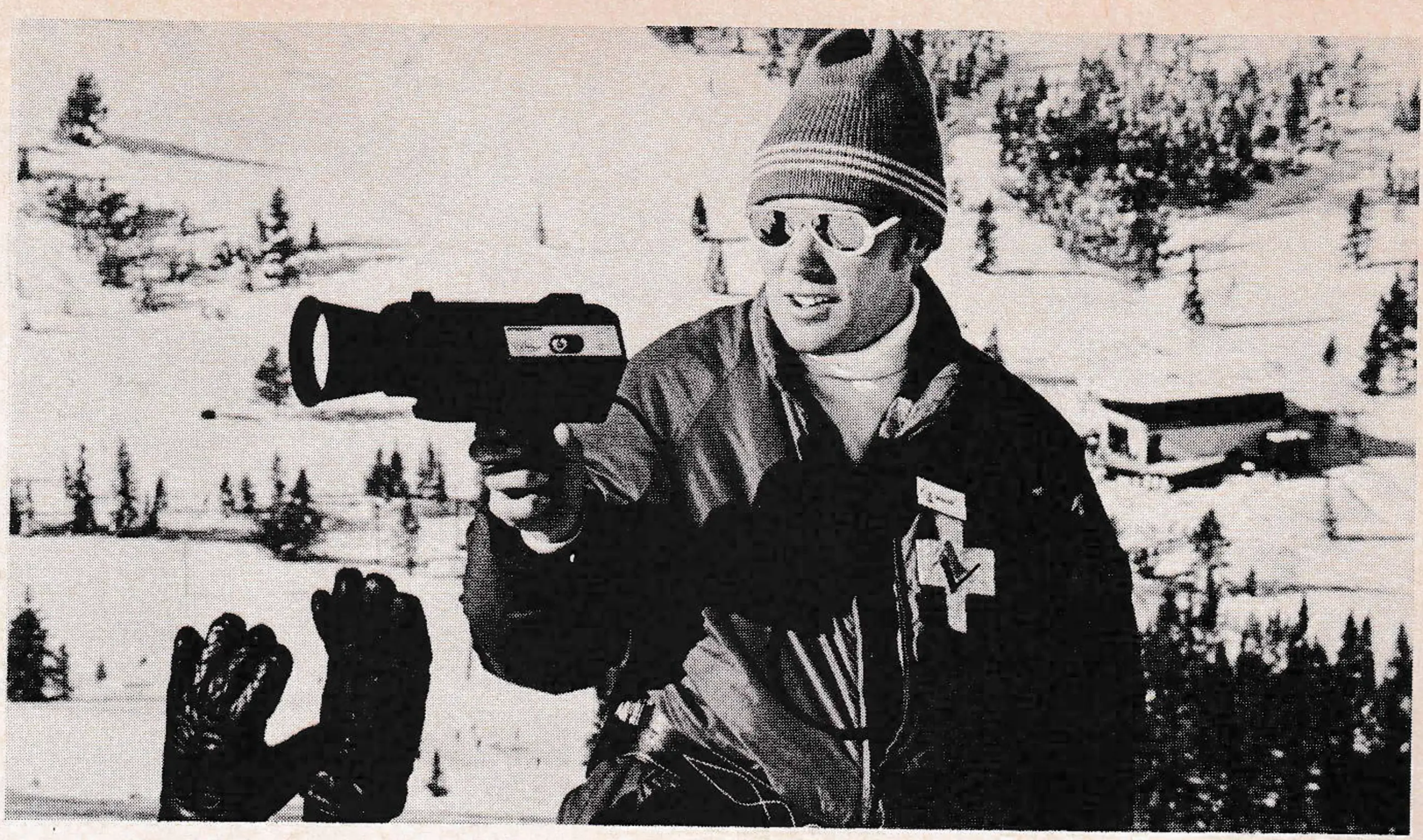
Minutes after the keynote address by Mt. Snow’s John Christie, students attending the Kissing Bridge Corp./University of Vermont ski area management seminar at Mt. Ascutney August 20-25 were introduced to a short who’s who in New England skiing. Sixty participants, from four colleges and 18 ski areas, packed the upper floor of the area’s base lodge to listen to the experts.
The program, aimed at giving both the area manager and the uninitiated the broad how-to’s of running a ski area, was prompted by what Kissing Bridge president Bob James described as the need “to get ski area operators and college students together, to have a look at our industry for its career opportunities and challenges.”
Sno-Engineering president Jim Branch, in an industry overview, said, “The primary motivation a skier uses in selecting a ski resort is the quality of skiing experience. Ski area master planning, which involves concentrated market research and detailed economic planning, is keyed to that need.”
Turning to the measurement of an area’s potential, Branch said, “Since it generally takes at lease three years for a ski area to become profitable, master planning takes a very hard look at the prospective mountain’s location and exposure, snowmaking possibilities, and hydrological resources, slope gradients, surface conditions and base terrain.
“Shortcomings in any one of these,” he added, “can make a site totally unsuitable for a ski area because of the costs involved.”
On the subject of food service, SAM’s Richard McHugh said “Food receipts represent a ski area’s second largest revenue source. Your lift income should run three or four times food service revenue per skier day. Unless your food service department can generate at least 90¢ per skier day, you’re in trouble.”
John LaGuardia, treasurer at Waterville Valley, N.H., turned to the area of ski area profit planning.
“A crucial problem when implementing profit planning,” he said, “is the accuracy of the data acquired from the middle managers and the shift supervisors. A system must be devised that encourages a two-way flow of information. It should allow supervisors to compare their expenses with their budget constraints at frequent intervals and give financial planners an accurate overall picture at any point in time.”
Among other ski industry figures who spoke at the seminar were Sepp Ruschp from Stowe, Vt.; Butternut Basin’s owner and general manager, Channing Murdock; Killington, Vt. grooming chief Jim Staeck; Mt. Snow lift manager John Plausteiner; and Harry Pollard, director of the National Ski Patrol System.
PEOPLE
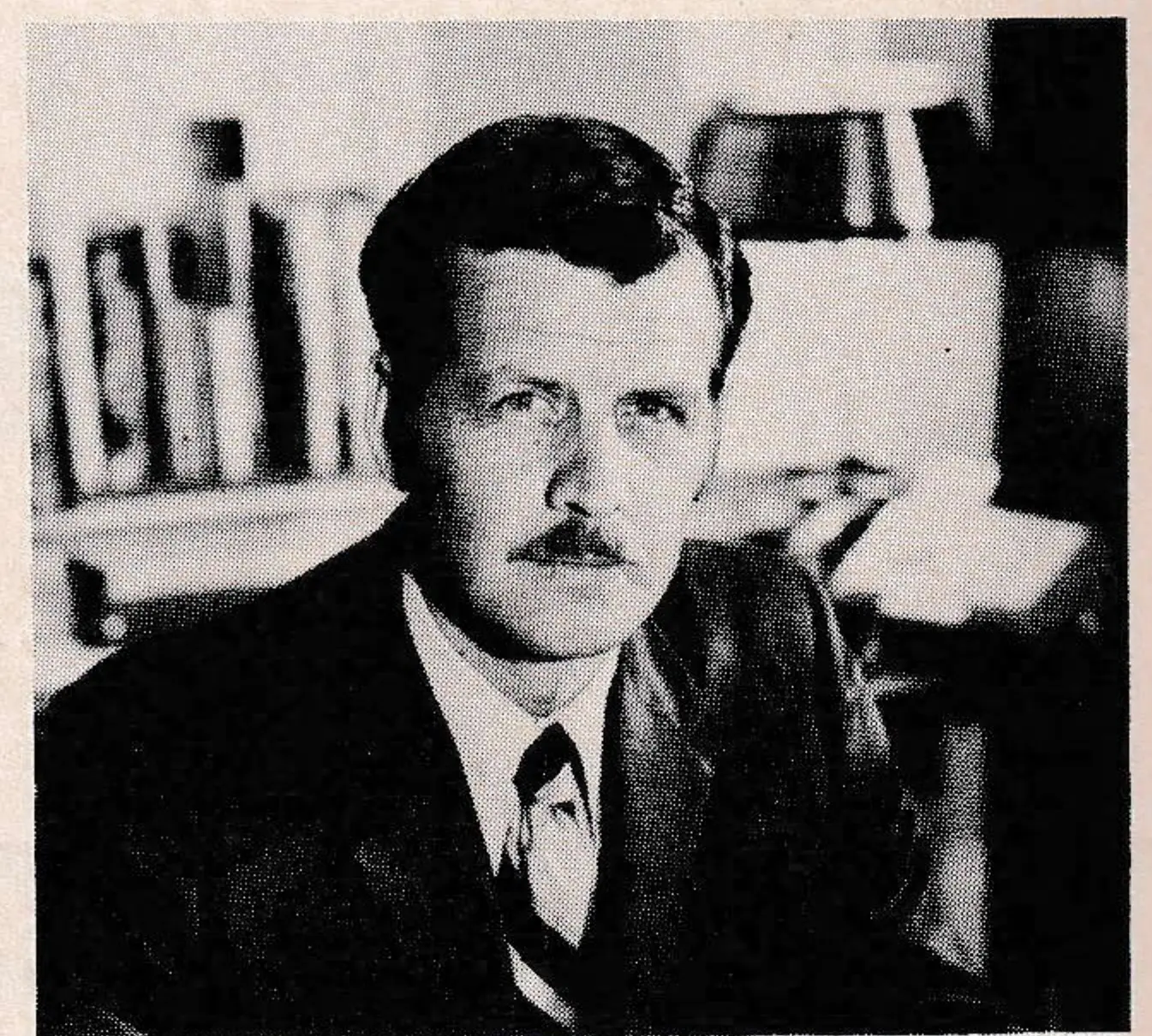
- Lee Jorgensen, former director of Utah Travel Council, has been named vice president and general manager at Mt. Snow, Vt. He replaces John Christie, who recently returned to Maine to direct operations at Saddleback ski area, the resort he recently bought.
- Alaska’s William McClure, vice president of the United States Ski Association for two years under Charles Gibson, has been elected USSA president.