


Stratton buys Bromley Ski Area
“The acquisition of Bromley complements our operation in many ways,” said Stratton president Donald Tarinelli. Referring to the often sun-drenched slopes of Bromley’s southeastern exposure, he said, “Our warm, sunny sister’s reputation for being well-managed and for providing friendly service is exactly in keeping with how we feel at Stratton.”
Bromley’s Albertsson told SAM, “The sale is in the best interests of Bromley in the long run,” and he stressed the economies possible through combined promotion, computer operations and reservations services. “Savings of between $250,000 and $300,000 are possible in the first year alone.”
The sale, for which no price was disclosed at press time, involved all of Albertsson’s ownership, which is about 97% of all Bromley’s assets, summer and winter, including the Alpine Slide and the Bromley Village real estate operation. The sale did not include the Alpine Slide Corporation (Inventex), which is still owned by Albertsson, and which will continue to be run by him.
There will be no personnel changes, according to a Stratton spokesperson, and Albertsson becomes a member of the Stratton Board of Directors and Executive Committee.
The acquisition merges two different but complementary operations. Bromley, essentially a day operation, was the creation of the legendary Fred Pabst some forty years ago. It has six lifts, handling a 6,000/hour capacity, and is 83% covered by snowmaking. Its Alpine Slide, the first in the country, is a substantial profit center in summer.
Stratton, eleven miles away, is a year-round resort, with nine lifts, a capacity of 10,500/hour and 59 miles of trails. There is also extensive snowmaking. Summer activities at the resort center around a John Newcomb Tennis Center and the Golf Academy.
Mont Tremblant sold to Quebec group
Venerable Mont Tremblant Lodge, the Laurentian creation of the late Joe Ryan more than 40 years ago, has been purchased by a group of investors called “Federarion des Caisses d’Entraide Economique de Quebec,” Mr. Jacques Gagnon, President.
Plans were announced for an ambitious construction program estimated at $26 million, of which about $4.5 million is projected for the first year. Of this amount, roughly a third will go for two triple chairs, a third for extensive snowmaking and the balance for grooming machinery and improvements in all services and equipment.
Phase II, scheduled for completion in 1981, will add two more triple chairs, while Phase III calls for a $3 million gondola the whole length of the South Side, which is targeted for the 1982-83 season.
There are no new trails on the drawing board for the time being, because a comparative study has shown that the present trail system could accomodate twice as many skiers as Tremblant’s present lift capacity. However, long-term plans include the eventual development of neighboring La Tuque, Pangman and Johannssen peaks.
Corcoran buys N.H. ski area
After two bankruptcies in ten years, Bobcat (formerly called Onset), N.H., has been purchased by a group of investors led by Tom Corcoran, president of Waterville Valley. The auction purchase price of $220,000 made in mid-September is $60,000 less than was bid in August by the area’s former owner. When he failed to raise the money, Bobcat went back on the block.
Bobcat is located on the same mountain as Crotched, separated by a strip of land about one mile in width at the bottom and 300 yards at the top. Taking advantage of the this proximity, Corcoran formed a management company with Tim Gannett, owner of Crotched. The two areas will be leased to the management company and Gannet will operate both under the name Crotched Mountain Ski Areas—East and West.
Eventually it is planned that the two areas will be linked with a chairlift and trails, if the strip of land can be purchased from the current owner, Landvest, Inc. For this season, snowmaking at the two areas will be doubled, grooming improved and the Bobcat lifts up graded.
Corcoran’s aim in purchasing the area is to develop a ski facility close to a major marketplace—Boston is 75 miles away. When linked the two areas will have a vertical drop of close to 1,000 feet. In addition night skiing and snowmaking are expected to attract day skiers. The Crotched management company has options to purchase both ski areas with developable land for recreation as well as homesites.
Haystack leased to Vermont group
The often financially troubled Haystack ski facility, just three miles from Vermont’s Mt. Snow gondola, has been leased by Associated Mortgage Investors to Tri-Mountain Leisure Group, a Vermont corporation whose parent company owns two Vermont ski areas, Round Top in Plymouth, and Birdseye Mountain Park in Castleton.
The new management will continue to operate Haystack as a complete ski center with both alpine and nordic skiing. A few interior changes are planned to improve Haystack’s lodge services. Restaurant, bar, and rental equipment operations, formerly leased to concessionaires, will now come under direct supervision of the new manager.
Management also plans to introduce what it calls “bold price incentives and innovative skier services to create first-rate skiing in a friendly atomsphere at affordable prices.”
Killington opens October 10, a record for earliness
Killington Ski Area opened for skiing October 10, setting a new opening record at this central Vermont resort. Last season the area opened October 16.
Skiing was on an average of one to two feet of machine-made snow on a half-mile section of the challenging Cascade Trail on upper Killington Peak. Killington claimed to be the first ski area in the country to open for skiing this fall.
“Autumn skiing,” says Foster Chandler, vice president and marketing director, “is for people who are as crazy about skiing as we are.” At an elevation of 4,241 feet, Killington Peak experiences below-freezing temperatures almost nightly in October to allow machine snow to be made.
Ski Patrol bill gains support
Senator John Heinz (R-Pa) has testified before the Senate Judiciary Committee on the need for legislation to provide a federal charter for the National Ski Patrol System.
Heinz, who was a member of the ski patrol in college, is supporting a bill (S-43) to ease reporting and registration for the NSPS. If he is successful, NSPS would enjoy status similar to that of the American Red Cross and the Boy Scouts of America. The measure, which is cosponsored by Utah Senator Orrin G. Hatch, involves no expenditure of federal funds.
The effort got another boost when Ted Kennedy decided to support it. ASF president Joe Prendergast has also testified before Senator Kennedy’s Judiciary Committee in favor of the charter legislation.
On October 30, Senator Hatch announced that the Judiciary Committe had reported out the legislation. The next step is for the whole Senate to act on it. Following that, the whole procedure must be repeated in the House.
Golf course touring program
In a dealer letter dated September 1, Trak Incorporated president Bill Danner outlined a series of promotional programs the company was embarking upon to keep the interest in cross-country skiing high through the 1980’s. One of the programs is an aggressive plan to convert golf courses into winter ski touring centers. Working with the National Golf Association (NGA) and the National Ski Touring Operators Association (NSTOA), Trak will offer their services in helping golf courses get into the touring center business.
To develop their plan, Trak is relying on the NGA for names of courses across the country. Trak is using the new NSTOA operator’s manual as the text for each center’s development. The new NSTOA manual was completed with the assistance of Trak consultants and the company will urge all golf course touring center program participants to obtain the manual through membership in NSTOA.

The winter conversion program is seen by both golf course and established touring center operators as a definite boost to their businesses. For the course operator, his season is extended to year ’round; for the established ski touring center operator, the urban and suburban centers will become feeders for his operation. “Successful ski touring center operators have told us that they look at the golf course center as a perfect feeder for their centers,” Trak’s Chris Crosby noted. “People will go out to the urban or suburban centers for a while and get involved in the excitement of track skiing. Soon, they’ll want to expand their skiing horizons and visit a bigger, more remote center with more varied terrain.
“We don’t want to compete with major established touring centers, rather open golf course touring centers in areas where no touring centers exist.”
Bonasso appointed B-77 Administrator
Sam Bonasso, an engineer with Alpha Associates, and a man with long experience in the ski field, was appointed by NSAA to its newly-created position of Administrator of the B-77 ANSI Standards. NSAA is the principal sponsor of the ANSI (American National Standards Institute) Standard B-77.1.
The NSAA Board had determined that there was a need to streamline procedures involved in getting revisions made in the standards. The new position is seen by NSAA as a catalytic one, with Bonasso coordinating all the input and review that is required before revisions take effect. A revised B-77 Standard is targeted for the fall of 1981.
Bonasso was chosen from among several applicants for the position. He will report to Bill Norton, chairman of NSAA’s B-77 Task Force, but will operate as an independent administrator on NSAA’s behalf.
Aerial Tramway Symposium held
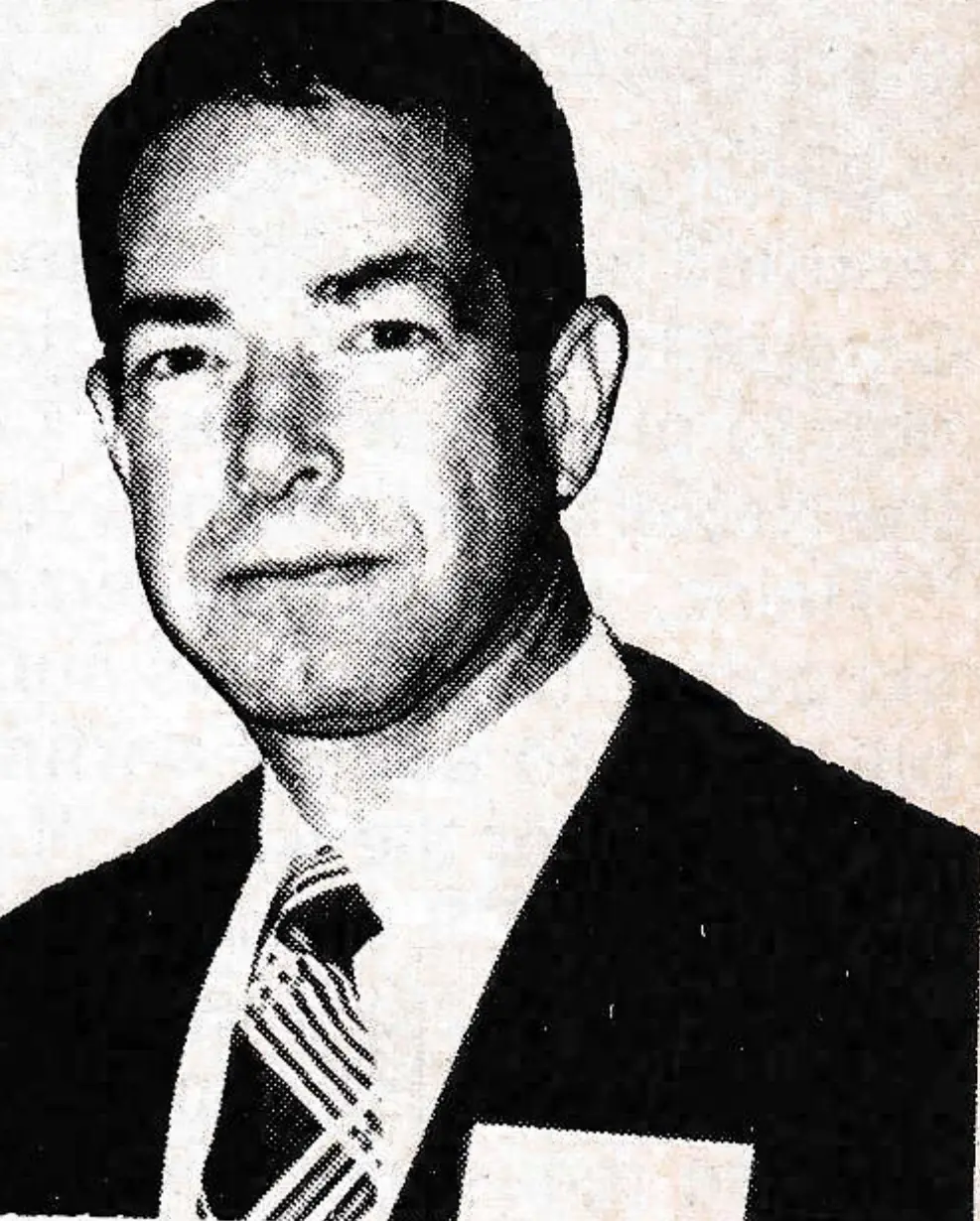
An international symposium on Enclosed Carrier Tramways was held in late August at Snowbird, UT. It was the first such meeting held under the sponsorship of the North American Contenental Section (NACS) of the International Organization for Transport by Rope (OITAF).
Overall responsibility for the meeting was in the hands of OITAF-NACS President Charles F. Dwyer, while the immediate planning and execution of the affair was handled by Bob Ficker of Snowbird and Howard Anderson, of Western Areas Ski Insurance Program.
The symposium was hailed by all present as being outstanding, and on the strength of it the members of OITAF-NACS voted unanimously and enthusiastically to prepare a bid for the next OITAF International Congress.
The International Congress, held every seven years, is a major event, requiring substantial funding by the host country and detailed logistical plans to accomodate the many hundreds of people who come from all over the world.
The Snowbird meeting was attended by 96 registrants and 43 accompanying persons. The registrants came from England, Switzerland, Sweden and Australia, in addition to the U.S. and Canada.
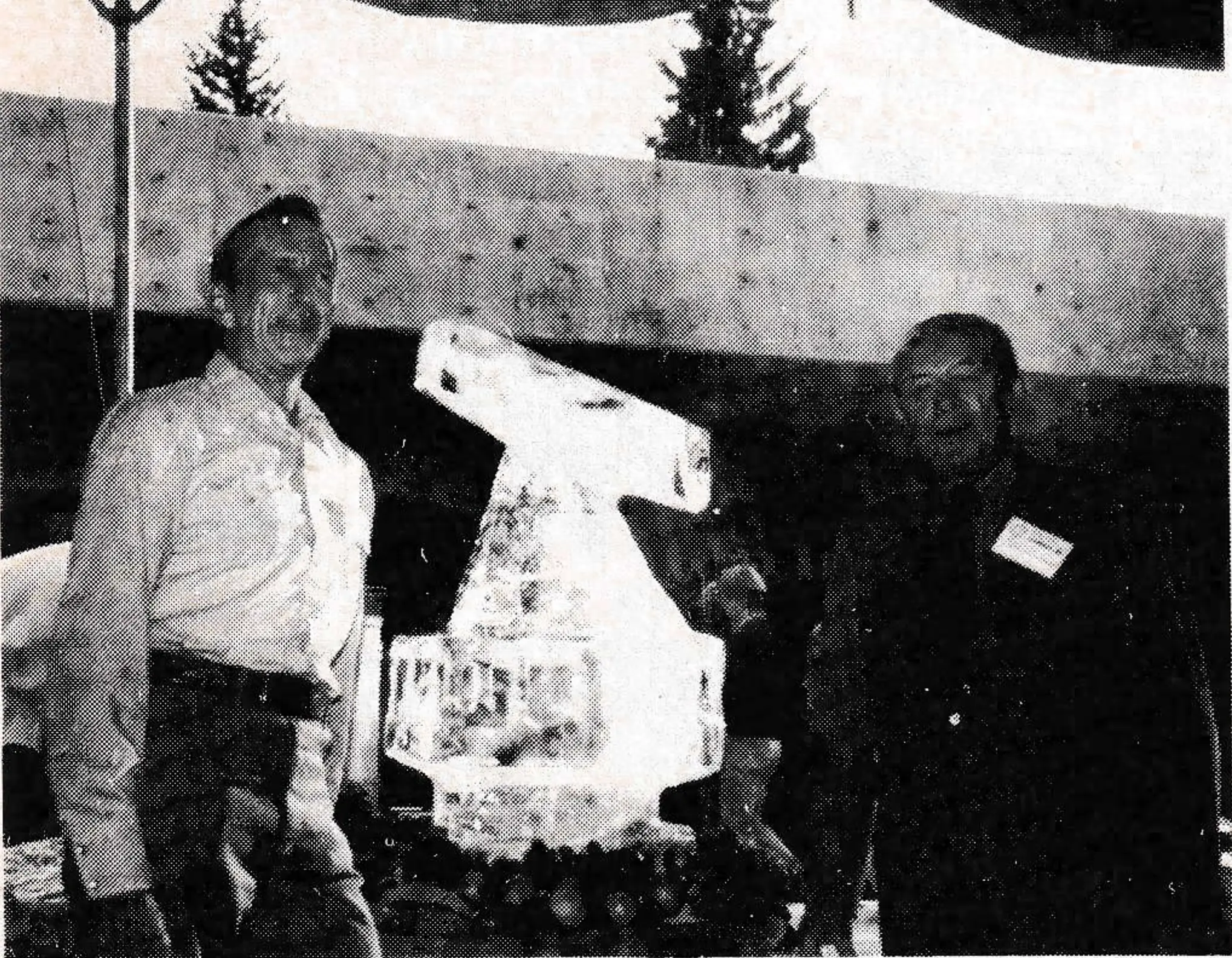
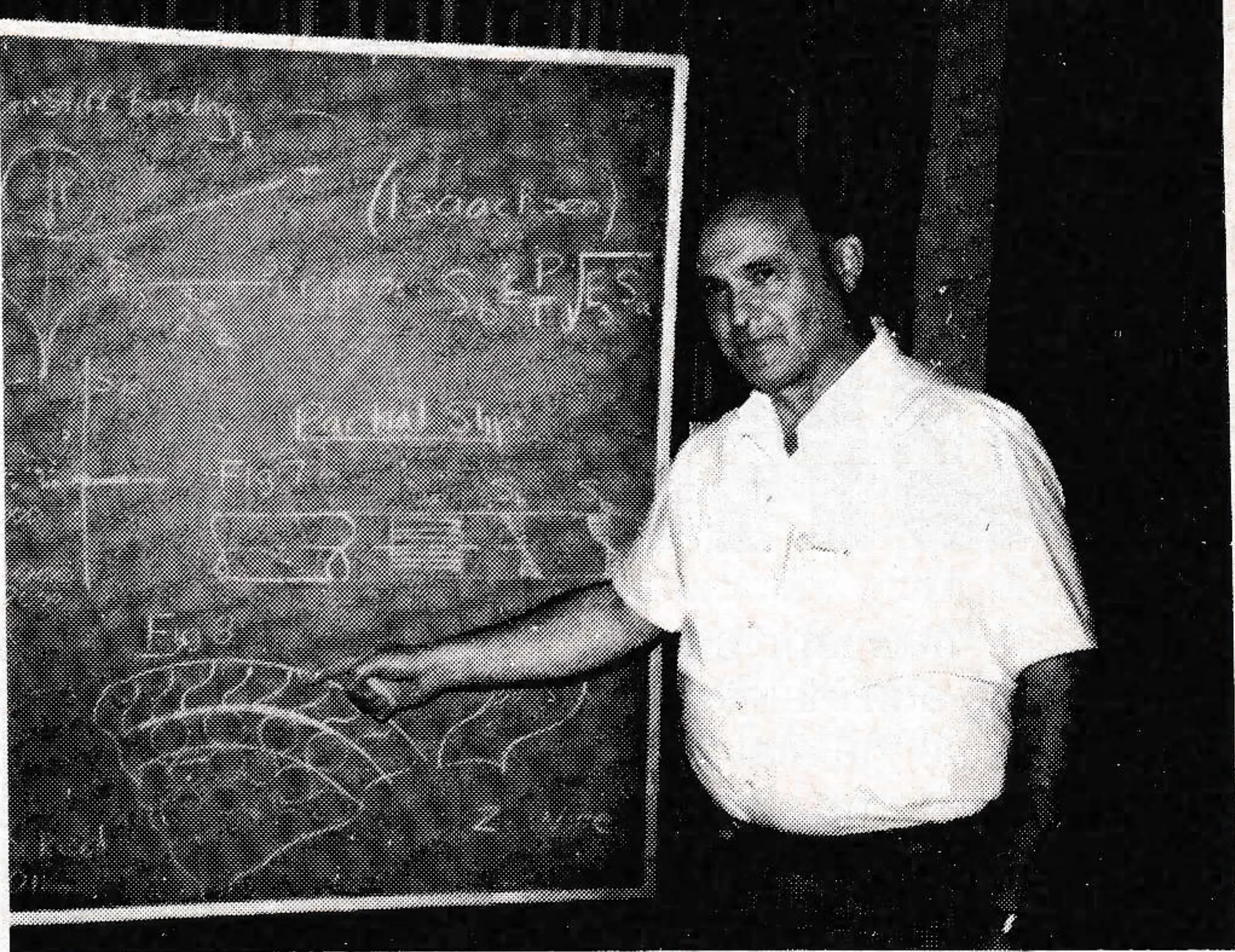
The central theme of the symposium involved reversible tramways, gondolas, and other enclosed carrier systems. Topics on the four-day agenda covered highly technical design considerations, maintenance and operational problems, promotional efforts, insurance, legal considerations, and standards for aerial tramways.
Internationally recognized speakers on technical considerations included Dr. Gabor Oplatka of Zurich, Switzerland, (familiarly known as the “Rope Pope,” a nickname that makes him shudder); Max Clayton, of London; and Robert McLellan of Vancouver, Canada. Speakers on the subjects of wire rope and track strand, non-destructive testing, operational considerations, and related subjects represented major North American tramway operations, ski areas, and industry interests.
The symposium was punctuated by social events including buffet breakfast, symposium luncheon, a western-style barbecue, and the symposium banquet. A ladies program included aerial tramway rides and mountain walks, athletic events, and an excursion to Salt Lake City.
Information concerning the seminar and the sponsoring organization is available from OITAF-NACS Secretary-Treasurer Phillip Berger, 5505 South Riley Lane, Salt Lake City Utah 84107.
Nordic distributors
Baechler, the Swiss-based designer and manufacturer of cross-country track-setting equipment, has changed its North American distribution arrangements, thus changing the information carried in the Summer issue of SAM.
Jaeger Ski Enterprises, of Vancouver, B. C., continues as the sole Canadian manufacturer and distributor and is currently authorized to distribute in the U. S. directly, or through their agents, Clark and Todd, of Goshen, VT. Valley Engineering withdrew from the licensing arrangement it negotiated with Baechler.
Reliable Racing Supply, of Glens Falls, NY, has also been appointed a distributor for the U. S. market and is expected to remain a distributor even if Baechler licenses another firm to manufacture the equipment for the U. S. market.
Baechler equipment is being used for track setting at the 1980 Winter Olympics at Lake Placid, NY.
Forensic engineering
Cadcom, a prominent forensic engineering firm, has announced the formation of a ski industry service group. The purpose of the group will be to aid ski areas and ski equipment manufacturers with regard to legal defense, as well as to suggest preventive safety measures. Cadcom has provided similar services for several years to utility companies, insurance companies, attorneys, and various product manufacturers.
The ski industry services group will be headed by Dr. Charles O. Heller who, in addition to being a lifelong skier, holds a doctorate in structural engineering, has acted as a consultant to ski manufacturers, and has experience as a forensic engineer in ski accident cases. “I will be assisted by a staff expert in all engineering disciplines as well as in sports medicine,” said Heller.
Cadcom, a division of ManTech International Corporation, has a staff of fifty professionals and its headquarters are located at 107 Ridgely Avenue, Annapolis, Maryland 21401.