Light Guard
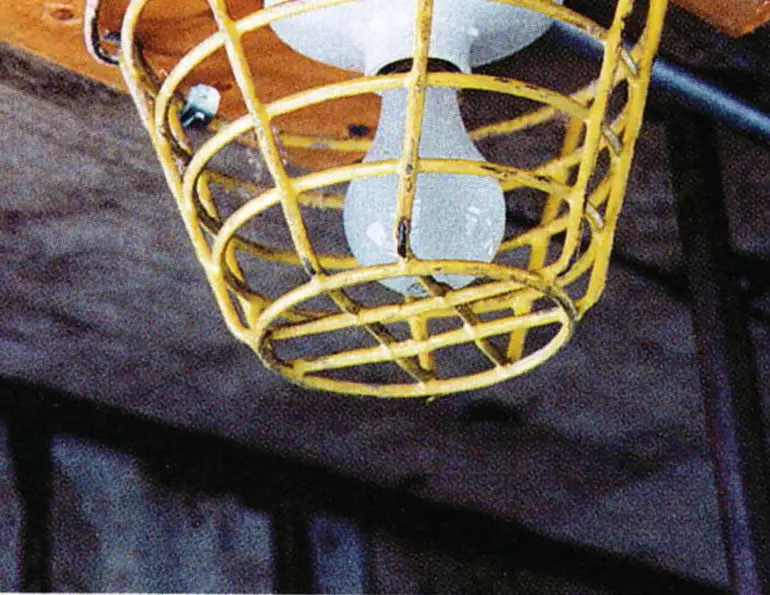
When the insurance inspector visited Snow Snake Ski Area in central Michigan, he cited the area for not having a protective guard over the light bulb in the motor room ceiling. A guard is very important and can prevent accidental breakage of the light bulb and those injuries that are connected with broken glass.
Not one to be counted down, Dale Brockway, president, set out to fix the problem before the inspector left town. He got the bright idea to use golf ball baskets recycled from the driving range at the resort.
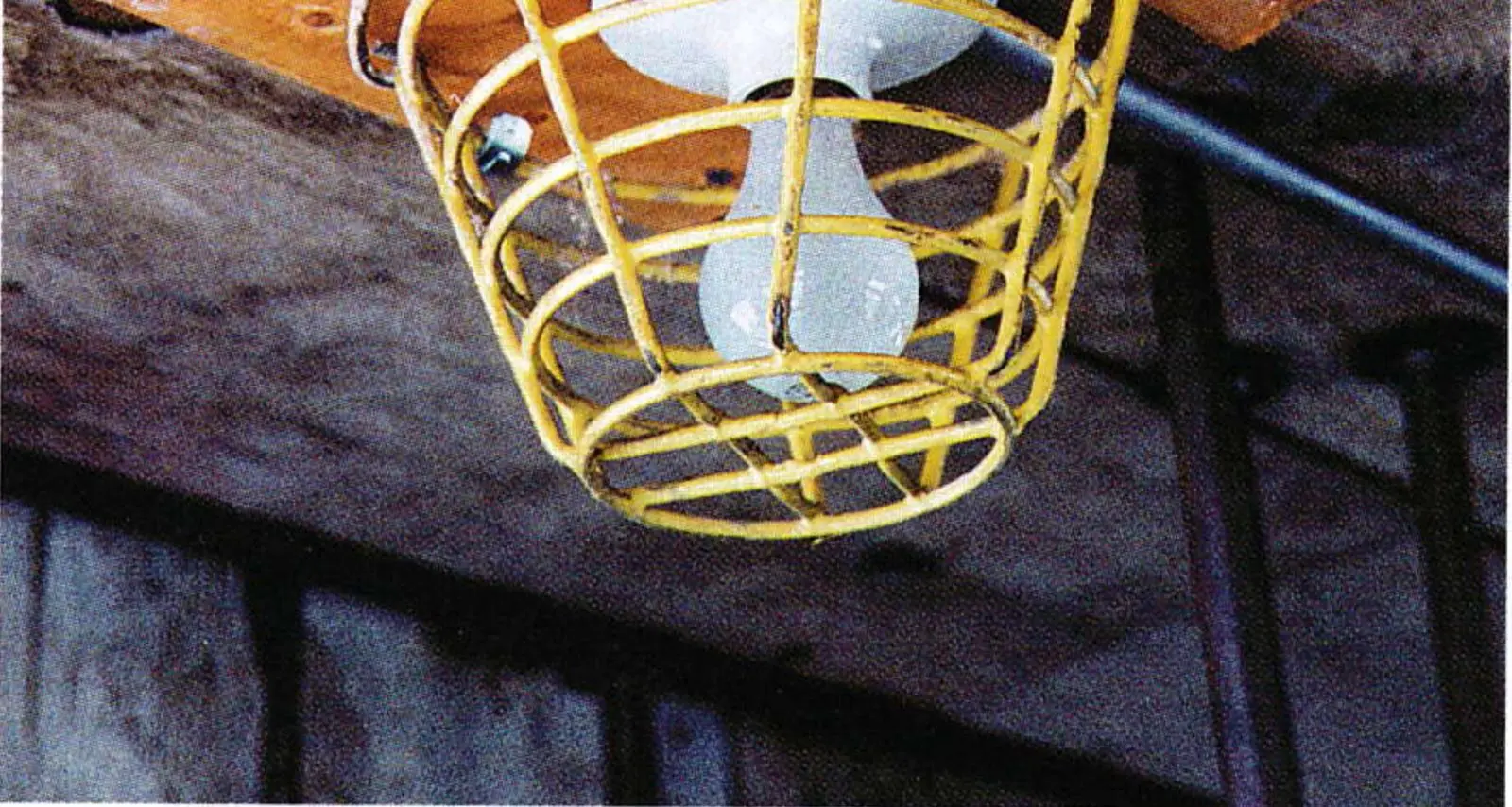
Eyeing the situation, Dale figured that a 35 baller would be the right size. To secure it to the ceiling a discarded 2 x 4 stud was cut into two eight-inch long pieces. Nails were used to secure the wood spacers and the basket over the light bulb.
Now when the ball baskets are running low on the driving range—run to the motor room!
Remote Control
Trying to operate the auxiliary engine from the overhead motor room on an old chair lift can be a real pain. Because the clutch lever on an old chair is usually placed behind the engine, it is difficult to see what is taking place below. At Wilmot Mountain, Wisc., the task was further complicated because the resort was forced to do all its summer maintenance with the help of APUs, due to the demand penalty enforced by the local power company—not an uncommon situation at many resorts.

In order to rectify the situation, Mountain Manager Bill Lill devised a system of levers and hinges making it possible to control the lift from the ground as shown in this photo. He accomplished this by first connecting a rod to the clutch handle that normally is operated by hand, extending it all the way to the back of the motor room. A pivoting lever and hinge arrangement translates the lever control 90 degrees toward the ground. Lastly, a long pole was connected to the pivot lever in order to control it from the ground. A great idea that works very well and saves time and money.
Measuring Up
ANSI B77 is particular about how to measure the stopping distance of a surface lift. According to section 6.1.2.11.2, “The stop gate shall be so located that the distance from the stopping device to the first obstruction or point of reversal of direction of the towing device is 150 percent of the distance required to stop the empty tow operating at maximum speed.” The problem is how to measure this distance, which varies from lift to lift.
Brad Lee, mountain manager at Mount Brighton, Mich., set out with a tape measure to determine the distance from the stop gate to the first obstruction. He then calculated the acceptable limit for stopping and cleverly cut a chain of the same length and fastened it to the first obstruction, as shown in the photo.
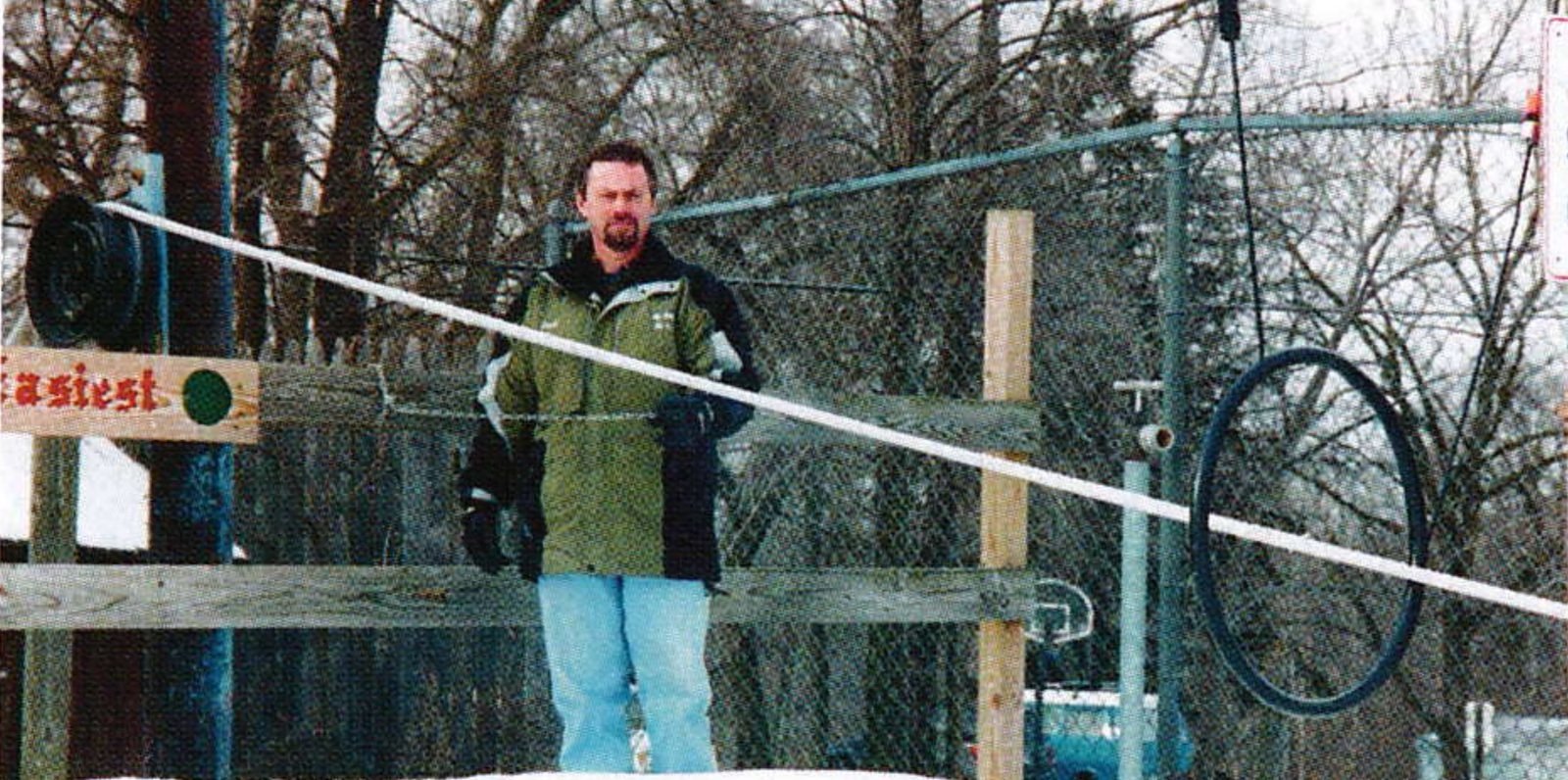
Now each morning when the rope tow brakes are being tested, the operator only needs to stretch out the chain to see if the tow stops before reaching the end of it. It is a simple solution to a daily problem. (In the photo Brad Lee is holding the end of the chain, marking the maximum stopping distance allowed.)