Photo by Sherry Dorward
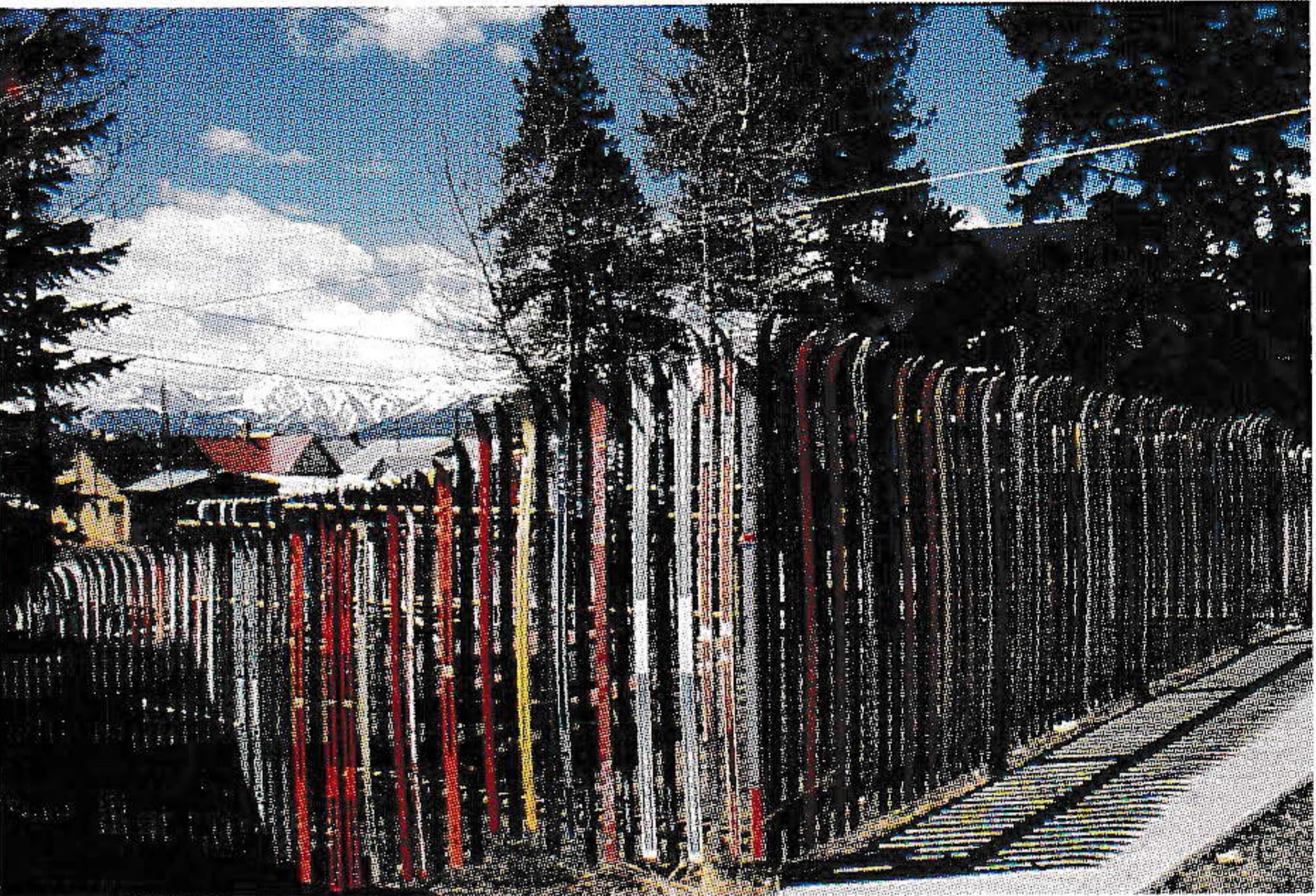
Photo by Sherry Dorward
Managers of ski resorts and ski towns are always on the lookout for ways to make outdoor areas livelier and more enticing to guests, both winter and summer. Growing numbers of festivals, food outlets, shops and galleries are helping to make public open space more active, but the importance of simpler details that embellish pedestrian spaces—the street furniture—is easily underestimated.
In a resort setting, street furniture can mean any of the small details that add richness to public walkways, plazas, patios, roads and open space. The term encompasses everything from seating to signage, flowers to flags and paving to play equipment, as well as a variety of other incidentals that help define the resort experience. Make no mistake, guests are aware of such street furniture whether consciously or not. The impressions they form—of function or funk, classiness or cheapness, love of place or lack of respect—can spell the difference between an unremarkable visit and a memorable one.
Fortunately, there is an abundance of good, commercially-available street furniture and many opportunities for creativity in making locally-crafted originals. The important thing for ski area managers is to understand the diverse functions of street furniture and to make selections that are both appropriate for the intended space and consistent with the desired image of the resort.
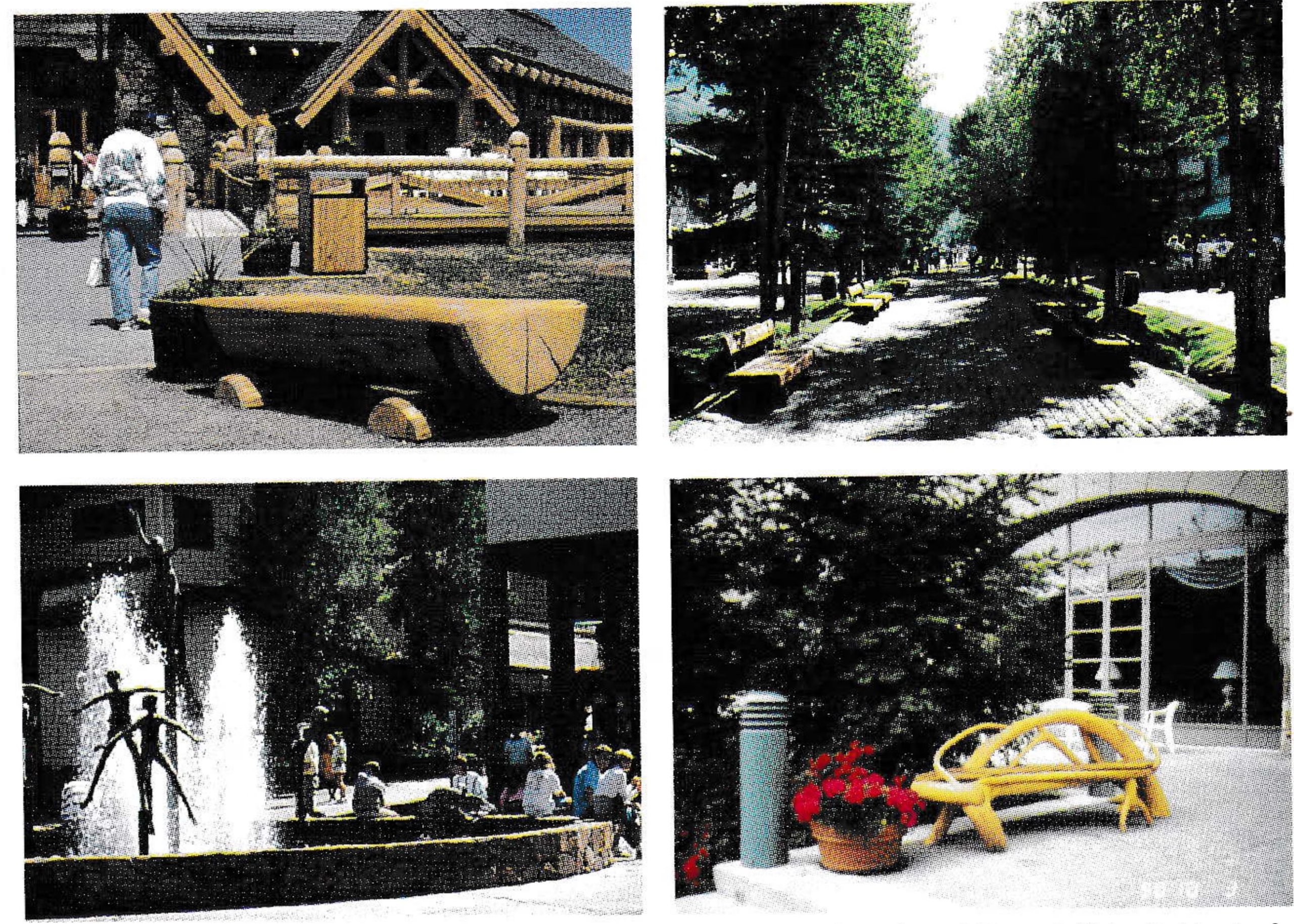
Street furniture means more than chairs. Seating is at the top of the list, of course, but there’s far more to choose from than those ubiquitous white plastic patio chairs. To supplement the standard choices available from catalogues or local stores, consider rocking chairs, light metal frame chairs, benches with backs and benches without, one-of-a-kind benches hand crafted from local materials like logs and stone slabs, as well as impromptu seating on low walls and steps. Give people the option to put their feet up or to have a picnic on a strategically positioned boulder or table.
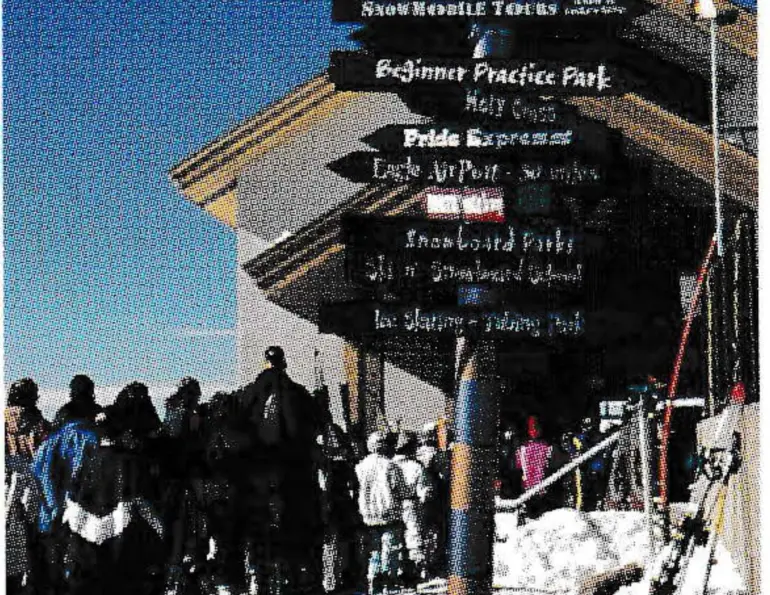
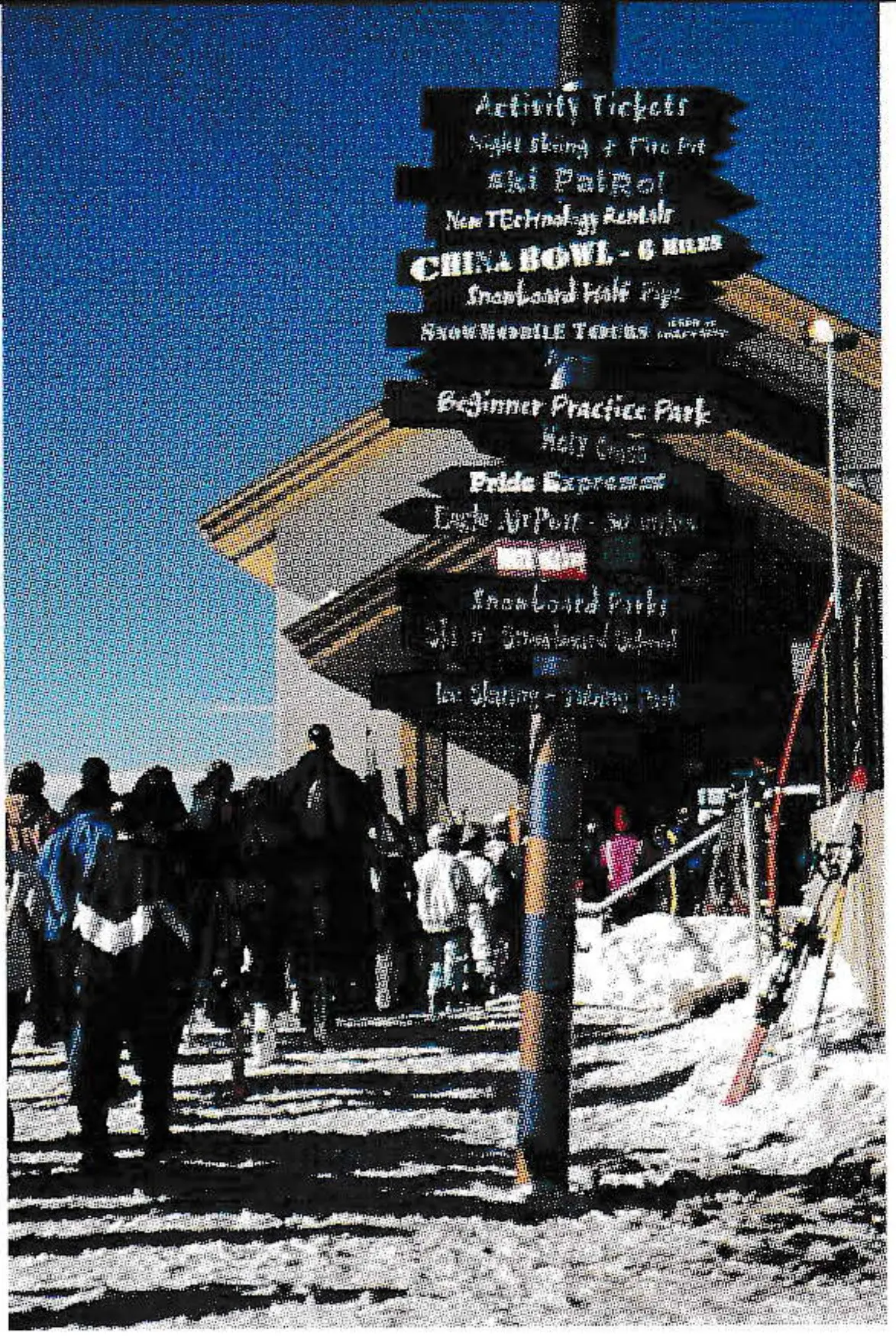
In addition to seating, the list of outdoor embellishments is potentially unlimited and can be augmented over time to build up layers of detail that make a place more interesting. Lighting, outdoor art, water features, information kiosks, newspaper and trash containers, flower boxes and pots, seasonal banners and flags, space-efficient bike and ski racks, directional and retail signs, interpretive and retail storefront display, historical monuments, play areas for tots, special clocks, gates, fences and bollards—all should be considered part of the street furniture inventory, for all of them contribute to the intricacy that attracts visitors and holds their interest.
In a resort, street furniture doesn’t mean you have to have a street. Quite the contrary, the best public spaces in an environment geared for people’s enjoyment are those where cars are not allowed to dominate. Think of pedestrian pathways as streets and try to create a variety of linked public spaces along them, from large, active gathering places at major crossroads to the smaller nooks and crannies that feel quieter and more intimately connected to the natural landscape. Seating and other design details should be tailored to reflect the spatial qualities that differentiate these spaces from one another.
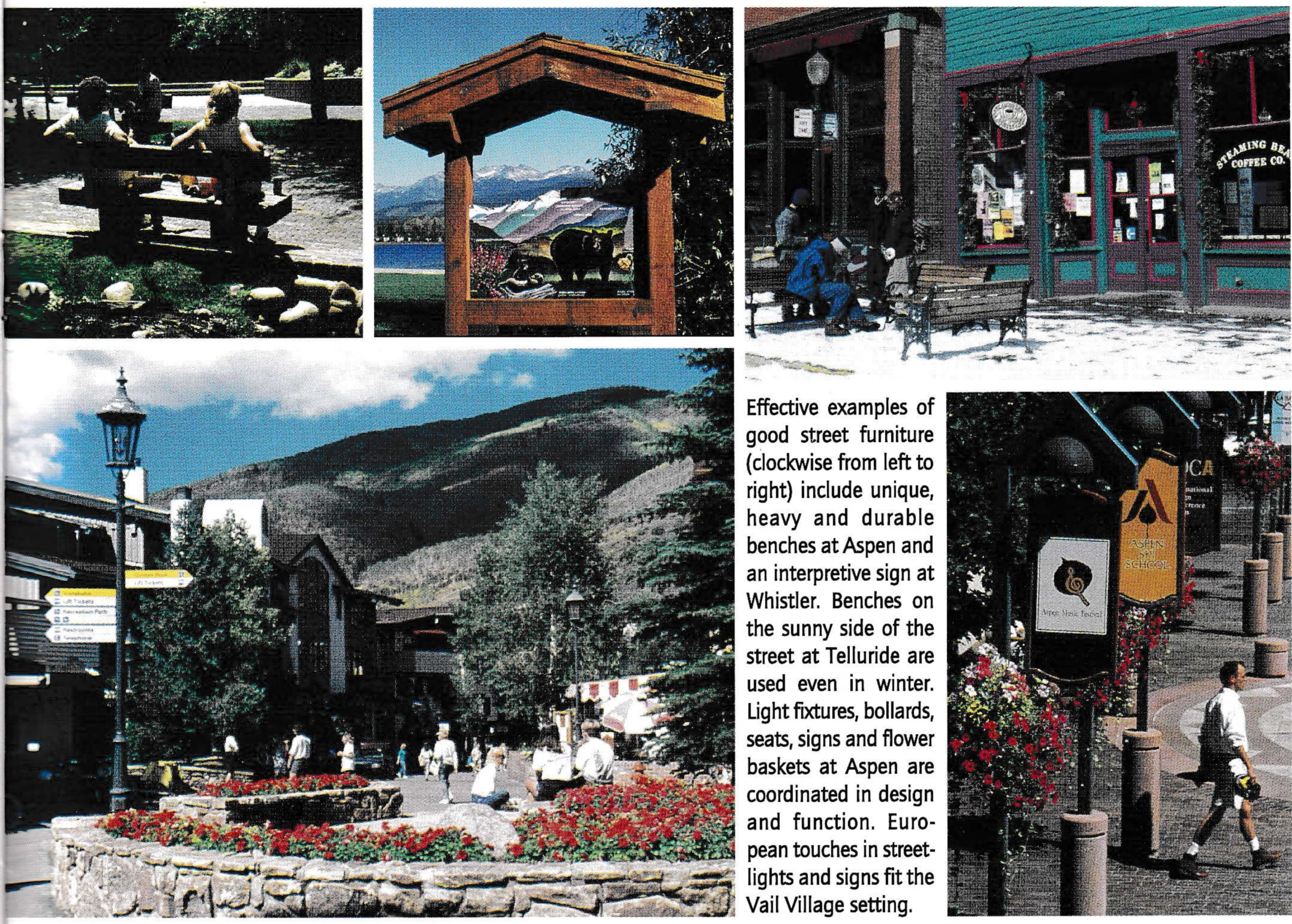
Photos by Sherry Dorward
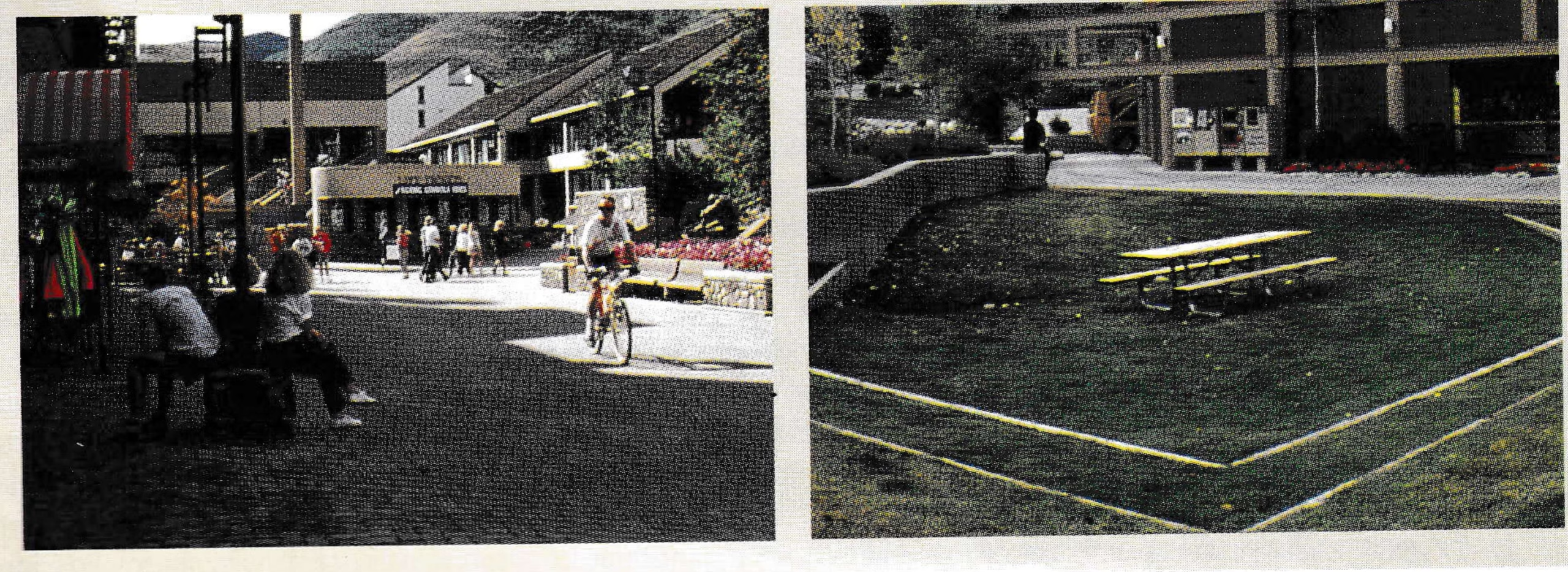
Put the seating where people want to be. Furniture isn’t worth much if the space itself doesn’t work. There are plenty of resort examples in which very expensive site furnishings have been placed where no one would ever wish to sit, either because it is too exposed to traffic or the elements or because there’s nothing of interest to look at. People like to linger and sit in places that are sunny, protected from wind and slightly out of the flow of traffic. These kinds of spaces will be used even in winter.
People-watching, especially in a tourist destination, is a favorite pastime, so take every opportunity to create vantage points where there are people passing by. Separate these spaces from the movement corridor with the suggestion of a barrier, such as a slight change in elevation, a low wall, planters or a well-crafted railing. Put seating wherever there is a scenic view, particularly of ski slopes, summits, creeks and lakes; the scenery is, after all, the main reason people come to the mountains. Lastly, treat the task of furnishing outdoor spaces just as you would an indoor room: create social groupings of seats so that people can face each other and talk.
Think “activity,” not “ornament.” Carefully chosen, street furniture has the potential to add significantly to the diversity of activities available to guests and residents. In this category are historical and commemorative monuments, public art, children’s play areas, interpretive signage, interactive water features and stage areas for spontaneous and planned events. These elements add richness to the guest’s experience and, at the same time, help to explain the character and history of the place in a way that sets it apart from other destinations. In contrast, street furnishings set out randomly, without regard for the scale, character and potential uses of a public space, will just get in the way.

You are not in a city, don’t feel compelled to make everything match. Suburban shopping malls and renovated urban downtowns led the trend into coordinated street furniture, but to mimic them in a mountain resort is a mistake. The leisure-oriented pace, more casual lifestyle and pedestrian organization of most tourist destinations suggest that urban models for selecting street furniture are not the most appropriate.
Eclecticism, individuality and unique craftsmanship are much appreciated qualities in a setting where you want to do everything you can to make people move more slowly and take time to notice details. People are encouraged to explore by the expectation that they will discover something different in their wanderings. Nothing dampens enthusiasm more quickly than predictability or the suspicion that the same thing can be found in another place.
Don’t let the snowplow driver design public spaces. By all means, consider the functionality and durability of street accessories, but don’t let the concern for snow removal alone drive their design. Reconfigure the resort’s snow removal plan, if necessary, to maintain public spaces that are sunny enough to support activity on nice winter days. Letting these areas become snow storage sites will frustrate the best design intentions.
Consider installing a pavement snowmelt system in key spaces. Position important furnishings and groundplane elements, such as light poles, bollards and trash containers, where they can’t be hit by snowplows or in spaces that do not need to be cleared of snow. Look for materials that will hold up to the elements, movable furniture that can be stored in winter and components that can be replaced inexpensively. Emphasize colors; details that cast shadows, catch snow and add relief; elements that move and add kinetic energy; lighting that warms the winter atmosphere and illuminates falling snow. Let functional elements, like signs and drain grates, become ornaments in their own right.
Flowers are power. Summer landscaping has become a big draw in mountain resorts. Annual visitor surveys at Vail, for example, indicate that the quality of its blooms is at the top of the list of attractions. The town’s spectacular Betty Ford Alpine Garden, the highest public garden in the country, is a must-see that attracts thousands of visitors each summer. Vail’s landscape architect, Todd Oppenheimer, has an anual budget of over $110,000 for labor and materials to maintain summer gardens and he estimates that merchants and property owners in the village spend at least that much for container plantings and hanging baskets of flowers in the pedestrian core. Roughly another $8,000 in public funds is spent every summer for the purchase of teak garden benches placed strategically in sunspots throughout the village core.
Photos by Sherry Dorward
In your selections, be true to the spirit of the place. This is perhaps the most important principle. Be authentic. Let street details express the special qualities that are unique to your region: its natural history, its geography, its climate and its population. Choose site furnishings and materials that also function as interpreters of local history. Let the region’s character read through in the paving patterns, the banners, the monuments and the interpretive signage at important view points. The more visitors learn about your area, the more they’ll feel right at home, every time they come.
How Not to Do It
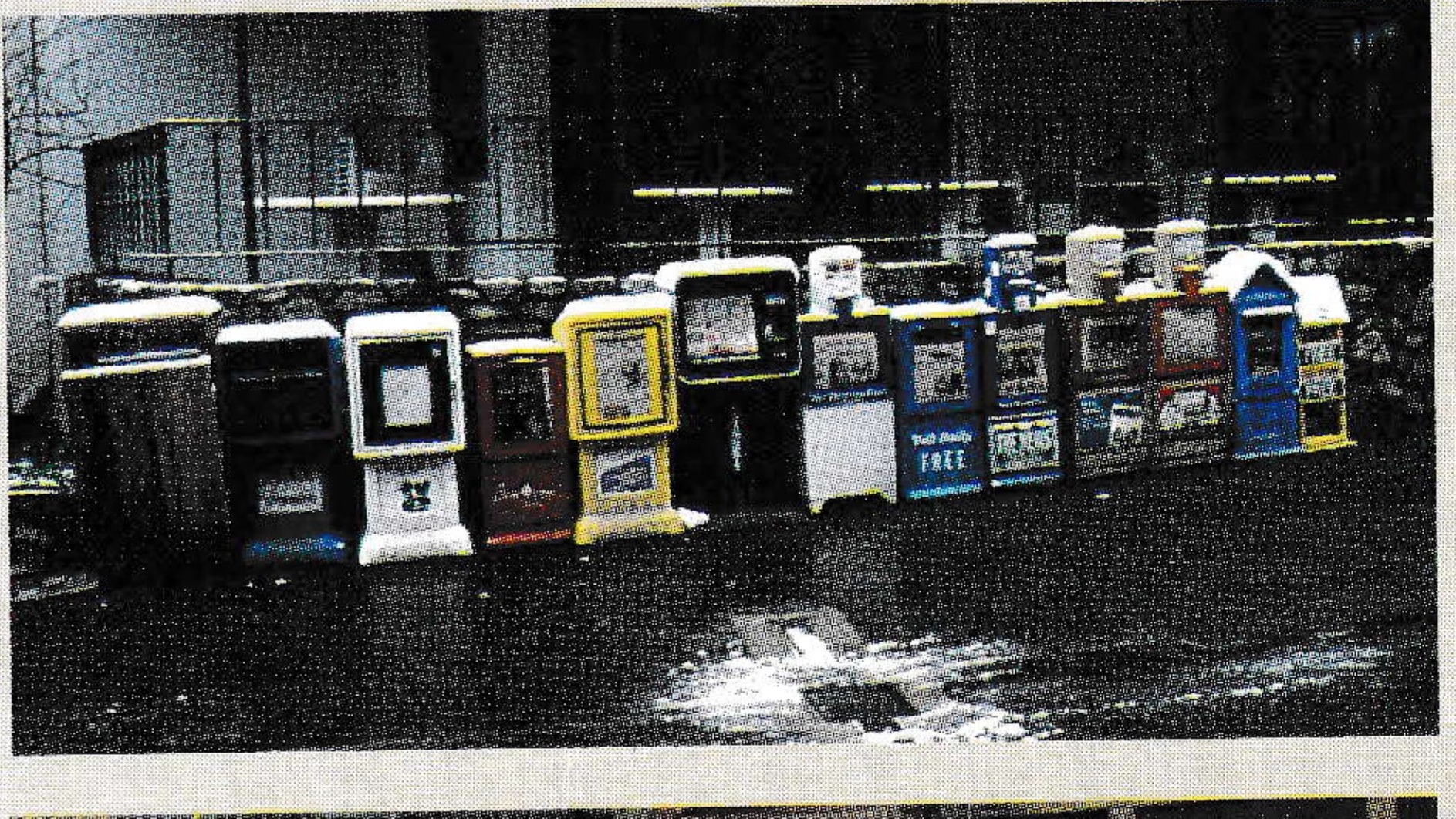
Photo by Sherry Dorward
Photos by Sherry Dorward