


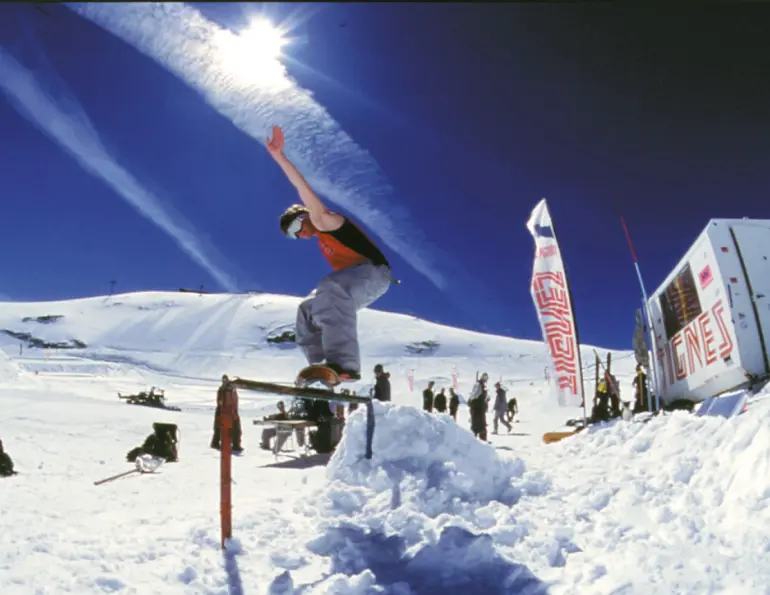
Most ski areas now accept the logic behind offering more than just downhill skiing and snowboarding. Smaller areas with limited vertical have demonstrated that alternative forms of fun can keep locals close to home and destination resorts have likewise sold tickets to non-skiers and kept generating cash at night with activities that offer an exciting change from the typical alpine sports.
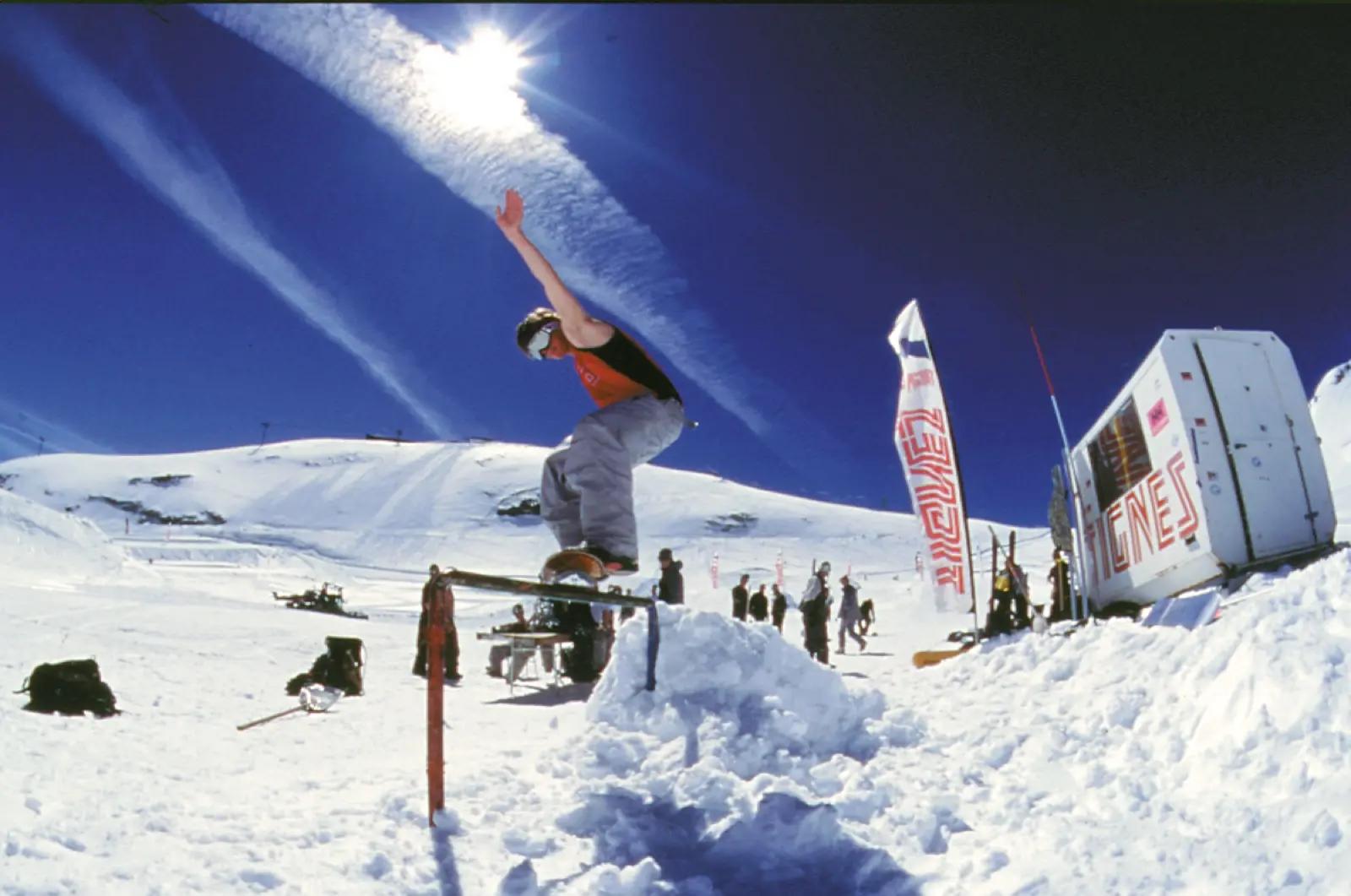
Photo by Jeff Curtes, courtesy of Burton Snowboards.
While expanding the menu of on-snow activities frequently includes upping the number and quality of terrain parks, adding snowshoeing and cross-country, or even selling dog-sledding and sleigh rides, many areas are taking a different tack and providing guests with non-traditional sliding devices such as tubes, sleds and snow bikes. A handful of resorts, however, are setting aside small skateparks on snow this season, with the hope of leading the way in what could turn into a genuine phenomenon.
Snowdecks
In case you haven’t noticed, skateboarding is in the middle of a tremendous resurgence in popularity. It is virtually exploding across the country and currently dominates the thinking and buying habits of the six- to 16-year-old urban demographic. It was just a matter of time before skateboards for snow appeared on the market.
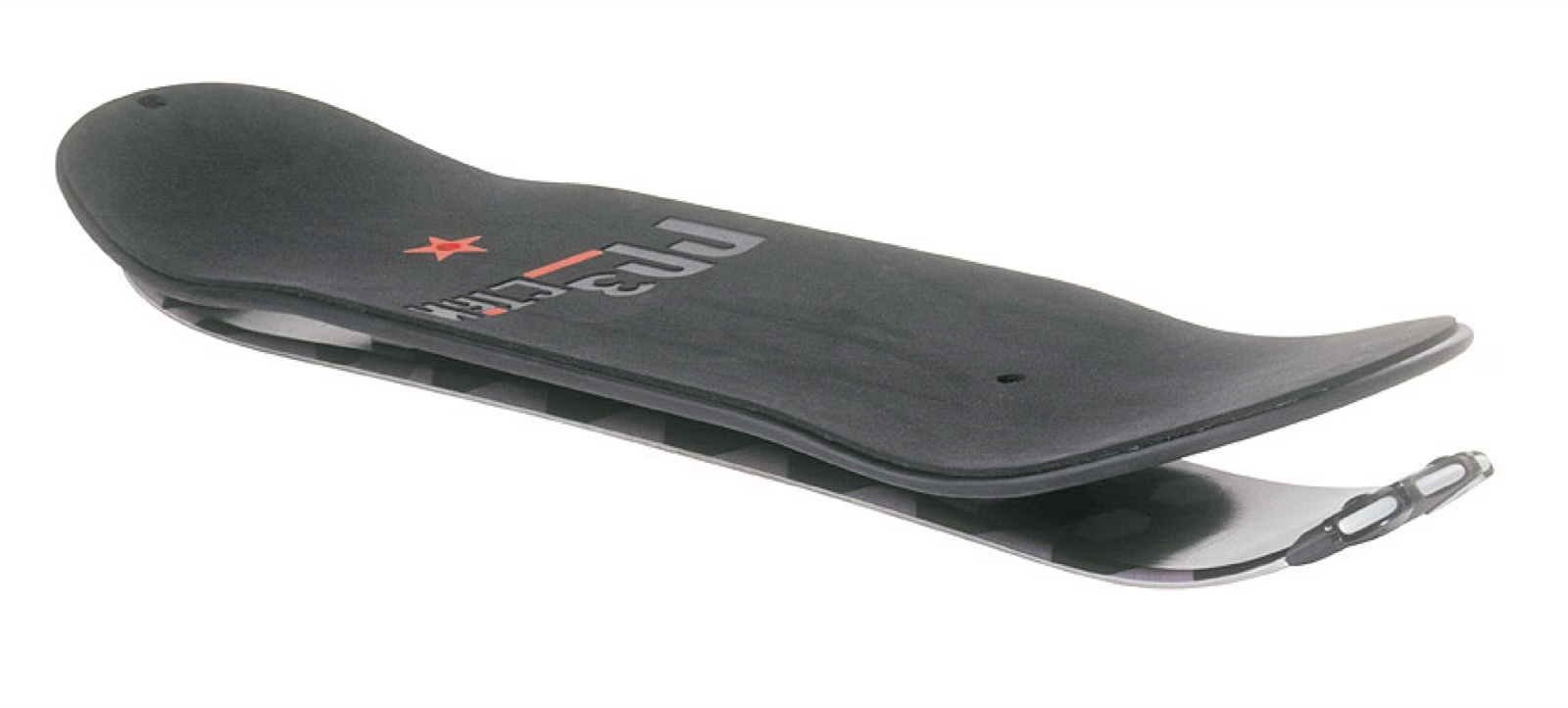
So far there are two variations. The Premier Snowskate is a one-piece sliding tool with edges that sits directly on the snow. The Burton Junkyard and Salomon PT3 use a skateboard-type deck mounted on trucks (two pivot points) that are in turn mounted on a mini snowboard. There are no bindings, but Burton offers a leash. Despite previous articles in these pages, numerous on-snow demonstrations and dozens of trade show appearances, many mountain executives have still not heard about, let alone thought of, the implications for ski areas.
Premier Snowskates, a division of M3 snowboards, expects to sell anywhere from 75,000 to as many as 100,000 of their product this season with retailers clamoring to secure supply. That could be as much as 25 percent of the total number of snowboards sold by all brands this season.
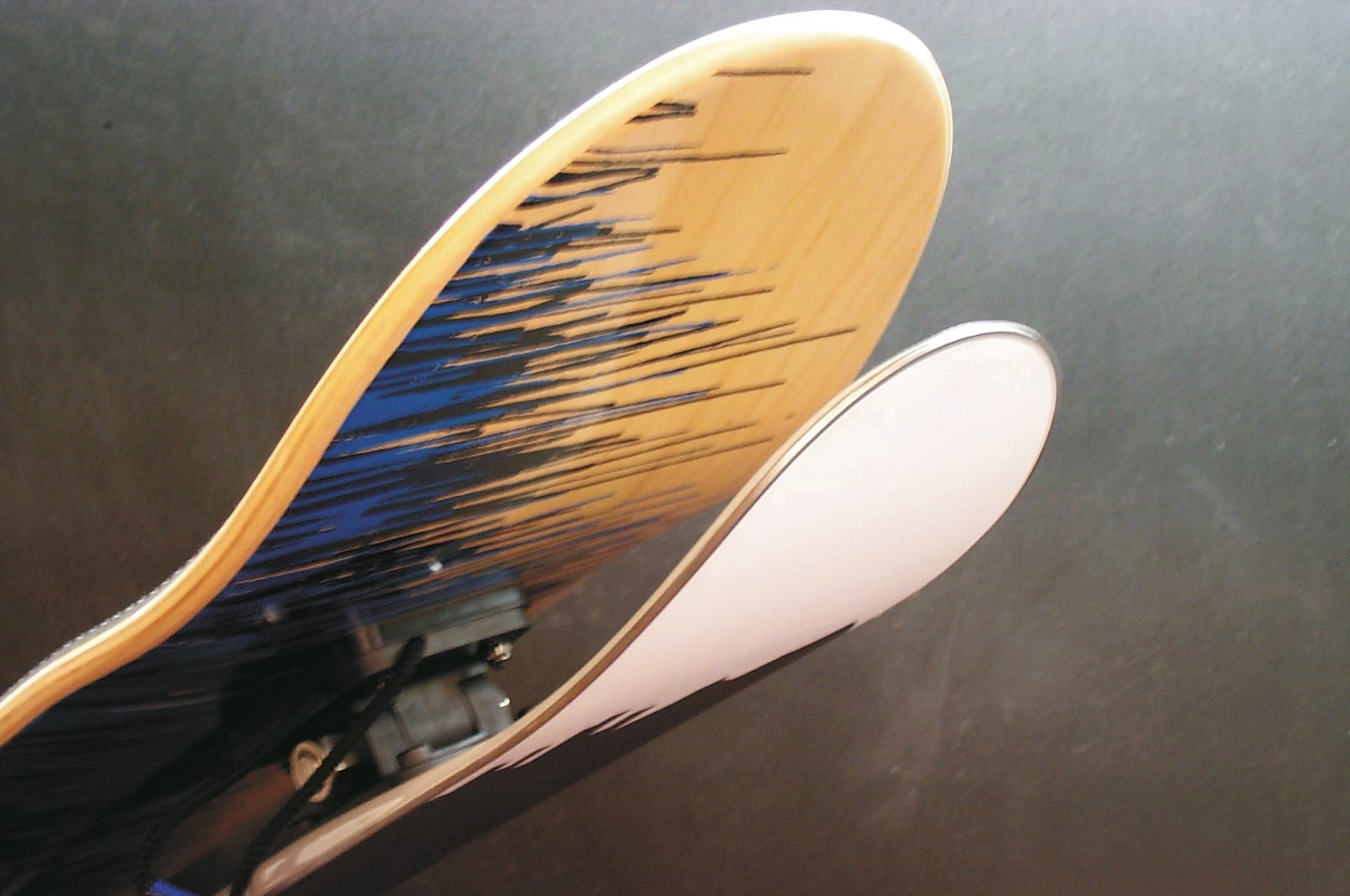
The retail potential is seen as great in urban and suburban areas because the snowdeck does not need much space or slope to use. It was designed for the backyard or golf course and, as such, is expected to make deep inroads in urban areas. Vertical and lifestyle media coverage of the product, use by well known pro-riders and inclusion in X-Games-type events should also expose a large number of young skateboarders to snow sports. These newbies, as well as snowboarders looking for a change, started turning up at resorts in California last year and more are expected to come armed with their snowdecks to ski areas throughout the country in the coming months. The question that begs asking is: Will resorts be prepared or will they spend valuable manpower to keep kids from jibbing off trash cans and rails in the parking lot?
According to a few forward-thinking managers, the simplest way to use the phenomenon to generate revenue is to grab a handful of snowdecks for the rental shop and then create a mini terrain park at the base. Ski areas from Mount Hood Meadows, Ore., to Tremblant, Quebec, are realizing that a small park needs hardly any vertical and nothing more than a few picnic tables and rail slides in order to satisfy a dedicated snowdeck user or a regular customer taking a break between runs.
Premier even offers ski areas schematics of how to build snowdeck parks. By next season, Salomon will be offering branded terrain park features and all the manufacturers are eager to work on co-branded or sponsored areas. And some areas are realizing that by locating the park half way up the hill they can sell $10 lift tickets to get there.
Lifts remain an issue, however, as mountains assess whether riders of the new contraptions are pedestrians and what it means with regard to local regulations. Another issue is whether snowdecks should be allowed on open terrain. Burton has seemingly solved this by adding a leash to its Junkyard. It is also becoming apparent that snowdecks can be valuable in the snowboard school with early indications showing they make it easier to pick up carving skills.
Remember 1990 when the first snowboarders started causing havoc? Well this could have similar impacts. Back then, many areas were unprepared and responded by banning snowboards. This time, the snowdeck community hopes that ski areas will accommodate and welcome these new sliders without repeating mistakes of the past.
Bicycles on Skis or Boards
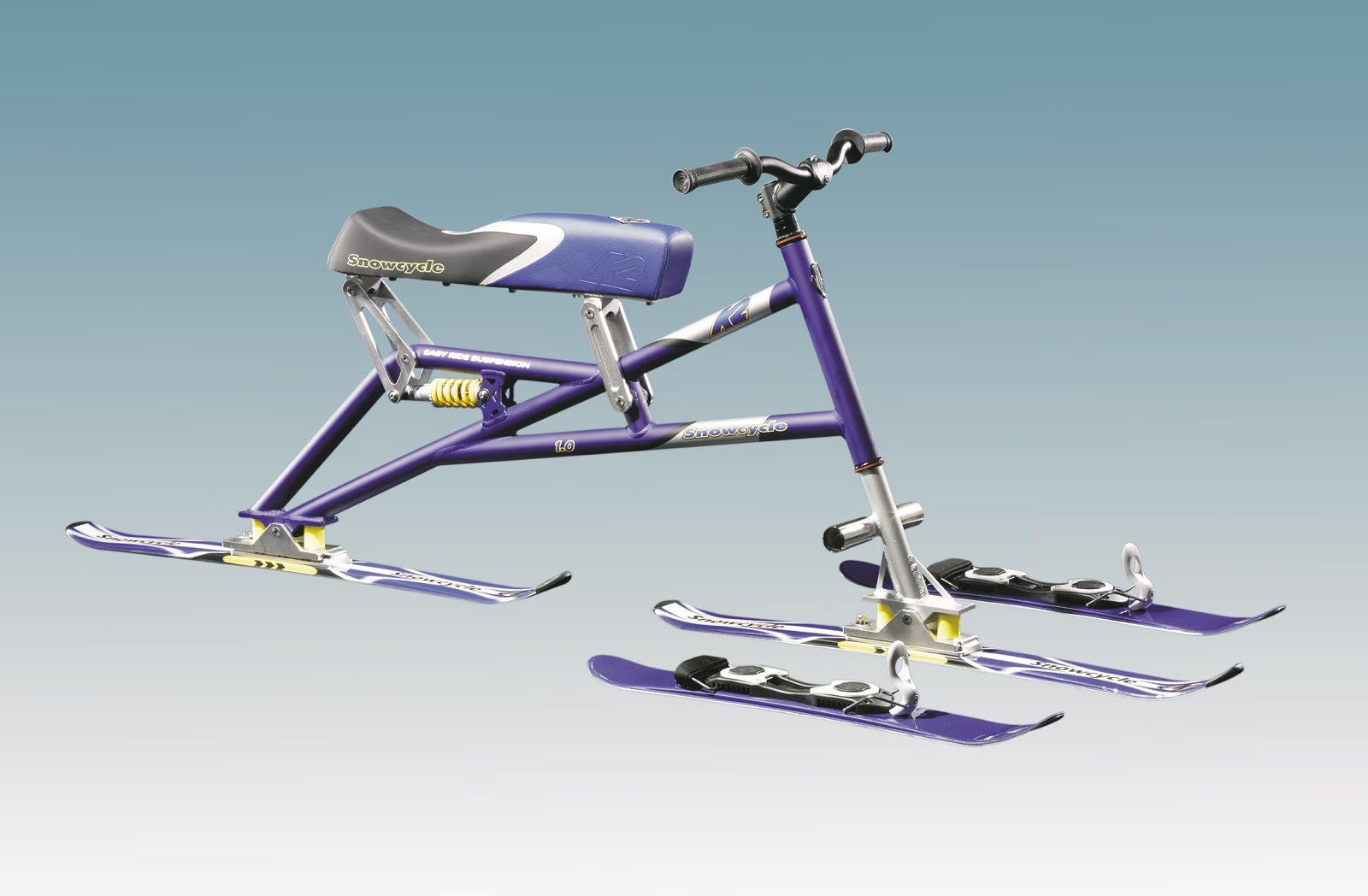
Park City, Utah, management has been concerned the soft drink company execs will be at a loss for things to do during the Olympic Games when they’re not gorging in hospitality tents or shuttling between events. The solution has been to buy a fleet of 50 of K2’s newly released Snowcycles, which promise a “low skill, high thrill” ride. And, they have been deemed safe and easy enough for even the most desk-bound corporate rat-racer.
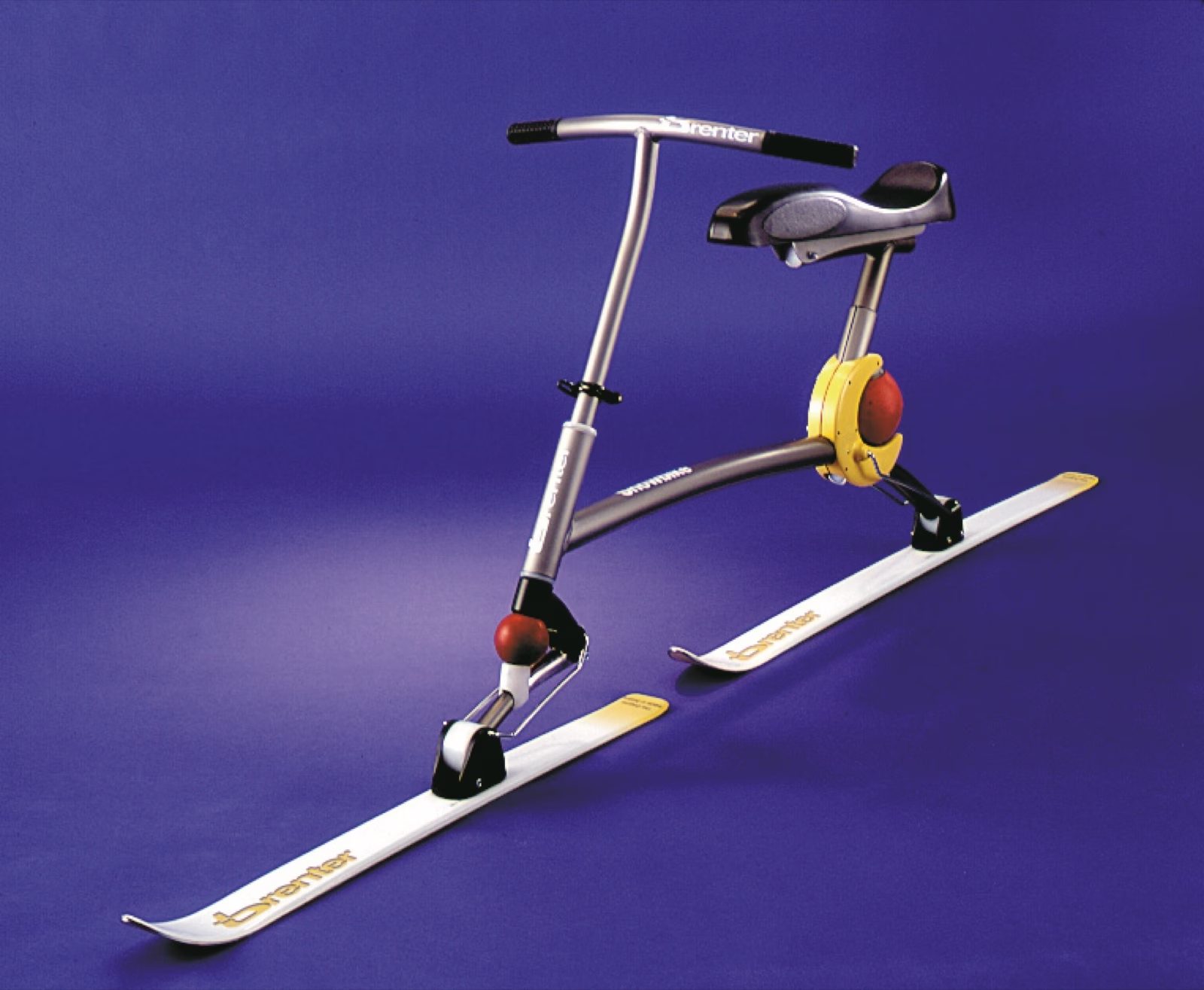
In fact, many ski areas offering the toys are rapidly scaling back previous restrictions on sliding tools. Until this season, Angel Fire, N.M., which attracts a solid family business mainly from the Amarillo, Texas, market, required users to take a two-hour lesson. This season, however, anyone who rents a Brenter Snowbike, either directly from the rental shop or as part of a $78 lift ticket/bike rental/lesson package, is free to skip class and roam the mountain from their first run. The bikes are even welcome in the terrain park. As at most resorts, mountain-bike racks fitted to the chairs in summer work well with snow bikes.
At Booth Creek’s ski areas, snow bikes were first purchased not just to offer an alternate activity but for use in ski schools to show the terminally unathletic the fun in sliding on snow. “It seems to lessen anxiety for total novices,” says Booth Creeks’ Director of Communications Julie Maurer. “Sitting seems easier and helps establish the idea of weighting and unweighting.” Maurer admits that the conversion rate of snow bikers going on to take a full ski or snowboard lesson is slim, but enough to make the process worthwhile.
“And some people really like to take the snow bikes out,” she says. “Ex-skiers with bad knees like them and parents who otherwise would be sitting in the lodge all day waiting for the rest of the family can go out and make a few runs with their kids. It widens the porthole. We don’t do big numbers, but it’s one tool in a big bag of tricks.”
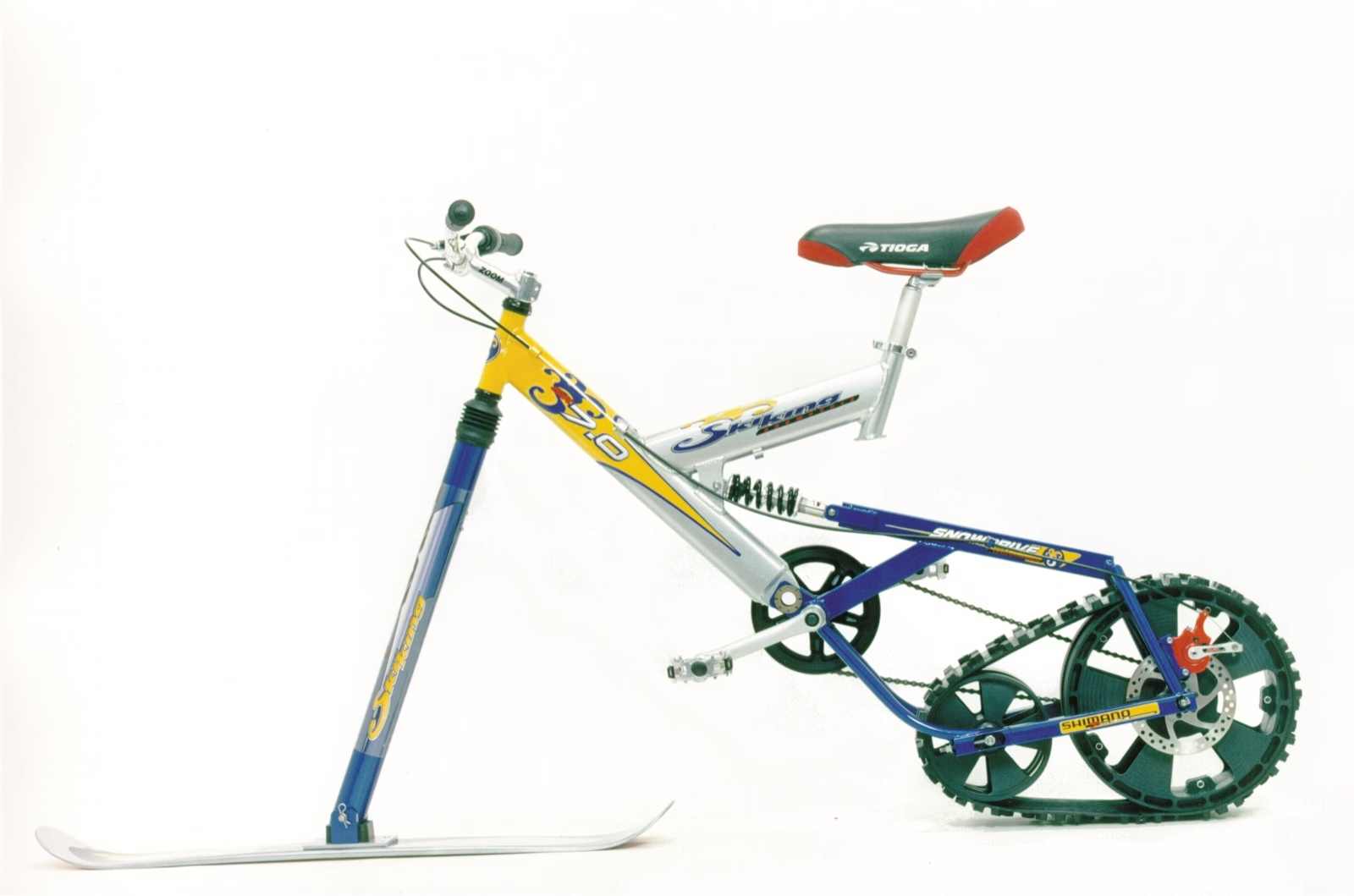
Since the Skibob was introduced about 30 years ago, at least 90 varieties of snow bikes have come to market. The Brenter Snowbike, available in the U.S. for almost a decade, is on 16 mountains. Although Booth Creek offers multiple variations such as the Snowscoot—a sort of snowboard with a handle—or the Ski Fox, these are almost unheard of elsewhere in the U.S. The Snow Cycle, from a company called Skiking, is another variation, using a ski up front and a lightweight pedal-driven track in the rear.
This season, K2 is bringing its Snowcycle to the market. With existing rental deals at numerous resorts, K2 has the distribution muscle to perhaps get these devices into rental shops, a goal helped by hiring Tim Petrick, formerly responsible for Booth Creek’s decision to invest in the category. Meanwhile, Brenter Snowbikes has cut back all its marketing activities to ski areas.
Despite reports of snow bikers cruising the novice Palmer Boarder Cross course at Cranmore Mountain, N.H., there are no reports of any mountains actually doing significant numbers of snow bikes. Even with its solid family market, Angel Fire reports fewer than 500 rentals last season out of 165,000 skier days and admits the program does not make money. Even Vail, Colorado, with a fleet of 50 of the bikes, logs only a few thousand rentals each season.
Steerable Tubes
Tubing, on the other hand, continues to be a big success. The activity makes money for almost everyone that invests in it. At Cranmore, the tubing hill is an independent profit center, even sponsored by Cherry Pepsi, and shows some solid numbers. Last year the tubing park sold 23,000 $13 tickets, each good for a two-hour session. Sixty percent of the tubers do no other activity and many take advantage of weekends and holidays when the area is open until 10 p.m. The remainder also buy lift tickets for alpine activities. The numbers look similar for numerous resorts, big and small.
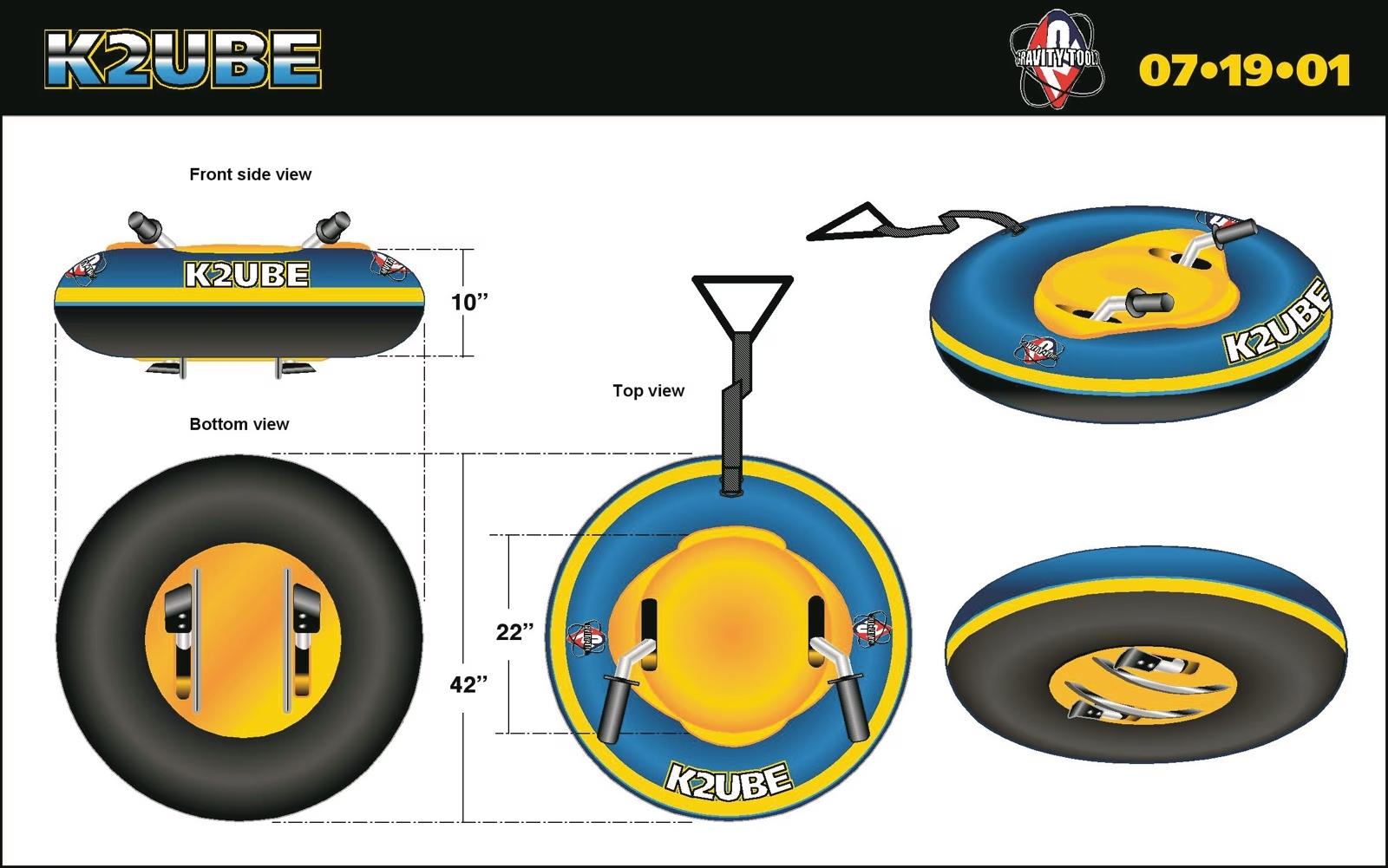
Things are about to get a little more interesting with K2’s K2ube ready to hit the slopes. With handles and a steering system, the K2ube allows areas to dispense with tubing lanes and dedicated tubing hills and instead allows the new tubes to be used directly on lift-served terrain. Bill Nicoll, ski sales director at K2, points out they can be used, for example, on a run that is underutilized due to an old and slow double, with a single snowmobile dragging strings of tubes to the top of the slope.
“We know ski areas will have to deal with their own specific local safety requirements. But we make the product and now it is up to [ski areas] to figure out how to best use it.” he says.
How To Build a Snowdeck Park
If you’re like Mountain High, Boreal and Snow Summit in California or perhaps Mountain Creek, N.J., you’re preparing for snowdecks without much effort or space.
According to Andy Wolf, brand manager at Premier Snowskate, all you need is about 2,400 square feet with a fun box, two or three handrails, a tabletop built of snow and maybe a short (5 or 6 feet) quarterpipe at one end. The park needs to be enclosed; a low bank of snow will do. And it can sit at the base or up on the hill, but should be on mostly flat terrain with a short, shallow pitch for riders to get “just enough speed to get going.”
The lack of a track record means insurance carriers can’t judge the device’s impact on premiums. “Most ski areas are covered for snow toys in general,” says Acordia’s Brian Derouin. “Every ski area is different, so the way they use the devices will be different.”

Mountain High appears to have sorted out most concerns. “The skate park will be half way up the mountain in an enclosed skate park and (the devices) will not be allowed on the open slopes,” says Marketing Manager Brad Wilson. A detachable quad already used for foot traffic will transport guests. “This is such a benign activity that we expect to see virtually no injuries from it.”
—M.K. and J.G.
The Zorb
Some people actually like the idea of rolling down a ski slope in a large transparent plastic ball while strapped into a harness. To satisfy that urge, just such a ball was produced by Zorb Action Sports Marketing of Arnsberg, Germany. Although such balls have been around in limited numbers for a while (one appeared in the 1982 classic Apocalypse Snow, which is considered to be the first ever snowboard video), few such devices were delivered to the U.S. Cranmore Mountain, N.H., purchased one several seasons back.
“It started leaking after a few weeks,” says Public Relations Manager Paul Giblin. “They sent us another, but the plastic was changed so you couldn’t see out except through tiny windows. Then that one started leaking, too.”
Heinz Buigener, Zorb’s director, blames two causes for the Zorb’s lack of success. “The U.S. is very litigious, so insurance and liability implications are very complex,” he says. “Also, the temperatures on the East Coast can be so low it makes the PVC brittle.”
He maintains a new version made with Polyurethane is both “crystal clear” and can withstand the cold. “We have maybe 50 in Europe. Mostly they are used around events and if they are dragged back up the hill by snowmobile, we can do descents at a rate of one person every five minutes.”
Paul Giblin thinks it unlikely Cranmore will invest in the Zorb again.
—M.K.
Suppliers
Brenter/Rocky Mountain Snowbike
P.O. Box 5407
Breckenridge, CO 80424
(970) 453-5271
email: [email protected]
Burton
P.O. Box 4449
Burlington, VT 05406-4449
1-800-367-2951
Website: www.burton.com
K2 Corporation
19215 Vashon Highway, S.W.
Vashon, WA 98070
1-800-426-1617
Website: www.k2skis.com
Premier Snowskate
8338 NE Alderwood Rd. Suite 200
Portland, OR 97220
1-800-305-4138
Website: www.premiersnowsk8.com
Salomon
9605 South West Nimbus Ave.
Beaverton, OR 97008
1-800-225-6850
Website: www.salomonsports.com
Skifox
Josef Welte Strasse 2
D-78183 Mundelfingen, Germany
(011) 49 7707 797
fax: (011) 49 7707 1291
Skiking
20 Acacia Drive
Holbrook, NY 11741
(631) 567-7600
Website: www.skiking.net
Snowscoot:
(011) 33 4508 920 65
email: [email protected]
Zorb Action Sports Marketing GmbH
(011) 49 2932 940 150
For more sources of snowtubes, refer to our accompanying Supplier Directory 2002.
