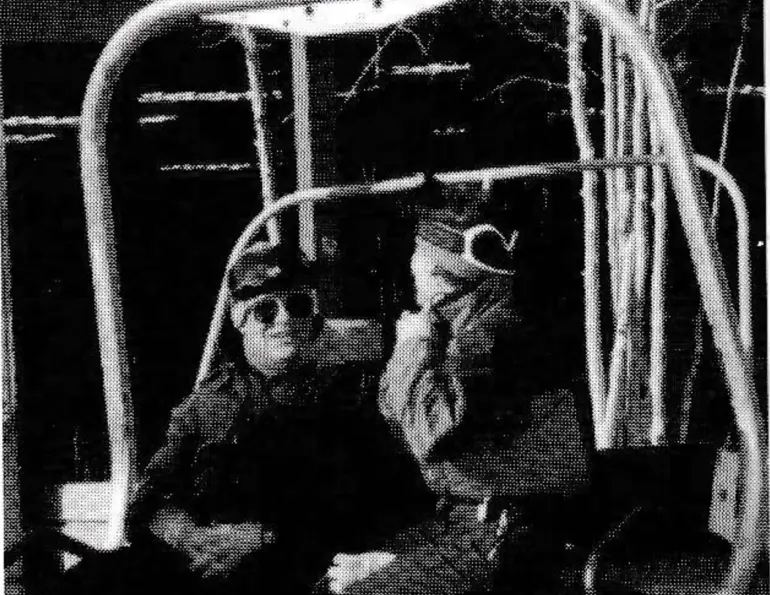
I—Detachable Double for Ruthie’s at Aspen
So, when Rob Baxter, who heads mountain operations for Aspen, pondered replacing that grand old lift, he knew he wanted to get it right. Yes, the lift ride should be faster, so that meant the higher line speeds of a detachable. And conventional wisdom was that a quad was the way to go for cost efficiency.
But Ruthie’s is not a quad sort of place. It’s not a “bigger is better” or “more ‘n faster” sort of place. It’s a very sunny part of the mountain and it’s not an overly congested slope. The terrain, which is groomed every night, is intermediate—though the lift does provide access to other expert terrain.
So, if not a detachable quad, what about a detachable triple, such as Poma had designed? But that wasn’t what Baxter wanted either. Quads and triples are mass transit: the quad an unsocial form, the triple anti-social. No, what was needed was another double—the chairlift configuration that built the sport, forged friendships and bred intimacies.
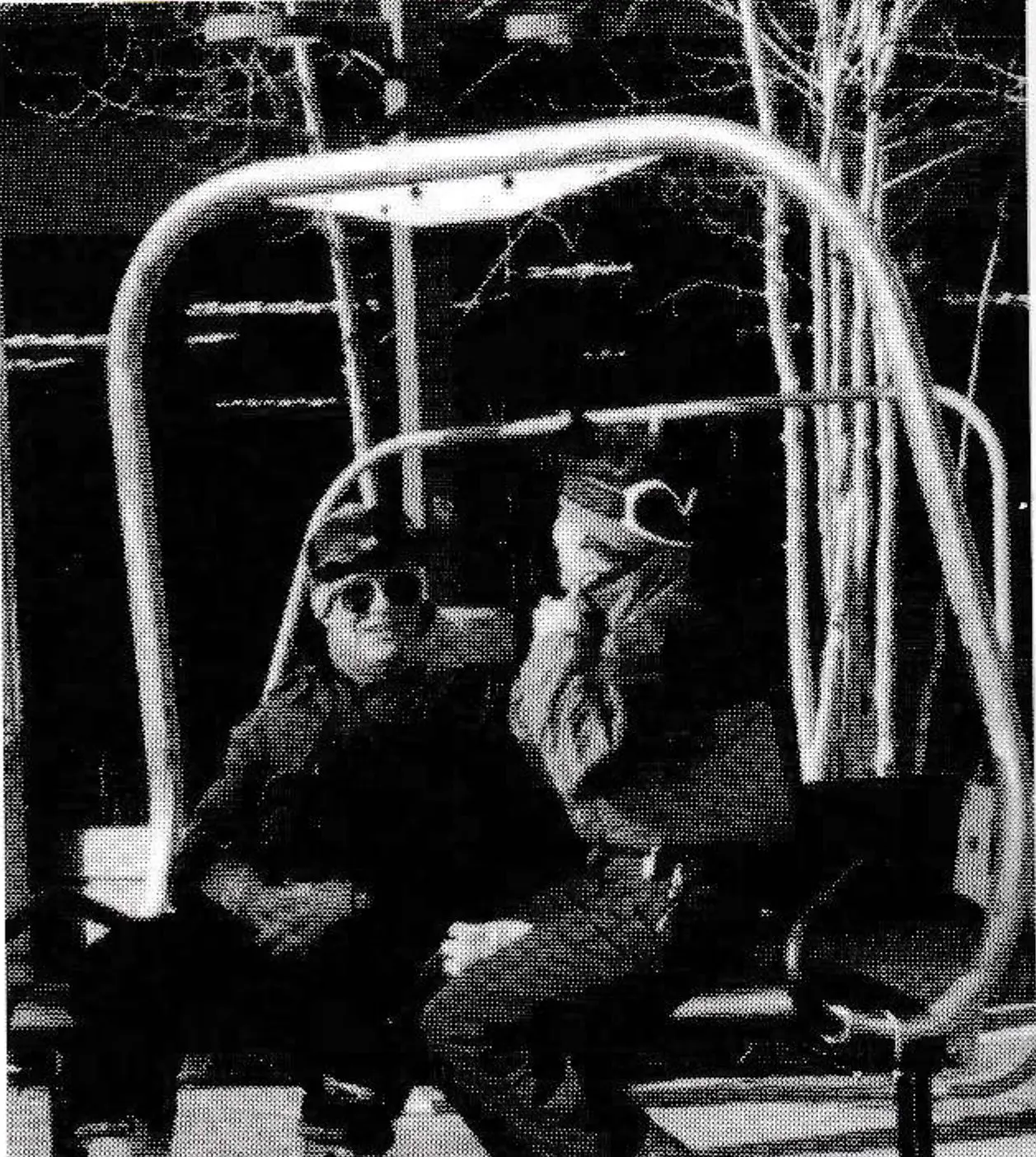
The answer: use Poma’s detachable triple, but configure the carriers to run as a double—a very, very comfortable, roomy double, with soft cushions. A center post creates two cushy, side-by-side chairs in the space normally occupied by three skiers. The important thing: the trip will take the same five minutes to complete that a triple or quad would have, and that five minutes compares to the 12 minutes of the old fixed-grip chair.
Rob Baxter admits the lift will cost about as much as a quad would have, but instead of lousing up the ski experience with the excess capacity a triple or quad detachable would have delivered, Aspen is making the whole experience better for its customers. “It’s a renewal of the old spirit of skiing,” says Baxter. “It’s retro!”
As far as manufacturer Poma is concerned, the new Ruthie’s lift is a detachable triple in their 1100 Competitions series, with a design capacity of 1,800 pph at a line speed of 1,100 ft./min. As far as Aspen is concerned, and as it will be reported next year in SAM’s new lift construction survey, it will be a detachable double, carrying 1,000 pph at a line speed of 1,100 ft./min. The length of the lift is 5,370 feet; the vertical rise is 1,363 feet.
Most towers of the old chair will be used. Some other line equipment will be inventoried as replacement parts for Aspen’s other lifts. But for those wishing a piece of Aspen history, a number of the old Riblet double carriers will be rigged and sold as porch swings.
Very retro!
II—North America’s First Funitel at Squaw Valley
Finally, Alex Cushing is getting what he has always wanted: a lift that will run in even the most severe winds. North America’s first funitel is coming to Squaw Valley, Calif., in 1998—just in time for the area’s 50th anniversary in 1999. A $12 to $17 million birthday present may seem exorbitant, but, hey—50 years is something to celebrate.
Cushing’s dream is to eventually build a hotel at mid-mountain. One major obstacle, however, has always been how to transport guests up and down in all weather conditions—specifically, the extreme winds at Squaw, which can range from 40 to 100 mph.
The idea of a funicular was tossed around as a possible solution, as well as thoughts of upgrading the tram, which only handles wind speeds up to 40 mph. When general manager Hans Burkhart went overseas to discuss a tram upgrade, however, he came back with another option: replace the existing gondola with a funitel, a new development at several European resorts.
The idea behind the funitel is basically that of a double monocable (DMC) with the wire ropes outside the width of the cabin. The name is a combination of funicular (railway pulled by wire rope) and téléphérique (French for aerial tram).
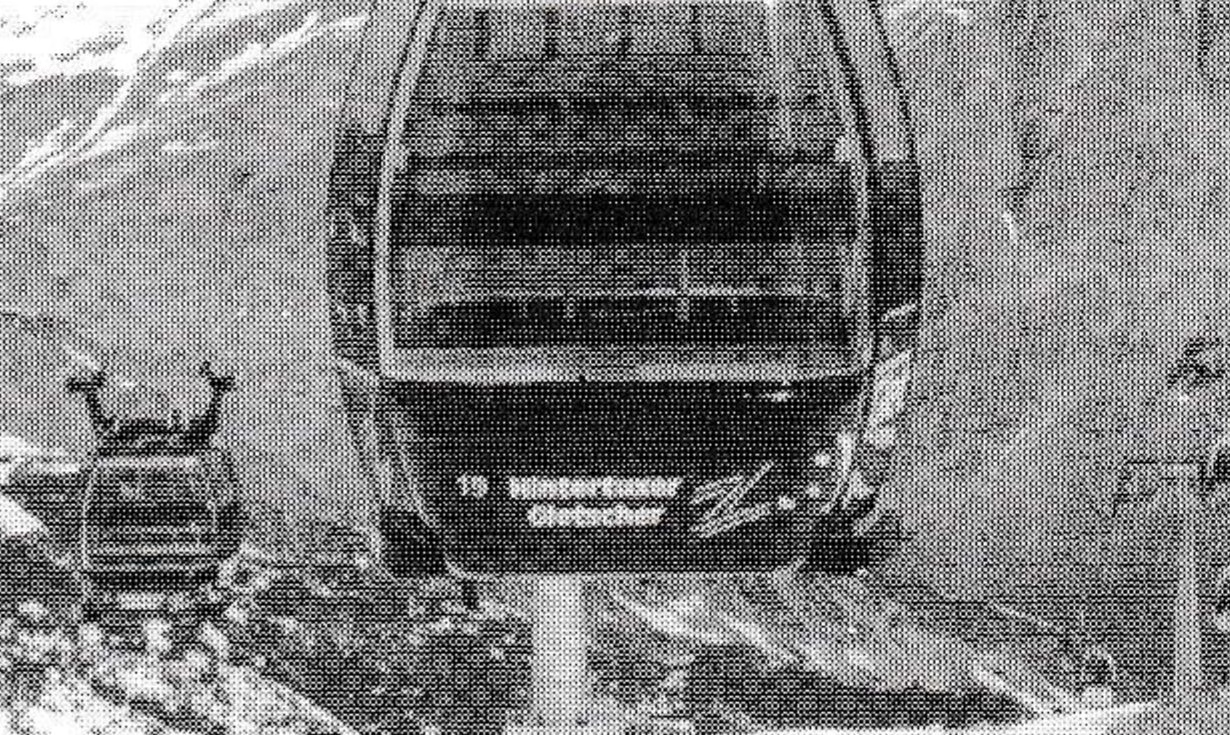
On top of each cabin are grips extending out on each side and attaching to two parallel haul ropes. The wide stance between the haul ropes—wider than the cabin—and short cabin hangers allow exceptional stability in high winds.

Once the cabins enter the terminal, the grips detach and the cabins—fitted with special guide and running rollers on the bottom—are transferred to floor rails and conveyed around the terminal for loading and unloading.
Squaw’s funitel—to be designed and built by Garaventa-CTEC—will cover a slope length of 9,065 feet with 10 towers. The longest cable span—made possible because of the funitel’s stability—will measure 1,910 feet. Forty-seven custom-designed cabins will carry approximately 30 passengers each. A brisk speed of 1,200 fpm makes for a capacity of over 4,000 pph.
Happy birthday, Squaw Valley!
III—New Idea in Inclined Elevators at Snowmass
The Snowmass Land Company had a problem at their Colorado real estate development when the Forest Service denied a request for a side trail that would have created additional slopeside access. The refusal left 15 home sites high and dry at an elevation inaccessible on skis from the existing trail.
A chairlift or a surface lift was proposed at first, but liability issues gave the development company “cold sweats,” said president Jim Wells. In addition, they didn’t want to incur extra operating costs by having to hire more personnel. The ultimate solution was the first product in North America of the new joint venture between Poma and Otis Elevator: an inclined elevator combining standard elevator components with funicular technology for a fully-automated system.
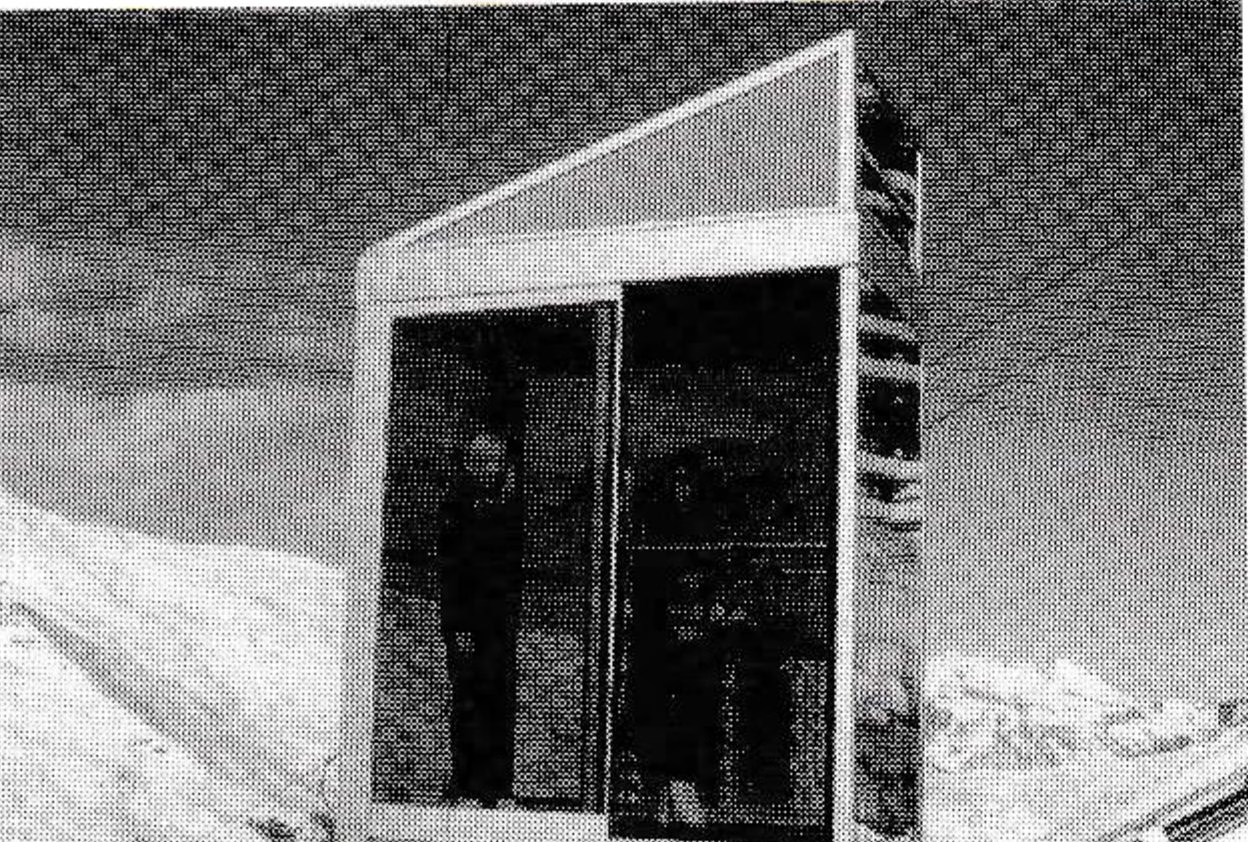
The single-track, single-vehicle system travels up a 320-foot slope at 300 feet per minute. Skiers load in one end of the car and exit the other end without ever having to take skis off or turn around. The system is run by dual computers that independently monitor the car’s speed and location—information that is fed to the system by magnets located along the track—and verify the information with each other.
The combined technologies of lifts and elevators led manufacturers to a few innovations. For instance, instead of a single rope system, Poma devised a multi-rope system, three in all; smaller rope diameters allowed them to use drive sheaves with smaller diameters. Another idea borrowed from elevator technology is the gearbox electric motor: a single unit combining gearbox and electric motor.
Another reason the inclined elevator option was attractive, said Wells, is that it is easy to evacuate in case of emergency. In addition, should the car stop for any reason, the “Otis Link” feature autodials the company’s Connecticut headquarters and sends relevant information to the Otis operator. The operator can then either contact on-site personnel or speak directly to the passengers to communicate information such as, for example, “Get your foot out of the door.”
Though the $700,000 price tag is more expensive than that of a comparable lift, it fits in just fine at a high-end development offering the ski-in/ski-out lots for a cool $1.3 million each.