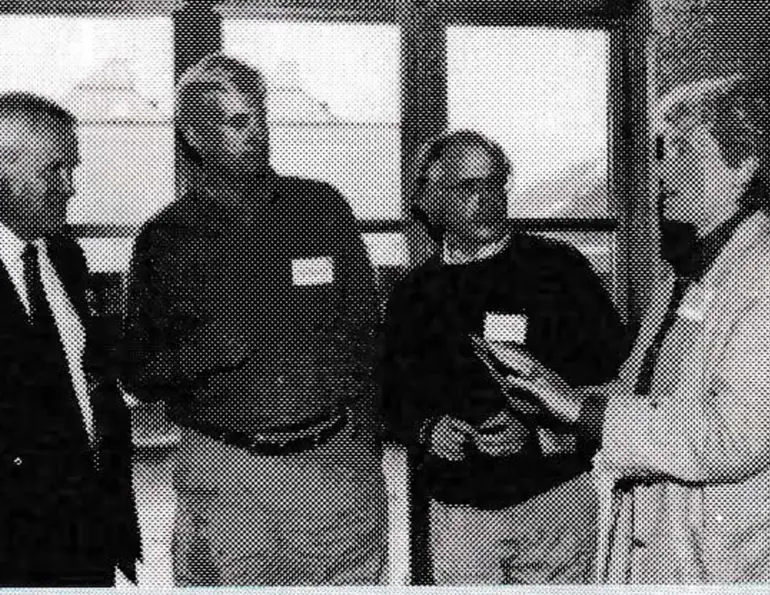
The vision has been lost. And unless it is restored to its rightful place soon — and kept in place by an alliance of community leaders, planners and concerned citizens — the spate of ills that threatens ski towns across North America will seriously cripple their growth in the future. That, in a nutshell, was the message delivered to the 300-plus attendees at a conference on mountain resort development held in Vail, Colorado last May. Sponsored in part by Snow Country and Ski Area Management Magazine, the three-day conference addressed some of the most important issues facing mountain towns in the 1990’s. And the verdict? Things are going to get a lot tougher before they’re going to get better.
“Everything is moving so fast these days, that people are just saying ‘Stop!’,” says Tom Schultz, a consultant with Arnold and Porter Associates, a Denver-based law firm specializing in environmental law. “It’s not an intellectual decision, it’s a gut reaction to the rate of change around them.” Such is the case with mountain resort development. A variety of interest groups — ecologists and conservationists, farmers and ranchers, small retailers and hunters and fishermen, senior citizens and historic preservationists — are finding common cause in their fight to preserve their community’s “quality of life.” And often these days, that common cause is opposing more resort development in their backyard.
“There’s nothing wrong with trying to slow down the pace of change,” said Mono County supervisor, Andrea Mead Lawrence. “Besides, who gets hurt when a new development fails? Not the developer — he just gets back in his Rolls Royce and drives home to the city.”
From New Hampshire’s Loon Mountain expansion to Colorado’s proposed Mt. Catamount, shocked developers everywhere are finding their way barred by newly discovered environmental red tape. “Although beefed-up federal and state regulations make issues like the preservation of wetlands and the protection of wildlife very effective instruments to block development,” says Harris Sherman, a partner at Arnold and Porter, “we’ve often found that the source of people’s opposition is fear of change rather than concern for the environment.” Sadly, he says, many mountain communities are drawing battle-lines without really understanding what they’re fighting about.
That’s not to say that ski resort developers are blameless. “A number of ski areas have lost their way,” says Terry Minger, of the Centre For Resource Management, based in Denver. “Forgotten in ticket pricing, real estate development and bottom-line spreadsheets is the sport’s raison d’être — the dream and vision of the ski pioneers who simply loved being in the mountains.”
Despite its apparent strength, the alpine environment supports a very fragile ecosystem. Any human impact is felt twice as strongly there than lower down in the valleys. And there’s the rub. Over the last two decades, some North American mountain communities have had to deal with 20 percent growth a year. It is this unsustainable rate of growth that has created most of the problems. Suddenly, ski area managers and developers are being lumped in with other environmental “bad guys.” And most of them are shocked.
“We in the ski industry are environmentalists,” says Vermont Ski Area Association’s executive director Joe Parkinson. “After all, most of us got into the business because of our love for the mountains and the land.” So what gives?
“It’s very simple,” says Professor John Humbach, of Pace University’s School of Law. “We’re now faced with ‘guarding’ a national land base rather than ‘conquering’ a national land base. And that changes one’s whole approach to development.” A very big part of what excites resort opponents to fight against mountain development, he adds, is the crassness of the secondary development — the strip malls, gasoline alleys and cheap housing — that usually accompanies any major mountain project. “While the initial project can be aesthetically pleasing and environmentally correct,” says Humbach, “resort operators often have no control over the offsite development that is going on all around them.
“Contrary to general opinion, Americans don’t have a constitutional right to develop land,” he adds. “Either we allow people to use their land to build what they want on it, or else we develop comprehensive masterplans that are strictly adhered to.” Does that mean that America’s “rugged individualist” myth will have to be revamped? In a word, yes.
“Once a community plan is in place, advanced techniques of land-use regulation can be applied to carry it out,” says Humbach. “For one thing is clear: we need to recognize that not every piece of land in the resort community should be eligible for development.”
At a time when the skiing industry is perceived to be in trouble — stagnant growth, a rising tide of bankrupt ski areas and falling retail sales are all offered up as indicators — it seems ironic to be discussing future growth and the development of yet more ski projects. Opponents of new development constantly complain that the ski industry is overbuilt and oversupplied. So why do you need more areas? they keep asking. The current ones are struggling as it is. Why not just fix up the ones you have?

Snow Country photo by Jack Affleck
“Successful companies learn from their customers,” says Ted Farwell, a consultant with 30 years’ experience in the ski business. “I wonder — Is the ski industry learning from its customers?” Farwell, for his part, thinks not. “The knowledge of the ski area market is in the stone-age,” he says.
The time for using skier visits as the sole measuring stick of success is over, maintains Farwell. There are a number of other indices — retail sales, property taxes, room occupancy rates — that can provide just as valuable information. That’s why, he says, public authority should never rule on public demand. It’s just too complicated an issue for government bureaucracies to handle.
“We in the industry,” he concludes, “need to understand our market better. That’s why we need to undertake an annual comprehensive ski market survey, which would include an analysis of ski area capacity and ski area profitability. Only then will we be able to provide accurate information to potential skiing investors.”
The Vermont Ski Area Association’s recent study of the state’s rural communities is an interesting case in point. “Increasingly, it seems that the conventional wisdom is that environmental protection depends on economic restriction,” says VSAA’s Joe Parkinson. “That thinking is flawed. Environmental quality is one of the first victims of a faltering economy.” Recently, the VSAA profiled a string of rural Vermont communities according to the essential characteristics of their economies. The result? While a majority of the smaller communities were struggling with unemployment and poverty, ski towns of comparable size were all contributing to the state’s wellbeing. They were providing 1.0 jobs per capita while non-ski towns were providing only .26; they were paying on average $2000/year (per capita) in taxes while their non-skiing counterparts’ contributions were less than $400; but of greater importance was the cost in education — whereas a student from a non-resort area cost the state about $2733, the resort student cost the state only $41.

But not every ski area developer is a responsible, law-abiding citizen with the future of the community at heart. Too often in recent years, bottom line considerations have ruled over aesthetic ones. According to John Cottle, an architect with the Aspen firm of Hagman Yaw, the challenge for the future is to properly apply the lessons of the past. “There is a great danger today for a ‘proven formula’ to be replicated endlessly throughout ski country. You know — the big ski hill/golf course complex with a 300-room hotel and a centrally managed reservation system.” He shudders. “That could spell the end right there.”
But accurate research and good design isn’t enough to insure success. “To be a successful developer today,” adds Tim Schultz, “You have to work very closely with the community. Develop good communication early on — up to ten years before the project is to be completed — and build a bond of understanding together. Finally, get involved in the community; get them to invest (mentally, spiritually and financially) in your project.”
And no one can afford to ignore the environmental issues of mountain development any longer. “So instead of being dragged kicking and screaming into the 21st century why not lead the way?” asks Terry Minger. Quoting Aldo Leopold, “A thing is right when it tends to preserve the integrity, stability and beauty of the biotic community,” Minger argues that a “sustainable” resort community — the successful resort of the future — will be committed to developing in only such ways as will protect and sustain the resort’s natural assets for future generations. By staying true to this vision, concludes Minger, the pioneers of the “Green Resort” will become model examples on how to marry economics, recreation and the environment.
Green Resort; Postmodern Resort; 21st Century Resort. By whatever its name, the successful resort of the future will have to address a whole mountain of issues that America’s skiing pioneers never dreamed of when they first started developing their weird and wacky uphill transportation contraptions. “It used to be called the ski experience,” says Sno-engineering CEO Tim Beck, “then it became the resort experience. Now it’s the total experience.” He laughs. “If you think people’s expectation of what a mountain resort should be able to deliver isn’t expanding, then think again!”
Today’s economy brooks no haphazard effort. If you want a project to succeed, adds Beck, you have to do your homework. Sensitivity to natural features; good design balance of the built environment; careful market research; environmental sensitivity; community relationship; professional management; and finally, keeping an eye on the economic/financial R.O.I.: these are the success factors that Beck calls The Magnificent Seven. “Deductive reasoning,” he says, “will tell you that if a success factor is missing or deficient in a project, then failure is certainly possible.”
There are no simple answers to the problems confronting today’s mountain resort communities. After three full days of presentations, most conference attendees returned home filled with even more questions than they came with. But the good news is that professionals at every level of the industry are actively working toward the future sustainability of mountain tourism. And so they should be. As Andrea Mead Lawrence put it: “The whole of skiing is much greater than the sum of its parts. Its our responsibility — yours and mine — to see that that vision is reflected in all we build in the mountains.”
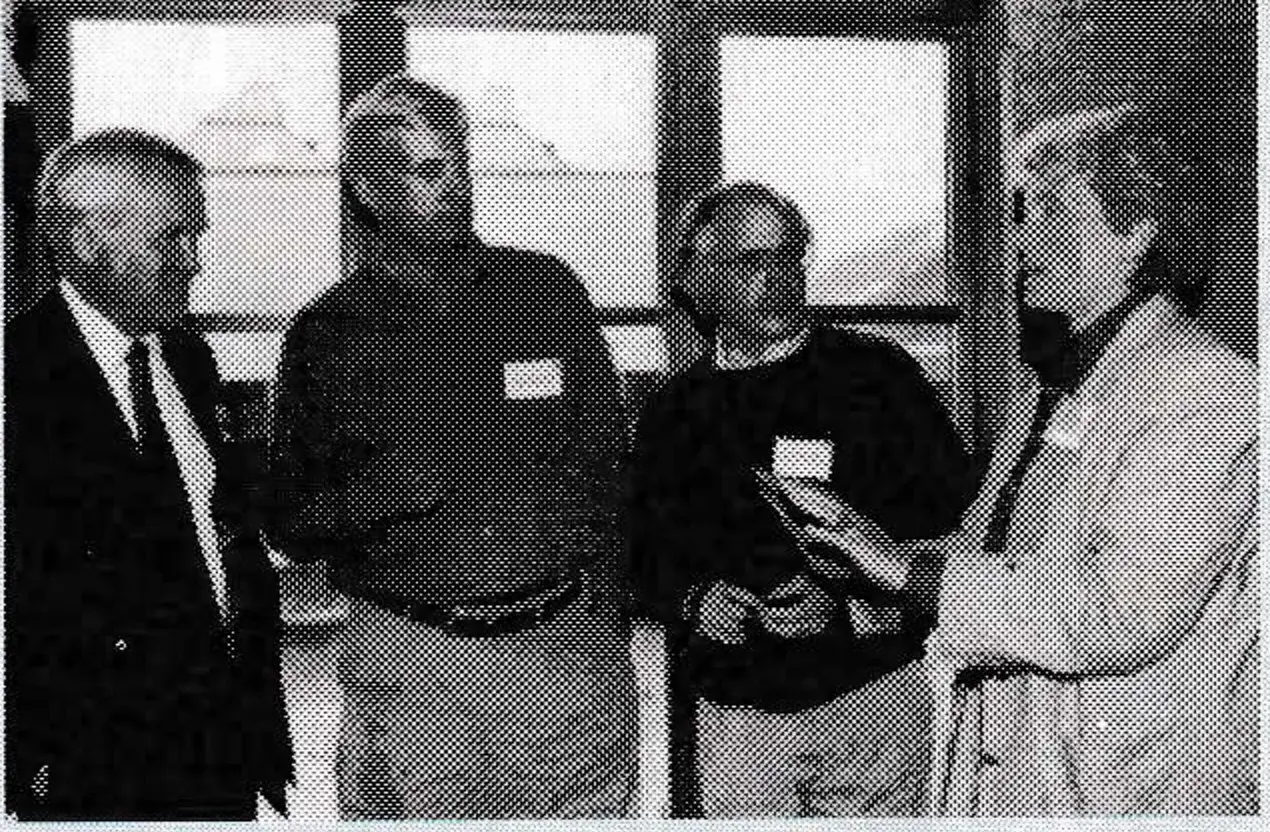
Snow Country photo by Jack Affleck
The Mix was Magic!
… That was how one attendee described an amazing April gathering in Vail for two meshed conferences: one, jointly organized by Ski Area Management and Snow Country, focused on ski resort growth issues; the other, organized by Professors Alison Gill and Rudi Hartmann, had a more academic focus on mountain recreation trends.
The magic came from the unstructured mingling of academics, town engineers, mountain planners and many other professionals in relevant disciplines. “For once we weren’t talking to ourselves,” wrote one on a critique form.
“Very worthwhile and productive,” wrote Andrea Lawrence, one of the presenters, who spoke as a county supervisor — Mono County, California. Her county has destination resort skiing — and some environmental and growth problems.
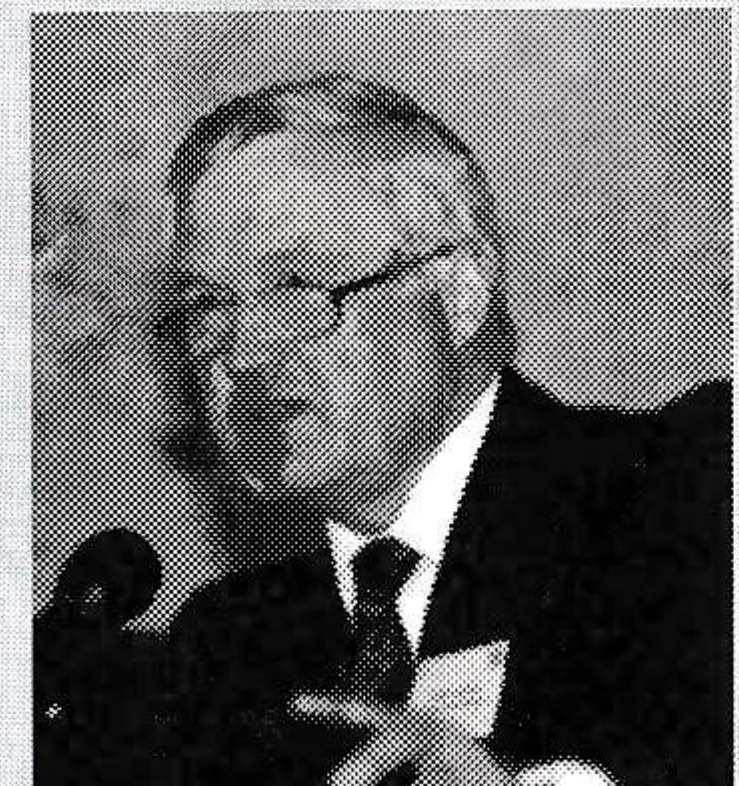
Snow Country photo by Jack Affleck
In his “wrapping-up” of the themes of the conference, Snow Country’s John Fry cited, among other items:
“The issue is not growth vs. anti-growth, but change vs. anti-change. It is important to identify groups that fear change and involve them in early planning … Joe Parkinson of the Vermont Ski Areas Association pointed out that many rural Vermont counties without the economic benefits of skiing tend to have weak environmental constraints … I get a sense from many that we need to reassess the matter of second homes and of low-occupancy real estate as the financial engine of ski resort development and expansion … We need to understand the nature of our opposition better. Somebody mentioned a 25,000-sq. ft. home with a pigskin-lined TV room unoccupied 48 weeks a year. It may have more to do with opposition to ski resort development than the spotted owl … We have heard about being a keeper of the vision for your mountain valley. If we keep the idea of beauty as the goal we all want for mountain resorts, then most of the solutions of environment, growth and planning will fall naturally into place.” — D.R.