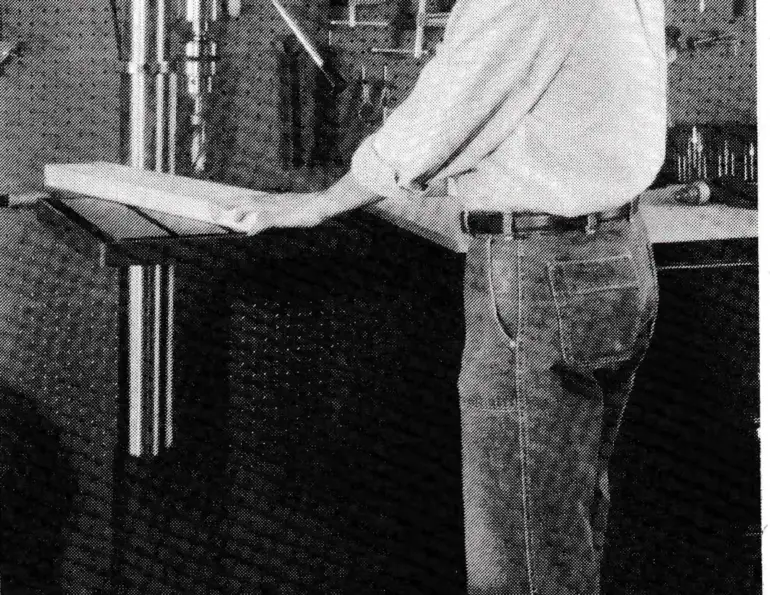
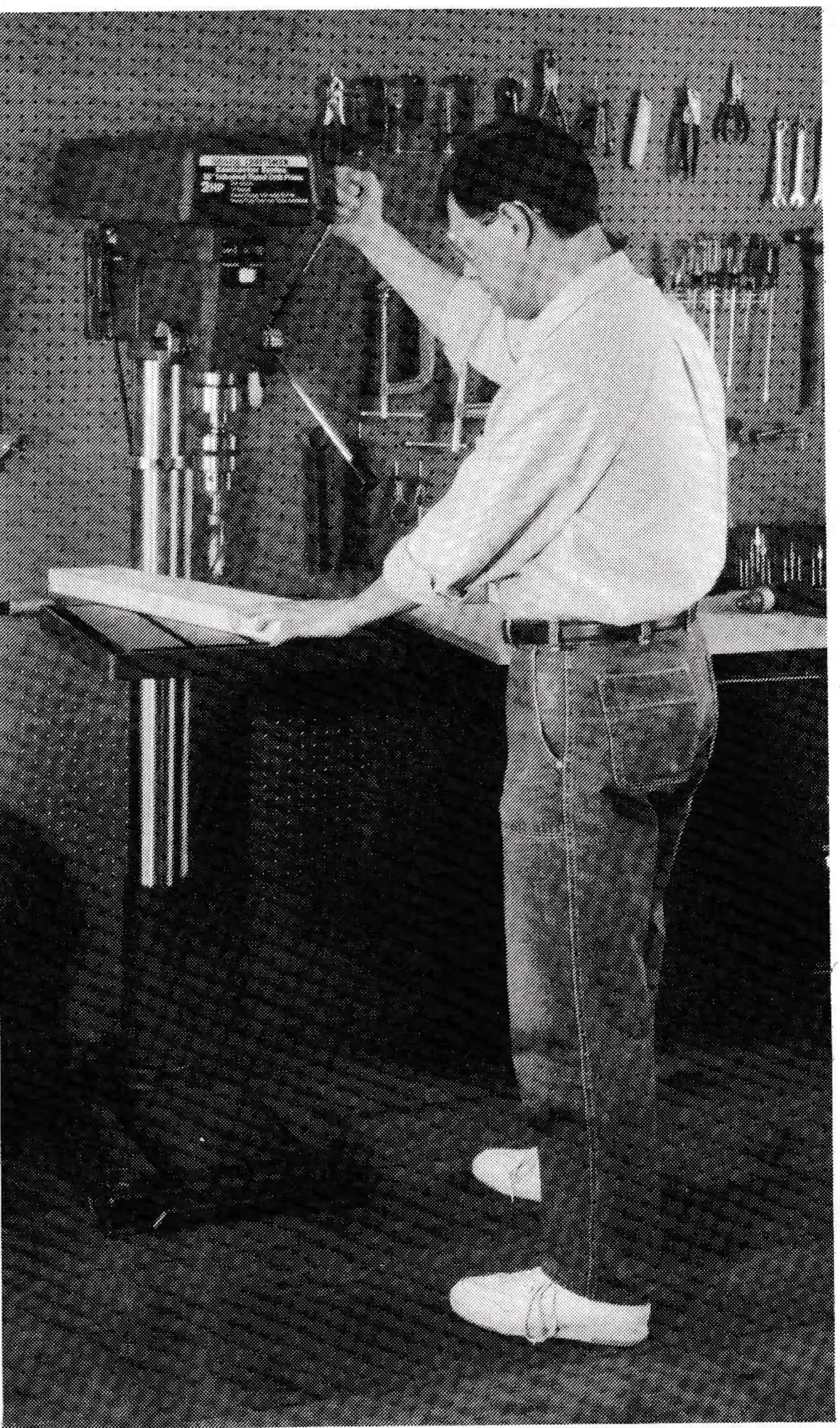
The drill press is a relatively simple machine in terms of design and its versatility for ski area applications has particular strength. Besides standard fabrication and reaming operations, drill presses can be used for multiple-stroke drilling jobs on grooming vehicles and making precise and true angles on lift parts. They even accept vise attachments so that slalom poles can be drilled for extensions and flags.
Ken Widelo, the head machinist for Mount Tom, Mass., recently reinforced the notion that a press is a multi-faceted tool by taking his machine out of the shop and carrying it to the top of the mountain. The retaining studs in a return bull wheel needed replacement and nothing but a perfectly-aligned hole would by Sanford H. Wilk do. Powering the press with a generator, Widelo was able to drill extraction holes in the studs of the 10-foot wheel without moving it off the mountain top.
The drill press has nine different elements to perform such tasks. Working from the top down, the head assembly contains a motor that sends power through pulleys and down a spindle where rotational torque turns as chuck. The quill is lowered by turning a three-armed quill feed. The column is a simple steel tube supporting the head while tying in the table and base. The table usually can tilt, pivot and it travels up and down the column for height adjustments. The base is a fixed support for the entire machine and usually has holes and slots that allow it to be fastened securely to the floor.
One of the key aspects of a good drill press is how well the quill travels. Because quill travel literally determines the depth of a hole into the stock, sloppy travel creates an effect known as runout, which translates into oversized and eccentric drill holes that can mean disaster for the workpiece. Fortunately, most manufacturers incorporate an adjustment mechanism that can compensate for runout and, while there were machines that ran truer than others, none of the test units showed signs of significant runout sloppiness. Most of the (minimal) runout occurred using Taiwanese chucks with three-jawed clamp mechanisms not as nicely machined as American counterparts. When purchasing an import, it may be advisable to chuck with a Jacobs version. The additional cost is worth the tolerances saved.
In our tests, only the General and Powermatic drill presses are made outside of Taiwan and so the accompanying chart is indicative of the mean standards for imports. The machines that we tested often looked alike and many presses available are literally off of the same assembly line as the competition’s machines.
| 1-10 Rating | Manufacturer | Model | Swing | Chuck Capacity | Speeds | H.P.* | Quill Travel | Table Size | Light | Weight | List Price |
|---|---|---|---|---|---|---|---|---|---|---|---|
| 7 | AMT | 4592 | 12 1/2″ | 5/8″ | 12 | 3/4 | 3 5/16″ | 11 1/2″ diam | Yes | 125# | $245 |
| 9.5 | General | 35-01 | 15″ | 1/2″ | 6 | 1/2 | 4 5/8″ | 10″x11″ | Option | 185# | $787 |
| N/A | Powermatic | 1150-A | 15″ | 1/2″ | Variable | N/A | 6″ | N/A | No | 300# | $1,508 |
| 9 | Sears | 213170 | 17″ | 5/8″ | 16 | 1 1/2 | 3 1/4″ | 14 1/8″x14 1/8″ | Yes | 180# | $399 |
| 9.5 | Sears | 213211 | 20″ | 3/4″ | 12 | 2 | 4 7/8″ | 16 3/4″x18 3/4″ | Yes | 335# | $599 |
| 7.5 | Tradesman | 8110 | 17 3/4″ | 5/8″ | 9 | 1 | 4 5/8″ | 14 1/4″x14 1/4″ | No | 260# | $530 |
AMT—Model 4592
This Taiwanese Machine was the smallest unit tested and is unique in that it has a round table instead of the typical square surface. This reduces the potential work space, but still has standard slots for vise and jig applications. Though the AMT is the smallest machine tested, it has a large 5/8″ capacity chuck as well as the standard 1/2″ capacity chuck for this size machine. The chuck size probably isn’t due to the foresight of an American designer (most imports utilize a 5/8″ chuck), but it’s a nice feature nonetheless.
The depth adjustment that controls repetitive plunges is a dial-type, which is not the best design because it has the potential to slip and, depending on what is being drilled, an over-drilled hole could translate into big errors. Another annoying feature is the switch location. Both the light and power switches are on the side of the head, rather than facing the operator. The redeeming aspect of this design failure is that the manufacturer includes a light as part of the standard package, which is not typical in this size machine.
Another standard feature is a rack and pinion for lowering and raising the table. Only a few of test units offer this feature as standard equipment (it can be ordered as an option at extra cost).
If you are looking for a small machine with some features that typically cost more money as options, the AMT might be a reasonable consideration. We still wish that the depth control was more accurate on repeats, but if that isn’t a primary focus, this could be a good choice.
General—Model 34-01
The General was the only machine tested that is made in North America and its quality shows. That’s not to say it’s a perfect press, but it is good. This was the only drill press with an acceptable depth adjustment. It incorporates a threaded rod with knurled nuts to enforce a positive stop that won’t be compromised by repetitive action. Little things like that make a strong statement in favor of the nonassembly approach to tool manufacturing found in this country. The unit’s switch is located on the head’s face for easy accessibility.
Another plus is the ability to run so smoothly and quietly that it’s barely noticeable. Machining was second to none and this was the press sent fully assembled. General sends out all machines assembled so that they can check the accuracy before the customer finds a problem.

A few negatives should be noted about the General drill press, such as an undersized work table that makes working with large pieces awkward and the lack of cooling ability for the table. (Most other machines can run coolant over the bit and surrounding area during the cut. In order to do this, the table is slotted and grooved for coolant dispersal and proper drainage.) A larger, more sophisticated table that does include coolant troughs is available from the manufacturer, but as an optional accessory. The light is also an option.
Another negative is the lack of a rack and pinion gear for table height control. The General has smooth column that isn’t easily adjusted for fine plunges. On the flip side, however, the gearing can be ordered as an option, which is a good idea because the press just isn’t what it can be without the rack and pinion.
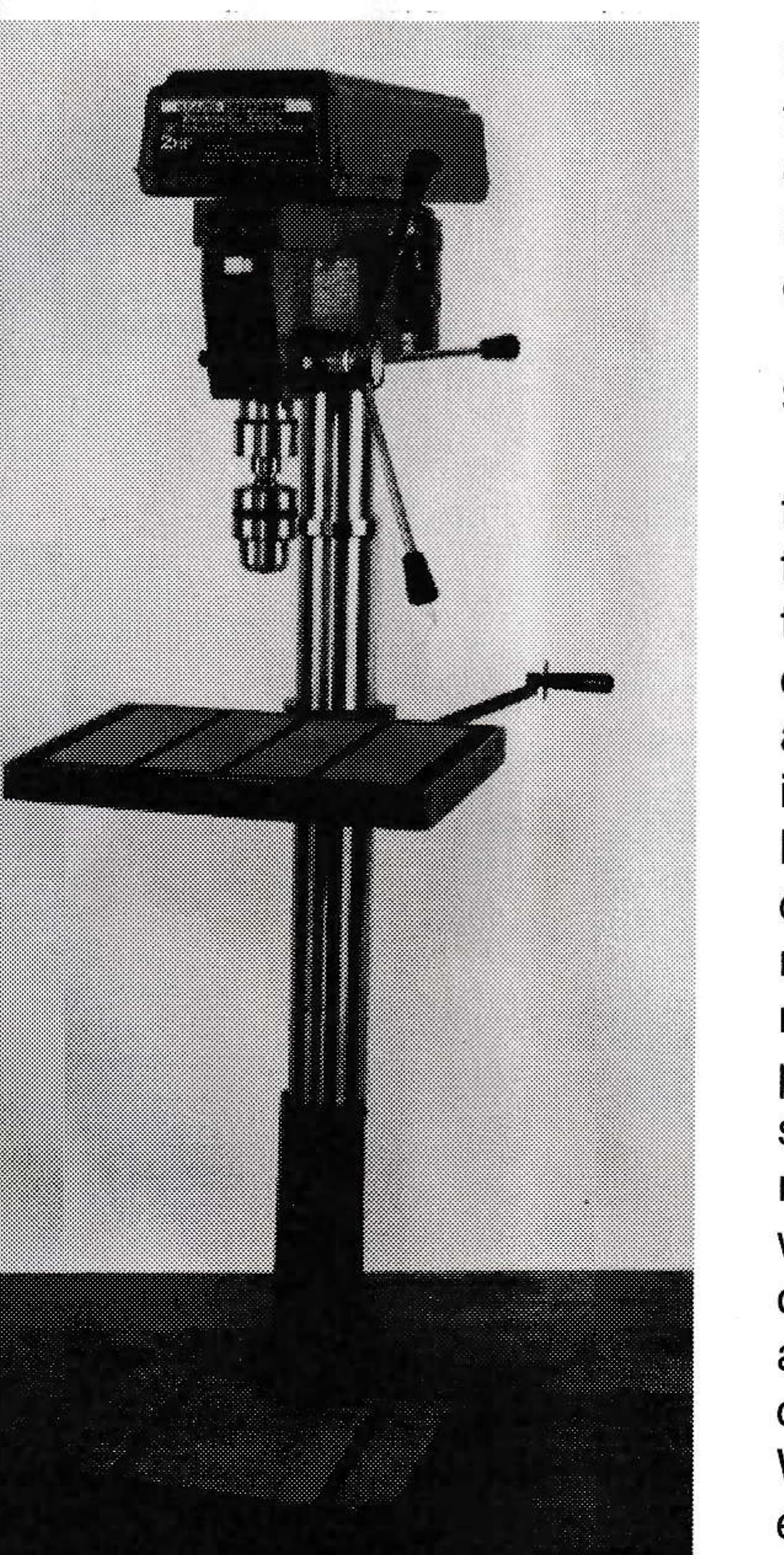
Sears—Models 21370 and 213211
These two models appear to be off the same assembly line in Taiwan, with the model 21370 a 17-inch press and the 213211 a 20-inch machine. Both are quite capable tools, the 17-inch model being a nice standard-duty press and the 20-inch filling the need for an excellent heavy-duty machine. Both also feature coolant-ready T-slot tables; the 20-inch model being nearly double the size of most of the competition. The tables incorporate rack and pinion gearing for smooth, accurate movements and both models come standard with a built-in work lamp that does not require a secondary power source. They also have as standard a safety switch requiring the operator to insert a key prior to operation. While some folks see this as an unnecessary feature, our testers agreed that it promotes better shop safety records.
Unfortunately, there were negative features such as a dial-type depth adjustments. As noted above, this depth control method can be weakened by repetitive plunges and becomes inaccurate. These presses definitely deserve better.
The overall machining on this press was nice, but the chuck is only moderately accurate, a bad way of terminating the power source. Sears did well in this test and like all tools purchased from this store, parts will be available far into the future.
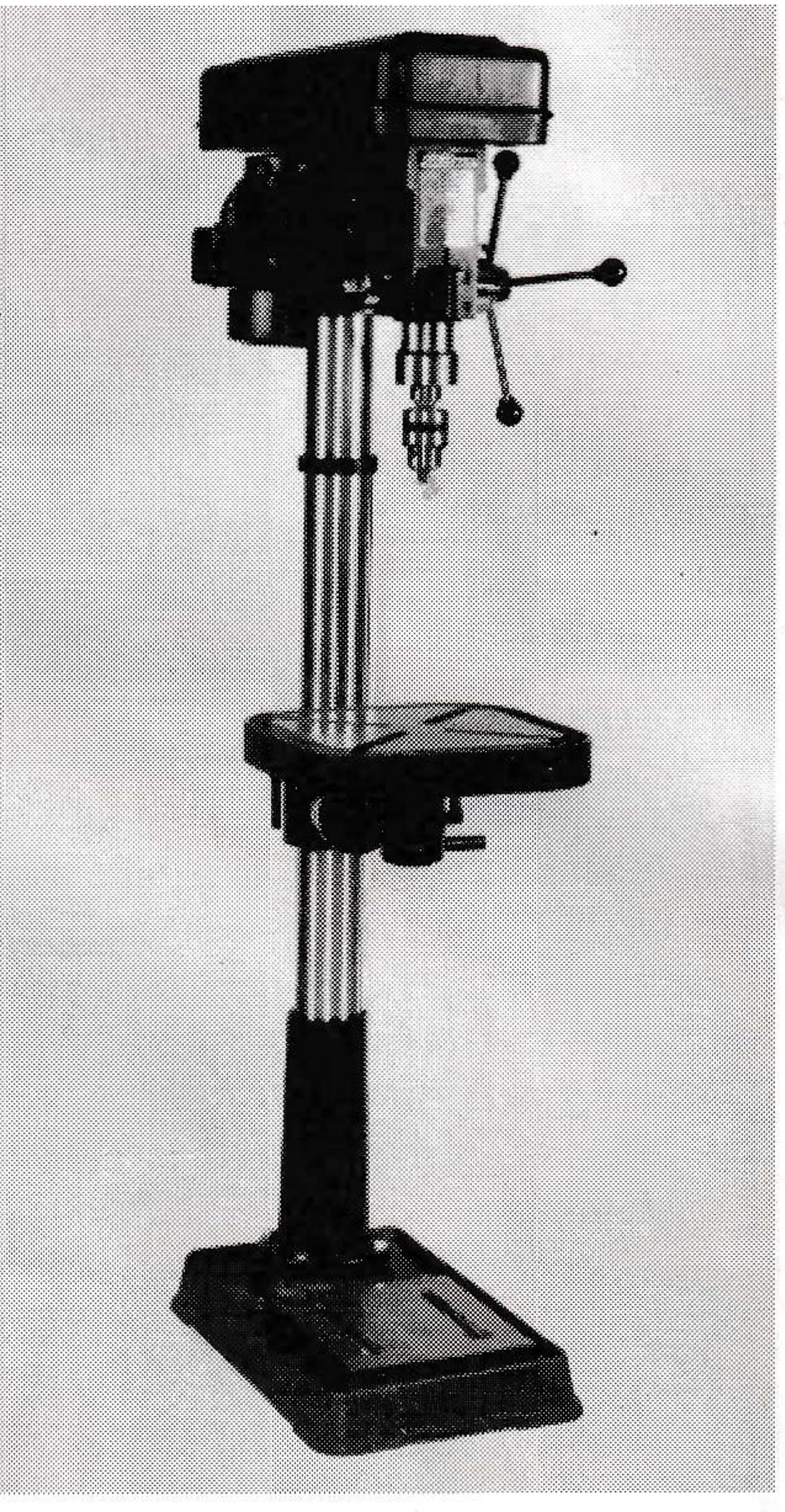
Tradesman—Model 8110
The sticker on this machine says “Tradesmith”, but this Connecticut-based importer has taken a new brand name, “Tradesman”, for future models. This is a very nice machine that’s built tough with a coolant ready T-slot table. The trouble is, the manufacturer forgot to put the drain hole into the table, making for some unusual spillage situations.
Another fault is a side mounted switch that makes blind shut-off into a dangerous pastime. Adding to this is the lack of a work light and that dreaded dial-type depth control. Not all is bad though because the machine has a rack and pinion gear (for the table) and a tough, heavy-duty sealed motor is incorporated into the head.
Like the other imports, this press ran with limited vibration and noise. It could have done better with some tighter machined tolerances, but it could have done much worse.