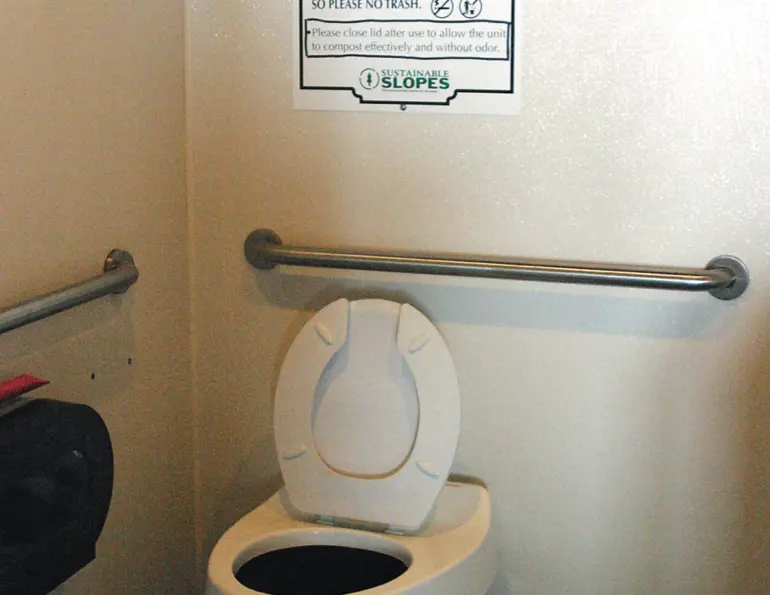
No BS: composting toilets can make economic and environmental sense. They are well-suited to locations where installing a septic system and/or leach field or tying into a sewer are problematic, and where water is scarce or groundwater contamination is a potential problem. But they are not limited to these applications, as New Mexico’s Ski Apache has come to appreciate.
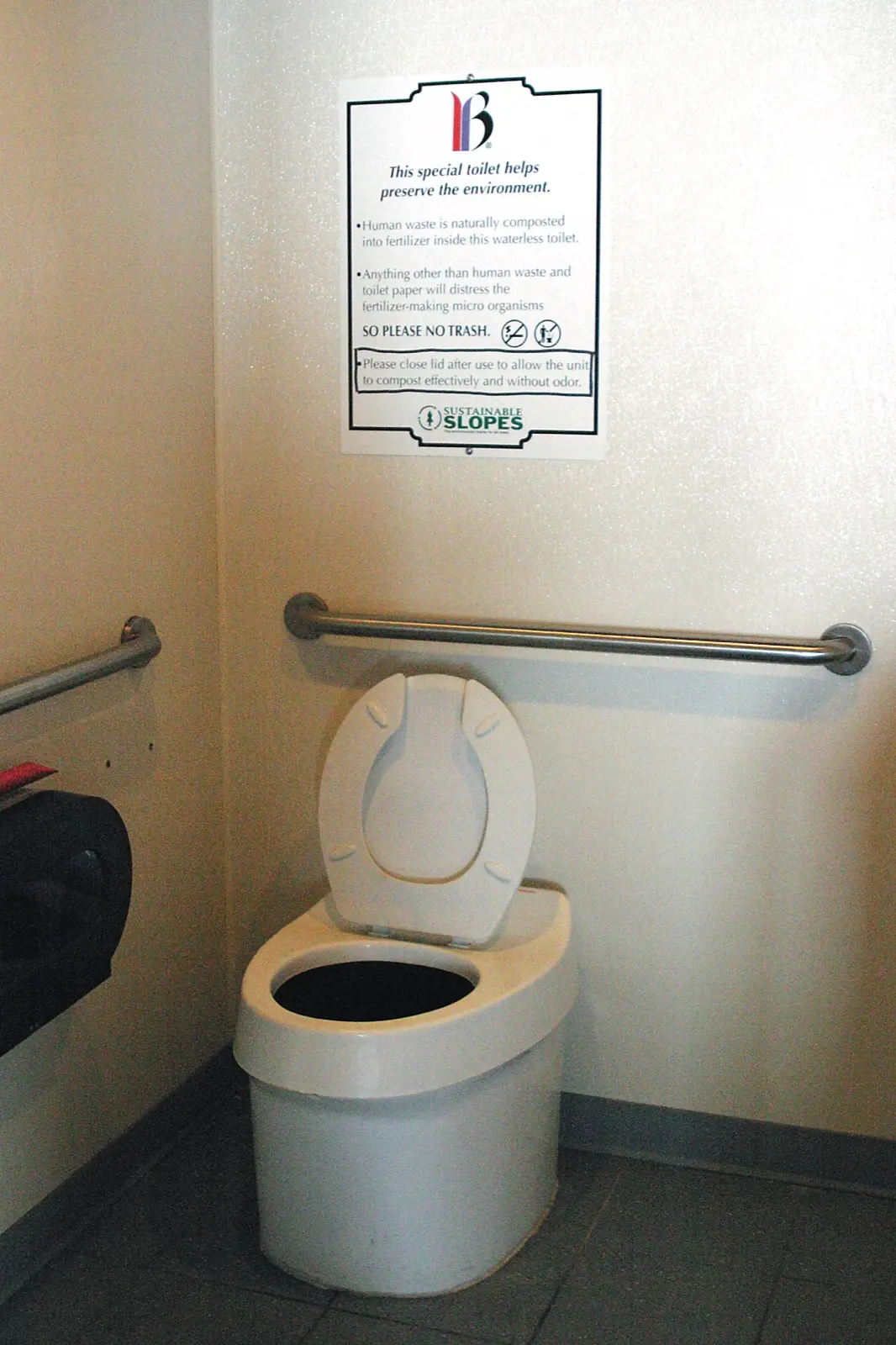
Ski Apache installed its first Clivus Multrum composting toilets nearly 20 years ago, in 1985, at the area’s mid-mountain Burger Stand lodge. The system worked so well—customers preferred it overwhelmingly to vault toilets (outhouses)—that the area has installed composting toilets for nearly half of its restroom capacity, including all johns at its Elk Lodge and in an addition to the day lodge.
Maintenance supervisor Rick Hall says, “We are really really happy with them. It’s cut down on our sewer to our regular system—we have dropped 24 toilets off the main system. It’s a big, big water savings.” Each unit can handle a surprising amount of waste. “It’s not unusual for a dozen or more fixtures to handle half a million uses in a year,” says Clivus chief Don Mills.
How the system works
The principle is the same as with any composting system: controlled decomposition. Whatever goes down the hole mixes with wood chips and enzymes and decomposes into first-rate topsoil. The process shrinks the waste by 95 percent or more; it takes a year (or sometimes several years) to fill a tank with compost.
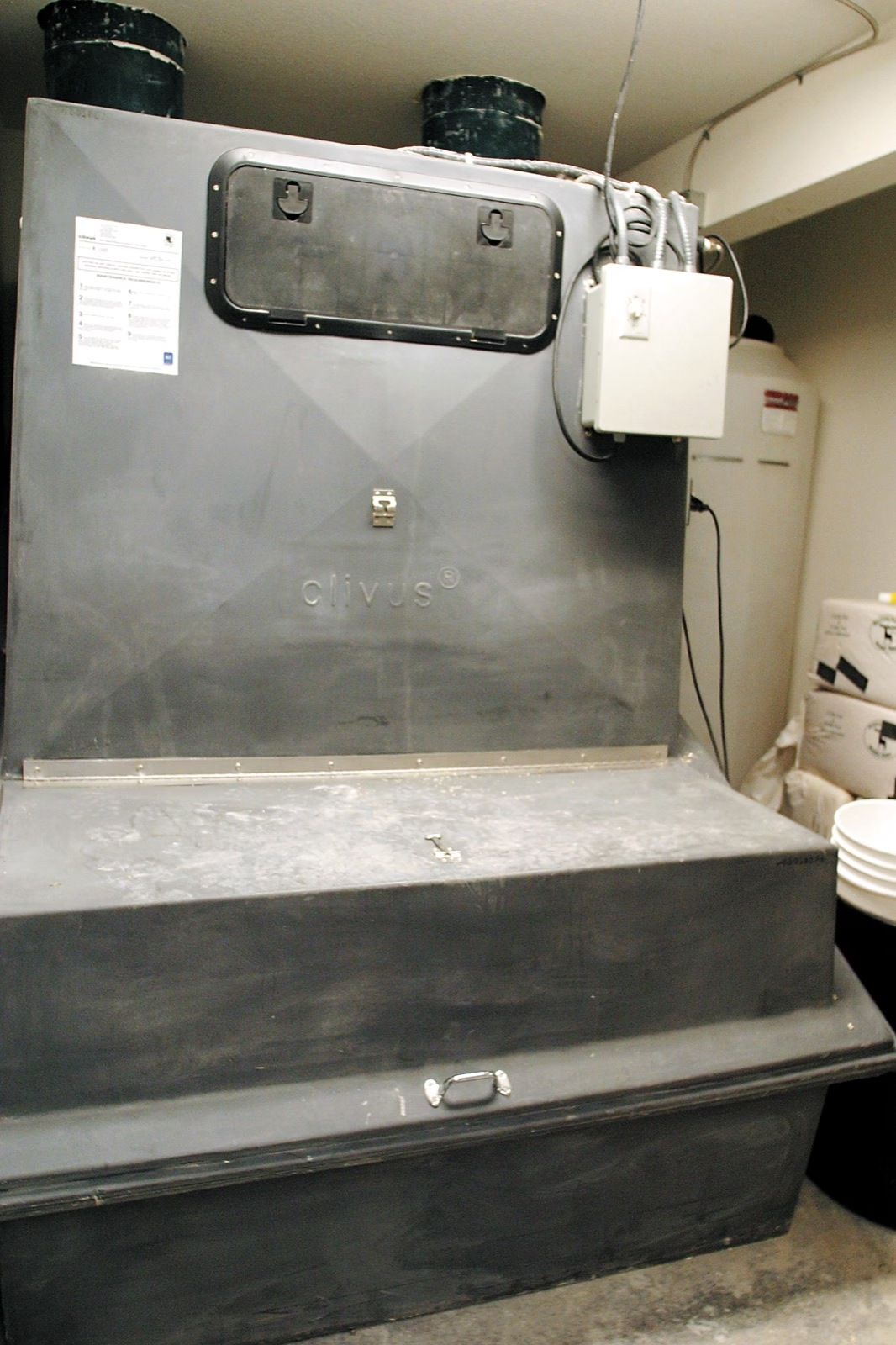
It’s a remarkably clean system. In each composting unit, two or four individual stalls or urinals feed a collection chamber, which holds anywhere from 1,000 to 1,500 gallons. A fan in the chamber pulls air down and out a vent pipe, so no fumes escape into the bathroom. The air circulation also speeds the composting process—oxygen fuels the process. Ski Apache has customized its installations by adding a second fan to each tank and topping most vent pipes with wind turbines.
Some regular maintenance is required. All compost piles need turning and periodic fuel supplements. Hall turns them twice a week, on Mondays and Fridays, by opening a door on the tank and raking them. This takes about an hour for each of the area’s three facilities. If a pile starts to cool down—a sign of inadequate decomposition—Hall simply adds more fuel. He throws a handful of enzymes into the pile, adds wood chips and a little water if necessary, and mixes it in with the rake. Fuel needs are minimal: each fall, Hall stocks the three Clivus facilities with a five-pound bag of enzymes and several 55-gallon plastic bags of chips. That’s all that’s needed.
We know what you’re thinking: how horrible is it to work with this mess? Doesn’t it smell awful? It’s not much different than working with any compost pile, says Hall. The fans and the compost process keep odors to a minimum (and eliminate odors in the restroom itself). Compared to dealing with plugged-up toilets, composting toilets are much, much more pleasant, he points out.

The process produces remarkably little compost. At Breckenridge, which has several Clivus Multrum units in high-volume and hard-to-service locations, the tanks are cleared out every spring after the snow melts, and the compost is spread on trails. At Ski Apache, Hall’s dual-fan-and-turbine system cooks the compost to almost nothing: he has removed two large shovelsful of rich compost in a decade.
And if staff is too squeamish about dirty work, suppliers such as Clivus Multrum will contract to service its systems.
Dollars and Scents
Composting systems require space for the tanks below the bathroom units, with room for maintenance personnel to service the tanks. So restroom buildings require a basement or two stories, and this can also add to the cost. Even so, composting toilets are not expensive. Halls says the base lodge system cost $27,000. “If you just went to put in a septic, it would be $10,000 to $12,000 just for that. But then you have the rest of the expense. So it’s nearly a wash.”
Ski Apache GM Denny Grover adds, “If we were to put in 28 to 30 more johns into our current septic, it would have to be expanded, and would create unacceptable water use. In low-perc areas, it’s especially valuable. Overall, composting toilets are a lot more cost-efficient.” Both Hall and Grover describe their system as labor- and money-saving in the long run, as well as environmentally superior.
All around, composting systems come out smelling like a rose.