Perfectly Dry
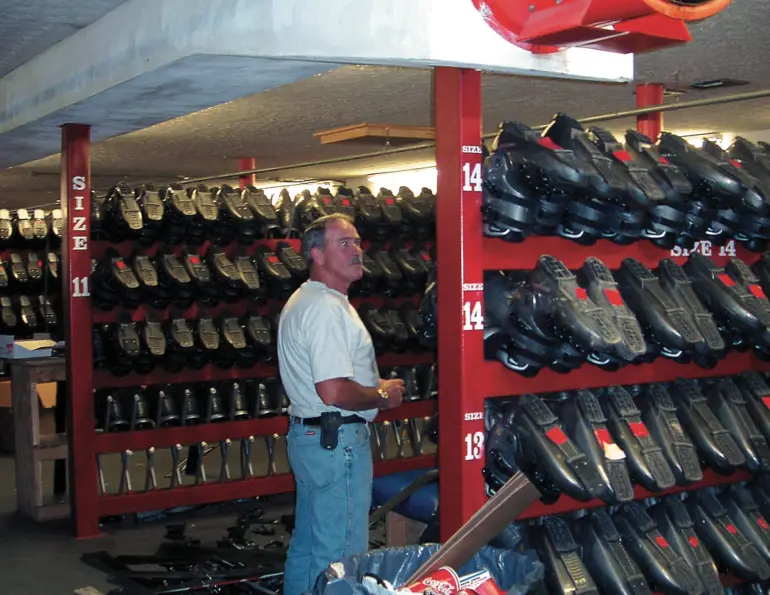
Nothing discourages a new rider faster than renting ski or board boots that are wet. To prevent this from happening at Perfect North Slopes, Ind., Clyde Perfect, owner of the resort, came up with this great boot dryer design. The secret behind the idea is that the boot dryer frame is also part of the dry-air ductwork and fits neatly into the boot storage room.
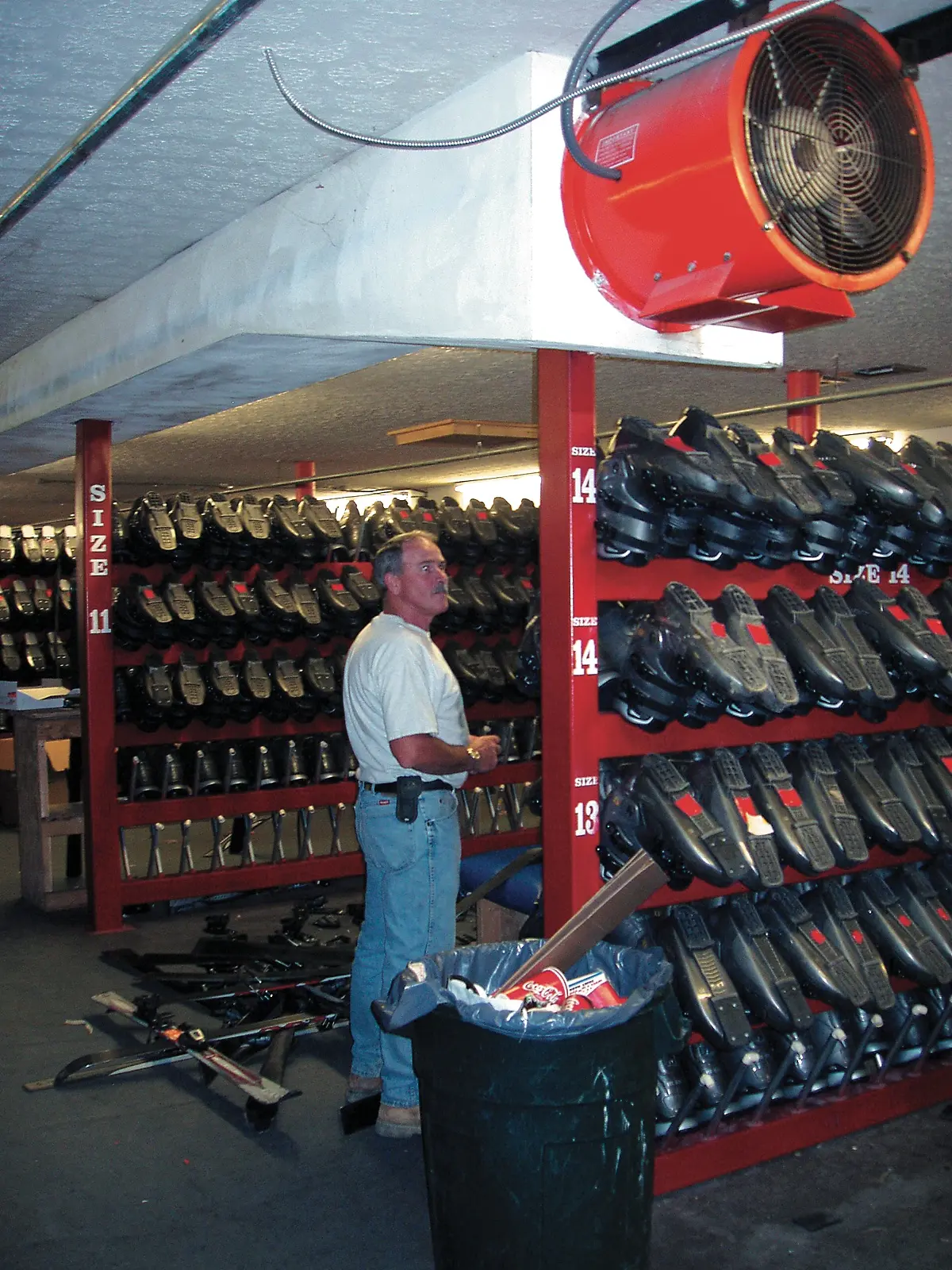
According to Chuck Heist, tubing hill manager, the boot dryer uses two farm fans, model no. 318AF-3-LC, that are forcing heated air into 25-inch wide by 13-inch tall drywall/plaster box ducts running along the ceiling and connecting to all boot racks. Each boot rack consists of 2 pieces of 5-inch square by 8-foot-long steel pipe used as uprights. The square vertical pipes in turn connect with five pieces of 4-inch-square by 20-foot-long pipe running horizontally and making up the individual boot rack rows. Each 20-feet 4-inch square pipe has a hole drilled every 6 inches to accept a 3/4-inch by 10-inch conduit pipe. The conduit is the final dry air distribution pipe and is positioned at a 30-degree angle.
This system was so successful that a second boot dryer was constructed. Both dryers operate overnight and can dry 3,000 pairs of ski and board boots in as little as 8 hours during peak times.
Ladder Transport
Ski areas would be totally lost without very long ladders. The problem, though, is getting them from point A to point B on the slopes, especially in the wintertime. Randy Smith, an electrician at Wisp Ski Area in Maryland, came up with this handy solution.
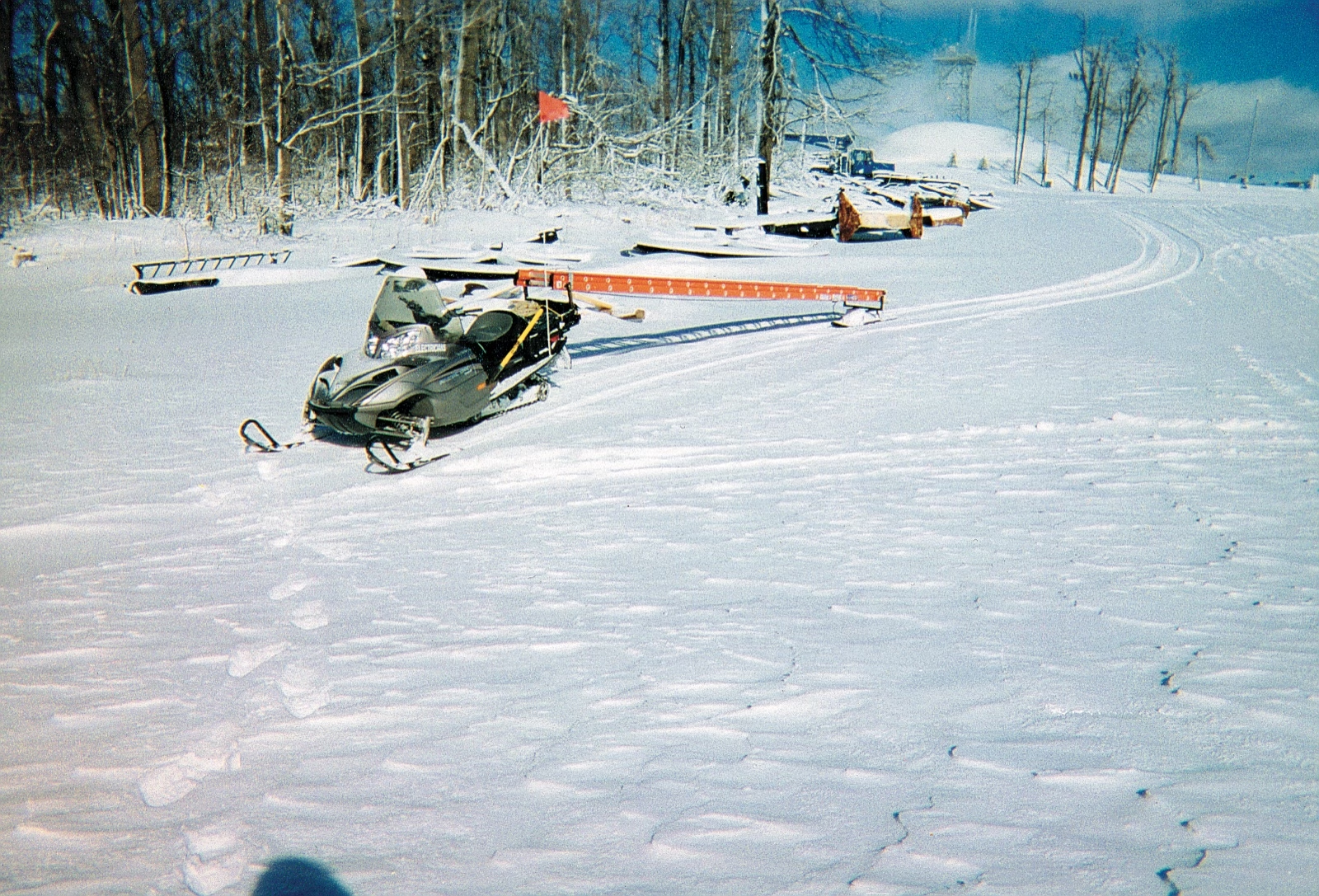
By mounting one end of the ladder to the back of a snowmobile and letting the other end follow like a trailer, transport is made much easier. In order to make this possible, a hinged mount needs to be installed on the snowmobile’s rear deck to enable the vehicle to turn side to side and up and down, while the other end of the ladder trails behind in the snow. Initially skis were used on the trailing end, but a better solution turned out to be using some old snowboards. This also makes it possible to back the snowmobile up with the ladder attached.

For more information contact Randy at [email protected].
Getting a Grip
According to ANSI B77, section 4.3.4.3 on grips, clips and carrier testing, “All grips, clips shall be tested. . .the test sampling method shall identify the parts to be tested to assure a rotating minimum test of 10 or 10 percent, whichever is greater.”
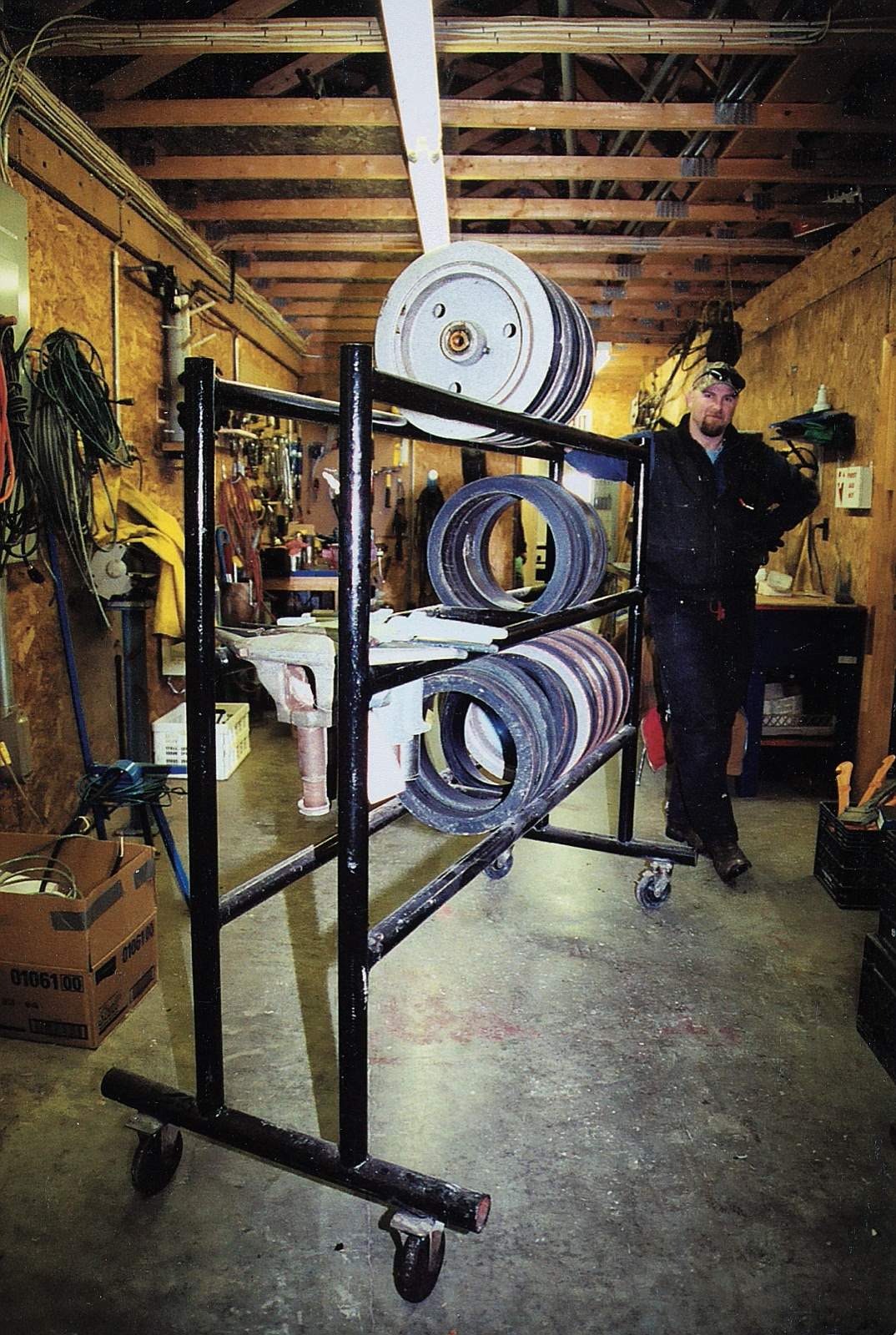
At Winterplace Resort, W.V., the problem was keeping track of the grips removed for testing from the different chairlifts. It used to be that each lift had its own reserved pile in the middle of the shop floor, and sometimes the piles got mixed up. Scott Howells, from the lift maintenance department, ended the confusion with this clever idea. Howells fabricated a grip and sheave wheel rack that not only stored the items, but also served as a caddy to move the grips and wheels around the shop for service.
The grip/sheave wheel holder was made of 1-1/2 inch steel pipe. The unit is 5 feet high, 8 feet long and is 10 inches wide. Three levels provide plenty of room for several chairlifts’ worth of grips. The pipe that was used was left over from another project at the area. The casters were purchased from a local supply store. Total cost is estimated at $100.