
Actually the proper name for what takes place is “evaporative cooling”. The same effect that causes a chilly feeling when you step out of a swimming pool, especially when a light breeze is blowing.
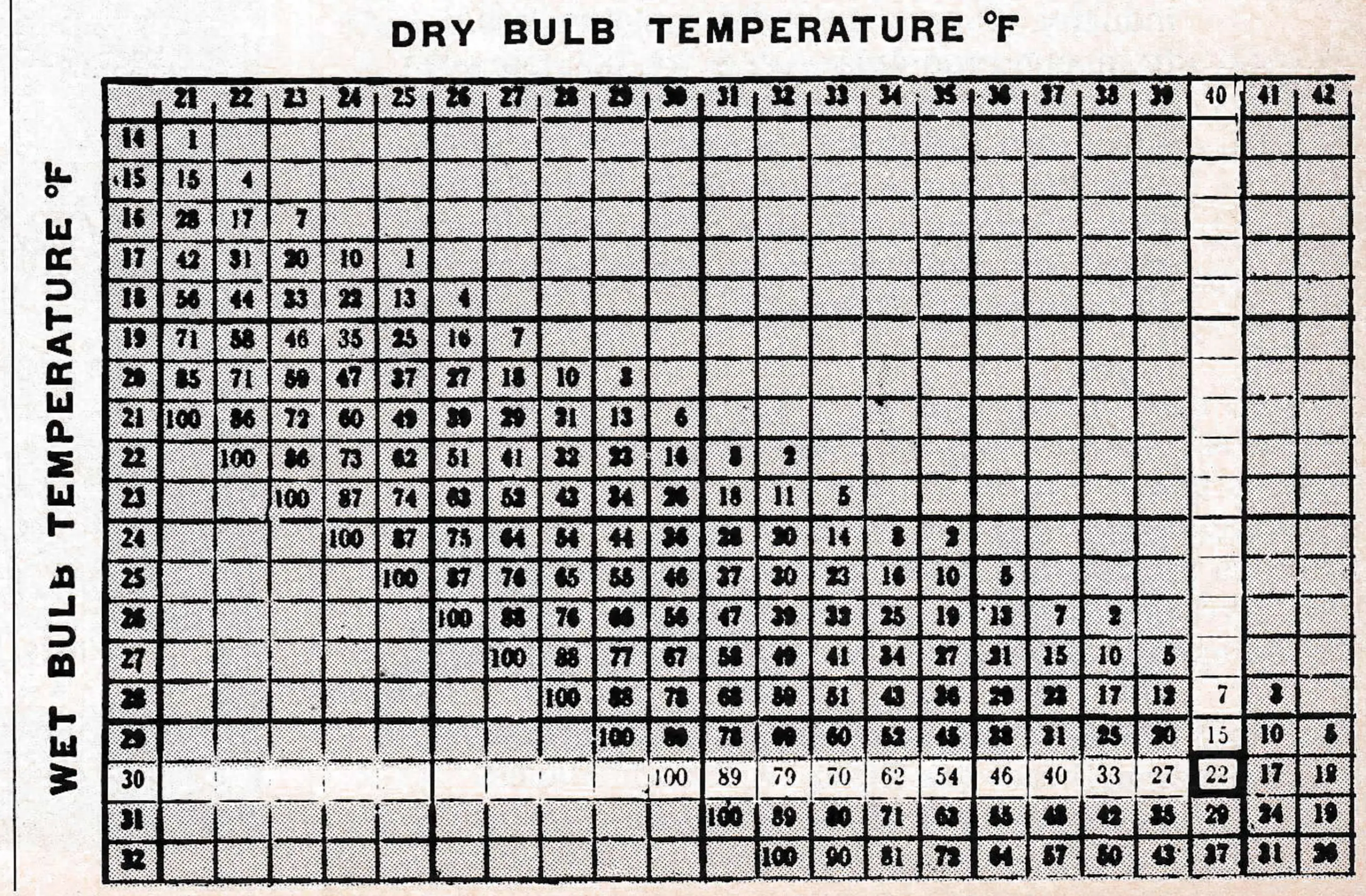
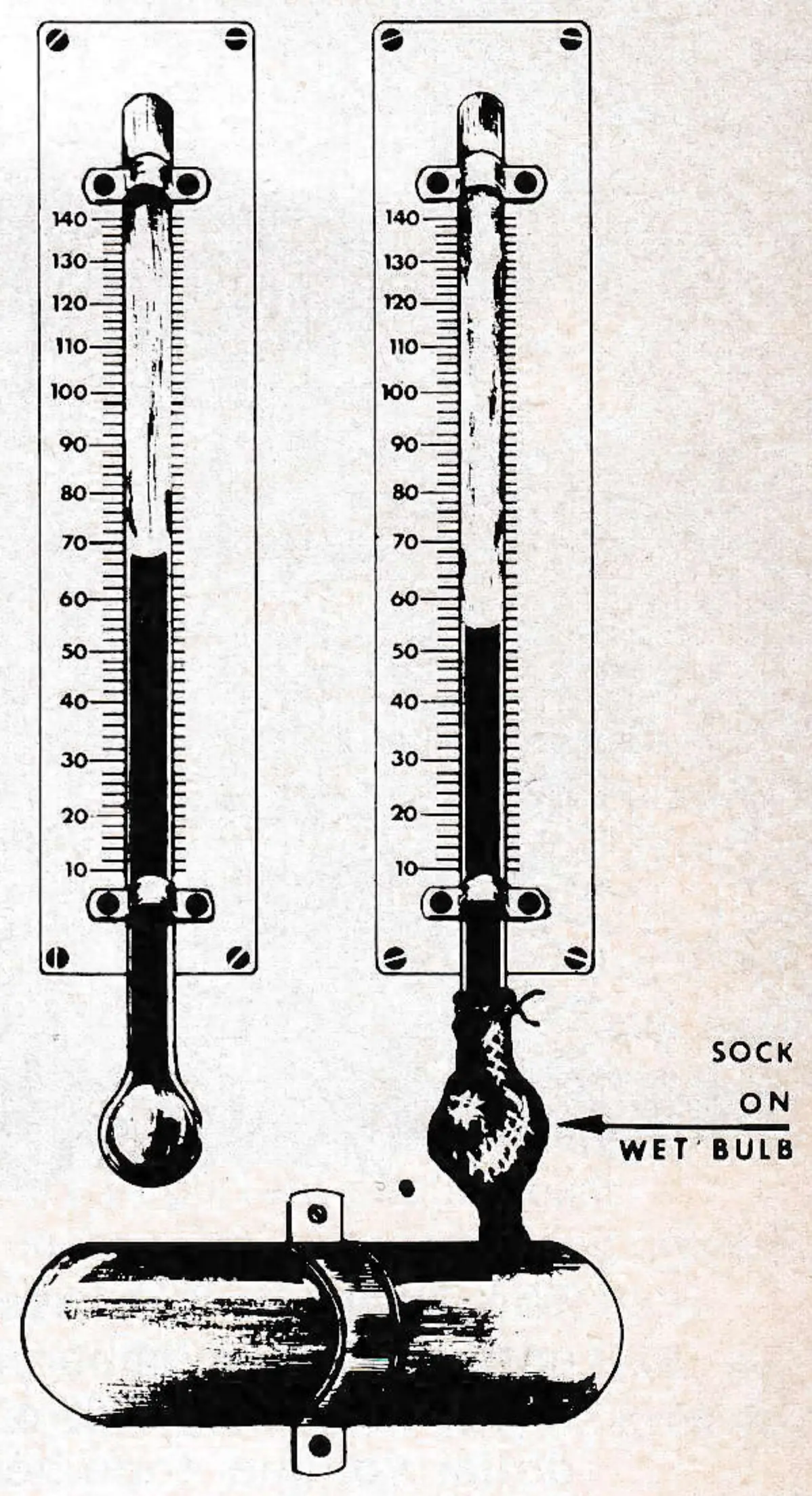
The best way to describe this effect is through the use of psychometric charts, more commonly known as ‘relative humidity’ (R.H.) tables. The data shown in figure (1) is used in conjunction with determining R. H. from temperature readings on two thermometers (Fig. 2) simultaneously. One thermometer is equipped with a ‘sock’ which is installed over the bulb and then wetted; the other is dry. When the surrounding air is relatively dry, moisture from the sock evaporates and lowers the temperature on the “wet” bulb more than the “dry.” Thus, referring to the tables, you will notice that a dry bulb temperature of 40 degrees F and a R.H. of 22 percent yields a wet bulb temperature of 30 degrees F. or 2 degrees below freezing.
As most snowmakers know, better or more snow is made on dryer nights. However, the effect may be minimal when slopes are saturated with snow guns with the resultant moisture contributed to the air. This is especially evident on still nights. Therefore, whenever possible, keep guns spread out as much as possible while still accomplishing the desired coverages.