

When owner Tony Wise decided in 1971 to build at-the-site lodging at his 24-year-old ski area he spent several months visiting ski areas and resorts all over the country. At the conclusion of his nationwide tour he had made a decision: “It was simple economics,” says Wise. “The areas that were making it were going after the convention business. It was obvious that convention business was essential to Telemark’s successful expansion.”
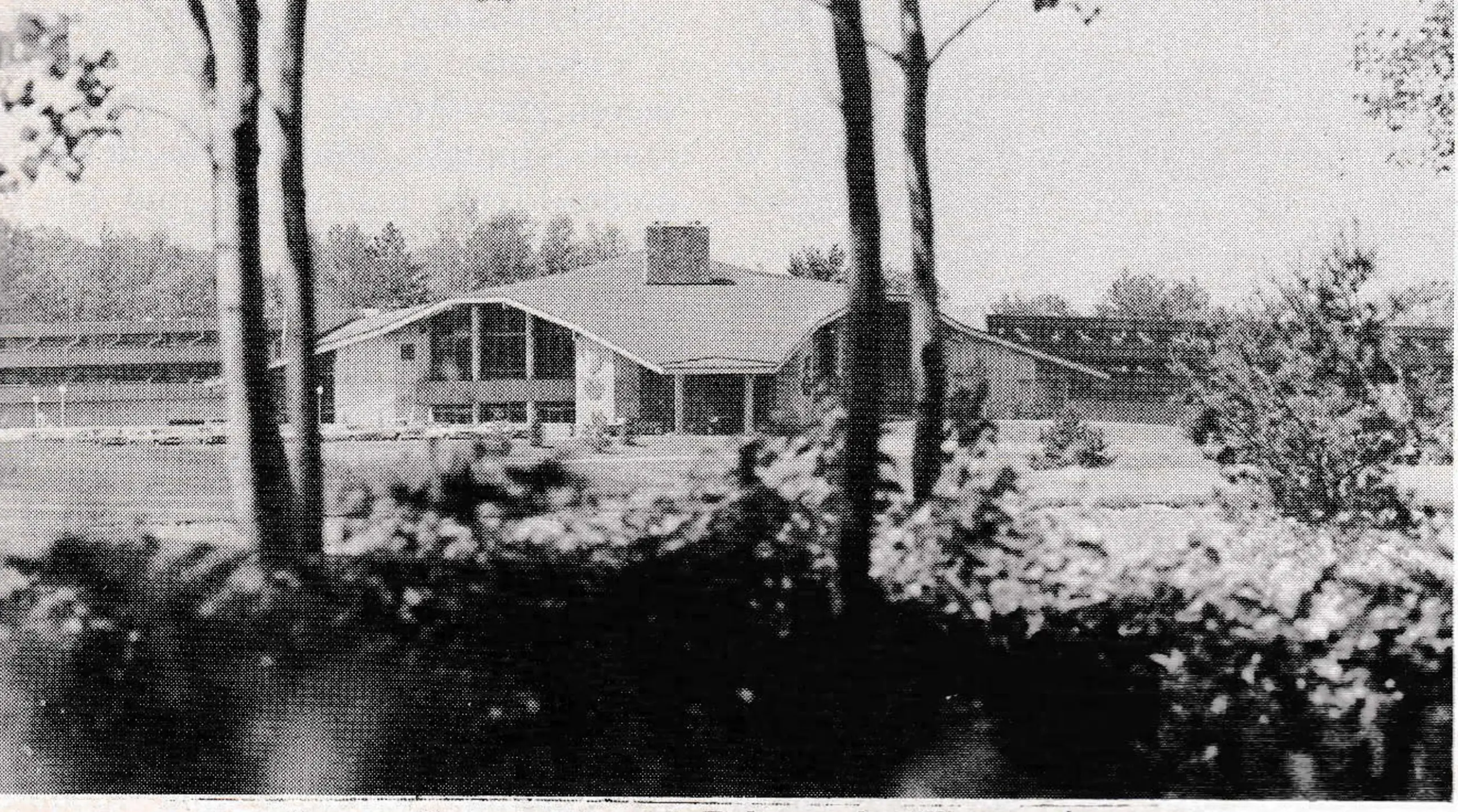
Construction started in May, 1972, and Telemark Lodge opened for business in December. A three-story structure, the lodge’smain core houses the lobby-registration area, lobby bar, multi-media theater and indoor pool on the ground floor. The coffee shop, dining room and a private banquet alcove are located on the second floor and the night club tops off the core. Two hundred suites which can sleep four each, meeting and banquet rooms, a product display area, administrative offices and a shopping mall are housed in two three-story wings radiating from the core.
The first convention was held at Telemark in March, 1973. “If I had it to do over again,” says Wise, “I’d start at least one year in advance booking conventions. We hired our convention sales staff in September, 1972, and because we only had three months lead time we had very little occupancy the first year.”
Today, however, 65 percent of Telemark’s gross take is the result of convention business, according to Wise. “Our summer business has been 5 percent to 10 percent greater than our winter business for the past two years,” he says.
A move into the convention business requires certain basics. “You need a minimum of 200 rooms” says Wise. “Your simplest staff can handle zero to 200 rooms and this will enable you to host groups of up to 500 persons.” Wise also recommends the lodge-plus-townhouse approach used at Telemark. “Town houses on the periphery of the area are great for any overflow you may encounter when hosting slightly larger groups,” he points out. With conventions in the 500-person bracket you do not need a convention hall, an expensive essential for conventions of 1,000 and over. Telemark, which is geared for meetings of 500 to 600, has two meeting rooms with capacities of 400 each, and five smaller meeting rooms for 40 to 60.
Banquet food service facilities are a necessary part of convention service and Wise recommends a separate banquet kitchen. A theater is important and Telemark’s multi-media 250-seat theater facility has become a major selling point. The theater has a quadrophonic sound system, an eight-track mixing console, a large screen with seven projector capability, film editing and custom recording equipment.
Recreational facilities are essential since most ski areas are situated far from the attractions a conventioneer might take advantage of in a metropolitan area. Telemark has indoor-outdoor swimming pools, four outdoor tennis oourts, an 18-hole golf course, horseback riding, canoeing, cycling and hiking. Such amenities as a heated whirlpool, sauna, steam and Swedish massage as well as an indoor shopping mall and a night club make selling easier for Telemark’s sales staff, and Wise believes Telemark’s entertainment policy — live entertainment nightly and regular booking of such names as the Duke Ellington Band, Frank Sinatra jr., The Four Lads and Harry James — is a primary drawing card.
Major personnel changes are critical to the success of your conversion to convention center. “Such an expanded operation naturally requires greater amounts of start-up capital than most ski areas ever need,” says Wise, “and if you’ve been running a one-man operation and playing the finances by ear, you’ll discover this is just no longer possible. You’ll need a much bigger accounting staff and a budget control man.”
Wise says a well-organized food and beverage operation staffed with competent people is essential; and one that is not can put you in the red faster than almost anything. In addition to a basic convention sales department consisting of a sales manager, two salesmen and three secretaries, your expanded operation will require increased public relations efforts, extra front desk staff, catering manager, convention set-up man and recreation director.
“The year-round convention-resort hotel concept can work equally successfully in almost any geographical area,” says Wise, but he does think ski areas have one special ingredient essential for building a successful convention operation — personnel. “Ski area personnel are accustomed to dealing with people and are generally courteous,” says Wise, “and when you’ve got this big summer nut to work off there’s a lot of incentive on everyone’s part to see that the customer is happy.”
Telemark, according to Wise, is growing about 5 percent a year. “We’re running a 50 percent occupancy now and anticipate 65 percent when our convention business plateaus in about three to five years.”