


You have decided that a new lift for your area is desirable and that a certain type of lift will best suit your needs. You have obtained surveys and have requested quotations from several lift manufacturers. This has certainly represented a great deal of blood, sweat and tears. But as soon as the various proposals from the lift manufacturers start coming in, the features of different makes of lifts are extolled by their representatives and the specifications and prices are compared. Everything up to this point seems to have been simple compared to the making of the big decision—“Whose lift do I buy?”
Who is selling what?
To have an operating lift you probably will require more materials and equipment than the lift manufacturers proposes to furnish. (If you are getting a “turn-key” job—complete erection of the lift—you have placed a great deal of responsibility for this analysis on the manufacturer. You are also in the minority of new lift purchasers—most areas do most of the erection work themselves.)
Stop and think what you will need for foundation work. Are anchor bolts, anchor bolt templates, reinforcing rods furnished by the lift manufacturer? If not, add the cost of these items to the basic lift price—you will have to buy these. (Ask a local contractor to estimate the cost of these items if not included—also get an estimate on the amounts of concrete required at various locations.)
Next, consider the power source for your lift. Normally, if the lift is electrically operated, you will be required to furnish the electrical connections up to a main disconnect switch at the drive terminal. Check and ascertain that all additional electrical switches and controls are furnished by the lift manufacturer. If any items are to be furnished by you, add these to the cost of your new lift. If the lift has a diesel or gasoline engine, either as a main or auxiliary power unit, you will need fuel storage facilities. Are they provided? With internal combustion engines, you will need a source of electric power for the safety system. Is it included—or must you provide for it?
Look carefully at the provisions for spare parts that are furnished with the lift. Your automobile probably has nothing more than a spare tire, lug-wrench and a jack. But you’re never too far from a garage that is well equipped. If you are faced with the replacement of a part of your lift in order to continue operations over a busy week-end, where is your garage? Spare parts to have on hand include: carriers (T-bars and chairs); grips, sheave liners (both bull-wheel and line), and sheave bearings or complete line sheaves. Check on each manufacturer’s proposal and determine just what is furnished with the lift.
What services do you obtain with the quoted price of the lift? Is the use of special equipment that may be required included? Services of a qualified wire rope splicer? Engineering inspection and advice from the lift manufacturer? A final, complete operational check-out? If you are erecting a lift, leave the specialized jobs to the qualified experts and get a final and complete systems checkout and approval from the lift manufacturer.
When all of the lift quotations have been adjusted to include all the required materials, equipment and services, then there is a basis for making further comparisons of the basic features of each manufacturer’s design, performance and reputation.

Does the price quoted for your lift include these items and services?—If not, You will have to pay for them.
For the Towers
- Anchor bolts
- Anchor bolt templates
- Reinforcing Rods
For Electrical Prime Movers
- Main disconnect switch and leads
- All auxiliary switches and controls
For Gasoline or Diesel Prime Movers
- Fuel storage facilities
- Electrical power source for the safety system
Spare Parts
- T-bars
- Chairs
- Grips
- Sheave liners
- Sheave bearings
Services
- Wire rope splicer
- Engineering inspection and advice
- Installation supervision
Why do the lifts differ?
When you look at the different proposals—all to fit on the same mountain, start at the same place, end at the same place and carry the same number of skiers per hour—the differences in wire rope sizes, power-plant sizes and number of line towers, may be bewildering.
The size of the main hauling cable is determined by either of two factors: the tension required at the drive bull-wheel to prevent slippage; or the tension required to prevent excessive sag between spans. On some shorter lifts, the size of the main hauling rope is considerably larger than is required by either of these criteria. This is simply because the savings gained by using smaller rope sizes is negligible. In all cases the maximum tension shall not exceed 20 per cent of the ultimate breaking strength.
The horsepower required to operate the lift is based upon three basic factors: First, and by far the greatest, is the power required to lift a specified number of skiers a certain distance in a certain time. Add to this the bending effort of the rope, rolling friction of the rope on the sheaves and bearing friction. Thirdly, add the friction of the drive system, principally gear and bearing friction. (For surface lifts—the first item of power must include the friction of the skier’s skis on the snow for the uphill trip.) Most manufacturers will provide an additional margin of horsepower above the calculated sum of the above requirements. The commonly used electrical motor systems provide a “reserve” for starting and acceleration—greater margins must be provided for internal combustion engines.
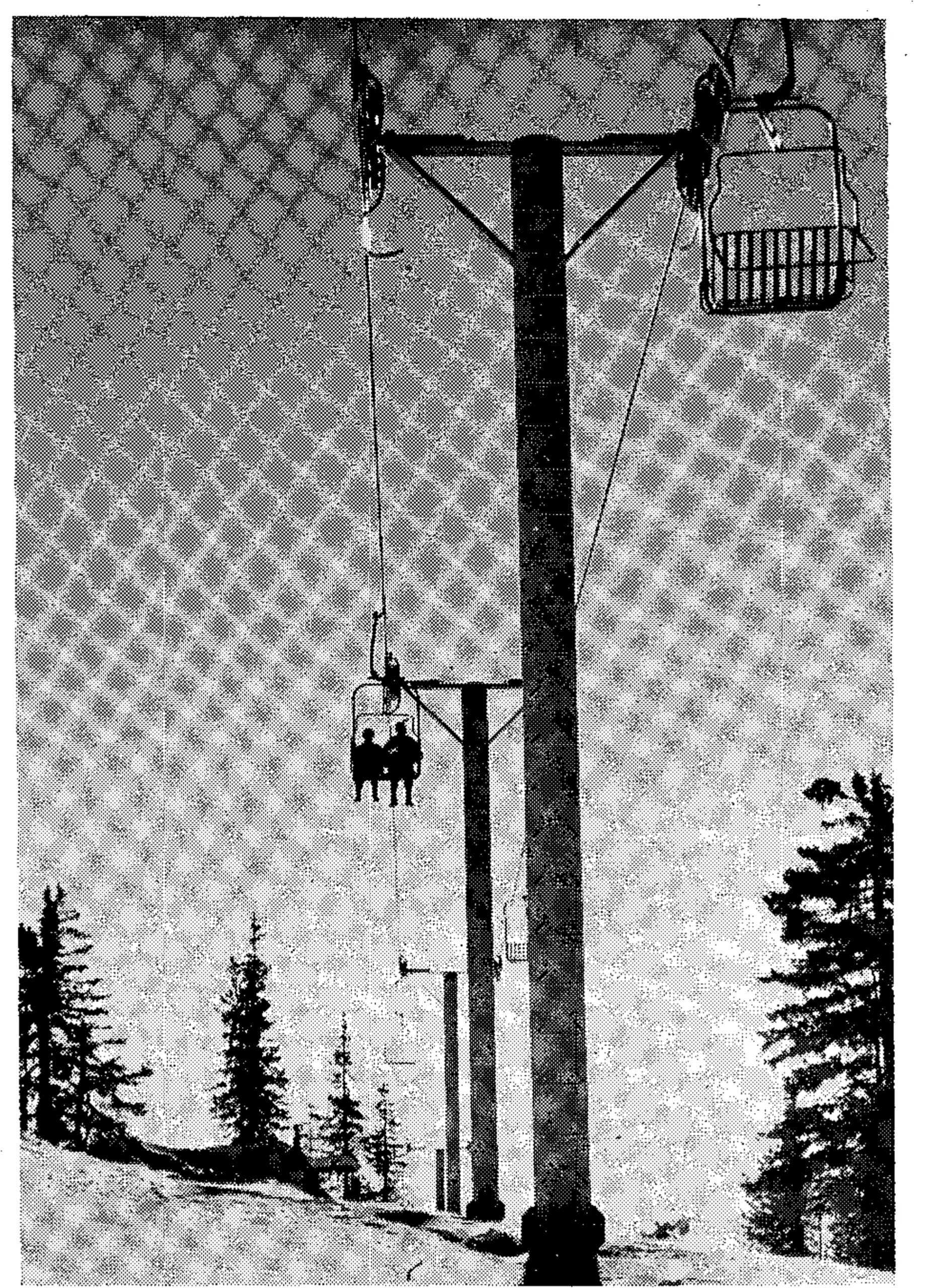
The most confusing item of lift comparison is the number and location of line towers. Lift manufacturers differ on design philosophy of this phase. Basically, the line towers must support the main hauling rope at a reasonable height above the ground in such a manner that the loads on the line sheaves are equalized between certain maximum and minimum values and the sags of the loaded rope are not excessive between the towers. The size of the line sheaves, the main hauling rope and the material with which the sheaves are lined determine the maximum allowable load that can be placed on a line sheave. The total maximum load on a tower is this allowable load per sheave, multiplied by the number of sheaves on the tower. Some manufacturers prefer to use few towers with multiple sheave units on each tower. This design results in heavier but fewer tower structures and foundations, as opposed to more towers of lighter construction with smaller foundations and fewer sheaves per tower. The A.S.A. Safety Code requires that on T-bar, platter and J-bar lifts, the minimum rope clearance above the ground be at least two feet when the rope is off any single tower. This requirement dictates the minimum number of line towers needed for a given tow regardless of sheave loads and configuration. While no similar requirement exists for chair lifts, a similar rule (allowing for greater clearances) applied to the line layout of chair lifts is a sound safety feature. Discuss the layout with the lift manufacturer’s rep. Learn what the maximum design load for his sheaves is; what tower has the greatest load per sheave; what tower has the least load. For a rope to run in the center of a groove of a line sheave, an essential requirement is an adequate pressure on the sheave under all conditions of operation.
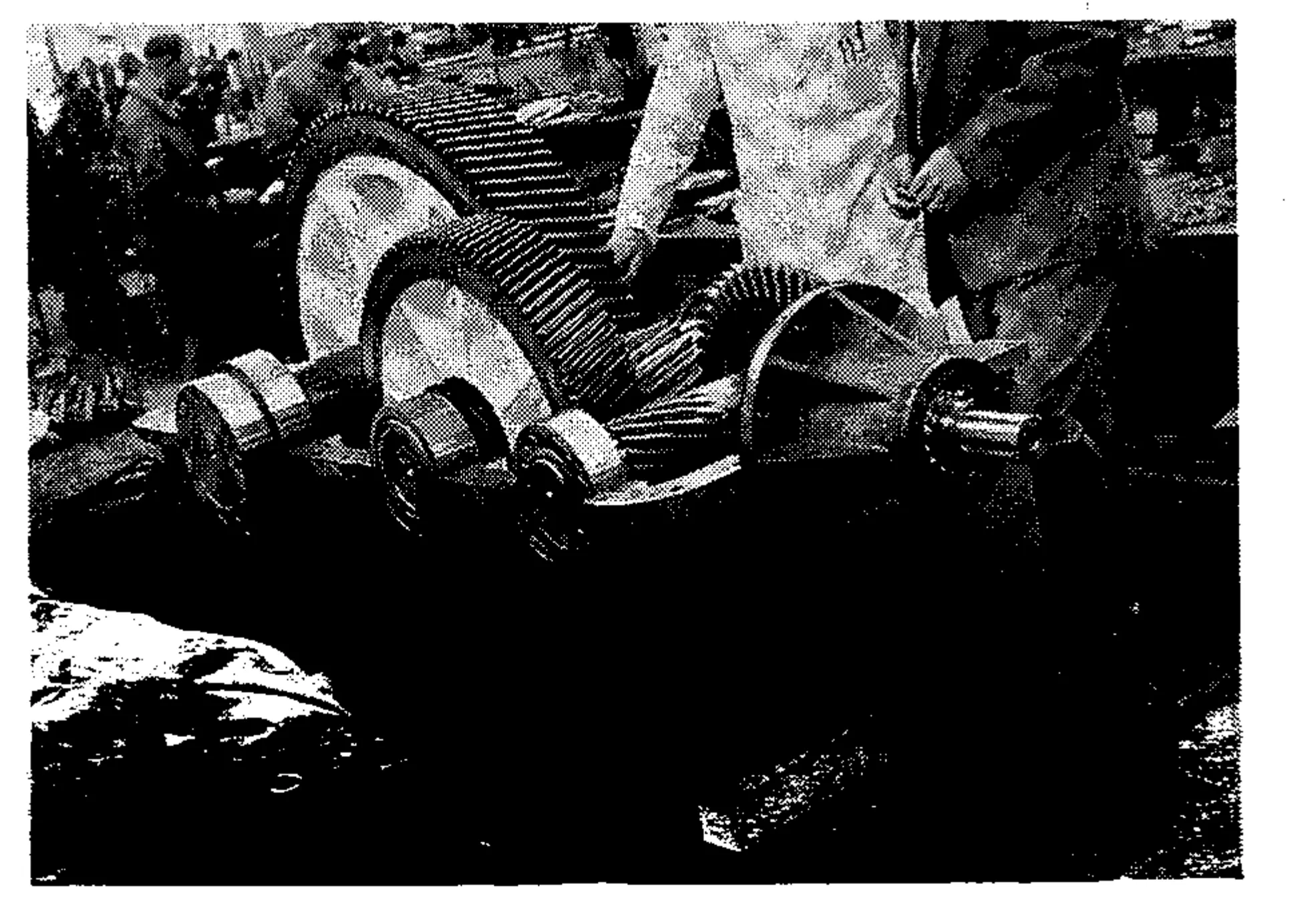
Other factors will weigh heavily upon your final decision. Most of these factors do not differ greatly from other purchasing decisions. The past record of the manufacturer both as to the quality of equipment and reputation in regards to service should be carefully considered. Delivery schedules should be clearly understood. One final recommendation is strongly urged. Place a specific requirement that the lift shall conform in full with A.S. B-77.1 Safety Code requirements and any applicable state or local regulations.