
Winter Park is 30 years old this Winter, and Steve Bradley has been manager for 20 of those years. The resort has become the third largest and best-maintained in Colorado, the very model of a well-run ski area—a model which observers from Europe and both coasts come to inspect, take notes on and marvel at.
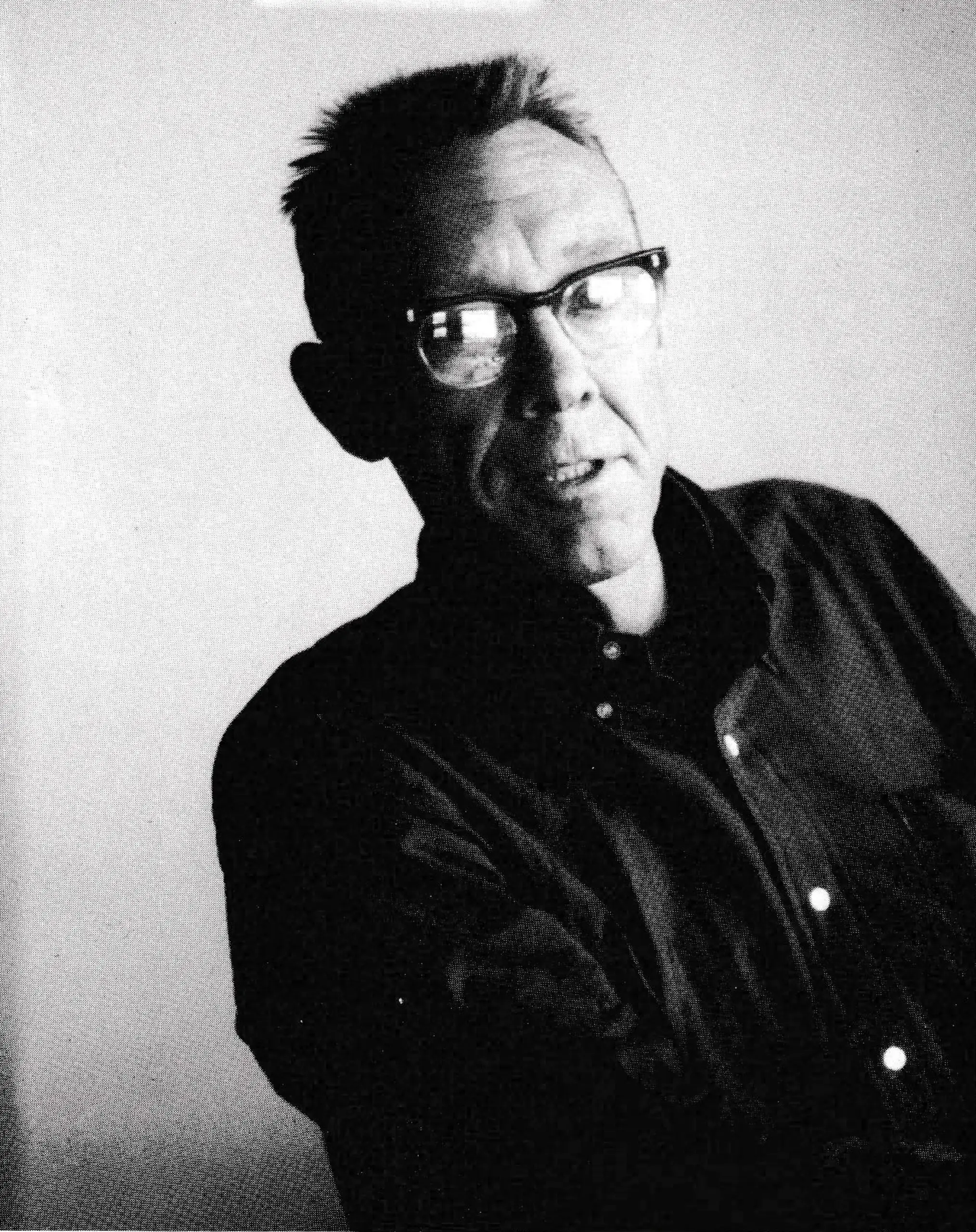
Bradley, this year’s president of the National Ski Areas Assn., is aloof, forbidding, exacting, imperious, talented, imaginative, successful and not without humor. Once, when a newspaper called for conditions at Winter Park, he barked, “Conditions are poor to unbelievably bad!” In that sentence was the typical Bradley mix of verity, self-goading, exasperation at less than perfect cooperation from God, and irony.
Basically, Bradley keeps his cool. On one occasion, a woman demanded to be let into Bradley’s presence. His secretary demurred.
“I insist,” said the woman. “It is very important.”
The secretary sighed, called on the intercom and then ushered the woman in. Bradley rose from behind a heap of work papers to his full six-foot-two, dark blond hair cropped close, long jaws longer than ever; a beardless Lincoln, complete with deep, sonorous voice. “Yes?”
“My little girl has lost her mittens.”
Bradley smiled tightly in a way which deepened until it became not-a-smile, yet he bowed the lady out with a courteous assurance and retired to his desk again where he briefly held his head in his hands (the nearest he comes to praying during the week).
Bradley’s hand is visible everywhere at Winter Park. He doesn’t buy in a strict sense, he invents. Whatever he purchases undergoes change before being allowed to serve. It has Bradley’s stamp, it has to have, to work right.
Bradley creations stand in every part of his resort. He has redesigned some of his chairlifts; he conceived the $550,000 “Snoasis,” the mountaintop restaurant; he helped design the base lodge with its strange but successful solar heating system. One noon, when some 3000 hamburgers were being served in the handsome base cafeteria, Bradley quietly watched the traffic snarls. He went back to his drawing board and sketched “islands” for dispensing coffee, tea, milk and condiments, thus solving the traffic problem.
The snow-grooming machines that make Winter Park the best-kept mountain in the West were constructed from original Bradley designs. Bradley is not a Johnny-come-lately in design: he has his masters degree in art and still has a fair hand. He’s a fine photographer, as well, and a competent movie cameraman. He writes lucidly and forcefully.
The average skier is served superbly well at Winter Park because Bradley, in his inner sanctum, knows things. He knows the intermediate doesn’t want to be scared out of his wits. So to keep “the wild ones” in control, Winter Park’s ski patrol sets up speed traps on intermediate slopes. On top, one man waits with walkie-talkie for the schussboomer. He sees one go by and radios down a description. Hundreds of feet below, the basher has to deal with a ski patrolman who stops him for a talk.
“Let’s face it,” Bradley says. “The average guy wants long, gentle slopes. He wants to ski without being hit. He wants a satisfying day. He wants fun. He shouldn’t have to apologize for that!”
Bradley was always fond of technical challenges. His younger brother, Ric, recalls, “In high school, Steve built a car out of an old washing machine motor mounted on a bed spring. And it worked! Then he built a couple of speed boats and they worked..!”
The Bradleys, of Madison, Wis., were a ski family. Dr. H. C. Bradley pere, who recently, at age 90, made the Ski Hall of Fame, helped construct a couple of ski-jumping hills. Steve’s older brothers, Charles (now 57) and Dave (54), were racers. Three younger brothers, Ric, Bill and Joseph, skied for Dartmouth. Steve became an “A” jumper and a fine four-way man. Those were the days of coaches like Otto Schniebs and Walter Prager and racers like Dick Durrance. Bradley’s racing career was much shorter than Durrance’s, but the two men became warm friends. “I wanted to ski like Dick,” Bradley says. “We all wanted to be like him.”

Bradley and Durrance raced Idaho, Utah, Vermont together; they photographed together. Their credit line read, “Durrance-Bradley.” In 1936 D & B were off to the ends of the ski earth. “We had no coach,” Bradley says. “Did we train? Hardly. We were too interested in our Leicas and the results of our fine-grain developing.”
All the same, Bradley and Durrance won the three-nation meet in Australia.
In World War II, Bradley became a Signal Corps photographer. He got tough assignments, such as skiing powder and photographing in Alta.
After the war Bradley volunteered to coach skiing at Colorado University. Then the coach received no pay for his work, but Bradley continued his art studies, which he relieved by such light work as painting skiers on highball glasses. In 1950, the year he got his masters in fine arts, he helped out by officiating at the FIS championships in Aspen. That year Winter Park was casting around for a manager, and Bradley got an invitation to apply. “There I was with my masters degree in fine arts, planning to become an art professor. I knew nothing about ski areas.” He took the job just the same.
He arrived to find a Winter Park where lifts were impossible. One T-bar had been fitted with staves of old whiskey barrels whose pieces just fell off, another T-bar had been condemned by the Forest Service and a third T-bar was weighted with small cement blocks that would periodically hit people on the head. All the T-bars were built originally for soldiers of the 10th Mountain Division at Camp Hale and operated at a speed that wore out skiers’ arms. One rope tow seemed to go right up a sheer wall.
Maintenance vehicles didn’t exist in the early ’50s, so the work had to be done by packers on skis and by men with shovels. Bradley studied Winter Park’s infamous moguls with fascination. The idea of a mogul-eating machine pulled by a skier or tractor was born.
Using electrical tubing, screen-door springs, aircraft cables and bicycle rims, Bradley experimented. The whole shebang fell apart during its first run. He persisted, personally skied down in front of the infernal machine; he took the risks. The first hill-grader that emerged successfully was equipped with huge rollers and looked like a wheat combine or mini-ferris wheel. Kids stopped in their tiny tracks, spastic with glee. Bradley would ski in front of the grader to hear remarks such as, “What’s that? A manure spreader?”
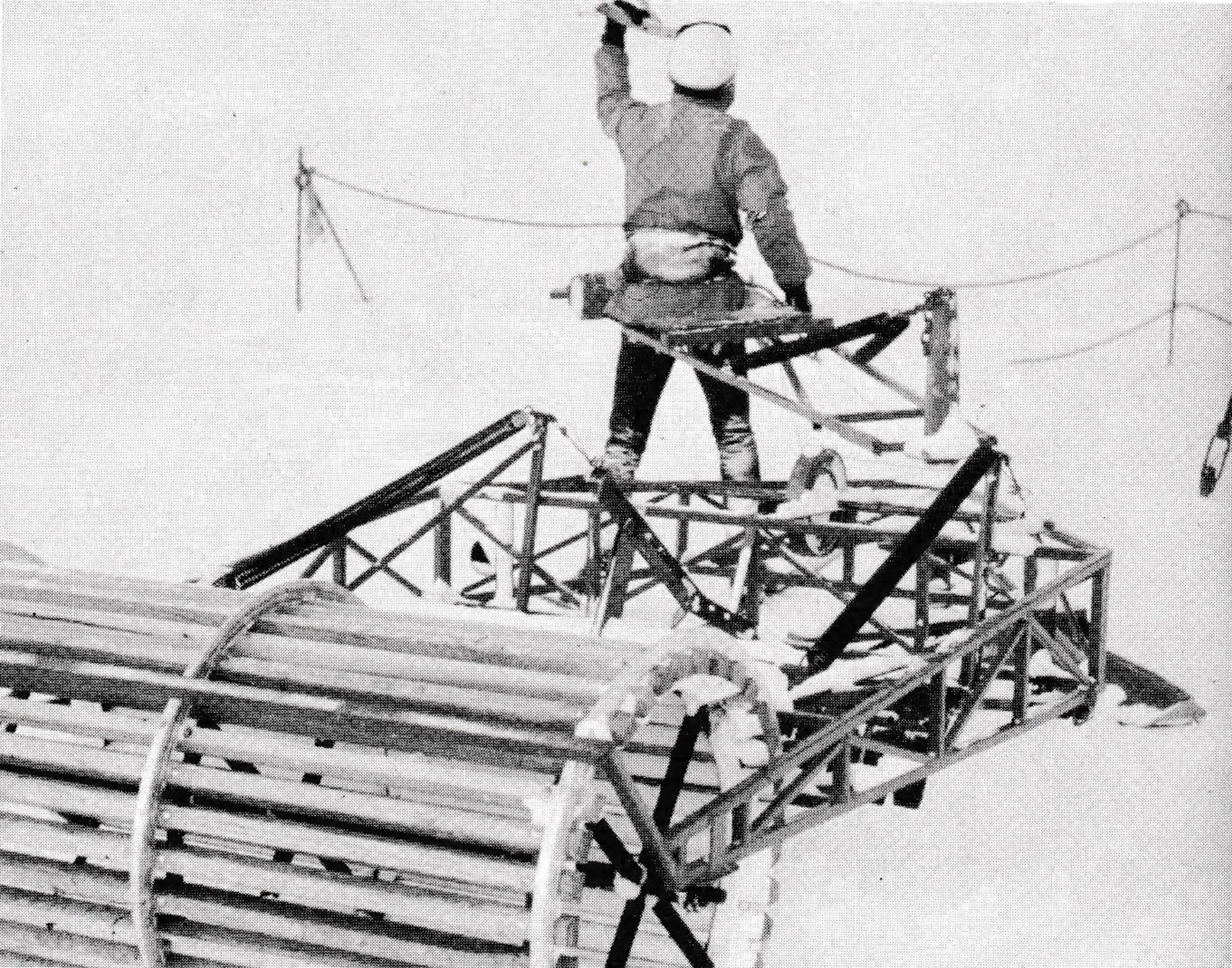
But the huge gadget was soon strong enough. George Engel, who became Winter Park’s first patrolman in 1946 and began to teach in the ’50s, remembers Bradley wanted him to try the grader. “Oh, no,” Engel told him. “I’m not going to have 400 pounds push me downhill!” By 1952 the “Bradley-machine” worked like a marvel, chopping up moguls, grading, making skiing better.
To combat T-bar ruts, Bradley rigged up the “Flying Doormat,” made of real metal doormat sections, raking each T-bar track smooth. Then there was “Flying Blind,” made of three to four blades, like a Venetian blind. In the next few years Bradley learned more and more about snow compaction, about rollers versus tracks. In time, experts like Vail’s Seibert, Stowe’s Ruschp and Aspen’s D. R. C. Brown beat a path to the Wizard’s door. “Bradley was years ahead in his philosophy,” claims Willy Schaeffler. “This man perfected his ideas long before others even thought of mechanical maintenance.”
With a man like that, how could Winter Park lose?