


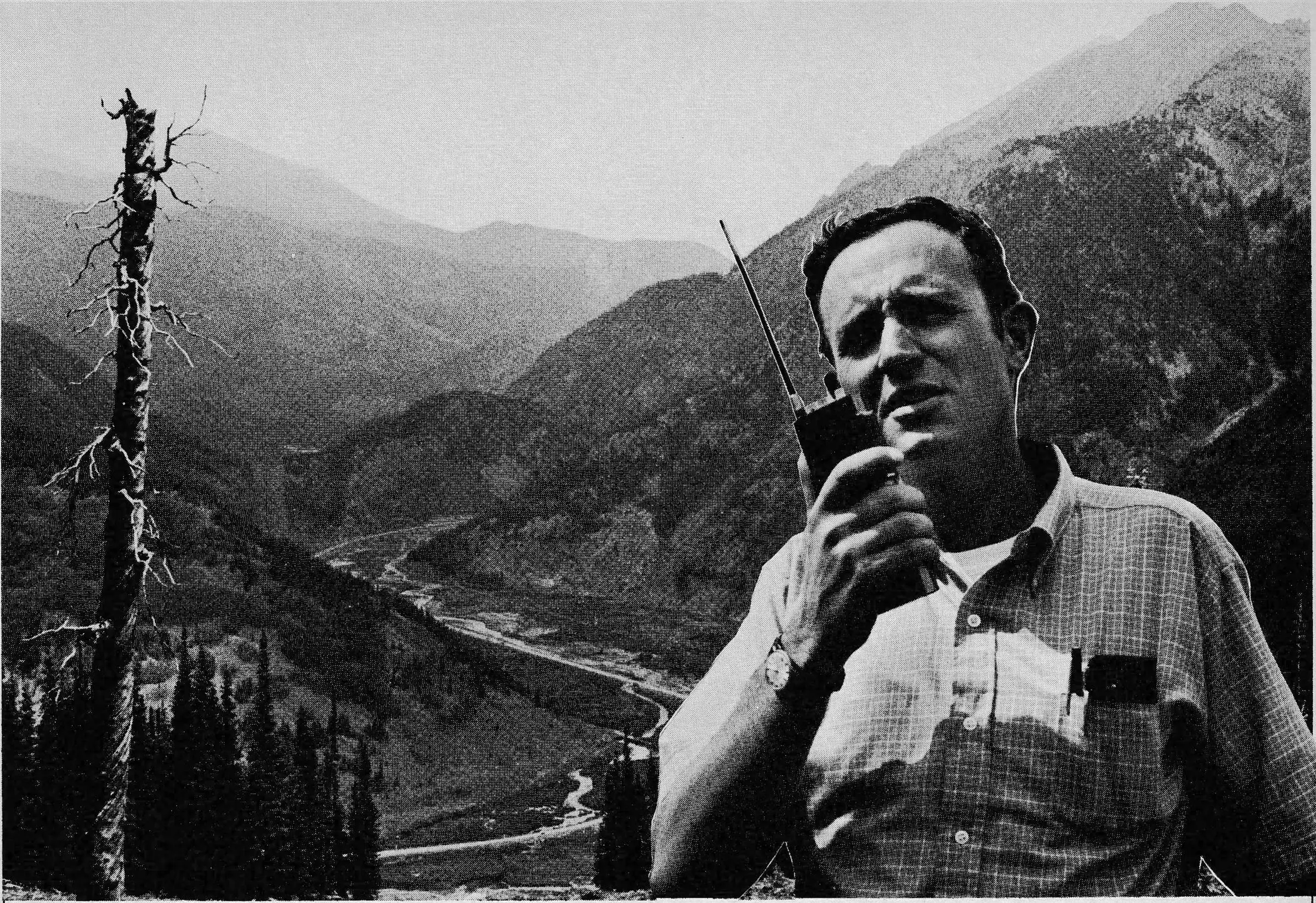
The words, resounding with conviction and articulated almost daily in other ways, are those of Chuck Lewis, the 36-year-old whiz kid and mastermind behind Colorado’s Copper Mountain, a behemoth ski resort 80 miles west of Denver, that will open in November with 2,800 feet of vertical, five lifts, 23 trails and 20 miles of skiable terrain.
With a multi-faceted background as skier, accountant, restaurant consultant, construction and ski area executive, Lewis brings a unique blend of experience to the task of area development. Man, nature, and profits are all part of the mix at Copper, an area born of a master plan which is unique in both depth and detail. And to make it all happen—and happen on time—Lewis has been drawing on talent from both inside and outside the ski industry.
At six feet four inches and slightly over 200 pounds, Lewis is both enthused and enthuser; he can chat unhaltingly on Copper’s architectural controls, lift capacity, income projections and financing while deftly navigating a two-wheel-drive pickup over Copper’s steep, rutted, windy and often muddy mountain road.
Lewis is also direct; he can make a long story short. His real specialty, according to local lore, is cutting through red tape, getting to the root of a problem, then taking quick action to solve it.
A native Coloradoan, Lewis took up skiing at age four and kept right on skiing. He attended the two biggest ski schools, Dartmouth and Denver University. His earliest involvement working at a ski area was at age 15 when he began running trail crews for Winter Park’s Steve Bradley. Later, says Lewis, “I spent a great deal of time trying to figure out how I could ski and still make a living.”
His MA in hand, Lewis joined Arthur Anderson, a national accounting firm and became tax manager of the Denver office. As luck would have it, his clients included Vail and several Aspen accounts. “I liked Vail because they were broad-minded and very progressive,” says Lewis. In the mid-sixties Peter Seibert (then of Vail Associates and now chairman) lured Lewis to Vail as assistant general manager. When Vail incorporated, Lewis was named executive vice president and treasurer.
In 1966, at age 30, he headed back to Denver to undertake reorganization of a construction company. When he turned to consulting two years later, Lewis’s clients included Vail, Bear Valley and Kirkwood Meadows in Calif., and Victoria Station Restaurants, a California chain. It was during this period that Copper Mountain backers first sought out Lewis.
Beginnings at Copper
Lewis, direct and impressive, was seldom forgotten by former business associates. When Charles Froelicher, an early Copper Mountain backer, asked former Vail board chairman Jack Tweedy for advice on naming an area manager, Tweedy responded with a list of five names. Tweedy not only topped the list with Lewis’s name, but dropped down a space before listing the others. Reportedly, Tweedy told Froelicher, “Lewis is the one guy who can do it all.”
According to Lewis, his destiny with Copper all began before he entered the consultant business. “There wasn’t much in the way of professional management in recreation. I thought I had a background that would lend itself to consulting. I got out of consulting because in that business you merely do one thing—advise people all the time. You’re never able to find out if your ideas are any good.”
Copper today? “Many of the concepts we are incorporating at Copper,” says Lewis, “aren’t really new. We’re taking ideas I’ve seen at other areas and are weaving them into our own plan. Perhaps what is most unique about Copper’s development is the time and money we’ve spent to finance a myriad of area studies which have been critical to creating a master plan. We were heavily financed at the start.”
Copper’s initial financing was achieved through the Pocahantas Mining Company of Troxwell, Virginia. Directors of Pocahantas, who were searching for raw land investments, agreed to put up funds for 269 acres of private land situated at the base of Copper Mountain. Aside from this property, Copper is completely surrounded by 980,000 acres of Forest Service land, 3,200 acres of which are leased to the area.
Next, Lewis lined up 16 limited partners who invested $500,000 in the project. “In 1969,” says Lewis, “everyone jumped right in. I think it was the easiest half-million I’ve ever come by. At that point I formed CM, Inc. as a general partner. I took on the liability aspects and they put up the money.
“With time and money, we’ve been able to use, I think, the best talent in every field. A firm out of California called the Palo Alto Group completed what we call a Relative Market Share Study, a completely new theory in market studies. Now we think we understand our competitors’ market better than they do.”
Besides the classic wind, snow, terrain, land planning and mountain studies, Lewis conducted police studies, fire protection studies, even a sun study.
“Now who would ever think of compiling a sun study in an area like this? When we lived over on the golf course at Vail, in January and February we got only two hours of sun. It’s pretty miserable living on a permanent basis with only two hours of sun. So one winter we ran up and down the valley at Copper every morning to find out when the sun hits the lift terminals. Now, every lift terminal has sun on the shortest day of the year by 8:45 in the morning. If there are people standing in line at 8:30 on the shortest day of the year, they’re going to be in a shadow, but at quarter of 9 they’ll be standing in the sun. We think this is important.”
The hunt for funds
Finally in 1970, armed with the knowledge that Copper, thoroughly studied and surveyed, was a viable skiing mountain, Lewis set out to find additional financing—big money to get Copper going. But the easy money of 1969 no longer existed. As the stock market slumped, Lewis traveled 150,000 miles by air over a seven month period seeking funds. This time, according to Lewis, “Nobody wanted to look at us.”
Actually, Lewis need never have set foot on a plane, for financing eventually was gotten together through one of Lewis’s former business associates in Denver, Paul Bailey, president of Fulenwider Management and Development, a company which is now a Copper Mountain general partner.
Exactly why Bailey was eager to invest in Copper while others turned tail relates back to Lewis’s stint at Vail. According to the story, Bailey wanted to build a Holiday Inn near Vail but because of a variety of obstacles and red tape he hadn’t been able to arrange an agreement. Lewis heard of Bailey’s plight, called him on the phone, set up a meeting and helped to arrange the deal, literally overnight. Bailey remembered this, and he now wanted “in” on Lewis’s venture.
Debt Financing
On top of its $1.5 million in equity financing, Copper now boasts a $2 million five-year “balloon” loan from the United Bank of Denver with an additional $1.5 million on reserve earmarked for future projects.
“This type of loan,” says Lewis, “is unique in the ski industry because it allows the area to get by its first two years on interest payments alone. There are no heavy loan payments which might dry up the cash flow.”
At Copper, mountain and town have been master-planned from one end to the other. “Time to plan things and to do things rather than always being under the gun has helped us more than anything else,” says Lewis. “Here we are in the midst of a construction season and most of our people are working a 40-hour week. We plan to keep it that way.”
Under Planned Unit Development ordinances written with the county in 1971, Copper is already committed to an eventual total of 6,000 beds. “This figure,” says Lewis, “is based on the hill’s capacity. We’ll ultimately be able to handle 10,000 skiers on the mountain. A hill, of course, has a capacity just like a village. However, many developers and realtors don’t realize this and are out slugging the ground for everything they can get. Copper is planned so that people can use our facilities without staying at the area.”
Under its P.U.D. zoning ordinances, Copper is committed to specific densities in each of its three phases of development. For example, Phase II, a 5.18 acre space where construction begins next year includes a 24-unit and 30-unit condominium, 120-room hotel, 4,000 feet of commercial space and 1.06 acres of shared parking and landscaped area. Both condominiums must set aside four units each for rent-controlled employee housing while the hotel is scheduled to provide eight units. There is no single family housing construction scheduled at Copper.
“Our design manual is very complete,” says Lewis. “Anyone who saw it might say, ‘Good Lord, they copied that from a shopping center.’ And they’d be right. Copper may be a ski area, but its base area development compares closely to land development at a shopping center where everything is joined together, compatibly. We encourage more density in high-rise units with greater emphasis on open space around the buildings. This creates a contemporary look and is much more compatible with the mountains.
“When developers ask ‘Can I do this or do that?’ we say ‘yes or no.’ That’s the way it is. Because of our isolation, we’re in complete control of our development. If we’re successful, Copper’s isolation will have been one of the major factors.”

Although parking will be close to the area this year, plans for the 1973-74 season include parking outside the area with a 2,000-skier-capacity-per-hour land train to transport skiers to the base area.
“There’s nothing beautiful about parking lots,” says Lewis. “This is one reason for moving parking out of the village.”
According to the Copper manual, underground parking facilities must be provided for 65 per cent of the estimated number of cars per building. “When you’re on the selling side,” says Lewis, “and you have a fellow who would like to build a hotel, it’s very hard to press the point of building underground parking unless a precedent has already been set.” To date, construction has already begun on four condominium buildings, all with underground parking.
“Copper is a highly commercial mountain,” says Lewis. “It runs north and it runs well and continually. We haven’t had to do much in the way of bulldozing or shaping. We trimmed the trees and moved them out but that’s been about all. It has excellent terrain from beginner to expert and a base area that lies right at the foot of it all.”
Turning problems—or “challenges,” as Lewis refers to them—into profits seems to be another Lewis knack.
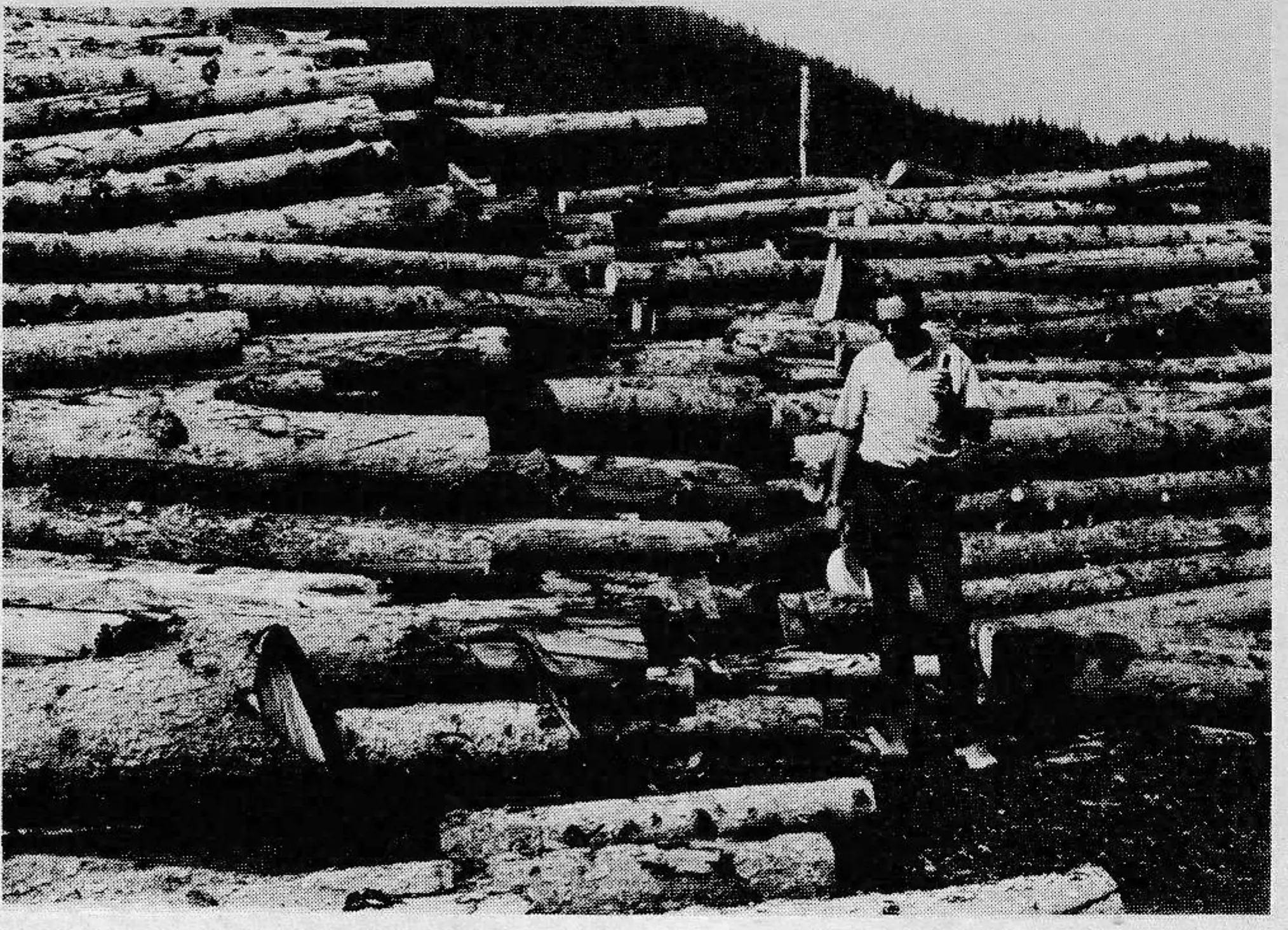
Trail cutting began at Copper in the spring of 1971. Several years ago, timber cut out from trails probably would have been burned, but in 1971, as is the case today, environmental regulations restrict burning. To dispose of timber cut from trails, Lewis formed a joint venture with a Canadian contractor by creating the Thick and Thin Lumber Co. The area now owns its own saw mill and uses its own wood for construction at the area while selling the rest to a lumber company. Lewis hopes to break even on the venture.
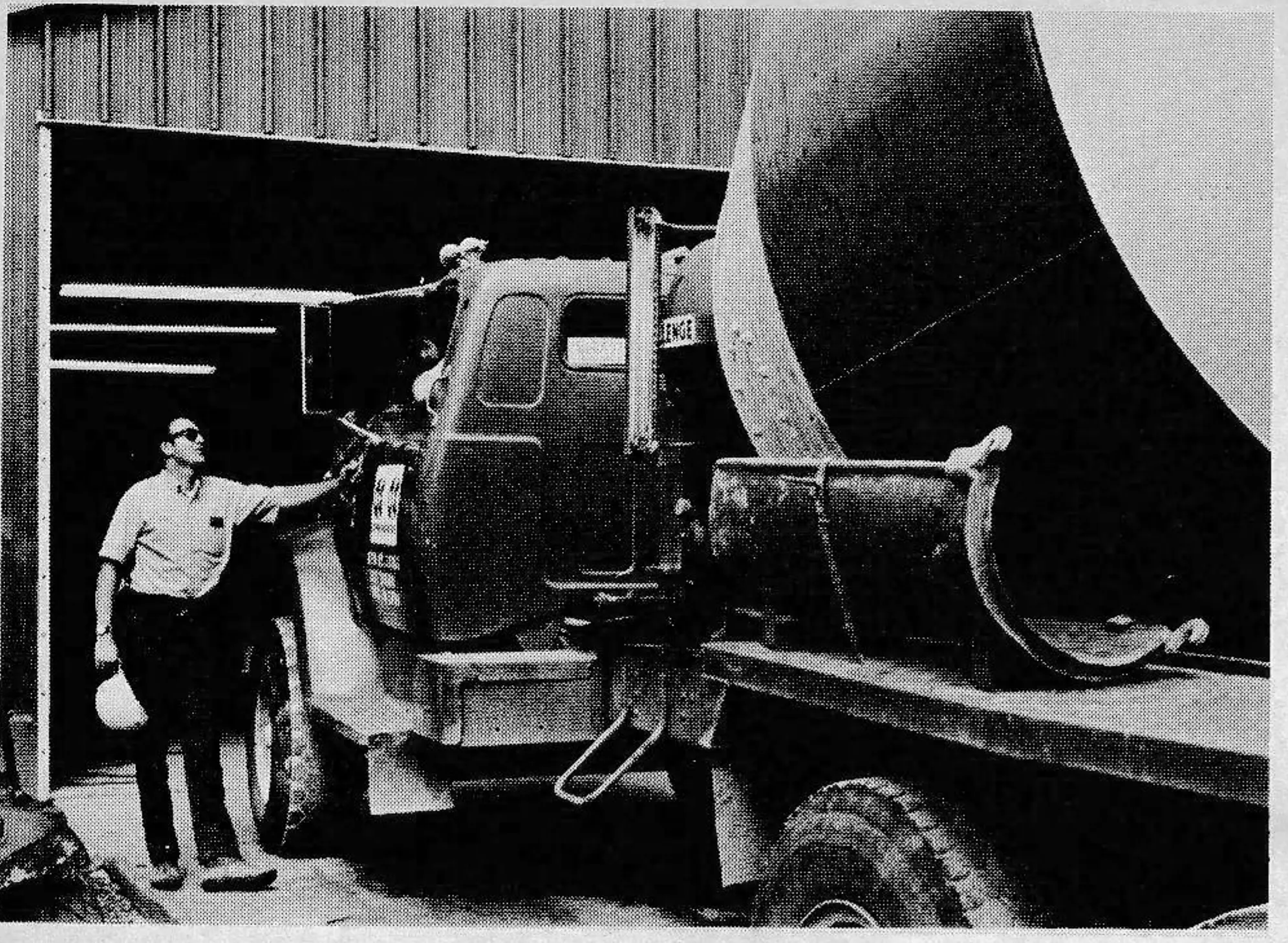
PLC, Inc.—Pretty Lumpy Concrete—is, however, likely to show a profit this year, while saving both time and money for Copper. Last year, according to Lewis, independent concrete dealers proved difficult to schedule, forcing late-night pours and costly overtime. To solve this problem, Lewis bought three 10-yard concrete-mixing trucks for $25,000 through a deal arranged by his construction manager, Don Peterson. No longer dependent on outside operators, PLC, Inc. is now the cement supplier for Copper and that means most pours can now be scheduled during the day. Lewis plans to subcontract his trucks to hotel and condominium builders at the area. In two years, he expects to sell them at a profit.
When it came to lifts, Lewis found another way to save money, big money. Says Lewis, “We looked at the bid on concrete and decided there was money to be saved there. The price of the job included helicopters flying concrete at $75 a yard; that adds up in a hurry. So figuring that there was better than a $100,000 difference between what was bid and what we wanted to spend, we decided to make our own.”
Next, Lewis looked at everything, from highlines to donkey winches, trying to devise a low-cost method of transporting the concrete to the lift towers. The final solution was to truck the concrete uphill along Copper’s mountain road, then use a double-pump relay system to transport the concrete several hundred feet uphill the tower site. Last year, pumping costs ran $12.42 a yard, a far cry from the cost involved in using helicopters. This year, Lewis estimates his concrete costs are down to $9 or $10 a yard.
When Lewis began studying public utility and phone installation costs, Public Service and Mountain Bell soon found they were dealing with a tough customer. When Public Service demanded a $60,000 construction contribution to install underground utilities, Lewis opted to build his own system. Instead of the five meters Public Service would have installed and the front-end cost that would have required, Copper’s own line takes primary metering to reduce rates by an estimated $60,000 over an eight-year period, enough to cover Lewis’s original installation costs.
Mountain Bell’s bid also included a construction contribution—$39,000 to install a phone system plus a monthly rate estimated at $1,000. When Lewis approached a private communication company, Arcata, it agreed to install a system for $50,000, but with no monthly fees. Lewis figures the Arcata system will pay for itself in 50 months. “There just aren’t that many areas,” he says, “where you can get a return in that short a time.”
“We’re now installing our own gas and sewer lines,” says Lewis. This I-can-do-it-cheaper-myself concern for cost control has made Copper largely self-sufficient and dependent on little outside help for its year-round operation.
To encourage cooperation among his crew, Lewis put all projects, including those being performed by outside contractors, on a bonus system. Says Lewis, “The whole theory is that if somebody at the mountain restaurant needs a machine, if he has problems with the road or if he needs concrete, someone else will make sure he gets it. This is a cooperative program between our own people and outside contractors. Now, when a man tries to expedite a job, he doesn’t just think about his own project but the whole mountain complex.”
Marketing Plans
“The day and age of marketing skiing as a rugged sport, as an athletic challenge and a way to prove yourself, is gone,” muses Lewis. “Look at what has happened to the women. The drop off at age 24 is fantastic. We want to make skiing fun. Everyone should be able to have a good time, and at Copper we plan to take care of them all.
“The service aspect is one we’re going to push. One of the ski industry’s most serious problems is the failure to recognize that it is a service industry and that people should be treated accordingly.”
In line with this, Lewis is planning a training program for his employees this fall. An industrial psychologist and sales pro are scheduled to talk to Copper staffers on the service concept with hard emphasis on the how’s of handling people and insuring their skiing fun. Other seemingly small details—a.m. and p.m. half-day tickets, a variety of touring trails, an enclosed chairlift, warming pits with infra-red lamps and gas logs, boot dryers, grey-glass windows designed to cut out heat and glare, sunlit base terminals and scramble system restaurant areas—are all designed to add to the creature comforts at Copper.
What are the resources that will make it all possible? Lift ticket sales, estimates Lewis, will produce 1/6 of the area’s income. Estimates for the ski school and rental shop income are set at 13 and 5 per cent of lift revenues respectively. Income from food operations is expected to gross $1 per day per skier. Net ground leases as a percentage of lift revenue are projected at 5 per cent during the first season, increasing to 20 per cent in the area’s second year of operation.
Convention business is also expected to generate summer income. Copper’s Day Center, scheduled for completion this fall, is designed to break into five meeting rooms each with a capacity of 30-40 people. Longer range plans call for screening facilities, a theatre and a second convention site. Meanwhile, the masterplan includes sites for over a dozen tennis courts, an Olympic-size pool, a soccer field and a golf course.
Copper’s development has been “fantastically exciting,” says Lewis. “I’m sure there are other pursuits that might be as much fun as the ski business. Then, come to think of it, I might get more time to ski or go fishing. But for the moment, Copper is it.”