

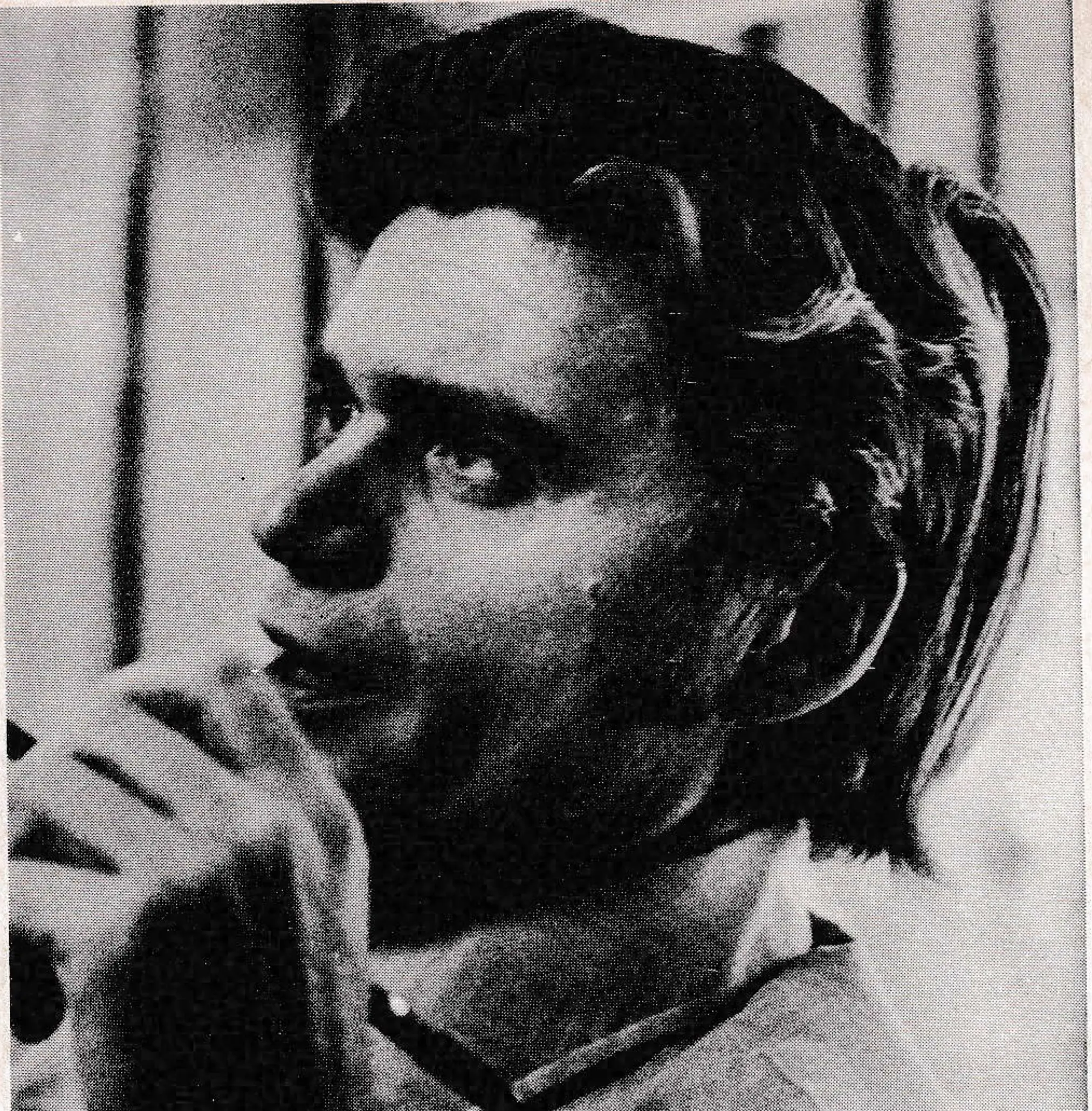
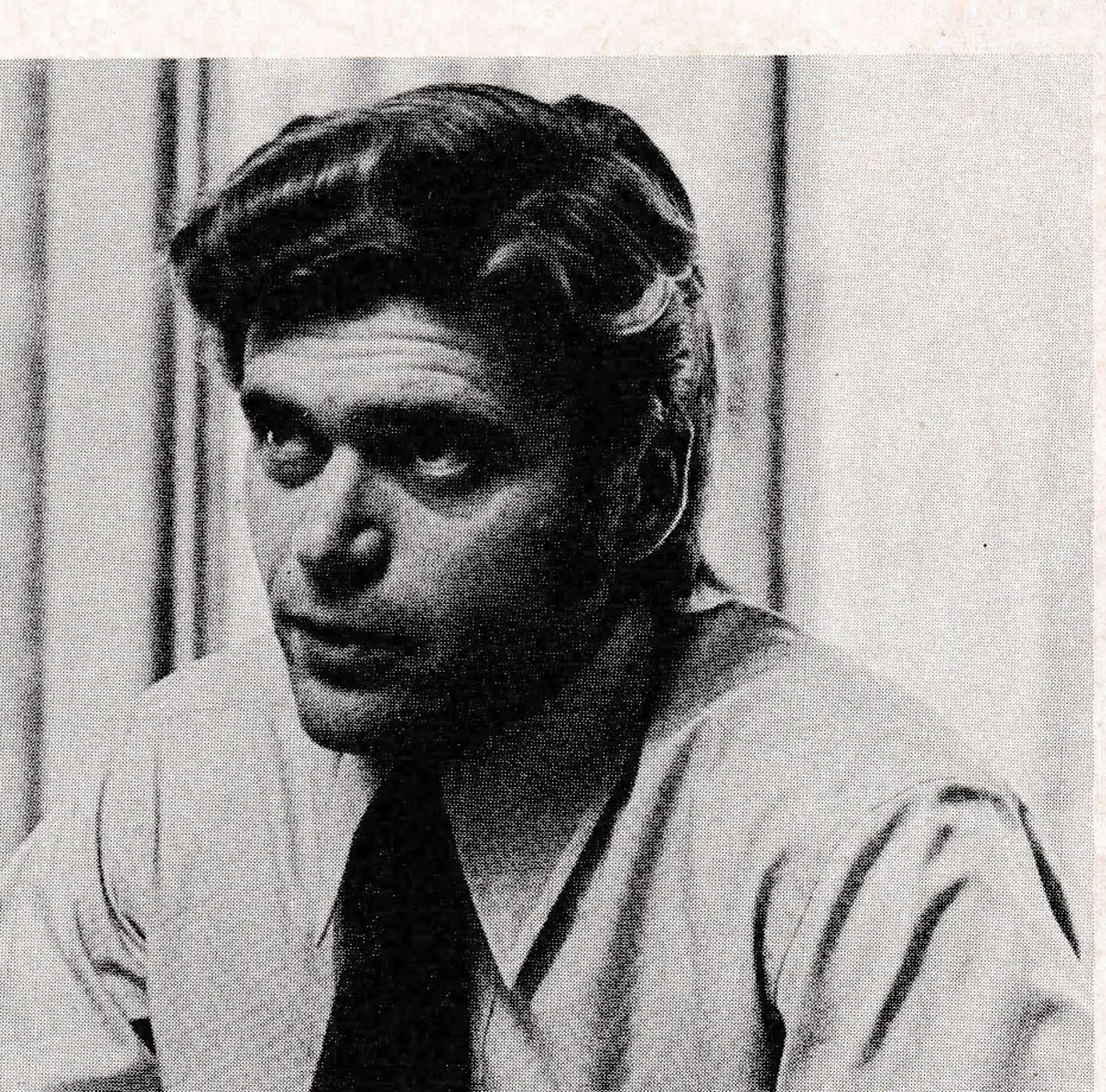
You’d hardly think that a kid reared in West Hartford, Conn., schooled in the Midwest flatlands and strapped to skis for the first time at 18 would be running a $6 million-a-year-plus ski resort. But Preston Leete Smith, today a boyishly disarming 43, delights in those kind of paradoxes. Smith is president and founder of the Sherburne Corporation, owner-operator of Killington Ski Area in Vermont, an Eastern behemoth whose unprecedented growth since its founding in 1958 has been turning lesser heads ever since.
Always eager, always cautious (another paradox), Smith’s early philosophy was simple: he loved to ski and he loved business, so . . .
“Very few people knew Killington existed back then. It was five miles into the wilderness. We used to walk it. Then the climb, over 3,000 feet of vertical—it took us nearly two hours to hike to the top.”
Smith, his travel-weary, dog-eared prospectus in hand, pounded on doors in Boston, New York, anywhere prospective investors would grant a listen. It was ironic that he finally found his investors among a group of hometown friends. Commitments in hand, Smith went to the state legislature to lobby for a road to the area (access to Killington had always been the big stumbling block). He finally got it—but not until the state had agreed, held off for a year, then agreed again.
“I spent a lot of time in Montpelier. At that time, of course, everyone was welcoming me with open arms—except for one, who called me ‘the Wall Street cat waiting at the door,’ though, truth is, I didn’t even know where Wall Street was.” (Smith, in fact, still spends a lot of time in the state capital. He is the only ski area operator on the Vermont Environmental Board.)
Smith had only six investors back then. That was in 1956. Today 1,200 stockholders share an interest in Killington. Area? Less than 3,000 acres back then, all of it leased from the state. Adding some 2,000 acres in 1966, Killington today totals over 5,000 acres, 2,100 of them privately owned. Sales? A gross of $6,020,000 last season, representing a 42 percent increase over the year before (and that during one of the worst snow droughts in recent Eastern history). Lifts? Eleven in all, including a 3½-mile-long gondola, servicing some 46 trails and 3,000 vertical feet.
Figures, of course, don’t tell the whole story. There’s now snowmaking to the summit, a Ski Vacation Center, a 125,000 gallon-per-day sewage plant, area condominiums, an 18-hole golf course underway, a cross-country program, tailored ski vacation packages, a complete summer activities program (summer business alone increased 39 percent last year, a healthy margin for even lesser areas doing a respectable winter business) and various other interests, including Sunday River, Me., a ski area in which Sherburne Corp. recently acquired a controlling interest (see SAM Report, page 14).
How did it happen? SAM talked with Smith recently about his area, his attitudes, his problems. Following are highlights of that conversation.
SAM: Last year Killington turned over $6 million in revenues, making it the leading ski area, in terms of sales volume, in the East. Your experience last season seems to accentuate a sales pattern that has been evident at Killington in recent years. To what do you attribute the area’s success?
Smith: Choosing the right personnel. Then there’s communications—and this is a vital factor in our organization. By communications I mean communications both between you and your employees and between you and your customers. Communications is particularly a problem with the smaller areas. When you’re small, you just don’t have a chance to think about communications—you only have time to do what you have to do, and that’s run your area.
Other than your organization—your people—and communications, innovation is important. Snowshed, our novice area, is an example. In 1961 we put in a chairlift at Snowshed on a grade that averaged only 14.9 percent, mighty shallow for a chairlift. Many questioned the prudence of that move, but we could see the potential.
We were also one of the first areas in the country to offer snowmaking on our upper mountain. Development, along with SKI Magazine, of GLM, which we’ve further refined into the Accelerated Ski Method, was another Killington first. Several years ago we also instituted a “free hour” of skiing.
Innovation? The ski industry really faces all the same problems that other businesses face. If we perform as other businesses do, if we’re mature in our attitudes, we’ll stimulate innovation, we’ll solve the unknown needs of skier—those that neither we nor the skier are aware of yet.
SAM: Returning to “people,” just what criteria do you consider when choosing your personnel?
Smith: First, I personally interview all prospective management-line personnel in depth. I look for what makes up a person, what activates him. Is he introspective, does he have drive, is he perceptive? What are his capabilities?
SAM: How heavily do you weigh experience in choosing your people?
Smith: I would hire a young, inexperienced man who demonstrates talent over an experienced, so-called “seasoned” area man, unless I was in need of someone with specific area skills. Oftentimes a person with industry experience is too ingrained with the ways the ski industry developed. The fact that he has grown up in the industry doesn’t impress me, for he often tends to think only in terms of static, established patterns. But the industry has been going through rapid changes for a number of years. For some, change is hard. People think you change to make things difficult, when you really institute change to make things easier.
SAM: Speaking of change, your area organization differs from most. How, specifically, are you structured?
Smith: For one, I don’t believe in assistant managers—a general managership is not the most workable arrangement for us. In effect, we have eight major divisions: marketing, retail shops, food service, controllers—which includes real estate and subsidiary operations—maintenance, lifts, skiing services—an all-inclusive division which concentrates solely on consumer services—and planning and construction.
The head of each of these divisions is an operating manager. Each one is not only capable of running his department but can, if need be, run the entire area on his own.
SAM: And how, if a division manager is called upon to run the area, does he acquire the experience to do so?
Smith: Through rotational training, a program in which our personnel are given an overall orientation of the operation as well as an in-depth orientation of our various operating levels. They learn all our various goals and objectives and all the departmental interrelationships that are involved.
One of the most important things in developing an organization is to give people the opportunity to learn, to develop their skills. You have the alternative of holding them within the status quo, burying them or providing them with a channel in which they can work themselves up. We chose the latter.
Our management training program is really geared to bringing in young college graduates and putting them right into the mill, involving them at the outset in front-line activity. Unfortunately, our program isn’t yet structured to permit putting all our key people throught such training. Sometime in the future, perhaps, when we have sufficient depth, we can do that.
SAM: Some of your incentive programs are rather unique in the ski industry. Would you explain them?
Smith: You’re no doubt referring to our profit-sharing and stock option plans. As we know, there’s no such thing as security in the ski business—employment for the most part is strictly seasonal. Our profit-sharing retirement trust, begun in 1967, is geared to long-range security. Profit-sharing is tied to the employee’s wage, and we’ve been putting in the maximum allowable under the IRS, 15 percent. As a person gets ready to retire, he’ll have substantial funds already built up.
We use our stock option plan as an additional incentive for our management people. It gets them more involved by giving them ownership in the company. We started this in 1966, and it has so far worked very well. This plan is available to key personnel in the operating management category, and to those who have demonstrated management potential.
SAM: Let’s turn to marketing. What is your skier market? Have you tried to specialize in attracting certain types of skiers or certain market regions?
Smith: We cater to everybody, and we’ll continue to cater to everybody. We do have certain skier services which are geared to specific kinds of skiers—instructor schools, ski patrolmen schools, coaching schools and other programs—but we’re simply too far away from specific markets to afford specialization. We have, in fact, enough other ski related activities to provide for almost all of the major needs of most skiers.
There are ski areas, of course, that can well afford to specialize. They may have limited facilities, limited terrain, or they may be located near specific markets, such as a college campus or a large company. If you have a specific market that you can zero on, you can slash your advertising costs by as much as 75 percent. Many operators have gone out and built ski areas, in fact, with a specific market in mind. This would be unworkable in our case because there’s simply no specialized market large enough to create the capacity to support our area.
SAM: This year you aligned yourself with four other Eastern areas in a promotional combine called Ski New England. Some observers have said that the group was formed solely as a retaliatory measure to counter the success of similar area groups in the West that have been attracting Eastern skiers. How do you answer them?

Smith: First, I don’t think that we’ll ever lose a very significant share of the Eastern skier market to the West. If all things remained static, of course, there’s a possibility that we would, but the skier market does not stay static. We really haven’t scratched the surface of the potential skier market in the East.
The major thrust of Ski New England is an institutional one—developing new skiers, broadening the industry market—not a reactionary one, as some critics claim. At this point in time, of course, it would be unrealistic to say that we are not facing competition from areas in the West. However, there will be increasing environmental pressure on the West, such as we are now faced with in Vermont, to limit skiing.
SAM: As Killington grew, there were no doubt operational areas that you found were critical to the area’s profitability. What advice can you give the smaller area based on lessons that you have learned?
Smith: Your question is a general one, and because there are so many imponderables—area size and market, hill size, climate, etc.—it can only be answered in a general way.
As a rule, the operator should first concentrate on his lift facilities—next, providing the best snow, whether through snowmaking or grooming. Throughout an area’s early stages, construction and development of facilities should be planned so that they can be completed at various stages.
Experience has taught me that we seldom achieve all the goals that we set for ourselves. The operator should block things out in terms of projects he knows he can complete well within a time limit. In doing this, he must analyze his financial situation, set some budgetary parameters and stick with them.
SAM: What about concessioning—of a cafeteria operation or the area ski shop, for example. Do you think this is a smart move?
Smith: There are imponderables here, too. I would normally sit down and try to analyze my food service and retail shop operations according to operating revenues.
Food service, for example, normally brings in only a small portion of the profits at a small area. Because of the complexities of the ski business, the small operator would in most cases be better off by concessioning his food service, and the same can be said for the area ski shop. You might be producing a negative cash flow by trying to operate these ancillary services yourself. And if you have a negative departmental cash flow, it’s going to be a drain not only on your overall profitability but a drain on your cash.
If you’re thinking of concessioning, however, you should be extremely careful how you draft your contract for such services, because you may end up paying a portion of the costs that you’re trying to get rid of.
SAM: Today, it seems, an operator’s responsibility toward area profitability is only half the story. Many feel he has an equal if not greater responsibility toward his community. What is your view?
Smith: The area man should get thoroughly involved in his community. The average community doesn’t really understand the economic benefits of a ski area but takes the skiing itself for granted. They see it from their own perspective, which in all probability is limited.
A ski resort is highly visible and it should be highly integrated into the social and governmental fabric of a community. People, particularly ski area operators, haven’t taken the time to face this issue. Partially, this is because the ski industry is a frantic and difficult business to begin with—it’s hard to take time away and look in a circumspect way at what is going on around you.
There is always community apprehension over a ski area’s growth, and this can be laid more than anything to a lack of communication. People, when they don’t have an overall perspective of your role and are unaware of the channels of communication, are going to develop some sort of fear. Since skiing stands out, because it’s in the limelight, many in the community think that it’s going to take something away from them. Quite the contrary, this is seldom the case.
SAM: Your real resistance has come from the environmentalists—isn’t that so?
Smith: Yes, and that’s what makes it difficult to create an aggressive, positive approach to ski community development.
It’s reached a point where everyone is standing around and pointing their finger at the other guy. This only creates devisiveness, and neither government nor the news media are doing anything to solve it.
Again, I repeat, the problems of the past have centered around communication. If the ski area can communicate to the community, if it can become a leader in the community, if it can influence the esthetic quality, the environmental quality, the educational quality of a community, it’s going to find itself more a benefactor and less on the defensive.
SAM: Vermont, more than any other mountain state, has come under the environmental gun. What impact has state environmental legislation had upon you?
Smith: First, I believe that an environmental effort is necessary. In the U.S. and in the world we have come to a point where concern for the environment has become a part of our maturation and evolution. We have to take it more seriously, and this is one reason that I’m involved on the state environmental board. There’s a great chance to create something significant and visible in Vermont—more so here than almost anywhere else I can think of.
But I don’t think that Vermont can afford to go off the deep end any more than a responsible businessman can go off the deep end. People too often feel that government is infallible, but that’s not true—the people of Vermont are going to have to insure that their government follows a rational approach to both maintaining the people’s livelihoods and creating a better environment.
What effect has environmental legislation had upon our area? I’d have to say that in Vermont the environmentalists have had a very significant curtailment on ski area growth. There’s no question that Vermont was ripe for a boom. Those of us who have been developing reasonably and responsibly, with a great amount of care for the environment, have been faced with the stringency of the law. That in itself isn’t so bad. I don’t mind these setbacks—they’re transitional, a part of doing business.
What really bothers me are those who have made a political football out of the environment, those whose only aim is to stop everything. They stir up controversy, they create devisiveness. This kind of misdirected reaction has kept us from improving our own design efforts as much as we would like because, paradoxically, the state is forcing so many varied regulations at one time.
On the other hand, as a result of Act 250, development in Vermont is now better conceived than it has ever been. Attaching conditions to permits has improved the end-product of all development in the state. Furthermore, it has cut a tremendous amount of helter-skelter development that would have otherwise occurred. Act 250 is a great thing for the state. It’s going to make the big difference in Vermont—and we’re going to prosper with it.