


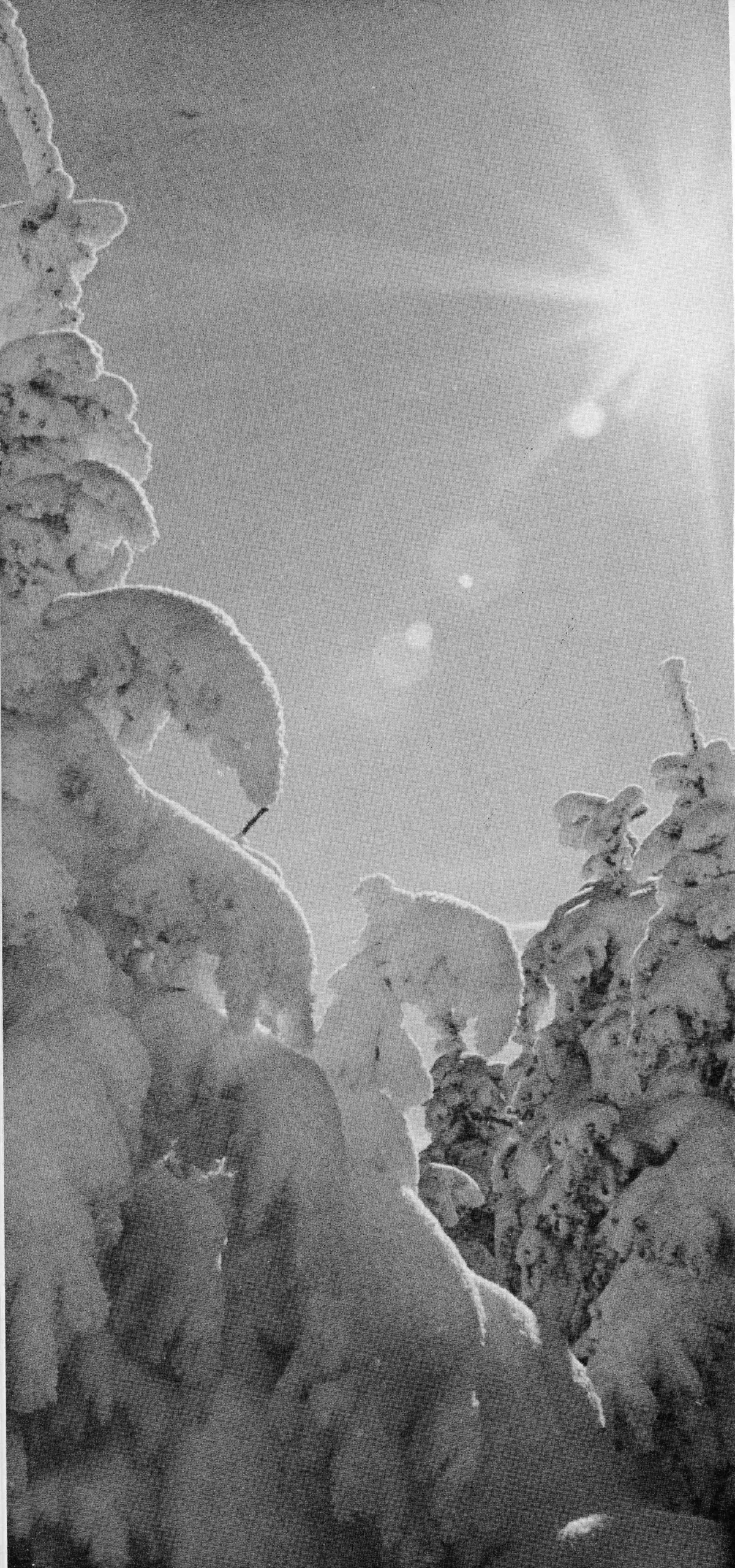
High altitude alpine vegetation is increasingly being recognized as part of a “fragile” environment easily damaged by careless or intensive use. The upper reaches of ski areas often include alpine vegetation, like the dwarfed spruce-fir stands which predominate near the timber line on Eastern mountains. Ski trail construction and the presence of large numbers of skiers in the winter causes considerable impact on these areas. Recreational hiking in these areas is increasing rapidly as a result of easy access to the mountain top by ski lift or by roads developed for ski area construction and operations. Summer use greatly increases the impact on these sensitive plant communities since they are not protected by a blanket of snow.
These alpine conifers are valuable in many ways. Their root systems stabilize the thin soils and prevent erosion and they add to the aesthetic attractiveness of the alpine areas. In addition, conifers at the edges of ski trails serve to control the wind more effectively in winter than bare hardwood trees because the conifers retain their needles in winter offering a greater barrier to air movement. The conifers therefore protect skiers from the sweep of the wind on ski trails. By slowing down wind velocity near ski trails conifers cause more snow deposition on the trails during snow storms. When wind velocity is reduced on ski trails, snow erosion by the wind is also decreased. Conifers offer some shade on ski trails and this reduces snow melt. Conifers will protect skiers from the wind on surface lifts and will offer considerable protection even on chair lifts. Because of reduced friction, wind velocities increase with elevation above the surface of the land or top surface of tree crowns. Coniferous trees, therefore, add some protection to lift equipment and skiers even when they are exposed above tree top level.