
Ski Area Management has followed the pro activities of Bob Beattie’s ISRA group this year, and based on the excellent vibes the program is generating, decided that we should get some answers for some of these questions. And others.
The pro racing scene took giant steps forward this year. The reasons are not hard to find. Fundamentally, it may be the case of the inevitable success of the right idea being executed right at the right time. The drive and stamina of Beattie is another underlying strength. The background this year also turned out to be right. There was the collapse of the U.S. Winter Olympics in ’76, accompanied by supplier disillusionment with the pool system of team equipment endorsements, accompanied by creakings and groanings, resignations and other manifestations of internal collapse within the world of amateur competition.
Then, too, there was Killy. King Killy. With his arrival on the pro circuit Beattie’s cup ran over. It positively gushed over. Even if he retires from pro racing after the Lange Cup, Killy’s impact will be long lasting. Pro racing needed a super-star, and Killy was superb in his role.
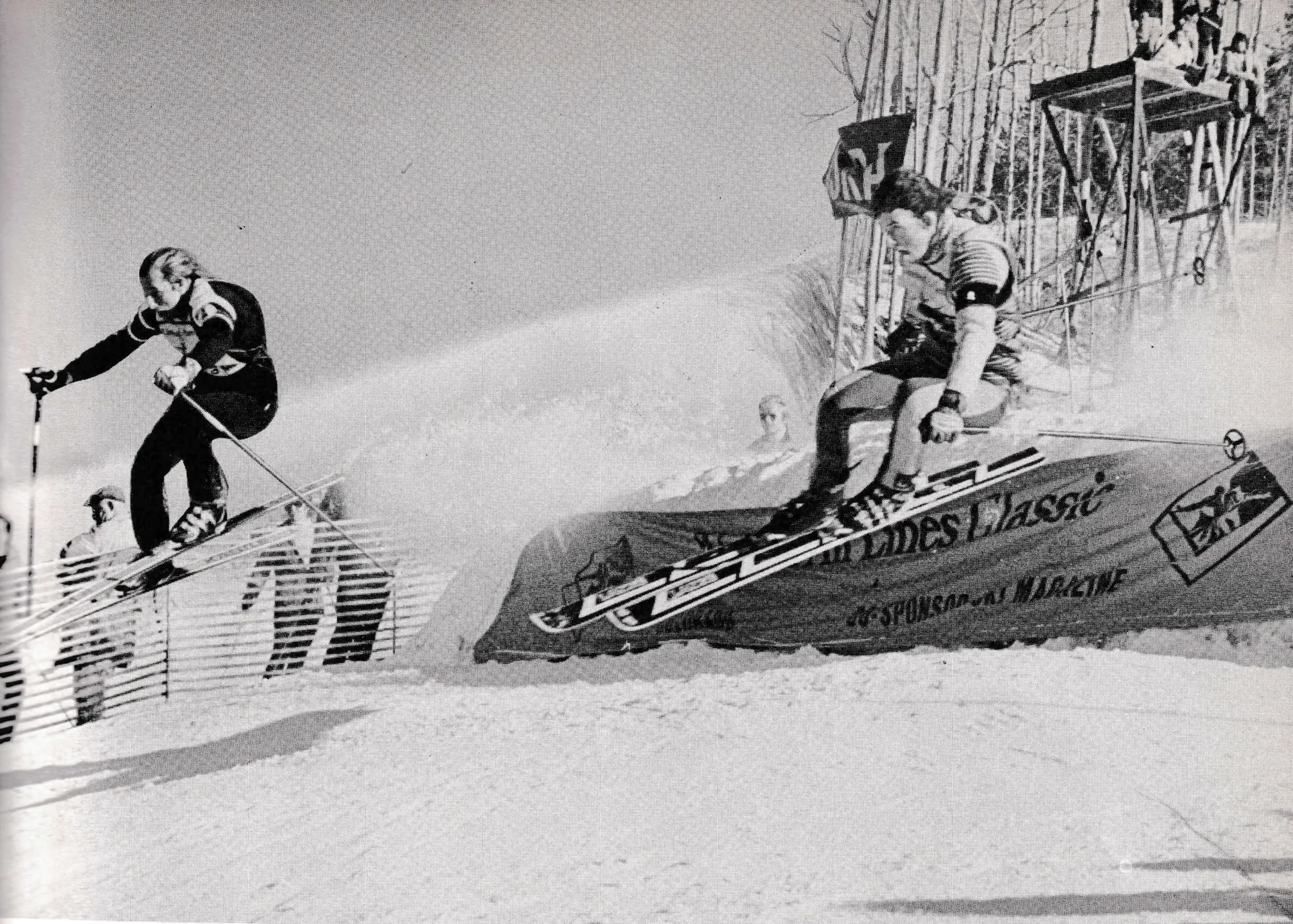
Then, there was the maturity shown by all the pros. Realizing that they were all part of the package being bought by sponsors and promoters, the pros responded and cooperated heroically in making every exposure a successful one, from pro-am events to endless sponsor cocktail parties to countless interviews. And, of course, to the races themselves. Gaylord Guenin of Ski Racing, and a shrewd observer of the pro racing scene, points out that the whole format and atmosphere of the thing made it a little suspect—like pro wrestling, for instance. But that the actual performances by the pros immediately dispelled any such suspicions.
But we are getting ahead of ourselves. The most significant conclusion we came up with is that every single fixture on the pro circuit was a law unto itself. The races and the format follow an almost identical choreography, but what the area gets out of the experience varies widely. For some it is the image-builder, for some it is a crowd-builder, for some a publicity-generator and for at least one, it was intended as a money-maker. Let us look at some specifics.
Buck Hill, serving the St. Paul-Minneapolis market, staged the MacDonald’s Cub—Pro Ski Classic. Just 13 miles from town, Buck Hill has a vertical of 310 feet. On tip-toe. It is a high quality, high capacity, high volume area, and owner Stuart Campbell likes to feel that as far as skiing is concerned for Twin City residents, “Buck Hill is where it’s at!” Asked about his pro race, Campbell says, “It was tremendously successful! (Pause) . . . except financially.” Well, will he repeat next year? “You’re darned right I will!”
“Unlike many of the other areas, we put this thing on to make money. We really don’t need the publicity it generated—and we got a lot, including 1½ hours of live coverage on WTCN-TV.” Campbell goes on to say that although 8,000 paying customers came through the turnstiles—at $3.00 for adults and $2.00 for kids—and though $1.00 was tacked onto the regular lift ticket, the bottom line on the balance sheet showed it was not a financial success. But, he thinks it can be, and probably will be in the future.
In explaining the costs, Campbell points to the responsibility of the area. A lot of manpower and equipment is needed. At a major destination resort like Vail this demand can be absorbed without breaking stride, but a smaller area’s resources are strained. The ISRA staff provides the technical know-how for preparing the hill, building bumps and so forth, but the area provides the manpower and machinery. Thus Buck Hill had to rent an extra over-snow vehicle, and had to put on extra help. For the races themselves, 45 gatekeepers were needed.
Contributing to the financial picture was the loss in lift revenue and other revenue from a normal weekend. As it turned out, the weather was perfect, as was the snow, and without the pro event they would probably have enjoyed near-record receipts. A larger area can offer pretty normal skiing while a pro race is going on, but this is not possible for a smaller one.
Buck Hill’s pro event was the first to have a purely local sponsor: the 23 MacDonald dealers in the Twin Cities area, who put up about $40,000 in prize money and advertising. Al Jaffe, account executive on the dealer group, says, “We had posters at the area, in the shops and of course in our own outlets. We ran a 30-second television commercial featuring an interview with Bob Beattie several times. We gave out discount coupons worth $1.00 for adults and 50c for kids which could be redeemed at the gate or applied to the lift ticket price. Our dealers were very pleased with the whole promotion. MacDonald’s is a youth and family oriented operation, and it is hard to generate publicity for it. The MacDonald’s Cup was exactly right.” Asked about the youth image and the cigarette sponsor, Jaffe’s laconic response was, “Well, we didn’t give Benson & Hedges much play in our promotion.”
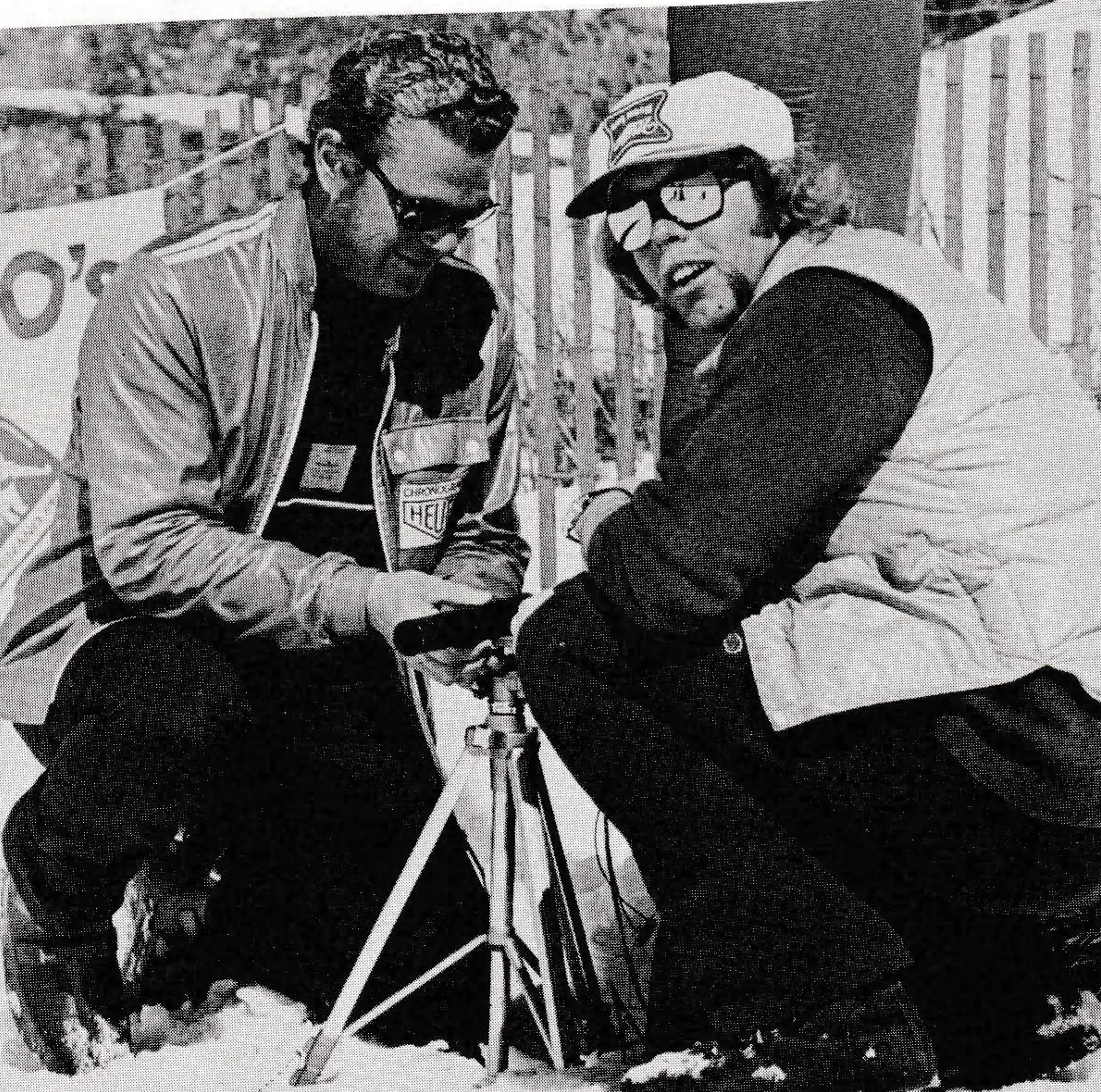
Summing up, the Buck Hill experience was a good one. They had hosted an IPSRA race back in 1963, and the contrast was enormous. Campbell gives a lot of the credit to the team Beattie has assembled. “Erik Hvoslef, Greg Lewis, Dick Olmsted (of Heuer Timing) and Jenni Seidel really know their stuff and are completely professional.”
What will they do differently next year? Well, they are still going to aim at making money out of it, and they think they can. For one thing they will not again make the event a part of the St. Paul Winter Carnival. “We were one of 17 events that Sunday, including snowmobiling, ice-boating, ice sculpture and so forth.” A much bigger gate will be realized, he feels, by letting the pro race be on its own. Campbell also plans to tighten up his pro-am event. Just knowing what to expect will put him way ahead of this year, Campbell feels, and he can hardly wait for next year. “This whole thing was one of the most satisfying and rewarding experiences I have had in the ski business.”
For a major resort like Vail a pro race is just one more in a long string of events that go on all winter long. It is absorbed with barely a ripple. The cost outlay is minimal because they are geared for it both in equipment and personnel. And a pro event is much easier to stage and much less costly than an amateur race. There are no racers to “comp”, no hordes of officials expecting to have their hands held.
The benefits for a large resort are essentially publicity ones. The sponsors like to pour on the promotional coals when they can trade on the glamour of a Vail. Celebrities of all sorts can more readily be attracted. Little celebs will come for the exposure, big celebs can be persuaded to come, sponsor executives and their wives come to hob-nob and be photographed chatting with Jean-Claude and Spider. It is all sort of a great big promotional happening that sends visions of sugar plumbs dancing through the heads of dozens of publicists. “Yeah,” says Vail’s Pete Seibert with a knowing grin, “we do all right with the pro races.”
At Hunter Mountain, a high volume and highly successful area in New York’s Catskill Mountains, there is a wide divergence of opinion as to the value of the pro circuit to the area, and the friendly split is between the two bosses, brothers Orville and Izzy Slutzky.
“You’ve got to be sold on it,” says Orville. “My brother thinks it’s great, and the ski school thinks they can’t exist without it. It’s a glory thing. For me, I go along with it. I think it helps the industry, and we’ve done it for a long time now, going way back to the old IPSRA days. But can you afford to be in the big league? There is manpower, expense, advertising, building jumps and then taking them down. And there is snowmaking. We make it anyway, but for the pro races we make it in different places than if we didn’t have a race.”
Marketing and PR man for Hunter, Paul Pepe, is equally skeptical, but he too gives the impression of wanting to go along with a pro race if the outlay can be minimized. “Look, if the prize money were all taken care of and all we had to worry about was the $10,000 it costs us to stage the events, it would be a great deal. But when the total tab runs $20,000 or more we have to give it a second look. And a third.”
Pepe is skeptical about pro racing as a spectator event—especially in January in the northern Catskills. “Our clientele may take a quick look, but by and large they’re not that interested, and the crowds are mostly negligible. With all of the racer chasers, sponsor personnel and others, it looks like a lot, but I can tell you that we could never make it charging for admission. As for the skiers we have anyway, some resent the inconvenience of the pro race, some like the idea. It’s a wash.”
When Pepe was asked if the total image of Hunter was not enhanced by the association with pro racing, especially since Hunter has such prominent on the circuit as Stuefer and Nindl, he put the whole scene into a special perspective. “Look, sure that stuff is great. I love it. But we don’t need it. If it’s five hundred or a thousand skiers we’re looking for, I can turn them out with a wine tasting or what-have-you. If it’s image we’re talking about, I’d rather people thought of Hunter because we guarantee skiing with the best snowmaking; or because Hunter cares about skiers and is known for its slope grooming and short lift lines. This sort of thing is a helluva lot more important than the racing image.”
Pepe is quick to point out that he is not knocking the pro circuit. He just questions it for Hunter. “A year ago we had Killy at Hunter on a special promotion. We sold at least five hundred lift tickets with him there as a personality. I doubt if we sold one ticket because Killy was there as a pro.”
However, Pepe believes pro racing is doing a fine job of promoting skiing as a sport, and “we’re going to get a piece of this pie. So it is probably worth what we invest.”
For LTV’s Steamboat, pro racing is a quality publicity generator, and they want all they can get. “There are many ways to get publicity for an area,” says PR Director Mix Beauvais, “and this is one of the best.”

Glen Paulk, Steamboat’s General Manager, points to the many ski industry people who turned up a Steamboat, many of them for the first time. The race was held right after the SIA Trade Show in Las Vegas which undoubtedly created an industry showcase for Steamboat. Assistant Manager Dick Randolph made the point that many of the people who visited the area over the pro race weekend “carry enough clout that they will publicize the area elsewhere.”
Steamboat officials all agree it costs plenty of money. Paulk estimates between $13,000 and $15,000, with the biggest expense being labor. Among others, ski patrol was involved, and 28 of the 80 instructors. Other money was spent on fencing, signs, press and celebrity lodging and entertainment and so forth.
The publicity angle of pro racing is hard to evaluate, and for most of the commercial interests involved in the ISRA events, publicity is the name of the game. The train of thought inevitably leads to television, because that exposure is what everyone is after. Through an aggressive and skillful press release program Beattie has generated an unprecedented volume of ski racing lineage in newspapers across the country. But Hugo, Harold, Alain, Terje and others are not exactly household names that are recognizable to the American TV viewing public as Arnold, Jack and Chi Chi are to golf fans. TV exposure is obviously the answer. Jean-Claude is the ski world’s answer—and a legitimate one; and Spider may be getting there. But realistically, professional ski racing is not about to produce household sports heroes out of skiers, at least for some time. “A long way down the pike,” says John Fry, Editor-in-Chief of Ski Magazine.
Nonetheless, Beattie and ISRA have generated more television exposure for the ski sport with professional ski racing than has any other individual or group, Winter Olympics excepted. “Skiing has never had a TV story to tell,” says Beattie, “and until skiing gets into that position TV coverage will not grow. There is a lot of work to be done to make skiing attractive to the networks, and we think we have a good program going for them.”
Putting this in perspective, television coverage of pro racing this past season included some intensive local and regional coverage plus national exposure through ABC’s Wide World of Sport which featured a race at Snowbird, Utah, from the 1971-72 season.
For those impatient to see regular newspaper coverage of the pro ski races and standings, and impatient to see more than an occasional network show, it is well to remember the increasing competition there is for the space and the time. In addition to ever-increasing numbers of teams and leagues in football, baseball, hockey and basketball—to say nothing of the dreary tail-end extensions to their normal seasons—there are new pro sports packages being put together and marketed all the time.
There was the spectacularly successful promotion involving competition between super-stars from several sports competing with each other outside their own specialties.
This year there is professional track, complete with big names like “fastest man on earth” Bob Hayes, and pole vaulter Bob Seagren, together with built-in classic rivalries like Kip Keino against Jim Ryun in the mile run, and Randy Matson against Brian Oldfield in the shotput. The names are already well-known, the coverage is idiot’s work for the press compared to skiing, the crowds are big (10,480 paying fans in Pocatello, Idaho, as a curtain raiser to over 50,000 in the Los Angeles Memorial Sports Arena) and, in fact, it all looks like a pushover for the promoters compared to what Beattie and ISRA face in developing a national audience.
However, what is going for the ski pros is the fact that they have suddenly become the single most important marketing tool in the ski world. That may still not be big potatoes on the whole national scene, but it is having a very big impact on the attitudes of four million recreational skiers. Olin, Head, Rossignol, K-2, Nordica, Hart—you name the firm and chances are it is budgeting more and more to reach the public by way of the pros.
The all-French combine of Look-Nevada bindings, Le Trappeur boots and Kerma poles are quoted in Colorado Magazine as having plunged $300,000 into the pro racing scene, and the Olin factory team investment is estimated at $100,000. All of this sort of money and commitment is what gives Beattie and ISRA an understandable confidence that they are driving the bandwagon that everyone wants.
Still, the question that keeps coming up is whether this sort of promotion is right for a ski area—whether the costs are worth the return. Interviewing several area marketing executives leaves one with the simple conclusion that you get out of it in proportion to what you put into it, and what you put in depends on what your marketing objectives are.
Snowbird, Utah, hosted a one-shot pro race a year ago as part of a campaign to put this new resort on the map. It was a huge success, according to Marketing Director, Dave Rose, but he doesn’t feel he needs another. For another area which might have a lack-luster image, a pro race gives the publicists a chance to trade on the glamour of the big names.
How does an area get a pro race? Well, there’s more to it than just asking. You first of all have to guarantee the purse and ISRA expenses. This past year $24,000 covered this. (“We may be looking at a $30,000 minimum purse very soon,” says Beattie.)
Secondly, ISRA sees pro racing in terms of market areas, and new fixtures on the pro circuit would have to fit in with Beattie’s (and Benson & Hedges’) regional marketing targets. “We want to expand from 12 to between 15 and 17 areas next year, and we expect to look for strengths in the Pacific Northwest (where we have nothing right now) as well as in California and the East.”
But actually hosting an ISRA event is not the only way for an area to be a part of the pro racing scene, Beattie is quick to point out. “There was a “B” circuit in the East and they are making progress.” He also points out that any area, even small ones, can get the glamourous pro rub-off by using the pros for demonstrations or clinics or other such promotional devices. These appearances can be negotiated individually, or through the various manufacturers’ teams.
There is no doubting the viability of professional racing today; the only question is how fast it will grow, and in what directions? Will free-style be a part of it? “We’re thinking about it,” says Beattie. What about downhill? Yes, probably. International competition? Nothing on the scene right now because there is no European circuit. It is likely to remain a North American phenomenon for some time.
“And we’re pretty proud of it,” says Beattie.