


After a ski or chair lift has been installed and is in operating condition, the major operating expense is usually wages for the personnel who run the lift. The cost of power, whether electric, diesel, or gasoline, is normally less than three cents per horsepower-hour. Today’s lifts do not require large expenditures for maintenance. It’s the human beings who see to it that passengers are safely transported that account for the large part of the cost of operating a lift.
The number of people required to successfully and safely operate a given lift depends on several factors. First, the number and location of these people must be in accordance with the codes and standards that are applicable to your ski area. But remember, these codes and standards make requirements for minimum personnel. Certain configurations and conditions may dictate using more people than the minimum required by law. You can well be practicing false economy if you are saving one employee at the expense of frequent lift stops, half-loaded chairs, and disgruntled skiers. On the other hand, a detailed analysis of each lift may well reveal that changes or modifications could be made to permit an equally efficient and safe operation with fewer personnel.
What Do the Regulations Say?
In general, all regulations require at least two people to operate a lift. At least one state requires three people for the running of a chair lift. Exceptions to the minimum of two persons are sometimes made for short surface lifts and tows. The requirements of the B77.1-1973 Standard are used by a number of states and the U.S. Forest Service, and are discussed herein. It is important that the applicable state rules be checked to assure the specific requirements for your area.
One person (an operator at the loading station for surface lifts, at either station for tows) is adequate for surface lifts and tows whose length, measured from the loading area to the safety gate, does not exceed 800 feet. Both terminals, the loading and unloading areas, and the entire lift or tow line must be visible to the operator.
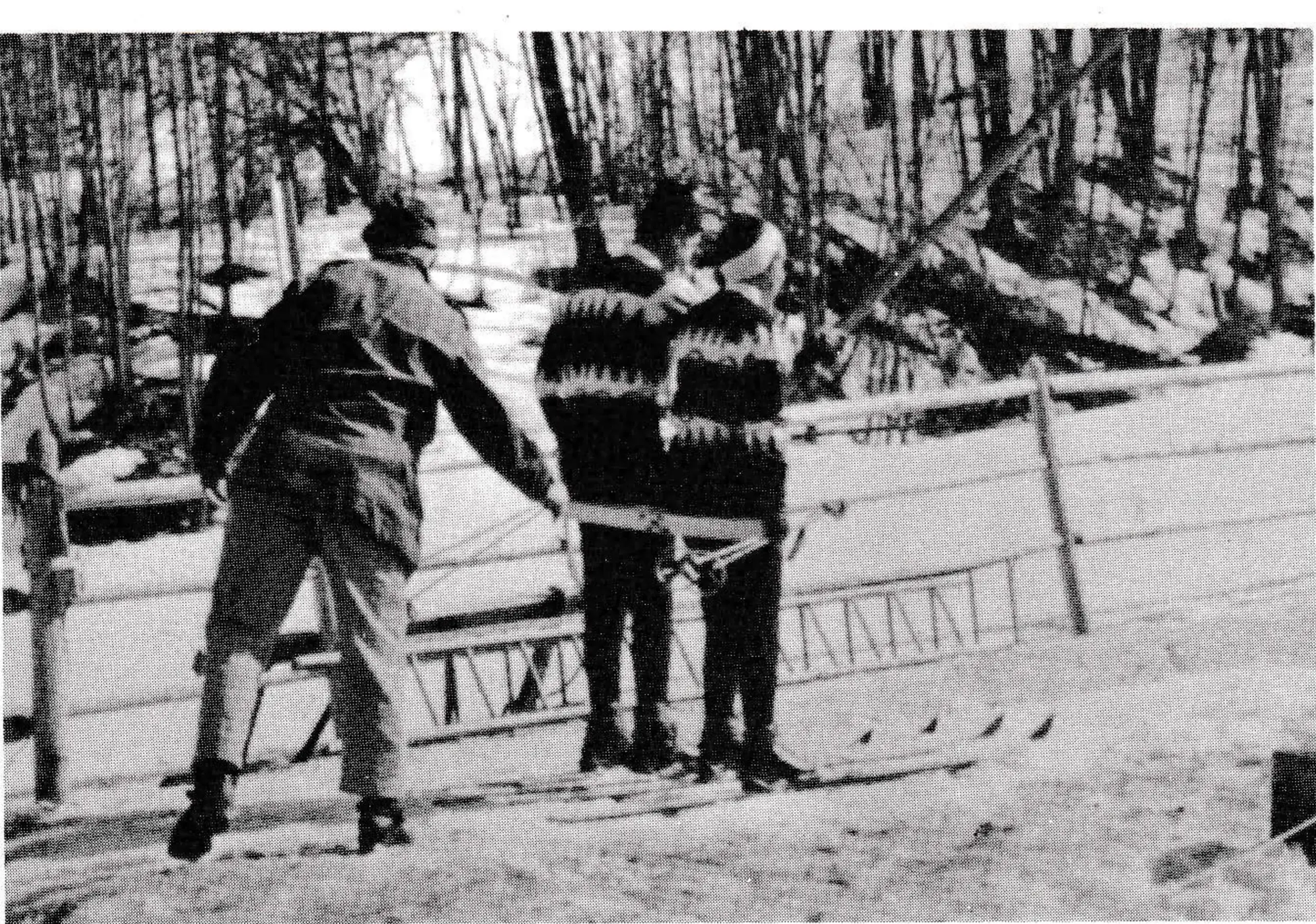
The lift or tow must be able to be restarted while the operator maintains surveillance of the entire lift or tow. On surface lifts, a clearly identified stop switch must be located at the unloading area. This stop switch must be in addition to the safety gate.
For tows that do not meet the preceding requirements, additional attendants are required. Normally only an attendant at the opposite end of the tow from the operator is required, with a stopping device provided for him and provisions for communications with the operator.
For surface lifts that do not meet the preceding requirements, and for all chair lifts, the following are required: 1) an operator; 2) an attendant at each loading area; and 3) an attendant at each unloading area. Although it would appear that the minimum number of people required is three, a footnote states that an operator may serve concurrently as an attendant unless the duties of the area preclude his maintaining reasonable surveillance of the entire lift operation. Therefore, under proper conditions a lift can be operated by two people.
Furthermore, chair lifts which have an intermediate station used both for loading and unloading can be manned by a single individual at the loading area if he can keep both the loading and unloading areas under his surveillance.
What is Practical?
The question of personnel for tows is quite clear. Normally, attendants are not expected to give physical assistance to skiers either loading or unloading. When tows fall into the category that allows a single operator, few unusual problems arise if the operator is located adjacent to the unloading area. Should a skier pass through the safety gate, the operator is in a position to assist the skier, assure himself of the safe condition of the tow, and reset the safety gate in preparation to resuming operation. However, when the operator is located at the loading station, special provisions must be taken to provide a means for resetting the safety gate and assure himself of the safe condition of the tow.
One acceptable procedure is to rely upon ski patrol members to reset the safety gate and “check-out” the unloading area. The other or alternate method is for the operator to go to the unloading area personally and reset the safety gate. For tows of any appreciable length and rise a snow vehicle placed at the disposal of the operator is a good solution. Skiers, not a part of the area’s operation, should not be permitted to reset safety gates.
For both surface and aerial lifts, the attendant at the unloading station is normally not expected to give physical assistance to skiers unloading. His duties include surveillance of skiers approaching the unloading area, and the maintaining of this surveillance until unloaded skiers have exited from the route of other unloading skiers. He should observe passage of carriers around the terminal. These duties can be performed from an enclosed shelter, and should the operating controls of the lift be located at the unloading station, one person can perform the duties of lift operator and unloading attendant. He can have immediate access to stopping devices, brake controls, telephone, and starting controls without compromising his duties as unloading attendant.
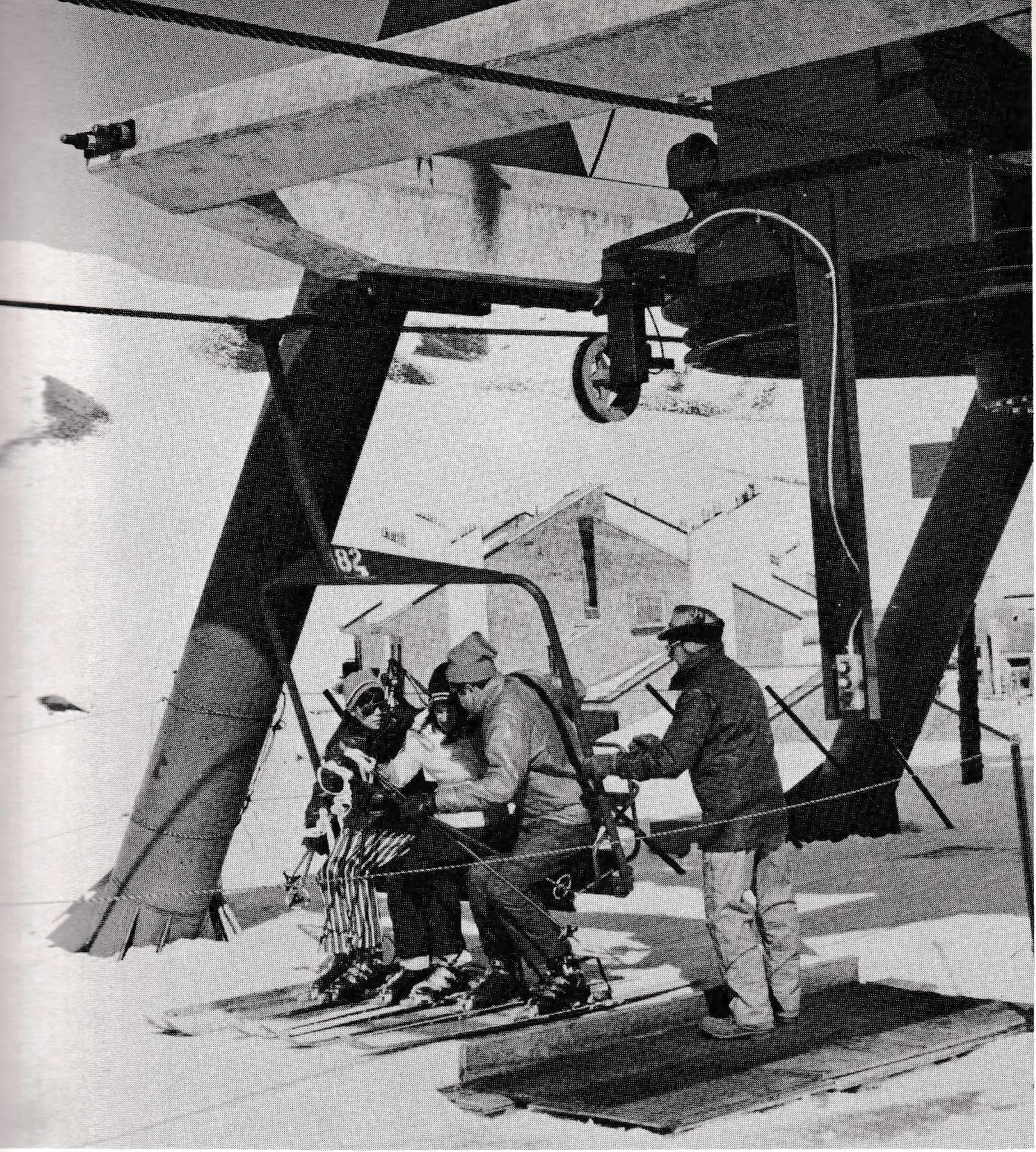
When the operating controls of a surface or aerial lift are located adjacent to the loading area, the ability of one individual to operate the lift and serve as loading attendant is more difficult. It is necessary that the loading attendant be located at the loading area and frequently offer physical assistance to skiers during the loading process. J-bars, T-bars, chairs, etc. usually need to be steadied and guided toward the skier, and carriers must be swung around skiers who are improperly positioned for loading. Skiers awaiting their turn to load must be kept at a proper distance from the loading area. Upon loading, the skier’s position must be checked. As an operator, the stopping controls must be immediately available. There is little doubt that today’s high capacity lifts, operating for capacity crowds with waiting lines, require both an operator and an attendant as separate individuals.

But how about periods other than capacity crowds? For most areas, this accounts for five out of every seven days. Can one person successfully double as an operator and a loading attendant? The answer is “yes”—with proper arrangement of facilities. The loading attendant we must have—located right at the loading area. For this person to double as operator, he must have at the loading position the following: 1) stop switch; 2) emergency brake controls (aerial lifts only); 3) telephone; and 4) starting and speed controls (optional).
One good solution for the stop switch is the use of a trolley cord alongside the chair line to operate the stop switch. Regardless of the position of the attendant, the switch cord is immediately available to him. For emergency brakes that are operated by the turn of a switch or valve, a similar arrangement has worked out well. Keep the two cords apart (preferably the emergency brake cord considerably higher).
A telephone can easily be located adjacent to the loading position, but provide a long extension cord to the speaker/receiver. The need to return to an operator’s station to restart the lift is acceptable provided skiers are kept out of the immediate loading area until the attendant has returned to the loading position. It is highly desirable to provide duplicate controls at the attendant’s station so that the entire control of the lift is at the disposal of the operator/attendant without his leaving his position.
Give the Attendant a Break
While attendants can successfully perform dual roles as operator and attendant, these people who have more direct contact with your customers than any other area personnel deserve specific attention:
First, train the personnel. It’s wonderful to have an attendant who knows what he is supposed to do—and does it. Don’t forget courtesy as a part of this training—a pleasant word to skiers is an unexpected joy and pleasure to the average skier.
Second, provide proper facilities and require specific requirements for appearance and dress. The heated attendant’s shelter with ample glass to view the lift operation is a necessity.
Third, schedule rest periods. Don’t expect a single person to load 1200 skiers each hour for a continuous seven hour day. Work out a rotation plan where each attendant gets a specified rest period.
Fourth, give the personnel responsibility. The operator is responsible for an operation log. See to it that he keeps it and it is reviewed. Solicit suggestions. Get him snow grooming when he requests it at loading or unloading areas.
The key to successful lift operations rests largely with the lift employees. These people can create an impression of a friendly, well-run area or they can convince skiers that all interests stop with the sale of the lift ticket. Sheer numbers of lift attendants do not assure you of properly run lifts. Well trained attendants with proper facilities can save operating dollars and create the proper atmosphere.