

In the April 1971 issue of SAM, an article under the by-line of Rufus Barringer started off as follows: “In the 1969-70 ski season, more claims were made against ski area operators for alleged improper adjustment of bindings on rental skis than for any other cause. This is based on accident reports from over 200 ski areas participating in the National Ski Areas Assn. insurance plan. Right now, there are 132 liability claims pending, against 67 a year ago.” Barringer went on to characterize the situation as “shocking” in terms both of skiing safety and of insurance premiums.
Partly because Barringer sounded this note of urgency, the intervening two years have produced a remarkable and encouraging “trend” (the elated, but understandably cautious Barringer disavows the word; the incautious Editor takes full responsibility for its use here).
An area’s rental operation, after all, represents a very significant opportunity to reduce accidents and thus exposure to litigation. Good patrolling, good record-keeping, good slope-grooming and other sound practices can help, but the operator still cannot do much about the skier with the unsafe equipment. But, with control over the rental operation, an area can exercise a formidable influence on the accident rate at his area. Consider, for instance, what happened when Waterville Valley, N.H. went from 24 fractures in 10,000 skier-rental-days to 1 fracture in 16,000 skier-rental-days. (And even that one probably shouldn’t count since the woman involved was hit after ski fell.)
It is against this background that we present this up-date by Rufus Barringer, of Barringer and Williams, administrators of the NSAA Insurance Program.
In April of 1971, we tried in these pages to call attention to what we viewed as a dangerous trend of claims against rental shops alleging negligence in the fitting and adjusting of bindings. To its credit, the industry has responded to the warning in a number of ways. While it is perhaps still too early to assess the results, we find cause for optimism.
For the year 1970-71, the NSAA Insurance Program computer run showed 44 out of a total of 186 claims were attributable to rental skis and/or bindings. This is 24 per cent. For 1971-72 the comparable number was 47 out of 279, or 16.8 per cent. For 1972-73, a year still incomplete, the computer at SAM’s press-time shows 29 out of 309, or 9.4 per cent. Is this a trend? We feel that it is too early to answer in the affirmative. In the final analysis the test must come in the courts as well as on the slopes.
One firm of attorneys active in the defense of ski claims, Messrs. Bergamino & DeGonge, are optimistic. In the northern New Jersey territory served by this firm, a large percentage of the skiing is on rental skis. Although they have been representing ski areas since 1967, their first rental binding claim reached trial within the past twelve months. So far in 1973 they have tried eight cases to conclusion, six of which involved bindings. All six of these binding cases were successfully defended.
When asked for their comments, they quickly point to the improvement in equipment, the availability of expert witnesses on behalf of the defense and improved record-keeping. No matter how much equipment and techniques of rental shops are improved, this improvement must be capable of being demonstrated to the satisfaction of juries.
And here I must repeat the all-important message on record-keeping. Because of the Rule of Evidence, attorneys can introduce records maintained in the regular course of business to refresh the memory of the individual who kept the records. When a shop man is testifying about a pair of skis he adjusted three years ago and doesn’t have these records, he is at the mercy of the cross-examining attorney, who will question whether he can remember these details for such a long time. On the other hand, if he has a form, with information that was routinely recorded in the rental shop, to show what he did three years earlier, it is admissible and hard to shake under cross-examination.
Records should also show the name of the person who adjusted a given pair of skis on a given day. If possible, the adjuster should also note the binding settings on the rental tag or the fact that the skier did release forward and sideways from the binding. This kind of record will be invaluable in a trial.
The post-accident records are, of course, equally important. If at all possible, release readings should be made on the injured skier’s boots and skis, and the readings should be recorded, as well as a notation made of any discrepancy between these readings and those on the rental tag when the skis left the shop.
Returning to our up-date, one of the key reasons for the improvement in the rental safety record is the quality of the equipment now found in many rental shops. It has improved immeasurably.
Whereas three years ago cable bindings were still in general use, today, if they are found at all, they are on spare skis that are seldom rented, and even these are being rapidly phased out by the conscientious shop operator.
The trend has definitely been toward the plate-type binding which we then felt, and continue to feel, offers advantages to the rental shop operator, particularly one dealing in heavy volume. There are enough case studies available to document drastic improvements in the safety record achieved by certain of these bindings to enable us to state that they are indeed more suitable.
Going hand-in-hand with the technical improvements in the bindings now available have been the efforts of NSAA, as well as of the binding manufacturers, to adopt standards against which the quality of rental operations could be measured. In 1971, no standard for measurement or for guidance existed for the rental shop operator.
Recognizing the need, the NSAA Board appointed a Ski Safety committee under the chairmanship of Cal Coniff, of Mt. Tom, Holyoke, Mass. to investigate the field and take whatever action was indicated. This committee retained the services of three engineering binding experts, Gordon Lipe, John Outwater and Carl Etlinger, to draft what has now been published as the “Guidelines for Ski Rental Shop Operations”. These guidelines now provide a definitive point of reference against which a rental operation can be measured and evaluated. Available from NSAA (99 Park Ave., New York, N.Y. 10016) the 9-page Guidelines is extremely important, and every prudent rental operator would be well-advised to familiarize himself with it.
Coincidental with the activities of the Ski Safety Committee is a continuing effort on the part of binding manufacturers to adopt standards which can be applied in the design and manufacturing stage. This group whose activities are being coordinated by the American Society for Testing and Materials (ASTM) is working toward the adoption of national standards for the design, manufacture and performance of bindings as well as other skiing equipment. This is a truly cooperative effort on the part of the industry as a whole, and promises to bring a degree of order not presently found.
Ed. Note: Actual progress on ASTM is best characterized as glacial. Indeed, to an outsider, it might look like a gigantic cover-up whereby the industry could point to its collective efforts on behalf of skier safety, but produce the grunts and groans of effort in lieu of results. In fact, however, the mere fact that the manufacturers have sat down with ASTM to establish criteria has encouraged the industry to hurry up. Skiing Magazine’s Doug Pfeiffer cites “man’s innate competitive nature” and suggests that the manufacturers privately race each other to comply with—and exceed—the standards that are being discussed publicly.
Last, but certainly not least among these positive actions, is the program of binding workshops conducted for the first time last fall. This program, jointly sponsored by Skiing Magazine and Barringer and Williams, is directed at the man on the spot, the ski binding mechanic, whose capability or lack thereof, is the key to rental binding safety. The sessions were conducted in cities across the country, and were attended by over 1,000 persons. If the trend of claims against rental shops has been slowed or reversed, these binding seminars were probably the single most effective factor. This coming fall, a registration of up to 2,000 is anticipated in the 10-city circuit.

It is hard to look into the future and see what my next up-date two years hence will be able to show. At the moment, the experts are optimistic. Gordon Lipe refers to the improvement in binding equipment the past two years as “fantastic” and says we are “getting out of the woods.”
Knowledge of the role friction plays in releasable binding function, and of how anti-friction devices work, has undoubtedly changed the face of the safety record, and continues to change it as more and more people get the word. Perhaps two years from now we won’t even be discussing it, so universally will it be understood.
I like to think that the next two years will see the industry at large learning from the experiences of today’s leaders. The dramatic results that follow the introduction of sound equipment and sound practices into a rental operation are available to everyone.
There is no doubt in my mind that the combination of a good sole-plate binding, properly-mounted and well-maintained by well-trained mechanics who keep good records, can force some claims attorneys to look elsewhere than ski areas for their business. And that is good business for our industry.
Binding Check-up Programs
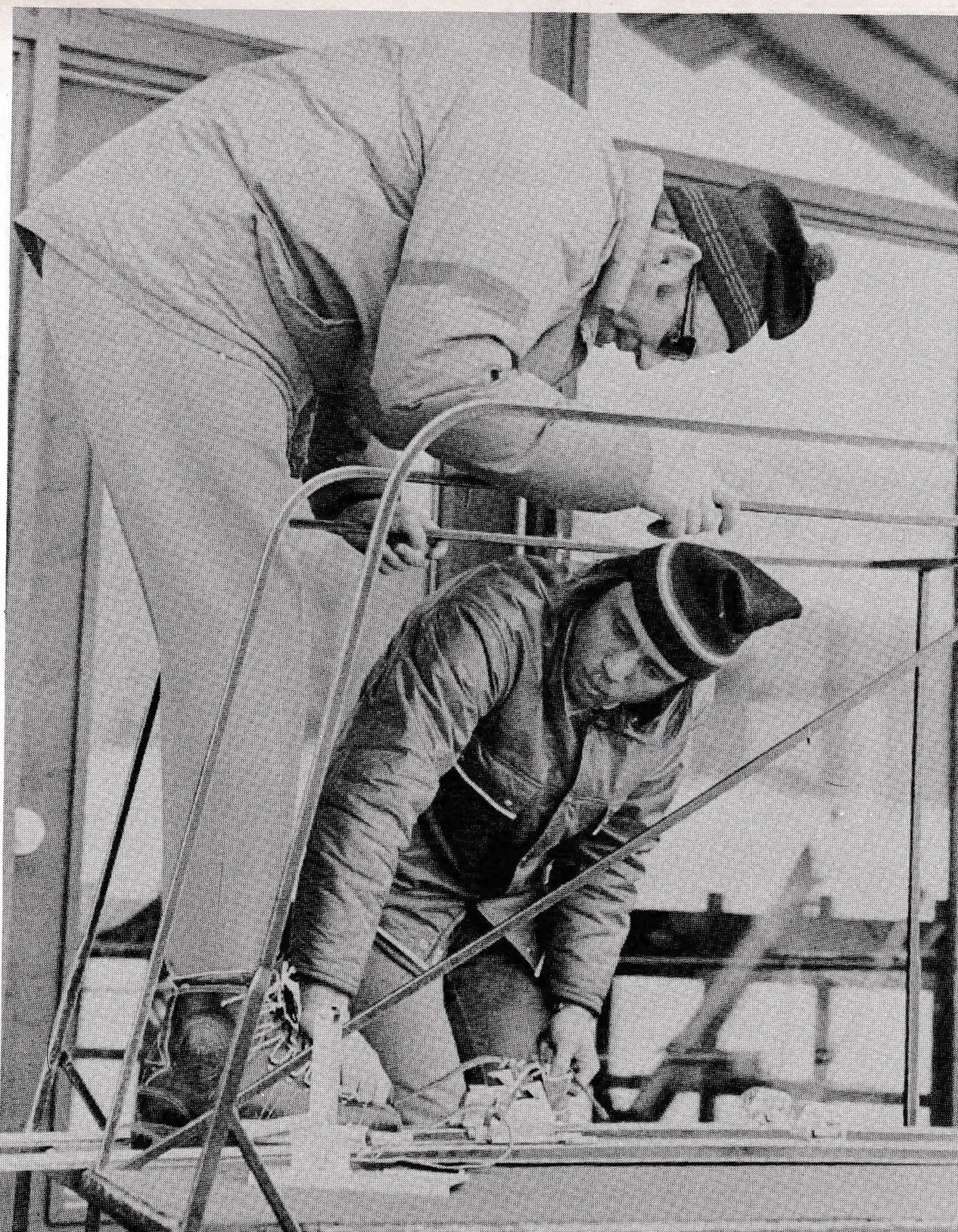
What happened at the pilot program for binding check-ups at Jackson Hole, Wyo., last winter? Well, everyone involved in it was enthusiastic: Buzz Bainbridge of the area, Gordon Lipe the program designer and Skiing Magazine which underwrote it. But, the project is currently “stalemated,” according to Skiing’s Doug Pfeiffer. “We are still hoping for an outside-the-industry sponsor. It’s a great opportunity, but it’s hard to sell because it doesn’t have the glamour of pro racing or free-style competition or other programs that attract sponsors.”
The pilot program at Jackson confirmed what others have observed: that up to 80 per cent of the boot-binding complex used by on-slope skiers had some potential malfunction. The vast majority of skiers are fused time-bombs—accidents about to happen unless they are defused.
Skiers were invited to have their bindings checked “to help you determine, within reasonable limits, whether your releasable bindings are safe or unsafe for skiing.” The skier was charged $1, for which he got the written results of the check-up which he could take to the ski shop for remedial action, if needed. Later on, a sporting wrinkle was successfully tried: If your bindings are safe, you don’t pay a thing.”
Meanwhile, back in New England, Doctors Henry Crane and Robert O’Malley, long active in ski accident prevention, have ideas on the subject:
“We feel that adequate facilities for binding checks and adjustment near the lifts should be provided by ski areas at no charge or, at least for a nominal fee. It is of interest that at the Mt. Tom area in Massachusetts, a courtesy binding check program has functioned for the past seven years, and there are now over 25,000 binding checks made per year. While this service is not infallible, to date there have been no known suits as a result of same. It should also be noted that this courtesy service has been an excellent public relations program.”
SAM Staff
Skiing Binding Workshops
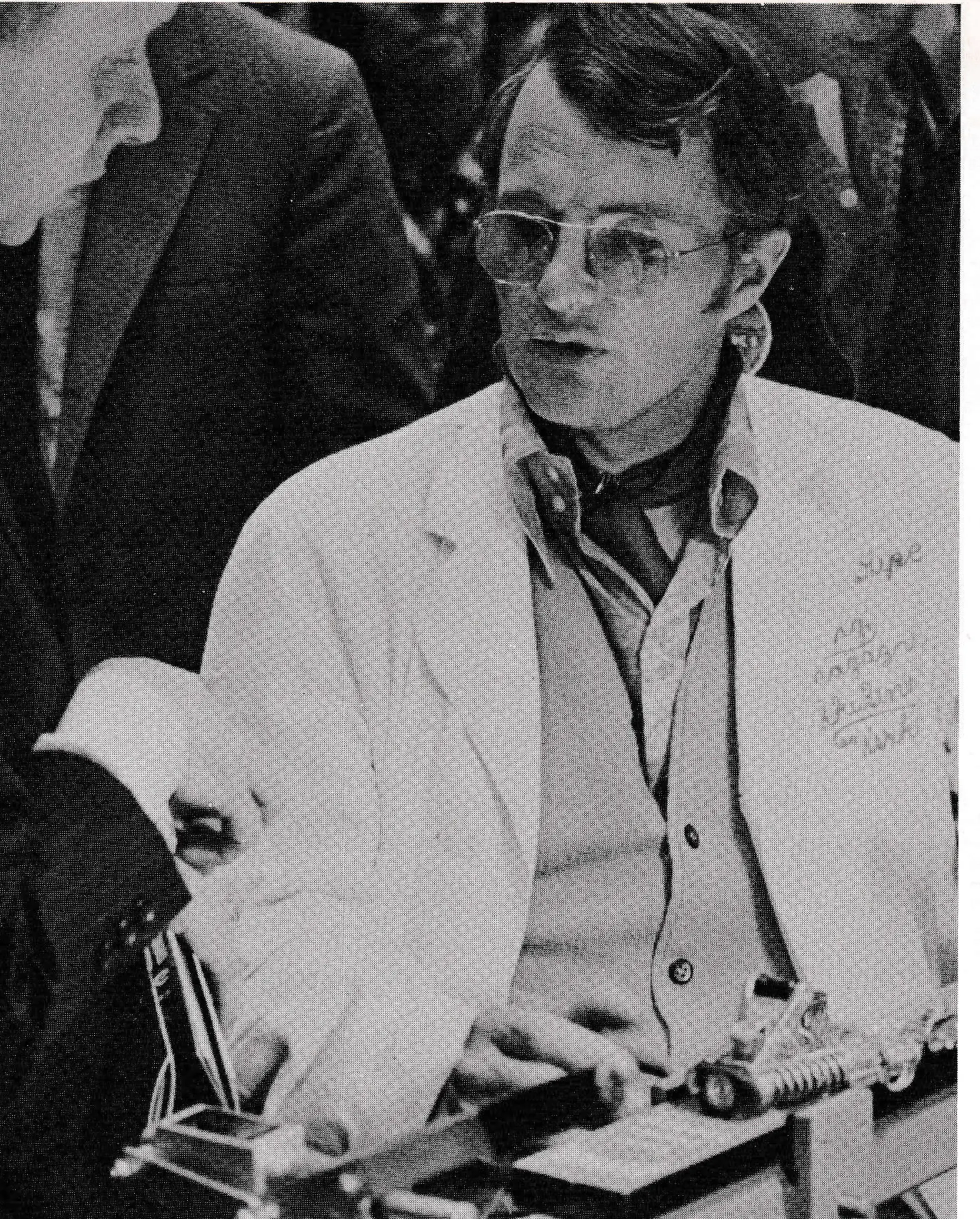
The 1973 Skiing Mechanics Workshops have been scheduled in ten cities this fall. Sponsored by Skiing Magazine and Barringer and Williams, NSAA insurance plan managers, the two-day-long workshops feature lectures, discussions and workbench sessions.
To be covered are compatability of elements (skis, boots, bindings, accessories); anti-friction devices; canting; mechanical testing devices; new forms and record-keeping aids; and rental shop safety guidelines. The full-day workbench sessions will include mounting procedures related to ski, boot and binding compatibility; solutions to common binding mounting and adjustment problems; and newest shop tools and techniques.
Leading the 1973 program will be Gordon Lipe, John Perryman and Carl Ettlinger. All major ski binding suppliers will send technical experts to demonstrate and answer questions.
Attendance, for which the two-day registration fee is $75, will be limited to approximately 200 mechanics per session. Registration forms are available through the producers of the workshops, Harry A. Leonard & Co., 53 West 82nd Street, New York, N.Y. 10024.
Following is the schedule:
- Tarrytown, N.Y. (Hilton Inn) Sept. 12-13
- Framingham, Mass. (Sheraton Terrace) Sept. 16-17
- Buffalo, N.Y. (Sheraton Inn East) Sept. 19-20
- Bloomington, Minn. (Ramada Inn) Sept. 23-24
- Denver, Colo. (Stouffers Denver Inn) Sept. 29-30
- Seattle, Wash. (Edgewater Inn) Oct. 7-8)
- Los Angeles, Cal. (Hilton) Oct. 14-15
- San Francisco, Cal. (Hilton Inn) Oct. 21-22
- Arlington Hts. Ill. (Holiday Inn) Oct. 28-29
- Detroit, Mi. (Hotel Ponchartrain) Nov. 4-5