
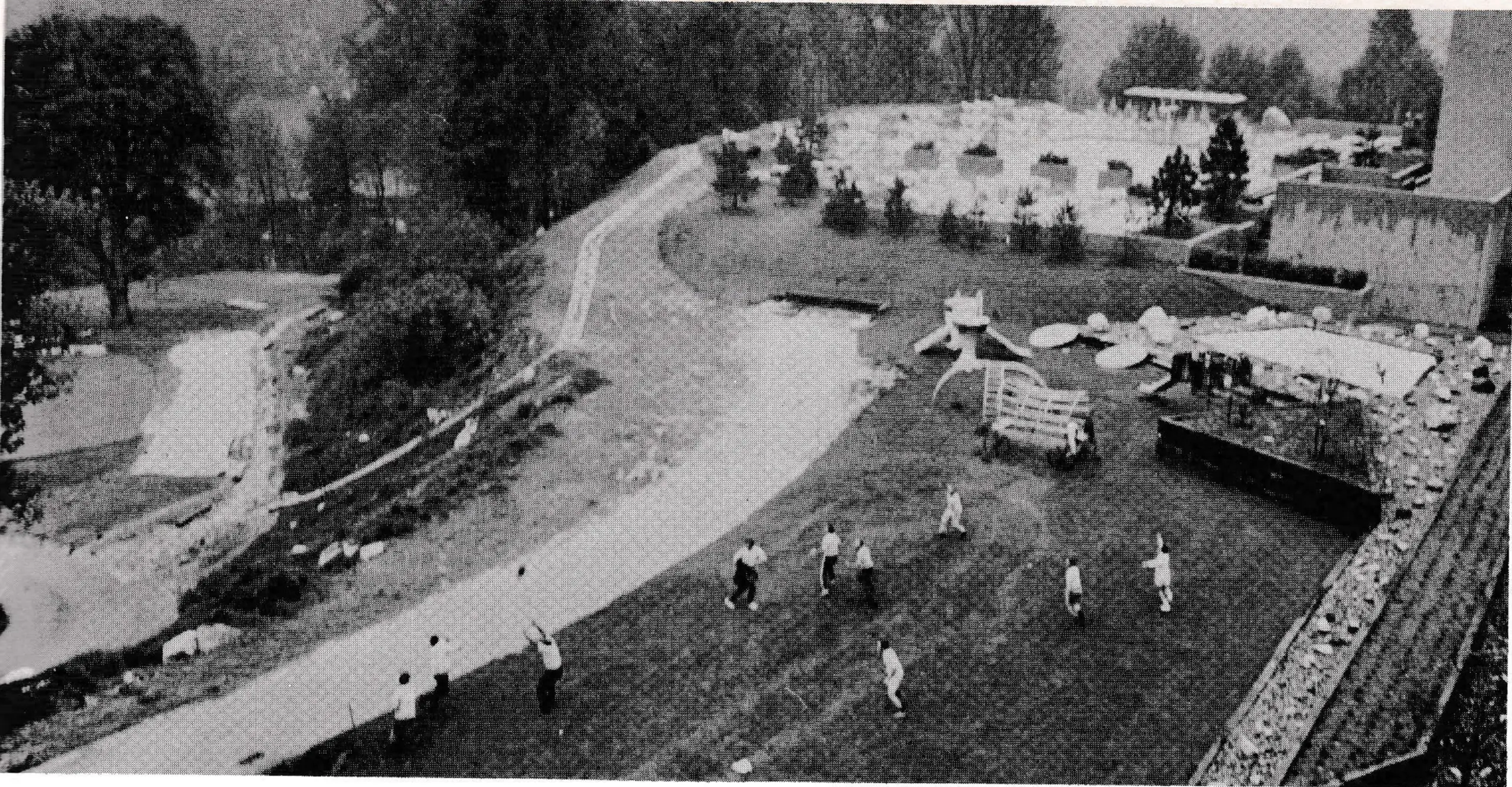
The Playboy Club at Great Gorge, N.J. proved to be well suited for the 11th Annual NSAA Convention. Nobody really liked. it. In fact, it is really quite unlikable. But even those who really dis-liked it were willing to admit that the meeting facilities and general convention efficiency were of a high order.
The convention itself went very smoothly right up to the final business meeting. Normally, this is an exercise in rubber stamping, with a few hardy souls hanging around to ratify the actions of the Board. But, quite unpredictably, two major debates were launched, and the 26 members there witnessed the liveliest scene in NSAA’s history.
First, a bolt of lightning arced between two supercharged polarities: Paul McCollister, of Jackson Hole, Wyo., and Hugh Killebrew, of Heavenly Valley, Calif. The subject was the 1978 World Championships, and each wants them for his area. Each was somewhat vigorous in expressing his conviction that the other was using unfair tactics to get them.
As the charges and counter-charges and verbal ricochets shot around the room, President Frank Snyder strove mightily to keep matters in parliamentary order.
But hardly had he achieved this than a second, equally lively and unexpected, debate arose on government financing of ski areas. Stuart Campbell, of Buck Hill, Minn. tried unsuccessfully to get a resolution passed that would have put NSAA on record as opposing government financing of ski areas when money from the private sector was available.
Finally, about 90 minutes later than expected, Snyder was able to turn over his gavel to incoming President, Peter Seibert, and the convention closed.
A total of 546 attended at least some part of the 4-day meeting. Of these, 295 (including 48 wives) were from 134 different ski areas. Associate members (mostly exhibitors) accounted for an additional 222 registrants, with guests and press adding a total of 29 more.

Underlying the whole convention, and especially the seminars and open forums, was a search for professionalism. At the Sun Valley meeting a year earlier the theme was environmental confrontation. But this year the industry was not preoccupied with these issues; and nor, it seemed, were the no-growth environmentalists. Leaders of 46 environmental groups and organizations were invited to participate in a panel session with area operators, and not one accepted.
A special session was held on OSHA, but the subject turned out to be too complex for a 45-minute presentation. The impression given was that the odds were slim that one of OSHA’s unannounced sleuths would show up at a ski area, mainly because OSHA is spread too thin. However, a serious accident would pretty well guarantee a visit, and a complaint might do likewise.
The trade show produced 64 exhibitors, most of them indoors. Many were disappointed by the attendance of ski areas, and wondered out loud what they could look forward to in Del Coronado, Calif., in 1974. The expense of belonging and exhibiting is proving difficult for many to justify, and a number of exhibitors were complaining quite vocally.
For future business, NSAA undertook to research and report on ski area medical facilities. Optimum configurations and equipment for both large and small areas is the aim of the study. The Board also ratified Sugarloaf, Maine, as the site of the winter meeting of NSAA. This meeting will feature both slope-grooming and snow-making demonstrations.