

He introduced himself as a sports writer from a newspaper in a distant town. The area owner’s wife talked with him briefly before she was called away to attend to a problem in the main lodge. He went to the ticket window and said he had just talked with the owner’s wife and he wanted two lift tickets. The ticket seller gave him the tickets, but later mentioned the incident to the owner’s wife who said she had given no promise of tickets to the man. Clearly, they had been conned.
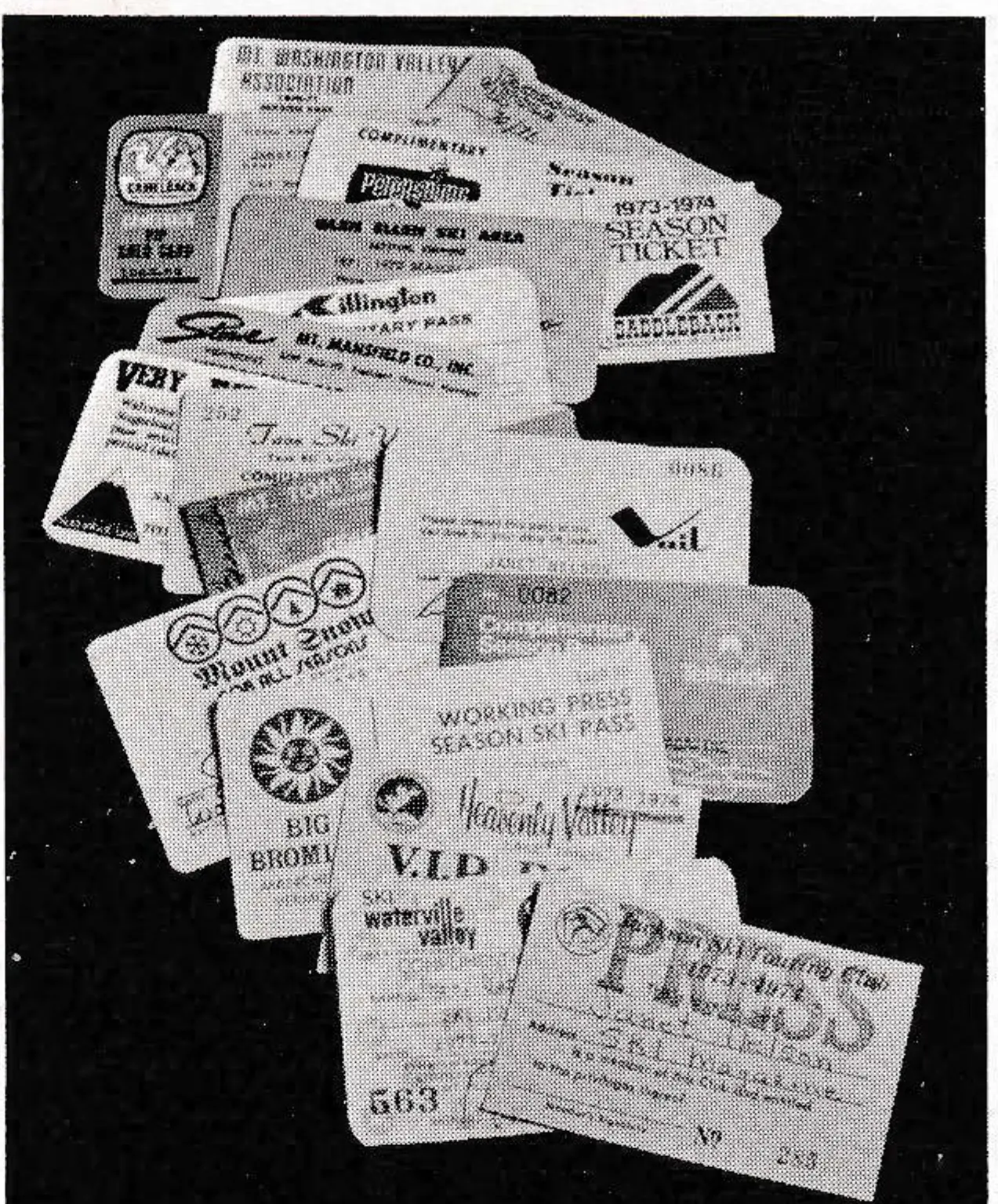
This true incident occurred at West Mountain, New York, last season, but does it represent the overall pattern of the media seeking comps and freebees from ski areas? A spokesman for the U.S. Ski Writer’s Association recently claimed that such gifts to the so-called “press” probably comes to six figures, and that too many people are able to flash a pass and get three to six lift tickets for four or five consecutive days at one ski area.
At Snowbird, Utah, area manager Bud Seaman says that on any powder day after a good storm there will be 10 guys out there with Nikons around their necks asking for free passes to do some shooting. “You can spot the phoneys by examining their credentials to determine if they are valid,” he says. “But it takes someone with experience in this business, who is knowledgeable and tough in judging these guys. You also have to decide how valuable their efforts might be for Snowbird.”
Certainly, the ideal situation for ski areas would be to have every person on the hill a paying customer, but how practical would that be from the point of view of publicity? “We get good coverage for the cost and the expenses that we put into it,” says Gene Keilitz, of Timberlee Hills, Michigan. “A small area like ours just couldn’t afford to buy this kind of linage. Even when we’ve been criticized it’s been constructive and based on fact.”
Some areas attempt to solve the publicity problem by holding “press days” with lots of fanfair, free banquets, free skiing, free races and prizes, free cocktail parties and free everything. One ski columnist who attended these functions last season at Gunstock, N.H., and Berkshire East, Mass. says that every station announcer, sports editor, typesetter, producer, and all manner of media personnel who ever skied or wanted to try skiing was there.
Clearly the problem of having press people ski your slopes is one of selection. You want the benefits of their attendance, but who do you let in free?
A sampling of large, medium and small areas across the county produced a variety of methods for dealing with this problem as well as a variety of experiences, good and bad, as a result.
- Vail, Colo., sends out over a 1,000 season passes to a list of press people that is reviewed annually. They also give day tickets to people on assignment, but usually they have made prior contact to arrange for passes, according to Pam Conklin, publicity director. “The press passes seem more professional and make it easier and less embarrassing for the press,” she says. The major abuse of this policy has been press people who fail to stop in for a friendly hello.
- Alpine Meadows, Cal., cut their free pass list to the bone during the past five years in an overall budget move. “We used to give away thousands,” says Kathleen Keith, ticket manager. “Now we have a comp list of about 22 people and when they come to the desk we automatically give passes to them and to their spouses.” Anybody else has to pass the Keith credential’s test. Still there are abuses like the sports writer from Reno who continually came to the area and presented his press card. Following up, she found he was not writing anything about skiing. A call to his editor stopped his visits to Alpine Meadows.
- Stowe, Vt., sends passes to the Vermont press corp and to members of the Eastern Ski Writers’ Association. For anyone else to get a free ticket means passing the steely gaze of New Bureau Director Bill Riley. “We help important people on assignment,” he says, “and, we may give the benefit of the doubt to others for one visit. But I take a firm stand with others and I’ve had good luck with this policy.”
- Timberlee Hills joins five other ski areas in the Traverse City region (Sugar Loaf, Crystal, Hickory Hills, Shanty Creek and Schuss Mountain) in an early December press weekend held every two years. The list of about 300 invitees (with families) has been gathered over the years and is screened regularly by the areas and the Chamber of Commerce which organizes the affair. Furthermore, the press is asked to send in coverage growing out of the junket. Last season the press weekend was held just after the energy crisis broke and areas were able to present their plans for saving energy and helping skiers get to the resorts. Most felt that alone justified the $7,000 cost.
- Snowbird, which has been plagued with everything from marginally-connected media people to requests for passes written on forged letterhead stationary, sets a maximum of three days of skiing for press people with a legitimate affiliation. Occasionally longer stays are allowed for detailed articles involving photography or for other major projects. The judgment is left in the hands of Randy Montgomery, marketing director, but experience has shown that the people who scream the loudest, pound the table and threaten to never mention the resort are invariably the least legitimate.
Media managements are often tougher about such abuses than area people are. One columnist went to Bromley and threatened never to mention the area again unless he got a season pass for his wife as well as for himself. The area manager called the newspaper he worked for and in less than 10 minutes, the columnist was no longer a columnist.

On the other hand, the working press often accuses the top brass of being on the take. “The guy on the desk isn’t allowed to accept a bottle of booze for Christmas,” complained one ski writer, “but the executives are offered or ask for week-long free privileges with tickets, lessons and lodging thrown in. Those who make the most, get the most — free.”
One example of this is the head of the sports department for a major television station in Los Angeles. He is a devoted skier with a house in the mountains and he skis free all over the region. Yet, his station never mentions the sport of skiing, let alone the specific ski areas where he has enjoyed the free snow.
So, who can you trust? How can you judge who is legitimate? Should you expect tit-for-tat — free publicity for a free ticket?
This dilemma is not solved by the ski writer’s organizations either, which admit that they have trouble enforcing standards for membership from one region to another. Don Metivier, president of the Eastern Ski Writers’ Association, says that although most Eastern areas use his organization’s list, it would be up to the areas themselves to determine press pass policies. “Whether or not they write about a ski area immediately after visiting it, a ski writer is advancing the sport in the long run by participating or being a spectator of it,” he says. He advises areas to keep an up-to-date press list, adding that an annual VIP card or an invitation to visit the area is more apt to produce results than passively waiting to be discovered by ski writers.
That won’t solve all the press pass problems, but it might prevent some embarrassment like the time an area manager came up to my table at lunch with a “colleague” from the magazine I worked for. I had never seen the man before in my life.