

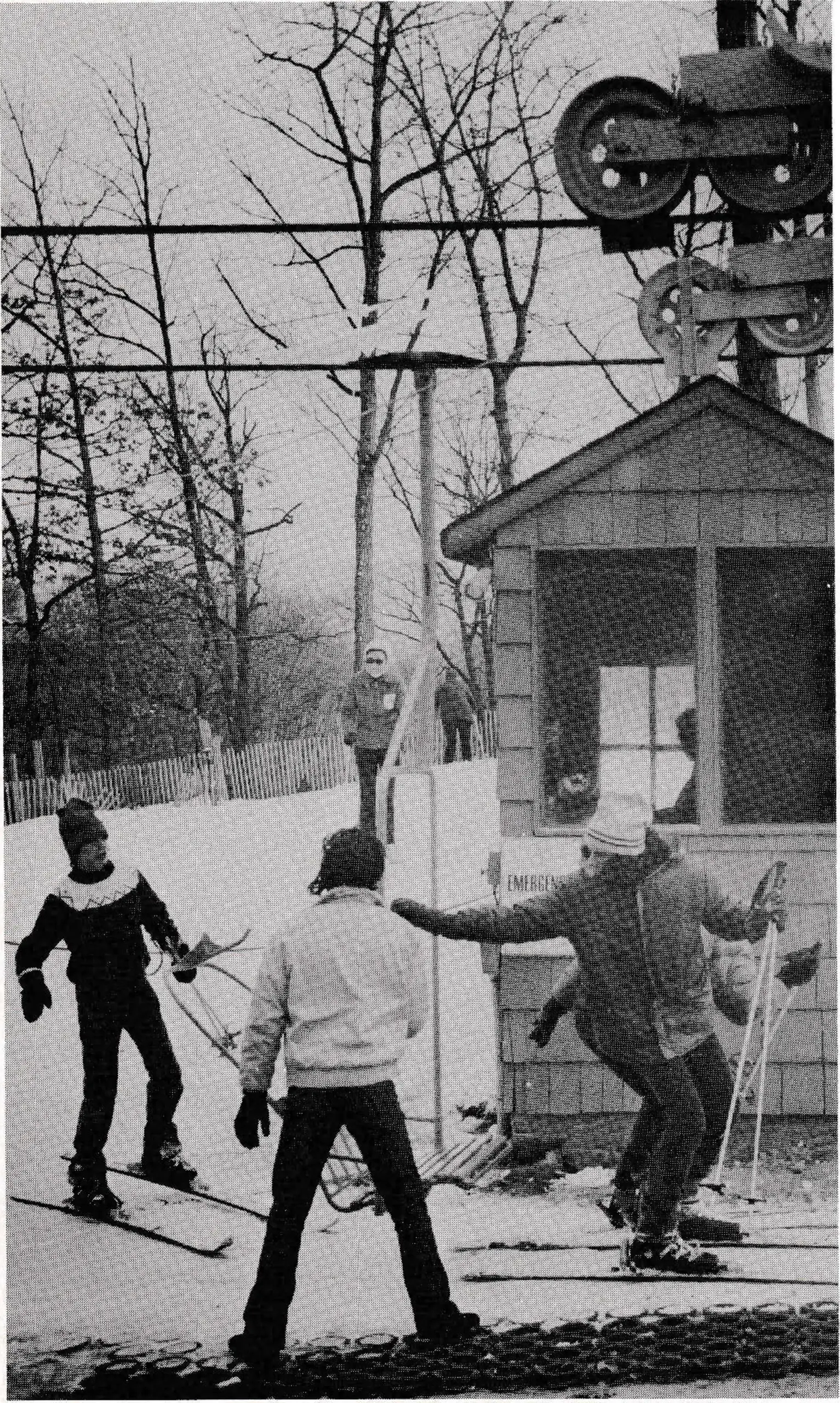
The operator of a ski lift or a tramway may have as many lives in his hands an an airline pilot or a railway engineer. Pilots and railway engineers are trained in both normal and emergency operator procedures (EOP in this article). Ski lift and tramway operators also have normal operating procedures which are published and should be known by the operators, but the emergency operating procedures are usually not as well known nor standardized. Yet, it is vital that these procedures become second nature, to be applied immediately and instinctively if serious emergencies are to be reduced.
On the following page is a set of emergency operating procedures that cover the most frequent lift emergencies. Some modifications will undoubtedly be necessary for particular installations, and trial runs should be practiced whenever possible to determine these modifications. Beyond that, if questions exist, the lift designer should be consulted.
Remember, too, that design, construction, maintenance and inspection must be properly carried out for any emergency action to be effective. When the emergency occurs, it is too late to call for maintenance.
While there are specific actions for specific problems, nearly all lift emergencies involve the following EOP: first, STOP THE LIFT, then HELP THE AFFECTED SKIERS. Emergencies occuring because an attendant was not fast enough to catch a skier caught in a moving lift or tow are not unknown in the ski industry.
In addition to operator alertness and reaction time, other factors affect a proper response from the operator. He must assess the emergency in light of (1) the skill level of the skier and (2) the seriousness of the mechanical failure. These are intangibles in the early stages of an emergency which are dependent on the judgment of the operator.
Probably 90 per cent of the emergencies involve human error — either that of the skiers or the lift operator. The effort to reduce lift accidents must be two-fold. First, to educate the skiing public to think safety while using lifts. And, second, to educate the lift operator in emergency situations. The first effort is difficult and imponderable, but the second is an area in which the ski industry has both responsibility and control. After adding your own variations and modifications to this EOP list, be sure that each operator has a copy of it and is trained to apply the procedures when needed.
| EMERGENCY: | POSSIBLE CAUSE: | EMERGENCY OPERATING PROCEDURE: |
|---|---|---|
| Hair or scarf caught in rope tow | Spiralling rope and/or long hair or loose clothing. | Stop tow immediately! Then help skier. |
| Fall or jump from chair | Improperly engineered unloading or loading area. Improper unloading or loading procedure. Human error. | If fall is in unloading or loading area, Stop Lift First. Clear area before restarting lift. Contact ski patrol to administer first aid as required. |
| Fall on tow path | Poorly maintained ski track. Jerky lift operation with novice skiers. Human error. | Stop lift! Do not restart until fallen skier is clear of tow path. |
| Caught clothes, hand or poles on carrier | Sharp edges, hooks, etc. on carrier. | Stop lift! Aid skier. |
| Inability to release safety bar | Bent or inoperative safety bars. | Stop lift! Aid skier. |
| Deropement | Sheaves, bolts or bearing failure. Surging of the line due to premature restarting. Swinging chairs. | First, stop lift if safety switch did not. Initiate evacuation alert. Advise top management office. |
| Chair contacts guide or tower | Improper loading procedure. Operation in excessive wind. Human error. | Stop the lift to prevent recurrence. Restart lift — (Possibly at a slower speed). Shut down for a time, if problem is due to wind. |
| Grips slipping | Improper design or installation | Stop lift as soon as passengers are unloaded. |
| Mechanical failure | Undetermined causes. | Stop lift if safety switches have not. Go to auxiliary engine operation or initiate evacuation alert as necessary. Advise top management office. |
| Various brake failures | Brakes not properly adjusted and maintained. | If the service brake fails apply the emergency brake. If emergency brake also fails, the lift drive should be restarted, if possible and operated in its slowest normal speed until all skiers are unloaded. |
| Rollback | The occurrence of rollback indicates that(1) The service brake has failed; (2) The back-stop has failed. | If the drive will restart do so immediately and operate until all skiers are unloaded. If this does not work, use the emergency brake. If the drive will not restart and the emergency brake will not work, assist as many of the people as possible from the chairs to keep them from going around the bullwheel. |
| Skier hit by carrier | Failure of skier to pay attention to carrier. Human error | Stop lift. Assist skier. |
| Caught ski top at loading or unloading station | Poorly engineered or maintained loading and unloading areas. Human error. | Stop lift where skier can unload or be assisted. |
| Lift fails to stop satisfactorily | Improper brake maintenance or failure. | Operate lift only long enough to unload the skiers already on the lift. |
| Ski caught on tower | Guards not in place. Human error. | If skier has fallen out of chair, call the ski patrol to administer first aid. If skier did not fall out of chair, stop lift and assist. |
| One ski unloading | Human error | Stop lift and assist to permit safe unloading. |
| Person partially out of chair between terminals | Human Error | Do not attempt to back up lift. If person is close to terminal or other area where rope-to-snow heights are not excessive, try ladder evacuation, otherwise, run the lift slowly as an evacuation procedure. |
| Fire in terminals or along line | Short-Circuits or undetermined | If lift is operable and is not carrying passengers through fire, operate long enough to unload passengers already on lift, otherwise, initiate evacuation procedure. |
| Power failure | Undetermined | Switch to auxiliary power and/or auxiliary drive for lift. If auxiliary drive won’t function, initiate evacuation alert and contact top management office. |
| Structural failure | Undetermined | Stop lift if safety switch did not. Initiate evacuation procedure. Contact top management office. |
| Severe Climatic disturbance | Acts of God | Get everyone off the lift as soon as is practically possible. This can usually be done by running the lift until everyone has unloaded. If it is impossible to operate the lift, evacuation may be necessary. |