
The various surfaces that are used for limited, high-wear spots such as on loading and unloading stations, are still around and relatively unchanged. But what is being sought today are surfaces that can provide pre-season instruction at existing snow-ski areas, and surfaces that can provide season-long skiing—or year-round, skiing for that matter—on hills where snow-skiing does not exist in any form. Still further interest is being shown by the nation’s parks and recreation authorities in the hopes of being able to offer skiing where today none exists.
SAM here presents an update on some new developments with artificial surfaces.
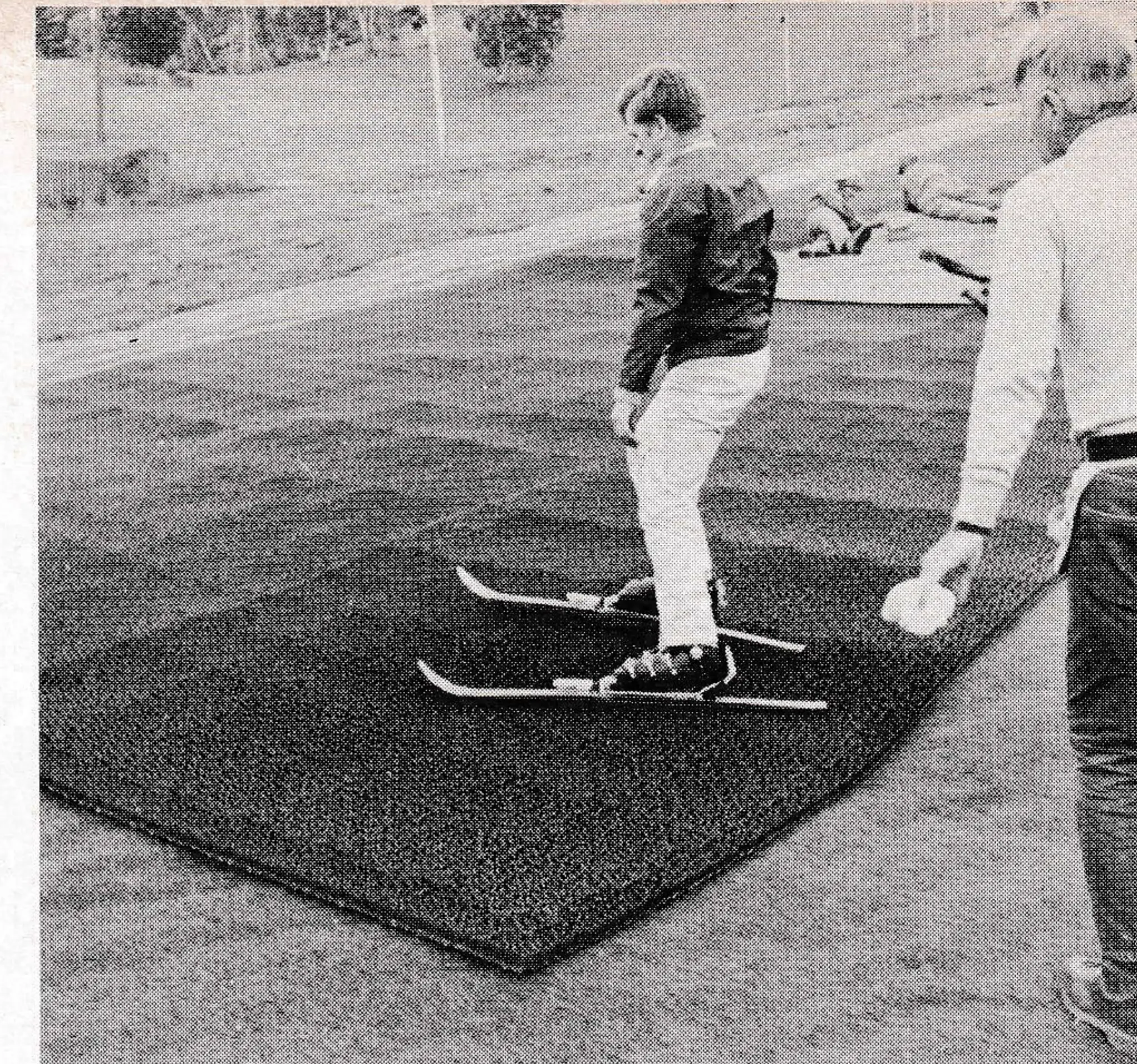
Skier training at Wisconsin’s Mt. La Crosse starts earlier now because a small mountain of cushiony plastic covers a 15-deg. slope for beginning skiers. The material—a semi-rigid, multi-spined injection molded plastic—was unrolled and installed in late September, 1975. The first contingent of students totalling 153 beginners started sliding and gliding three days later.
Ted Motschman, area manager, says the $9,000 investment, which includes grading and supplies, was a pleasant surprise to everyone, including himself.
“Out of all the beginner skiers who started on the slope we lost only three going into the regular season,” says Motschman.
Motschman expects to recoup his investment over three years, including bank interest. This could be good news for many smaller ski area owners who may be looking for off-season business.
Motschman discovered these advantages in his new venture: 1) A low per-student cost—$25 for four one-hour lessons on plastic, and one on snow—attracts business; 2) The idea of learning a cold weather sport in warm weather has appeal; 3) Students are less self-conscious in small groups of five or so; and 4) The fear of getting hurt on snow, in contrast to the softer plastic cushion, is alleviated.
About the only disadvantage of the fall season program is the occasional mosquito bite, according to Motschman.
The Mt. La Crosse training surface is 75 feet long by 24 feet wide. It is produced by Sun Slope, a Los Angeles corporation headed by Paul Livermore, an avid skier and former movie cameraman.
“Until now, synthetic ramp or slope type teaching has been limited to smooth surfaces requiring excessive degrees of downhill slope (25 to 32 degrees in some cases) in order to attain sufficient acceleration,” according to Livermore. “In most cases only flat, skidding turns were possible on carpet-type materials since there was little or no edge control.”
On the Sun Slope product an unattached ski will run down a 4-degree slope, and skiing can be accomplished on gradients as low as six degrees.
Livermore says the reason his Sun Slope product is closer to the feeling of snow is because of the three vertical extensions which make up the surface. These extensions vary not only in height, but in density.
“The longest vertical extensions, or ‘track’ verticals, that are not depressed by the ski bottom or edges, remain upright along the ski’s side edges and form a track,” he explains. “The ski glides along the second (or deeper, medium bristles) layer of verticals, called ‘turn’ verticals. When skis are edged, both track and turn verticals instantly bend and compress against the ski bottom and edges in proportion to the amount of degree and edging force exerted. This gives stability and control as skis go into reverse camber.
“The third and lowest layer of verticals called ‘base’ verticals are more solid and resistant to the force exerted. They function at higher speeds (20 mph plus), when skis press through both track and turn layers during high speed turns and stops.
As far as ski equipment is concerned, Mt. La Crosse starts the beginners on 100 cm skis and advances them to 150’s in a GLM program. The skis are more efficient with application of a high-density silicone applied to the bottoms. Ski edges must be free of nicks and burrs which can tear the plastic, and Motschman advises shortening ski pole tips to avoid damage to the plastic. A cluster of steel washers reduces tip length about 1½ inches.
Students must be prepared with proper clothing to withstand direct skin contact with the plastic. Close woven fabrics—levi pants are good—are recommended.
The maintenance of Sun Slope centers on keeping it free of dust and dirt. If rainstorms fail, a good hosing will work.

Motschman settled for green plastic because of its resistance to ultra-violet ray degradation, though he would have preferred white. Livermore hopes the plastics manufacturer will be able to come up with a new formula which will make white possible.
How Sun Slope is installed
Before the ski surface arrives, a bulldozer smooths the slope to a grade of about 15 degrees. Light and woven-wire fencing is placed over the graded area, followed by a layer of indoor-outdoor carpet, which reduces the dust under the surface. (Mill end-runs or mis-dyed mill runs are economical sources for this carpet.)
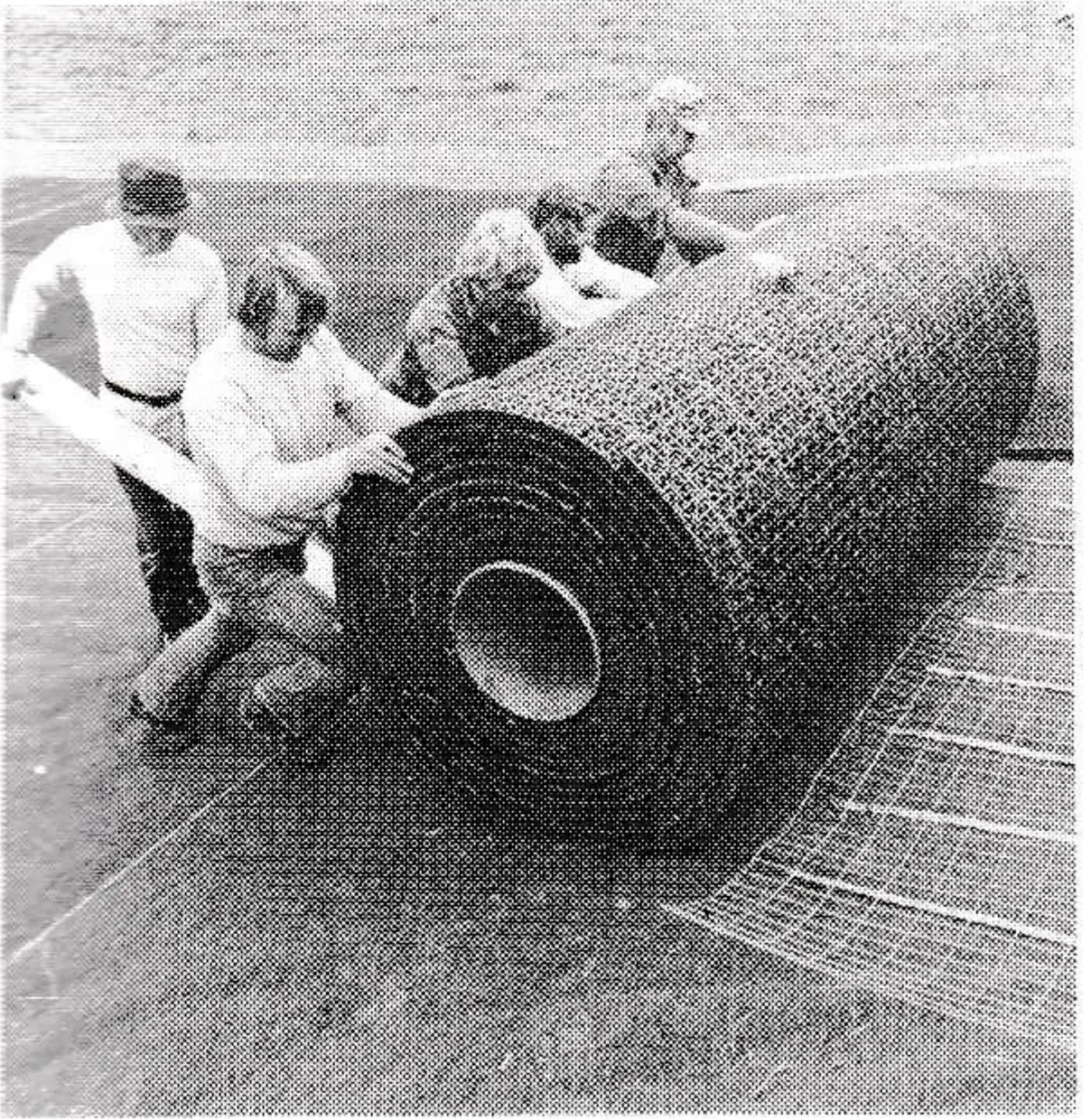
The plastic surface comes in eight-foot-wide rolls in lengths of 20, 30 or 40 feet. A 30-foot roll weighs about 40 pounds and is three feet in diameter.
Two workers under the supervision of Sun Slope executives, can install 250 or 300 square feet of the material in an hour. The most difficult aspect of this installation is the painstaking job of tacking down and joining edges with screws, rings or nails. Once the plastic is in place, the entire slope area is framed with plastic tubing.
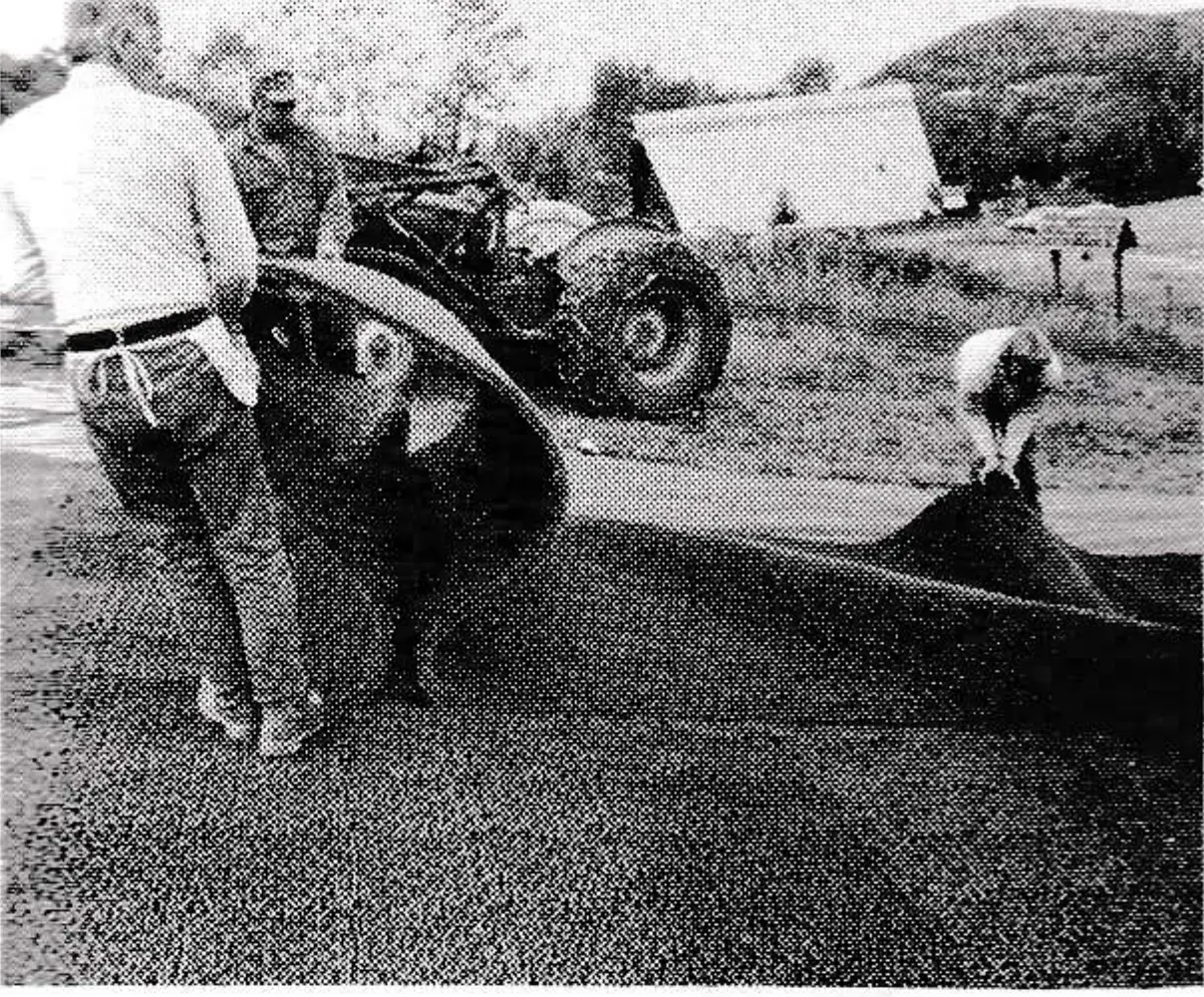
The ski surface is constructed of a plastic ribbon base from which about 2,500 vertical extensions a square foot project. The square foot sections are welded together so that sections can be removed to make repairs or changes.
Other Artificial Ski Surfaces
Following is information on some of the other synthetic ski surfaces on the market:
Astroturf Ski Surface: This product is made and marketed by Monsanto. It consists of a white polyethlene grass mat on which polyethylene beads are laid. The skiing actually takes place on the beads, permitting edging and more of the sensation of snow. Price of the installed surface is approximately $3.00 per sq. ft. including sub-base work; and the price for materials alone is $1.75 per sq. ft.
Astroturf Ski Surface has been installed at over 50 locations, many of which are quite small. Several, however, are in the 10,000 sq. ft. or larger range, and the Gatlinburg, Tenn. installation is over 200,000 sq. ft. Another significant installation is at Vinings Ridge Ski Area in Atlanta. For more information, contact Stanley D. Nelson, Monsanto Commercial Products Co., 800 N. Lindbergh, Mo. 63166.
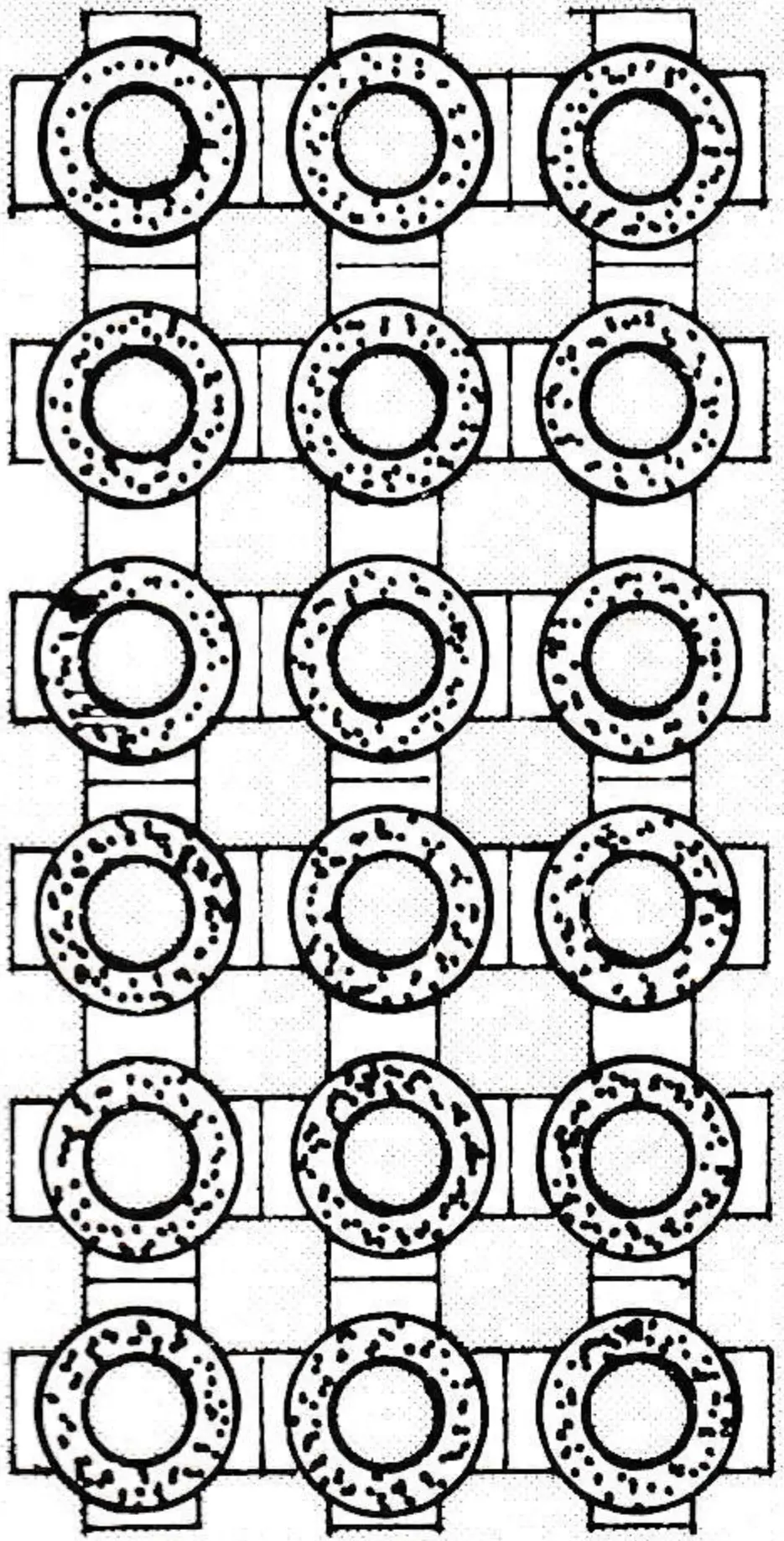
Snomat: This is a product of Plastiworld, Inc., 1227 Central Ave., Hillside, N.J. 07205. It is a Celanese plastic mat consisting of rings of plastic projections molded to a rectangular base. The standard mats are four feet square and easily assembled.
To increase speed, Plastislide Liquid may be applied to the surface.
Cost of Snomat runs from $1.70 per sq. ft. for orders below 1,000 sq. ft., down to $1.52 for 100,000 sq. ft. and over. Minimum order is one pallet (300 sq. ft.). It has been used successfully for ski jumping and off-season slalom training, as well as for loading and unloading areas.
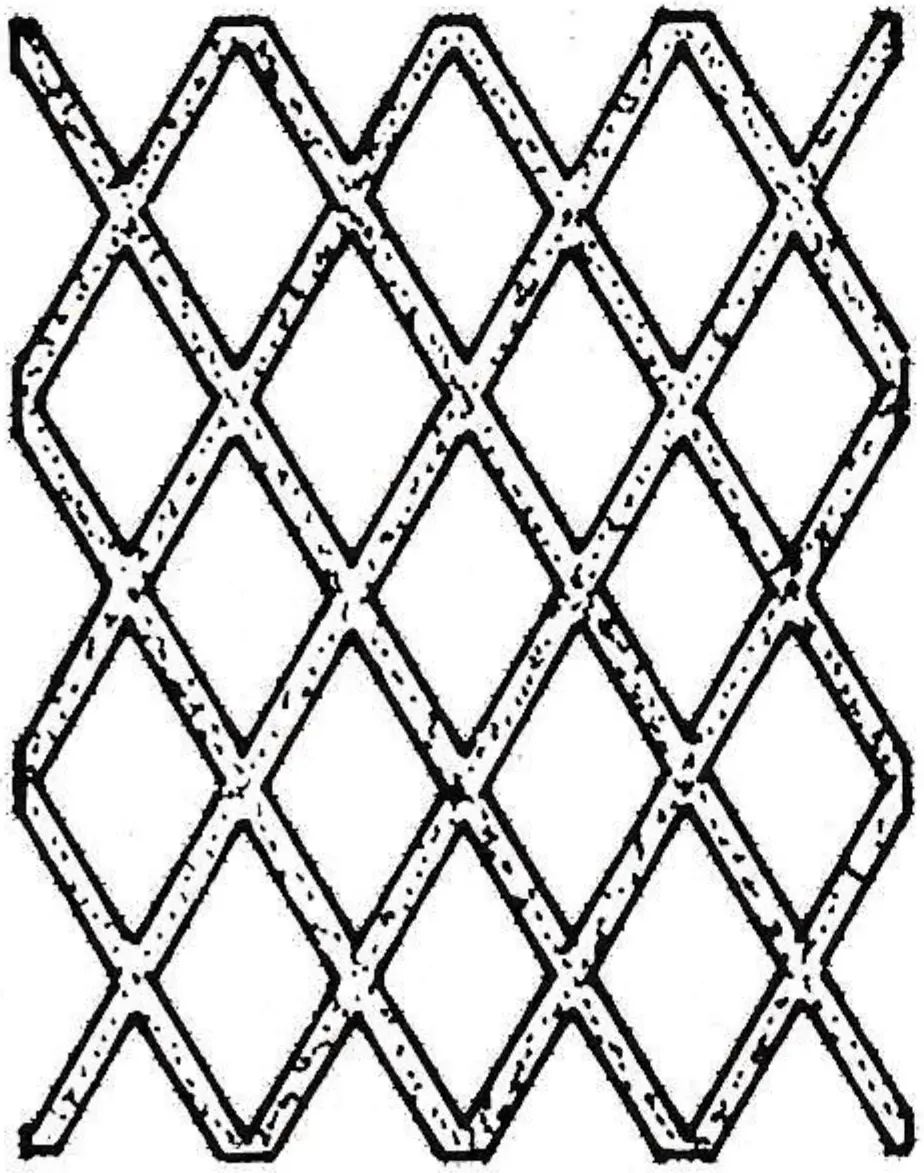
Skitrack and Uptrack: Manufactured by S.A. Felton & Son, P.O. Box 538, Manchester, N.H. 03105. These products involve a flexible open mat consisting of a metal base with plastic bristles extending upwards. Skitrack has the bristles arranged in a diamond pattern and is furnished in 4′ x 6′ mats. It is used for high-wear sections such as loading and exit ramps, and also for ski instruction slopes. Square foot costs ranges from $2.75 for 1-4 mats, down to $2.40 for 600 square feet and over.
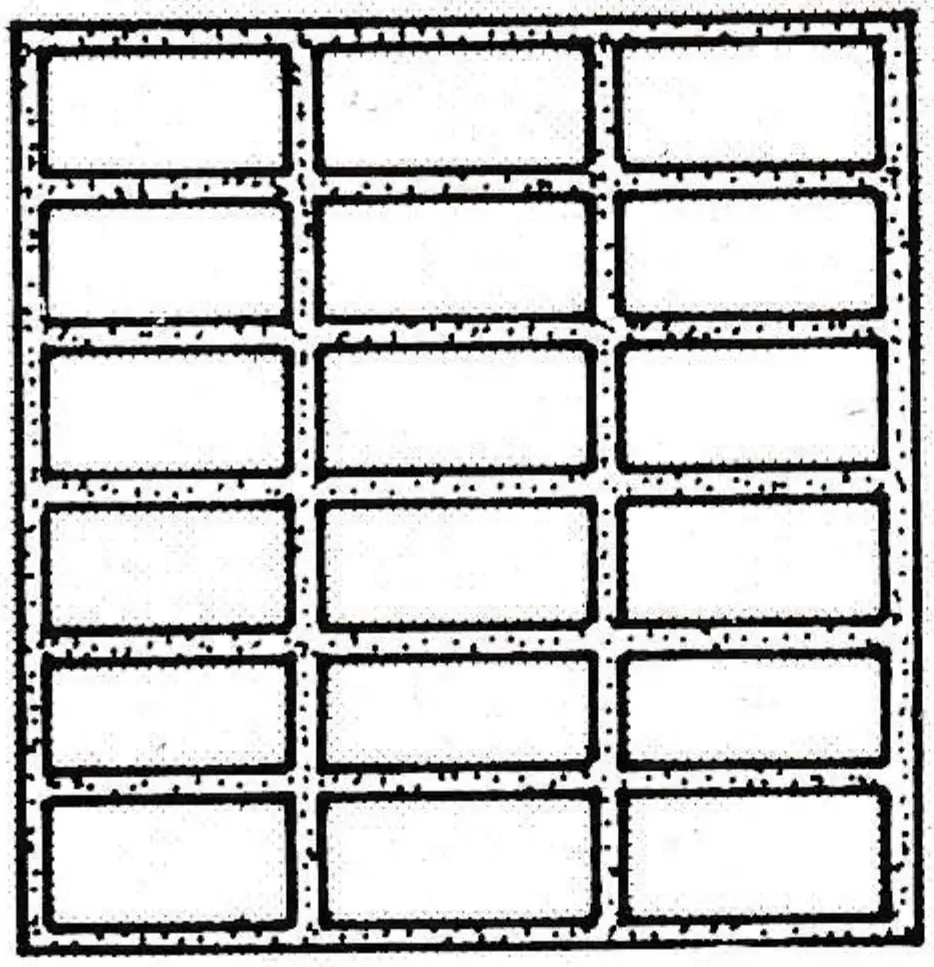
Uptrack has the bristles arranged in a rectangular pattern, and is supplied in 40-inch wide by six-foot long mats. Its use is for the uphill track of surface lifts. Cost runs from $32.20 per mat for up to ten mats (60 linear feet), down to $27.80 for 51 or more mats (306 linear feet and over). That works out to $4.63 per linear foot, or $1.46 per square foot.