


Paperwork. Most busy maintenance men find it a nuisance, but they know that it can be helpful and is even necessary to get a job done. The Maintenance Job Order (MJO) form is a document, which when used judiciously, falls into this category.
The MJO is used to request maintenance work and then, based on the scope of the job, to plan, schedule and control the work. But, the MJO should be used only where control and documentation are necessary: for important repairs, lift overhauls, capital-funded construction jobs, etc. When verbal instructions will get the job done, MJO’s should not be used.
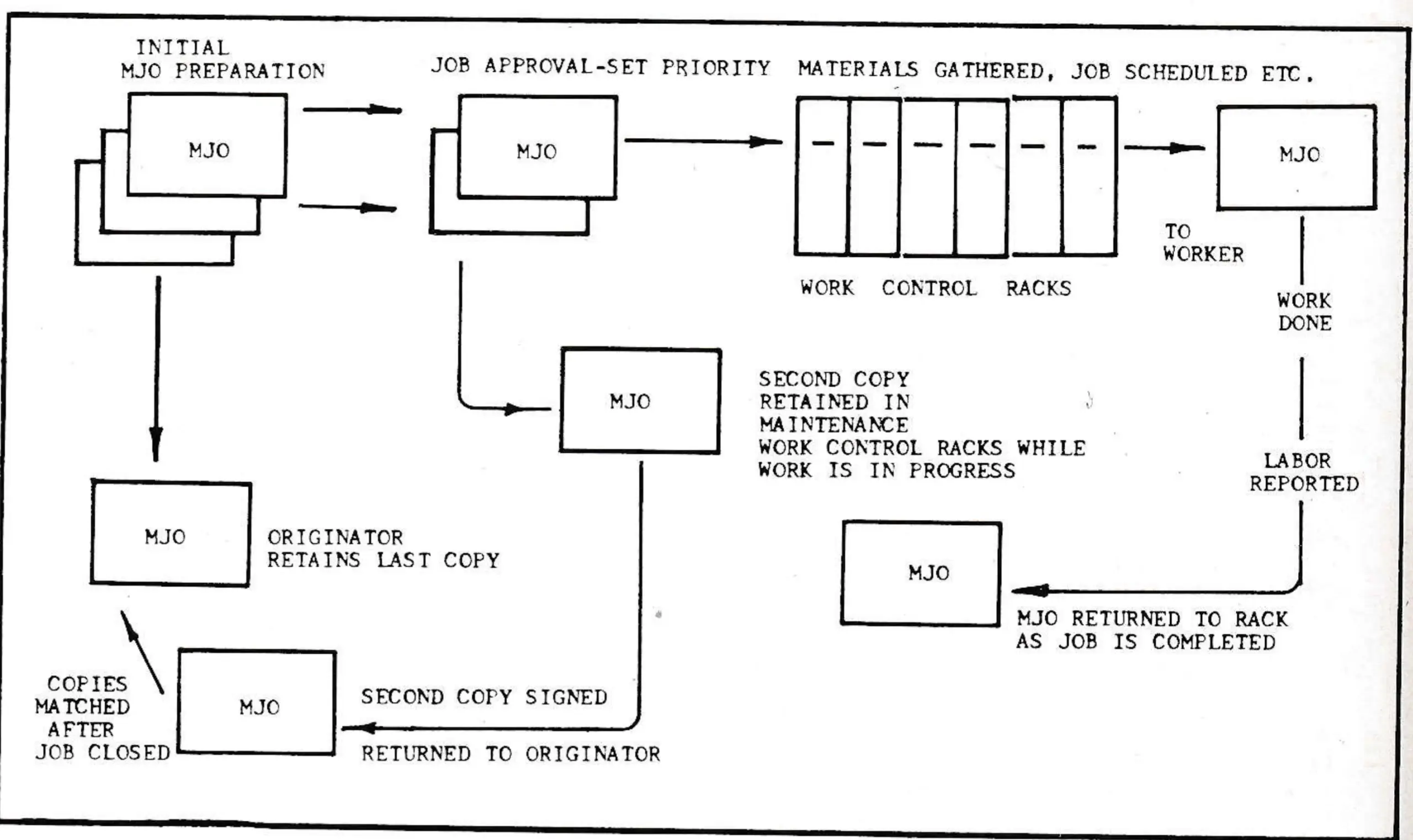
During the past two years the MJO has been used at Winter Park, Colorado, first on a limited basis and then gradually expanded. After initial testing in the Lift Maintenance Department, the MJO is now being used in plant maintenance, mobile equipment and in shop work.
At Winter Park, the MJO is usually prepared by the department needing the maintenance work. The MJO currently being used is a three-part form which identifies the equipment on which the work is to be done and describes the work needed. The requestor retains a copy of the MJO and forwards the remaining copies to the maintenance department for action.
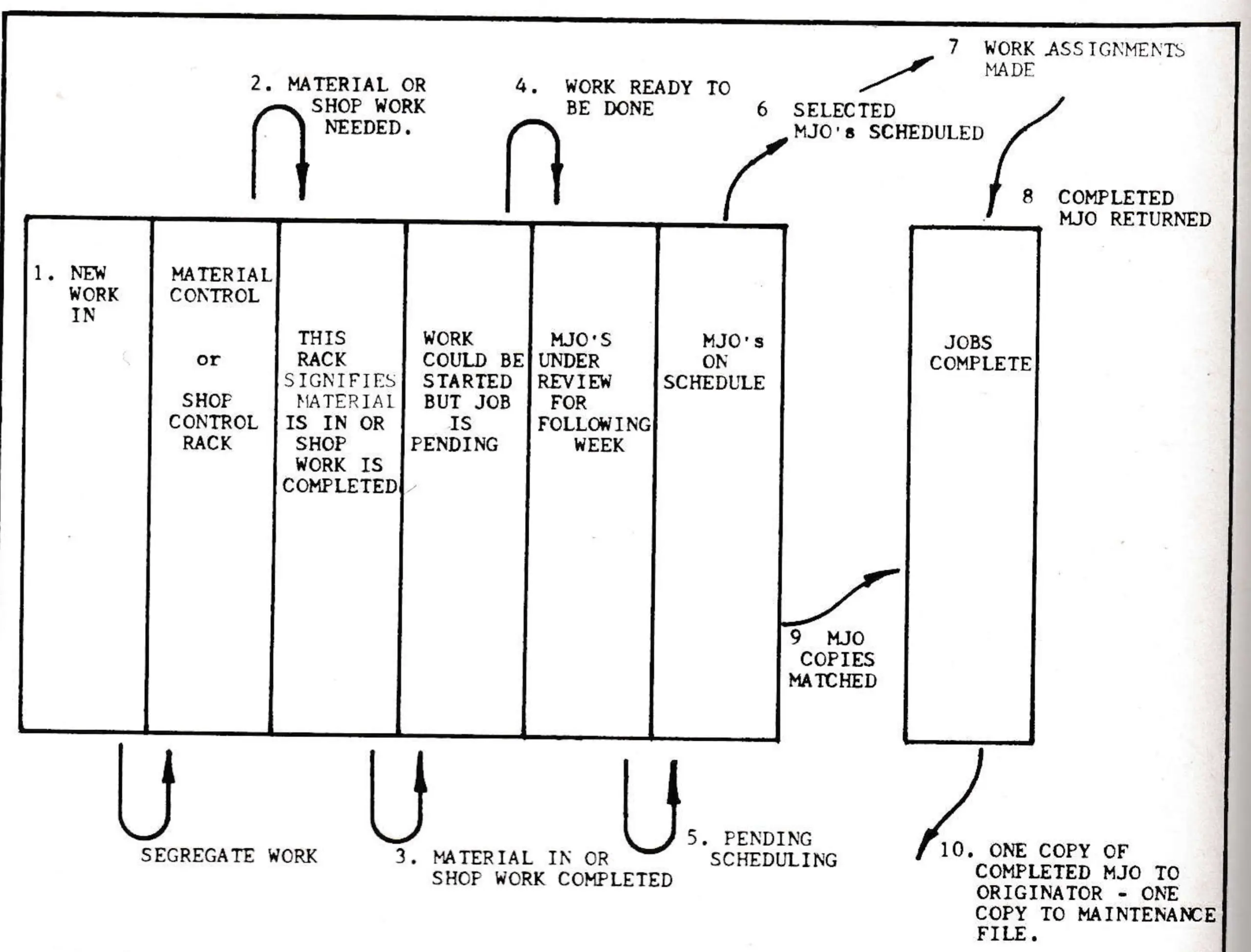
As the MJO’s are received by the maintenance department they are sequenced into Work Control Racks according to priority. In these racks the work is also sorted according to type: mechanical, electrical, construction, etc. As the MJO’s flow through the racks, compies of the Orders are placed in specific slots on the racks to indicate: materials needed, shop work required, shop work completed, ready to schedule, scheduled and completed. This type of control provides a visual check on the status of each job from receipt to completion.
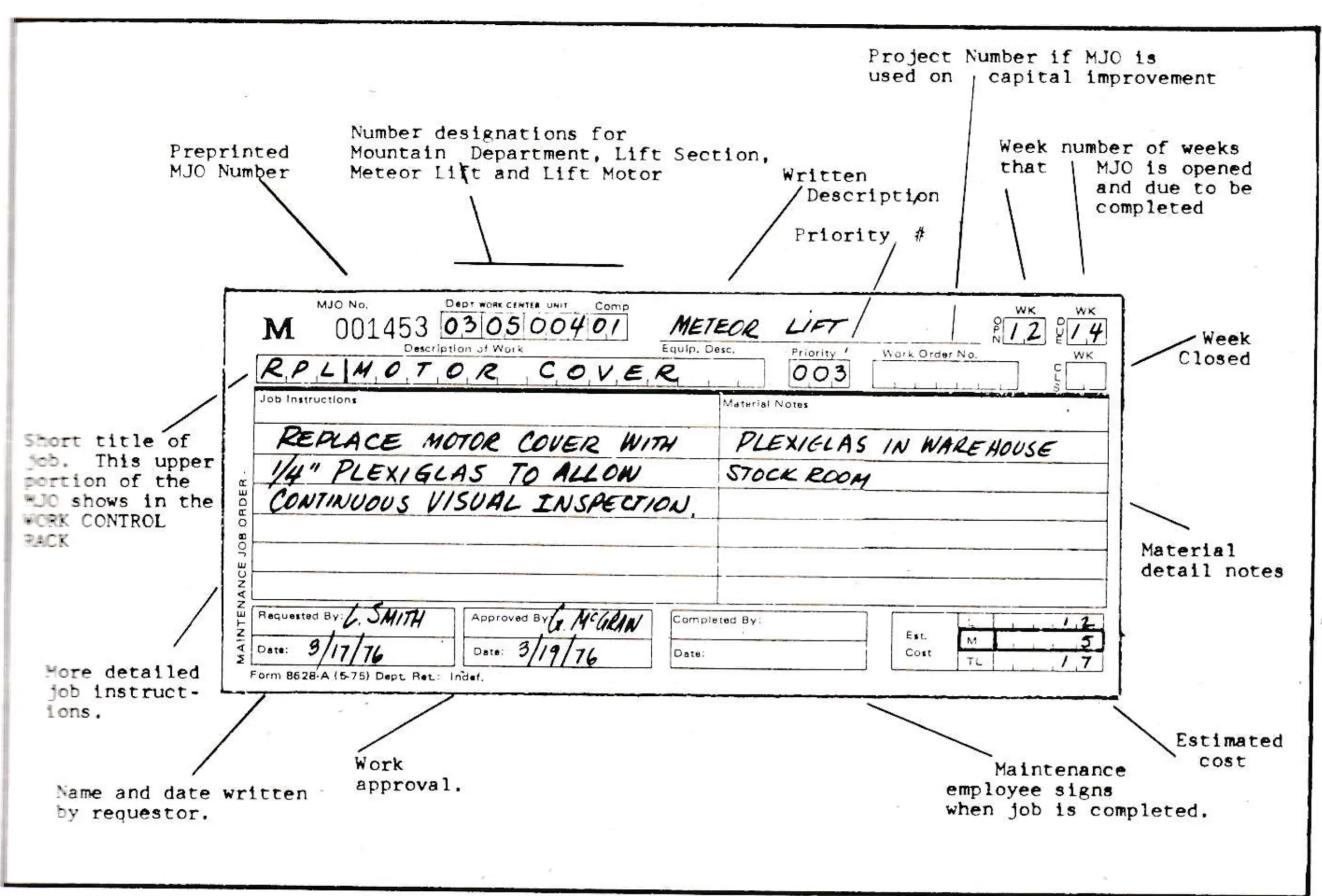
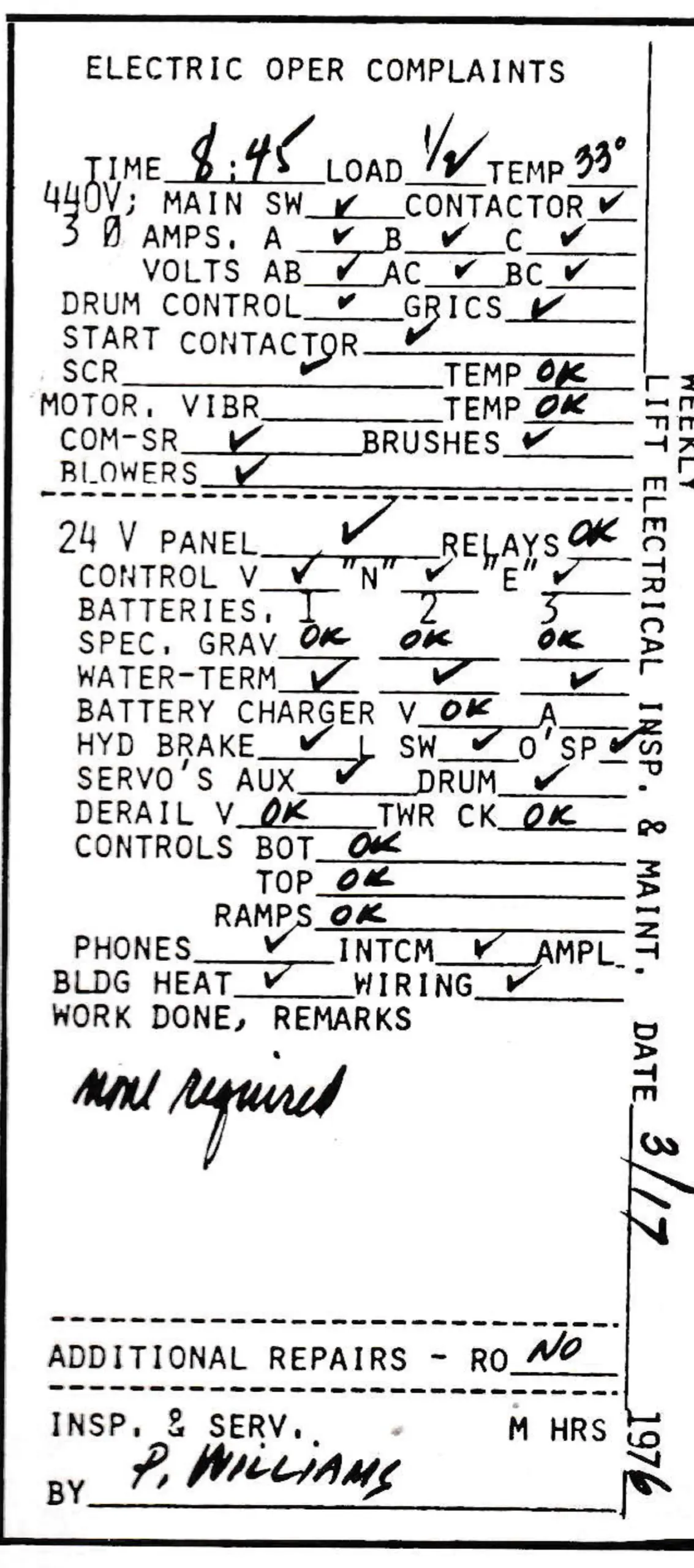
The MJO form has gone through a gradual evolution at Winter Park. Currently the MJO is standard on the front side of the form and can be used for any purpose from a major overhaul to the repair of a leaky faucet. The reverse side of the MJO can be adapted for special uses such as a weekly electrical inspection on lifts or the prescribed servicing of a vehicle.

Numerical coding on the MJO form allows it to be tied into the accounting system. For example the computer codes 03-05-004-01 mean Mountain Department (03), Lift Section (05), Lift No. 4 (004) and Lift Motor (01). When these numbers are placed on a time card, warehouse issue slip or purchase requisition, the charges can be debited against that particular cost center and the unit or component specified. The results appear on a computer report.
With this information in the accounting system, Winter Park managers can evaluate maintenance costs along with operating costs, depreciation, etc. in making decisions on equipment overhaul or replacement.
On some major maintenance jobs, parts lists are required. At Winter Park consideration is being given to tieing in a parts inventory to the MJO system. This step is expected to free individual supervisors from the time-consuming tasks of assembling or purchasing parts. Separate parts storage areas may be consolidated and the inventory jobs would be done by a warehouse crew. Subsequently, the charging of materials “as used” rather than “as purchased” is expected to produce more accurate and timely maintenance cost data.
This year with the addition of new trails and lifts in the Mary Jane area, the size of Winter Park nearly doubled. Yet, to date the size of the maintenance work staff has not changed. In part, this expansion of maintenance needs without a corresponding increase in personnel can be credited to the use of the MJO in better organizing maintenance work.