
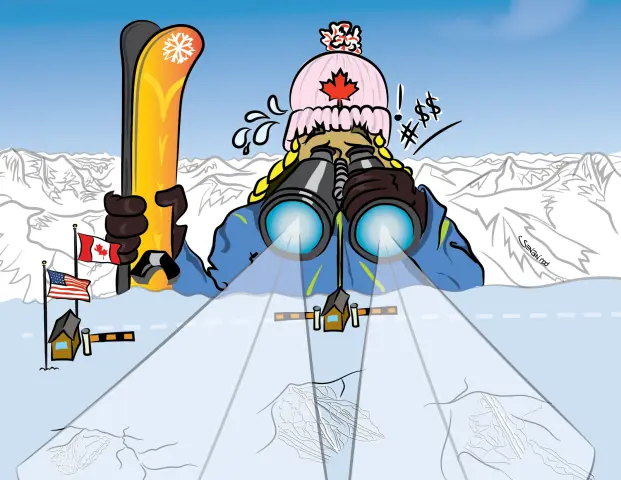

It wasn’t just another party of ski people who would sit around and discuss the ski business. I had planned an unusual activity: looking at that routine item, the ski area brochure. There were no cheers of enthusiasm for this idea, but holding a “brochure contest” is at least as much fun as charades.
Six people with a broad range and a total of 48 years experience in all phases of ski area operation were invited to the party. Fifty brochures were entered in our contest. Each judge decided on his own accord and for his own reasons which ones he liked or disliked. We used a scale of 10 and then totalled the points for each brochure. Those with fewer than 25 points were designated “bad,” 26-40 points were “indifferent,” while 41 points and higher were rated “good.” Most of the brochures were judged “bad or indifferent.”
After the individual judging, all entries were placed on the floor in their respective categories and we sought to find reasons for the bad ones prior to discarding them. Proceeding to the indifferent and good ones, we discussed why they were better. The judges commented on the interest value of certain photographs, the use of graphics, the impact and importance of the cover design, the feelings of bright colors and of warm tones. It became obvious that even type styles, paper weight and print quality influenced scoring. This was a “party game,” but also a short course in brochure appreciation which any ski area contemplating a new brochure is well advised to undertake.
After the brochure party, I recalled my own experiences with brochure design, production and distribution. I tried to set down the specific steps in producing a ski area brochure.
The first and most important item in creating an effective brochure is for the ski area operator to believe that the brochure is important. If you believe the brochure is worthless, then it is. The potential of the brochure is limited only by your perception of it: does it work for you or do you produce them only out of fear of what might happen if you did not?
The effective brochure, like an effective salesman, doesn’t just talk about its product, but speaks to its prospective purchaser. It is designed not as a calling card, but as a form of communication. Whatever the identity, size, sales objectives or market areas of the ski area, each is striving to communicate with skiers and non-skiers in a manner which stimulates a positive response. The effective brochure can be a personal invitation extended to a specific market.
In addition, for a brochure to stimulate a response from consumers, it must establish to their satisfaction: WHO you are, WHAT appeals to their emotions, and WHY they should visit your slopes. These three are essential.
WHO Establishes the Character and Credibility of Your Ski Area
Jim Branch, president of Sno-engineering believes this element is often left out of ski area brochures. He says, “The biggest pitfall is that ski areas cannot overcome the urge to be all things to all people. They have a definite problem identifying themselves and the market segments to which they must project a definite image.”
Dick Hamilton, executive director of the White Mountain Attractions’ Association, and a former ski area operator, says, “It’s important that the ski area live in the niche in which they find themselves, rather than spend great sums of money to create an image which isn’t them.”
My brochure judging contest revealed that areas which have it all together in terms of identity are able to state it in one concise phrase or sentence. In a few words, they can summarize all the factors of location, facilities, services and the skiers’ attraction to their mountain.
At the risk of turning some people off, the ski area with a clear sense of self is able to turn a far greater number of people on.
Credibility is another matter, because it depends upon the reputation of the ski area for fulfilling the expectations of its market. An area which consistently delivers what it promises soon reaps the rewards for being credible. Word-of-mouth plays an important part in the credibility — or lack of it — accorded a specific ski area. It relates, as well, to the mountain’s record for stability and to its exposure in market areas. Credibility is working for you when a skier picks up your brochure based on name alone.
WHAT Evokes Feelings and Stimulates the Senses
Concentrate on your best features, your strengths and special characteristics: limited lift lines, night skiing, an active summit lodge, a shuttle bus, hot springs, or an indoor swimming pool. Special beauty, personalized attention, and unusual services also qualify. Give the reader a taste of what it feels like to experience your ski area.
WHY Should the Skier Visit Your Slopes?
This is where you cover the vital statistics: number of lifts, slopes, lodges, length of longest trail, etc. However essential, a list of these facts may be wasted on the reader who doesn’t understand how they relate to him. You can go one step further and help him determine why, from his standpoint, a trip to this ski area is justified.
One area that does a superb job in this regard is Killington, Vt. The brochure says, “This is the wise skier’s choice for a great vacation.” Already, they’ve indicated regard for the skier’s decision-making ability. In all other marketing efforts, Killington keeps stressing their interest in the skier, as if to say, “Because you are important to us, we are making special arrangements to save you dollars, to make you comfortable, and to serve your needs.”
Photography
Few ski areas have staff photographers, although some area operators or staff members have mastered photographic skills. When that source was not available, John Winn of Sunday River, found another way while at Telluride, Co. “There were lots of Nikons in town and I simply spread word among the locals that I needed photographs. They never failed to respond. It also contributed to community relations,” he says, “since they always photographed family or friends and were pleased that Telluride would present them in the brochure.”
After experiencing the frustration of putting together a brochure using photographs acquired by trading tickets for photos that amateurs had taken, I spread word that I was looking for a photographer. I soon had a parade of professionals, amateurs and others in-between who were interested in getting the assignment. I struck gold when into my office walked a young man who was not only a photography student, but a ski instructor as well. He presented proof of his ability with a portfolio of slides and prints. For $25.00 a day plus materials, he provided the area with a collection of photography which would rival any other in the country.
If the photographer gets the name, telephone number or address of skiers captured on film, you can follow through later with a model release agreement. I’ve never contacted a person who wasn’t flattered by the request and more than willing to sign the release, but never let that requirement be overlooked.
Without a photographer on premises, Phil Camp, executive director of ESAA, advises, “Photographs can be found by those willing to look for them. Someone else has probably hired a professional to photograph your area. Look to tourist agencies or other departments of state government, to independent resort associations, chambers of commerce and even to real estate developments nearby.”
Having located photographs suitable for your brochure, take care in determining where they can be used. Is the photograph sufficiently stimulating to use on the cover? Will it establish identity and capture attention? Is it a photograph which appeals to the senses and thus appropriate to that portion of the brochure where you stimulate good feelings about your area?
If there is one best rule for evaluating photographs, ask yourself whether your market can see themselves in this picture. If the answer is no, discard it.
Art
Some areas use artwork instead of photography in brochures, because it’s more readily available, doesn’t cost any more than photographs and could cost less. If you have an appreciation for graphics, you will understand that they capture attention, work onemotions, and can convey a strong sense of self when applied to identity. At the same time, if you are directing your brochure into areas where you are relatively unknown, you may feel the consumer needs photographic proof, rather than art, to stimulate his interest.
Free lance artists may be customers or neighbors and for a small fee, you can get rough sketches to determine whether they can convey your message. If you decide to use an artist, work as closely with him as possible, because your input is critical to his output.
Copy
It is important that the language and tone of the copy in the brochure be in keeping with the tone of your ski area. Figure that the attention span of the brochure reader is short-lived and keep copy short. If there is a rule for effective brochure copy, it is, “Don’t talk to yourself or only about yourself, but communicate as if you were speaking directly with that specific consumer in that specific market you are trying to reach.”
Printing Services
How much can the printer do for you and how much will it cost?
Dick Hamilton comments, “The tendency is for people to go to local printers for brochures, and while this is the logical place to start, it should not be the only place to look. It is important that cost estimates be sought for comparisons and that the ski area asks questions about the abilities of the printer to provide art and design services.”
In shopping for cost estimates, take along examples of brochures so the printer can give specific prices. Take the brochure you are currently using and see whether a printer’s estimate is higher or lower than what you paid. Ask for samples of the printer’s work in order to compare its quality with others.
Joe Corbett, vice president of George Little Press, Burlington, Vt., a firm which prints brochures for many ski areas, says, “. . . for some ski areas it is a matter of having the dollars to spend. Quantities, color, paper weight and folds versus stapled booklets are major factors in cost.”
Dick Bean, sales manager for Village Press, Concord, N.H., adds, “We can help an operator with concept and design if he will spend time with us and provide sufficient input. We encourage clients to compare costs, and if possible, we will include him on a gang run which reduces press costs considerably. Some areas pay twice the amount charged by another printer, simply because they do not shop.”
The mechanics of putting an effective brochure may seem long and tedious. It isn’t. The only difficult part are those first steps of convincing yourself of the worth of a brochure and then determining your direction and market. Fortunately that part of the brochure preparation can begin at any time. Like right now, for instance.
Some Effective Brochures
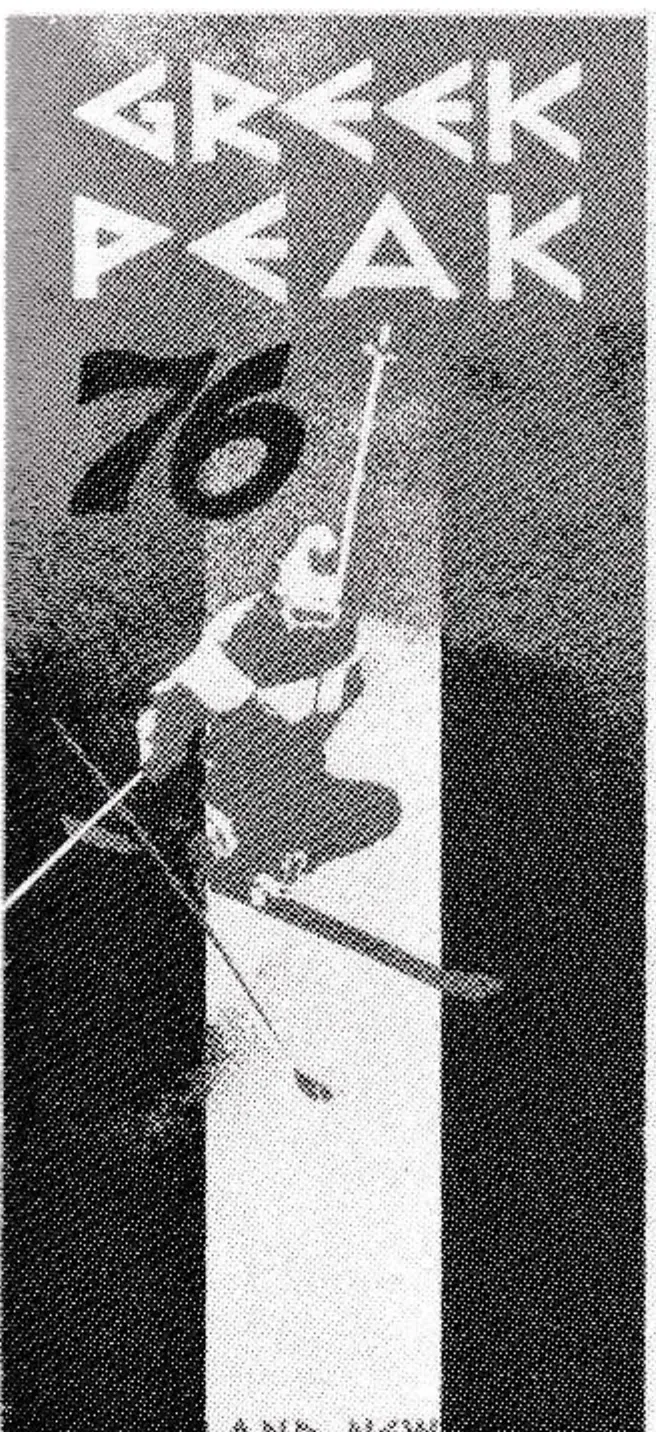
The cover of this brochure literally leaps out at the viewer. Printing of the brochure was done for a little less than 6c per copy.
Jerry Mahar, marketing director, comments “I need 100,000 brochures suitable for distribution not only locally where we are well established, but as far west as Wisconsin and as far south as Tennessee. The brochure must vividly illustrate our image as well as provide skiers with information and date. We have firmly established our identity as a ski area of excitement and that is the image I seek to portray.”
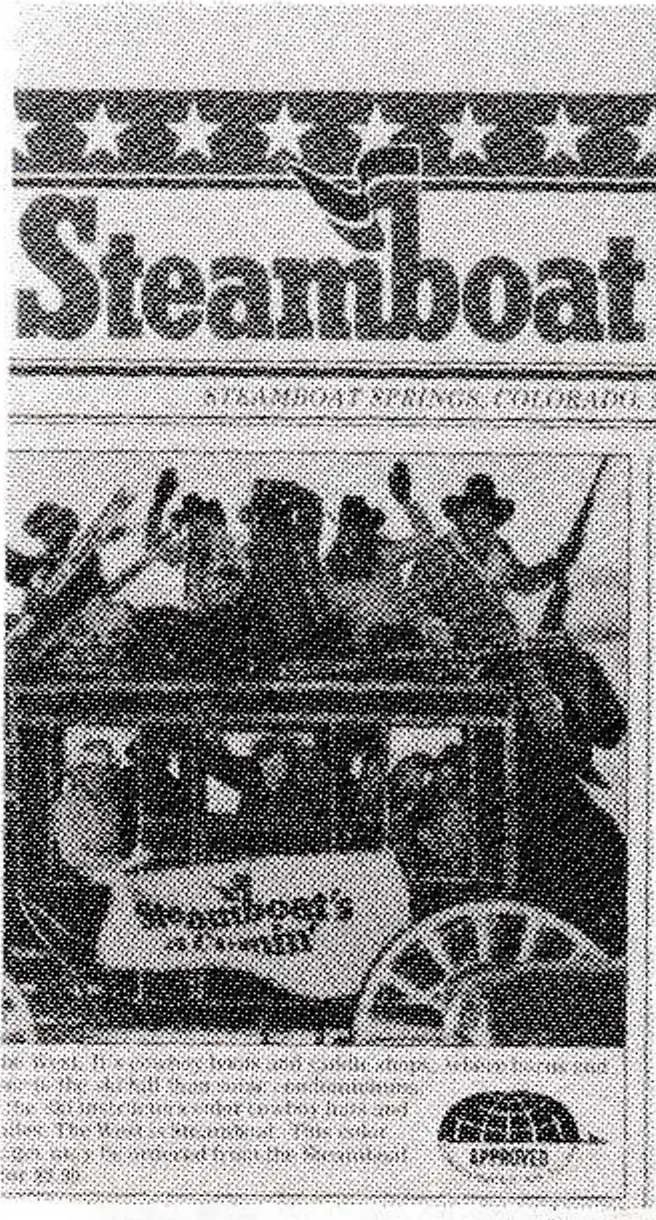
This brochure is anything but conventional, defying all standards of size, paper, and photographic content. When unfolded, it resembles the front and back sheet of a newspaper with a similar ratio of copy to photos. The cost was 10 cents per copy.
Marketing director John O’Hearn says “It is central to our promotional objectives that we depict the total vacation ski experience. Let’s face it, the time spent skiing the mountain is no more than four hours a day for most vacationers, and the destination skier market is interested in what he is going to do the rest of the time. The format is appropriate to our identity and to our marketing objectives.”
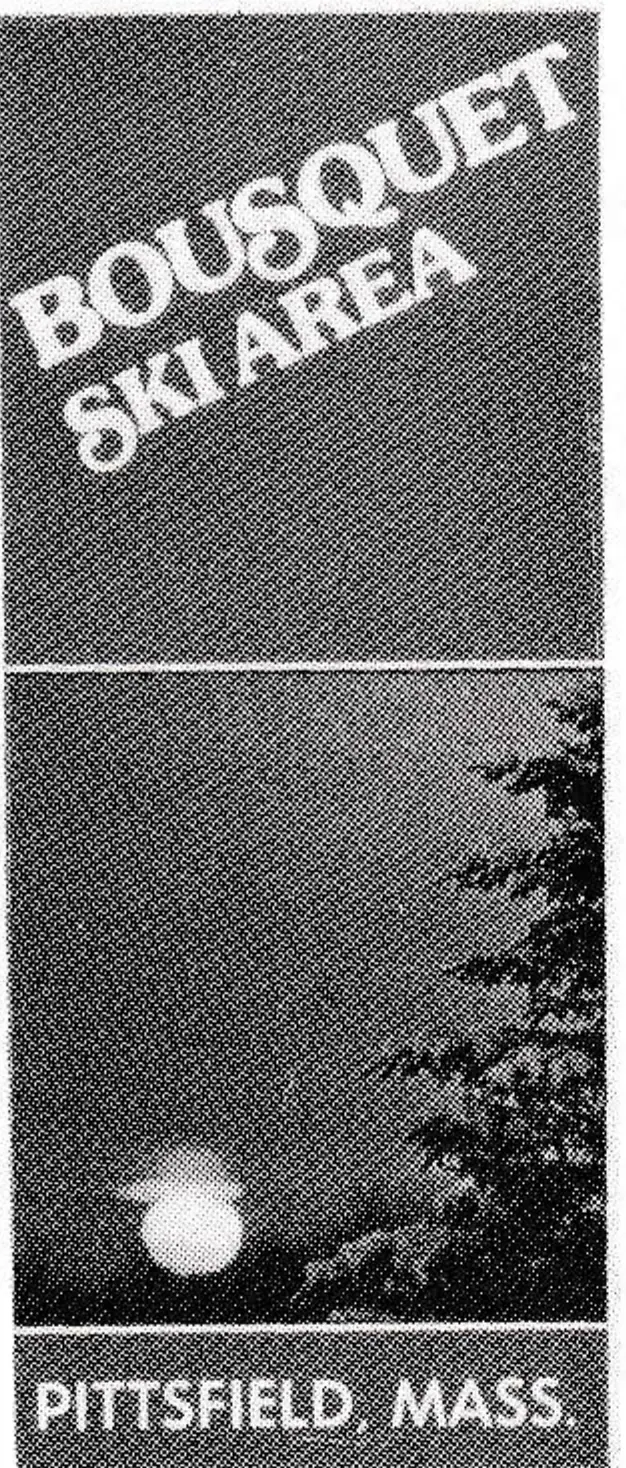
From a two-color brochure devoted mostly to copy, Bousquet actually cut costs in converting to a four-color brochure devoted entirely to photographs. The new brochure cost 5.8 cents per copy, because it was printed on a “gang run” with other four-color material.
Owner/operator Paul Bousquet decided upon the change, “Because the use of color more adequately conveys the feeling of our resort, a relaxed and enjoyable ski atmosphere for families. We stick to what we are most naturally, and by nature of our surrounding population and community, our market is the family seeking the resort experience within easy reach, one which offers a comfortable environment with all the amenities.”
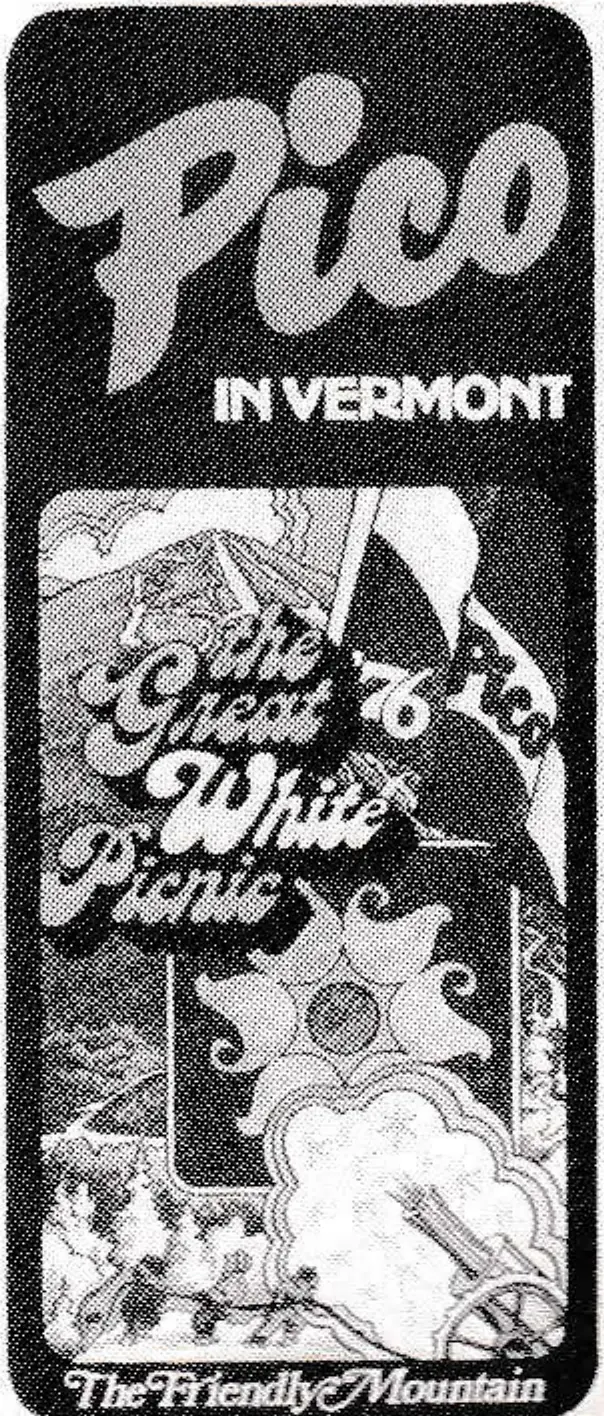
Pico switched from photographs to art this year in an effort to look different. In brilliant four color it cost 7 cents per copy.
Marketing Director Frank Heald says, “We wanted some good new color and a unique but effective way to tell our story. We settled on these very different illustrations executed with a felt-tipped pen. Our brochure is eye-catching and it can successfully compete for attention with some 20-odd other brochures on any given display rack.”