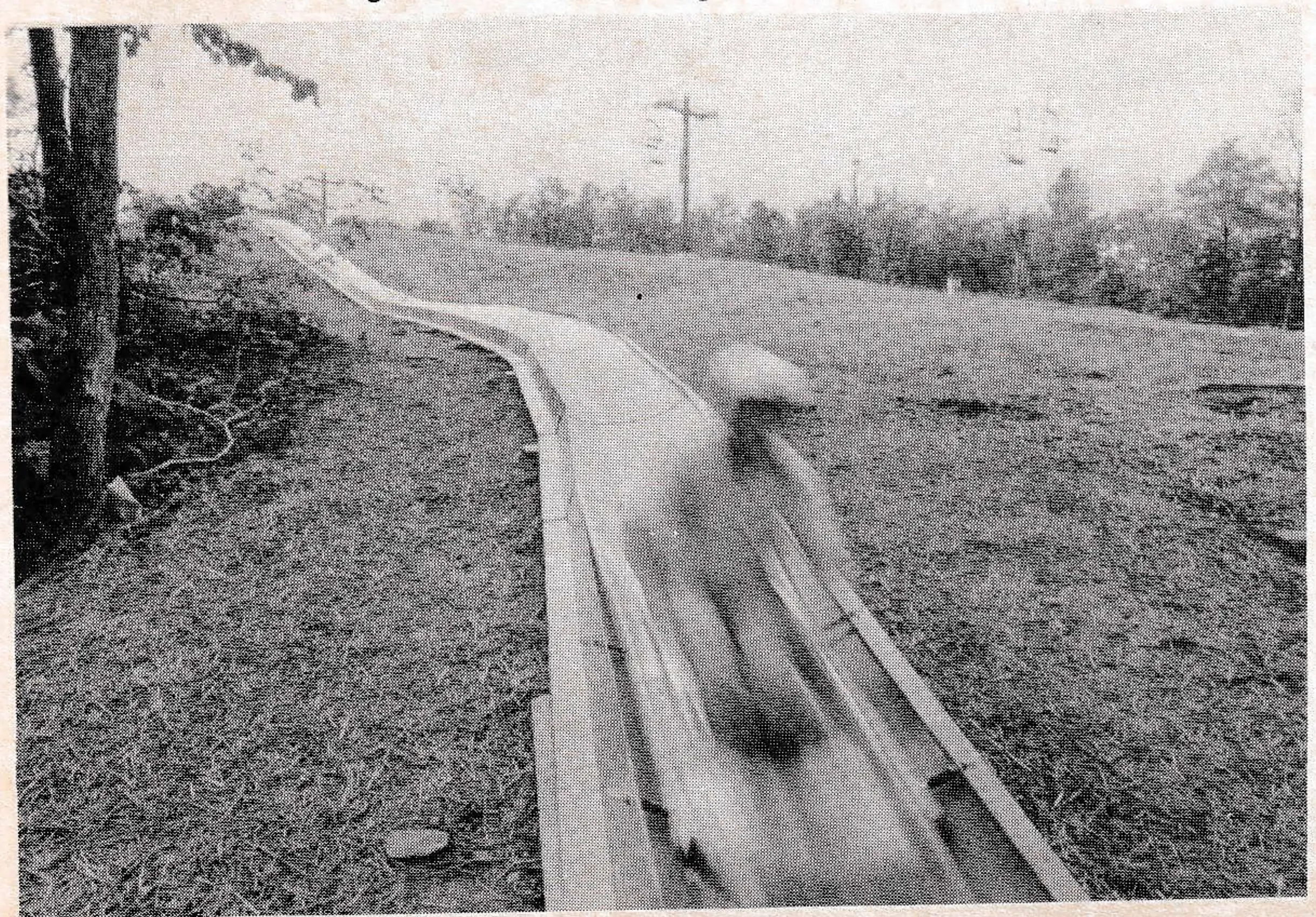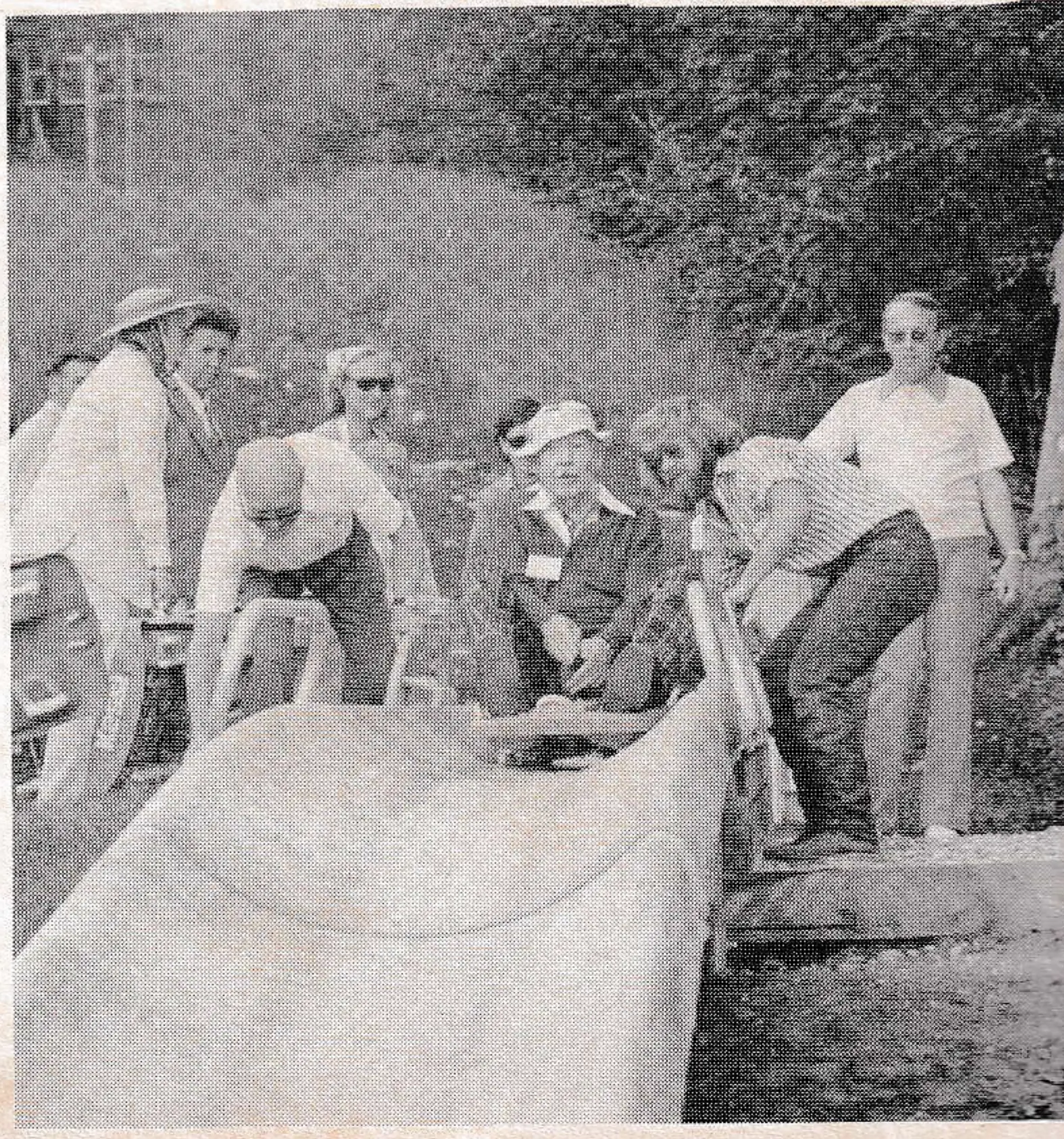


The Red Rumbler system is engineered and manufactured by Seasons of Leisure, Inc., 2506 Northland Drive, Mendota Heights, Minn. 55120. It consists of a track made up of 7’6″ steel sections, coated with a polymeric urathane and having identical end fittings. The rider goes down the slide on a polyethylene sled. The two polymeric surfaces have a very low friction, according to the manufacturers, and by keeping the slide moist, the recommended top speed of 25 mph may be reached on the preferred grade of 12 per cent.
The Red Rumbler can be installed directly on a regular ski hill for summer use and removed for winter storage in the fall. Or, it can be installed permanently with ground grading.
The speed of the 6-foot sleds is controlled by the engineering of the course, and not by the rider. The manufacturers cite this is a safety feature which they built in.
Cost of an installation on a complete turnkey basis is in the neighborhood of $40 per linear foot. Volume and early ordering can effect savings, according to a company spokesman.
An installation at Powder Puff Mountain in New Mexico had logged 11,151 riders by August 1, and was projecting an additional 4,000 by the end of the season. The area charges .75c per ride on a course that is 630 feet long on a gentle beginner’s slope.
A 200-foot Red Rumbler opened in Mineapolis’ Minnehaha Park the last Sunday in August and had 1,287 riders its first day. The charge was .20c a ride, or three rides for .50c.
Seasons of Leisure President, Ken Krengel, stresses the low installation costs and flexibility of the Red Rumbler system. “It is easy to add track, so we stress to our selesmen that we believe the best method for any area is to first try a run of moderate length and measure the results. We are confident these results will bring them back for additional track and more installations. The increase in summer revenues can be dramatic.”
The German-designed Alpine Slide is handled in the U.S. by a subsidiary of the Bromley Ski Area, Alpine Slide Corp., Box 1130, Manchester Center, Vt. 05255. Behind the operation is Stig Albertsson, president of Bromley. In charge of the operation is Karl Pfeiffer. Canadian rights are held by John Clifford.
Alpine Slides have been installed at Bromley, Mt. Attitash, N.H., Vernon Valley, N.J., Gatlinburg, Tenn., and in Canada at Mont Cascade, outside of Ottawa. In each case the summer revenues have risen dramatically, thanks to the rides.

The two side-by-side Bromley slides are each 4,060 feet long. Alpine Slide officials estimate that a normal, all-inclusive turnkey installation will run from $45-50 per lineal foot. The Bromley slides are engineered to handle 400,000 riders May-October, which would make it Vermont’s busiest tourist attraction by far.
In this first season, it logged 138,000 rides from its opening on July 3 through September 12. Adult rides are sold for $2.50, with a transferable book of five tickets available for $10. Children 6-12 ride half price, and under six ride free if sharing the slide with an adult.
Mt. Attitash has slides of almost identical dimensions to Bromley’s, and a somewhat similar pricing structure. They ran a little ahead of Bromley in total rides.
The Alpine Slide is a permanent installation, and is made from asbestos cement. Sleds are controlled by the rider using a control stick. They can accelerate by moving the stick forward, which lifts the sled up from its runners onto wheels; or pull backward to apply the brakes to slow or stop the sled fully. For uphill transportation, the sleds are hung on the chairlift.
Both the Red Rumbler and Alpine Slide systems have been hard to predict as potential insurance problems. The safety records have been good, but the occasional bruises and abrasions suffered by riders have caused some worries. Accidents of a more serious nature were few and far between. The biggest worry was the apparent loss of efficiency in the braking system of the Alpine Slide after rain had wettened the running surface.
How long will the public be fascinated with this new thrill? How many hillsides can be equipped with slides before the saturation point is reached? Nobody knows, but both the Red Rumbler and Alpine Slide executives look for a lot of expansion ahead, and the promise of new summer profits for a very eager ski area industry.