

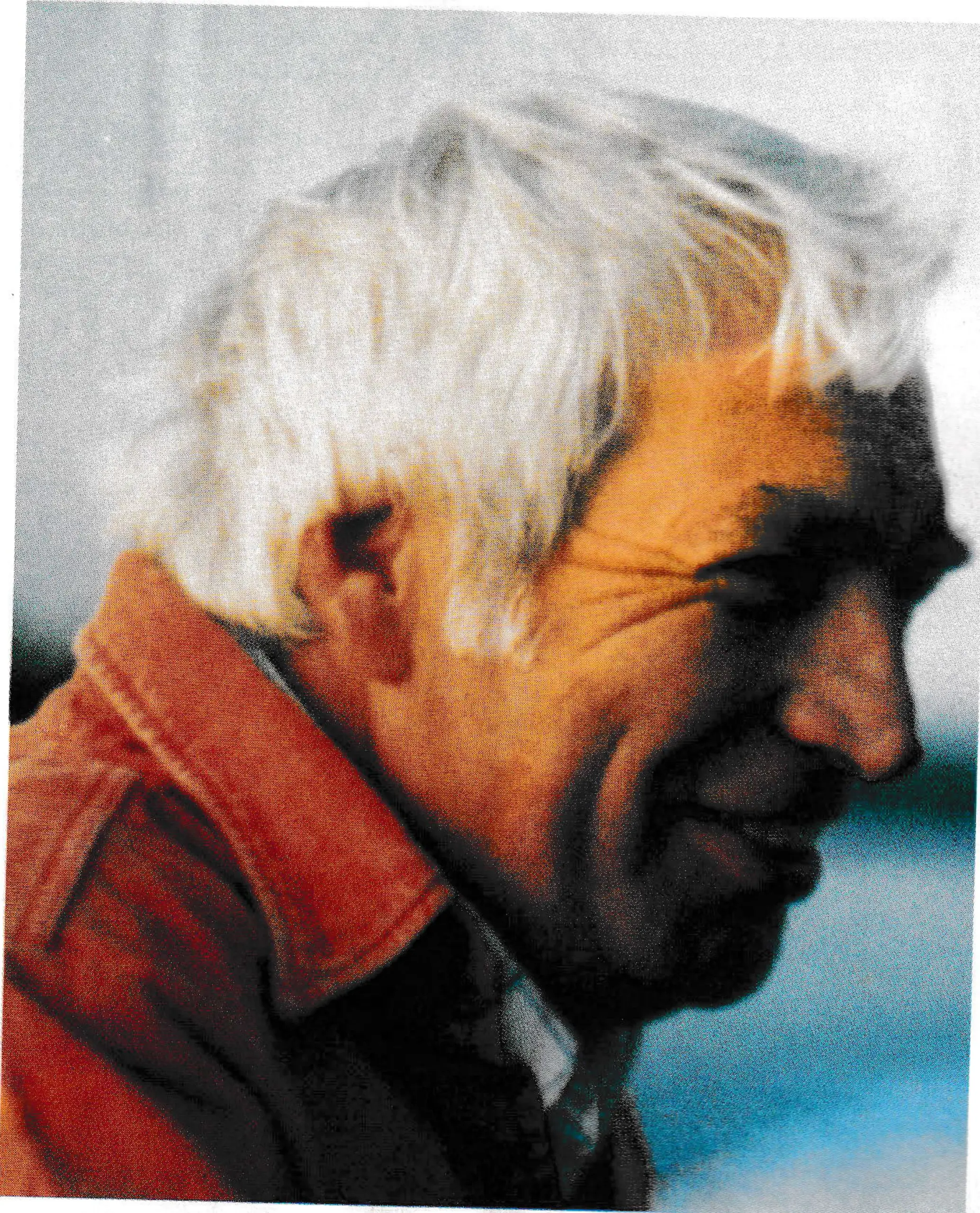
I can remember years ago picking up a copy of the 1947 East High School yearbook. The introductory page was written by Joe Parkinson, who was the senior class president. What he had written then read as if he had written it yesterday. It explained what he sees today as the central purpose of the Vermont Ski Areas Association. He wrote:
“Cooperation is the binding agent in all endeavor. Life is made up of cooperative acts. The baker depends upon the miller and the miller relies upon the farmer. The totally self reliant person does not exist. For each of us, life is social … and an appreciation of the needs of others is basic.”
It seems natural that the man who wrote those words over forty years ago would go on to become the executive director of the Vermont Ski Areas Association and to devote his career to organizing and guiding a cooperative approach to solving problems.
History
In the late 1950’s, the men and women who had struggled to build families after World War II finally had some discretionary income — and they had children to go along with it. Skiing became the favorite pastime of many of those people. In the East, many of them brought their families and children to Vermont.
By the 1960’s, skiing had matured to become more than a band of rugged pioneers who liked the outdoors and the mountains. The pioneers who built ski areas because they were in love with skiing discovered that there was a world full of people who had never tried it. And once they did they were as hooked as the pioneers. So skiing became a business. Lifts and grooming equipment cost serious money. Lodges and restaurants had to be improved to accommodate the less rugged in the crowd.
As the ski business grew in Vermont, so did government regulation and so did the importance and consequences of the legislative edicts handed down from Vermont’s state capitol in Montepelier. In the early sixties, the owners and managers of ski areas decided it was time to be more attentive to those problems and to begin to address them in a professional way.
Vermont, too, underwent fundamental changes. While the children of many Vermonters often had to move out of state to find decent jobs in earlier generations, by the 1960’s the beauty and tranquility of Vermont had attracted a new type of people and thinking to take their place. The new Vermonter was increasingly affluent, well educated and completely committed to a new vision for the state.
They had the time and money to participate in the political process, and had come to wield considerable political clout in the Green Mountains. One recent survey indicated that 70 percent of the people with annual incomes less than $15,000 were native Vermonters, while 60 percent of those with incomes over $35,000 were not. These demographic changes have translated into political changes.
Joe Parkinson recently noted one of his primary concerns, that “Vermont may be the victim of a virulent strain of elitism that has misappropriated the mantle of environmentalism. I fear that self-anointed environmentalists are bent not so much on cleaning up Vermont, but on sterilizing it.”
Legislative Change
The Vermont legislature is evolving from a citizens’ legislature to a body comprised more and more of professional politicians. The politicians making decisions for Vermonters today are younger than those making the same decisions fifteen or twenty years ago. There are fewer farmers, fewer Republicans, and fewer born in Vermont. Vermont politicians today have more years of formal education; more are lawyers.
For example, in 1970 there were eight farmers and one lawyer in the Vermont Senate. By 1986 there were eight lawyers and one farmer. Native Vermonters had a commanding majority in the State Senate in 1970; by 1986 they were in the minority.
Joe Parkinson has had to stand guard over Vermont’s ski industry in Montpelier during all of these changes and the onslaught of legislation they have occasioned.
From January to May, he is usually at the legislature; but the political aspects of his job don’t end in May. Often the toughest problems start after the legislature goes home, when the new laws move to the bureaucracy for rulemaking and for implementation. It can be akin to moving from the battlefield to the trenches.
The consequences of an extraordinarily technical and obscure detail can be monumental. The interpretation of a phrase in a planning bill or the actual mathematical formula applied as the standard in a water quality bill can create herculean hurdles.
The Beginning of VSAA
Joe Parkinson got his start in the ski industry at Glen Ellen, now Mount Ellen, a Sugarbush operation. He was the general manager there in the early sixties, when skiing in Vermont began to come into its own. Living in Waitsfield at the time, relatively close to the state capital, he had already been performing some of the work that the ski industry needed done in Montpelier. In the late 1960’s, when the ski areas decided that marketing and government relations needed a cooperative effort, Joe Parkinson seemed like the most logical person to fill the slot.
Today, VSAA has grown to one of the country’s most active state ski associations, with an annual budget of $1 million and a full-time staff of five. Its basic functions include education, research, communication, networking and lobbying. Fulfilling the basics, VSAA:
- Speaks to service clubs, public schools and universities;
- Researches and boils down essential demographic and occupational data into simple handouts, mailers and brochures so that audiences can grasp the facts concerning some of the no-growthers’ often repeated myths (i.e., tourism provides low paying jobs, threatens farming, pollutes rivers and so on);
- Sends out a regular newsletter to all legislators, state environmental agencies and regulators, town selectmen and planning commission members, ski area vendors and all major contributors to Vermont political campaigns;
- Organizes regular joint promotions with the agricultural industry to use tourism to promote Vermont agricultural products and vice versa. The office already works in conjunction with Milk Promotion Services, Cabot Creamery, and Ben and Jerry’s Ice Cream, as well as with the Vermont Department of Agriculture on a wide array of annual joint promotions;
- Coordinates with other trade associations representing the Vermont travel industry in particular, and the business community in general, in a host of legislative activities;
- Brings ski area managers to Montpelier when possible and takes legislators and regulators out to the areas to show them our snowmaking, sewage treatment and other facilities first hand;
- Writes and produces radio public service announcements, working in conjunction with various groups, such as the Vermont Youth Conservation Corps.
Recognition Received
As an effective force, both VSAA and Parkinson have earned the respect of friend and foe alike, nationally as well as on Vermont home turf.
“The professionalism and effectiveness of Joe Parkinson and VSAA is really striking,” says David Ingemie, president of USIA. “More often than not, Vermont is at the cutting edge of what will happen in the rest of the country in environmental constraints. The calm, responsible and deliberate approaches of Joe and VSAA are just right for the times.”
It’s no secret that Vermont’s ski industry has had great difficulties working with the current Administration in Montpelier. Nevertheless, even those sitting on the opposite side of the negotiating table have both a fondness and respect for him. “Joe and I have disagreed frequently,” commented Jonathan Lash, Secretary of the Agency of Natural Resources. “But we have worked together constructively over the years because Joe always stays calm and low key. He listens to other points of view — and he is always honest.”
State Senator Vincent Illuzzi, a Republican, describes Parkinson as “one of the most effective and respected lobbyists in Montpelier … I feel like I’m talking to someone who has Vermont’s best interests at heart.” And Speaker of the House, Democrat Ralph Wright, refers to him as one of the few lobbyists who commands his ear today, remembering Parkinson’s kindness and consideration to him when he was “an inconsequential freshman legislator.”

And Parkinson enjoys the loyal respect of his own constituency. Says Preston Smith of SKI Ltd., “Joe has grown in stature in the industry by quietly asserting his philosophy and principles in a temperate fashion. In a contentious and competitive arena, he manages to treat people with both loyalty and fairness.”
Managing Change
Day in and day out, Parkinson’s job is to help legislators and regulators — most of whom have never worked in the ski industry — get an understanding of it. He is an educator, one of whose missions is to educate these people about what the ski industry does and what its problems are.
In Parkinson’s view, while many ski areas have been out marketing skiing, they have ignored the political problems. That, he feels, could spell serious trouble. “The industry has not taken its case effectively enough to the public at large,” Parkinson says, “and that is a task for the industry and its trade organizations.”
The sociological changes that Vermont has undergone in the last two decades, along with their political consequences, have been felt deeply throughout Vermont’s ski industry. Parkinson believes that if the industry is to adapt to these changes successfully we have to swallow some pretty tough medicine.
First and foremost, Parkinson believes we will have to accept a handful of factors as postulates that we cannot change. We are going to have to live with even higher standards in disciplines such as sewage treatment, soil erosion and planning. But he emphasizes that high standards shouldn’t be confused with double standards. For example, few would argue that it is fair and reasonable to mandate that ski areas treat their sewage to near-drinking water standards, but a double standard still exists when all too many cities and towns in Vermont still pump raw, untreated sewage into the lakes and streams.
Second, in Parkinson’s words, “We must be ready to pass on the higher costs of these new standards to the consumer. In the future, we will be offering a more expensive product without correspondingly expanded facilities.”
Meanwhile, the serious environmental threats that Vermont faces go unchanged, since to correct these problems would have to be paid for directly by the voters. “The no-growth contingent in Vermont cloaks itself in environmentalism, while serious environmental concerns rarely receive serious discussion,” he comments.
Third, Parkinson believes that there is a hard-core percentage of the population now that is adamantly opposed to tourism and growth of almost any kind. Though every survey done by or for his office indicates that the vast majority of Vermonters are supportive of the ski industry, he believes that support will not be translated into political reality if the industry does not become more attentive and sophisticated about communicating.
Parkinson believes the ski industry must be actively involved with the community. “In Vermont, ski areas have developed their own homegrown public relations programs, but on an industry-wide basis we have failed to develop the same kind of sophisticated efforts as the groups that have been our adversaries.”
“Ski areas should be making even greater efforts to work together and share information,” Parkinson continues. He notes the tremendous costs involved in developing the technical data and information necessary for the land use and planning process. Likewise, in cases where the process is adversarial and permits are contested there can be astronomical legal fees. “Ski areas need to develop better ways of sharing these costs posed by the new, expensive and highly technical environmental issues we are facing today — including the costs of engineers, hydrogeologists and lawyers.”
Additionally, Parkinson feels ski areas need to be more active in the political process on the local level, and to communicate more often with decision makers about their businesses and about what they are doing.
What About The Future?
Remembering, as he does, the lean and precarious Vermont ski economy in the 1950’s and early 60’s, he doesn’t lament the so-called “good old days” before snowmaking. For the future, like others, he would like to see a longer ski season, increased midweek business and overall greater utilization. For that, snowmaking is crucial, and making it possible will continue to be a major struggle.
Parkinson sees public clamor for higher environmental standards that will further constrict expansion and increase operating costs — costs that the skier will ultimately have to bear.
As for the ski product itself, “We must provide higher standards of service and a higher quality vacation experience if the industry is going to sustain a competitive edge against the consumer’s increased array of choices,” Parkinson says.
Joe Parkinson remains confident about the future because he has faith in the ability of ski areas to rely on each other in pursuit of their common purpose. “They have always stood by each other,” he says.
As he stands behind them.