

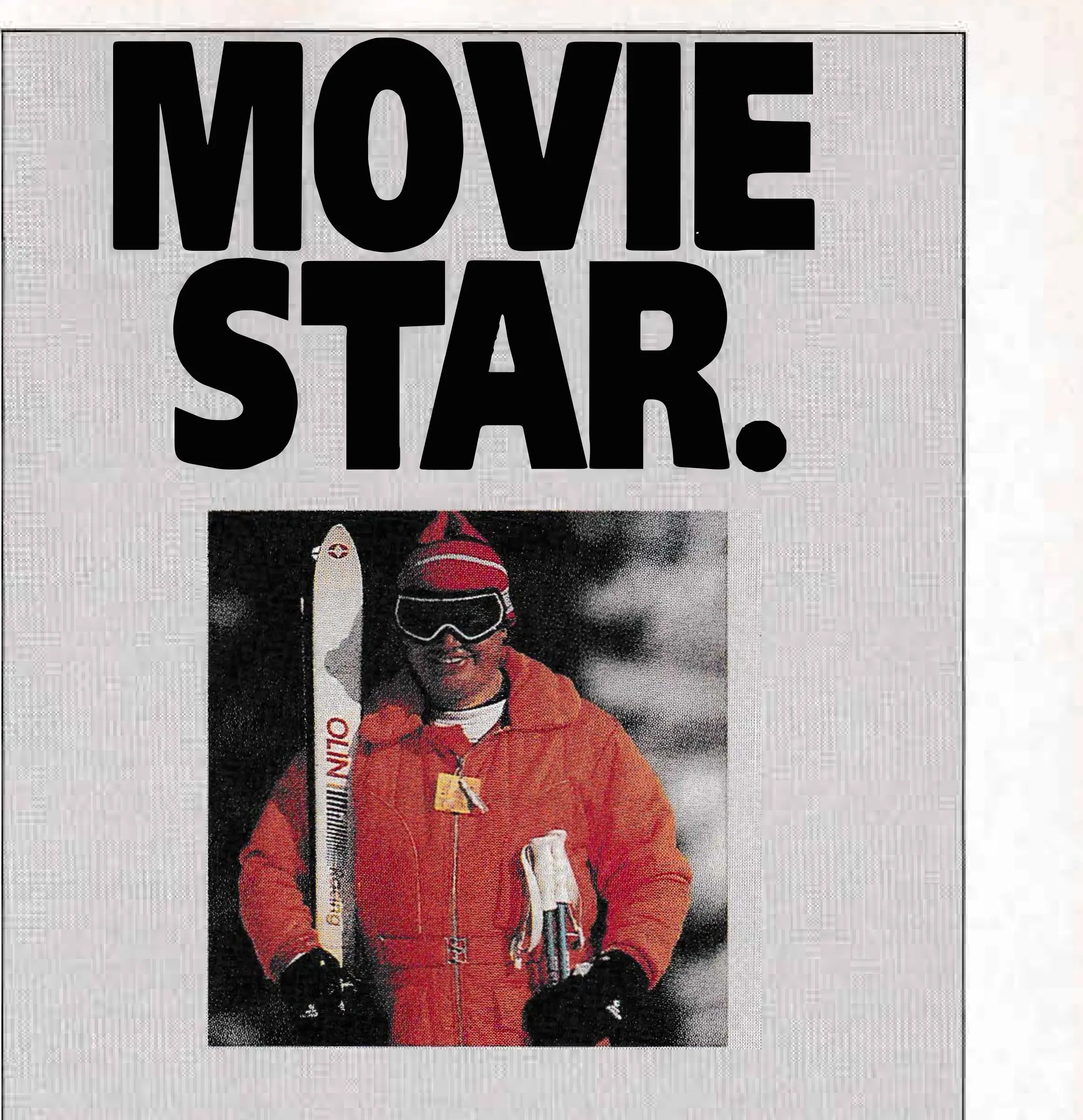
One magazine page stood out from last season’s abundance of virtually interchangeable ski area advertising that featured gorgeous skiers on great snow under cornflower blue skies. One ad had no great beauties, no soft snow, no blue skies. Under the bold headline “Movie Star” was a Polaroid-style photo of a chunky, mid-life fellow in a bright orange jumpsuit with lift ticket affixed to the zipper pull. “You don’t need to be a celebrity to be treated like a star at Purgatory-Durango,” the copy promised.
Coupled with great season-long conditions in southwestern Colorado, the ad and the campaign it spawned helped catapult the resort from 245,000 skier visits in 1991-92 to 317,000 this past winter. (Because of a computer system change, the area was unable to track the responses, but the numbers are an indicator.)
Even with a comparatively modest ad budget of $250,000, Purgatory established a long-needed identity and helped launch an inexpensive yet effective promotional program. The in-house creative process is a fine example of how to position an area and maximize the impact of an ad program.
“At Ski Industry Week a couple of years ago, a guy from Nike was critiquing ski area ads,” recalled Purgatory’s vice president of advertising Jack Turner. “I don’t even think he was a skier, but he said, ‘All your ads look the same to me. There’s nothing that tells me why you’re different from the others.’”
Turner continued, “I know I wanted us to position ourselves. For several years, we had a different ad every season. One year it was a sexy skier. The next, the family. Then it was powder. Then it was the slogan, ‘Your Colorado Resort.’ We had an ad agency that created a look, using Polaroid photos, a two-word headline and the slogan, ‘Purgatory-Durango: The Warmth of the Southwest,’ but we needed long-term strategy.”
The resort’s positioning began to sharpen into focus when Turner was writing a 30-word classified ad for the ski section of a Midwestern newspaper. “I had a few words left, so for the hell of it, I wrote in, ‘No Movie Stars,’ ” he continued. “I didn’t even think anyone would notice it, but I started thinking about it and I liked the idea of appealing to regular people.”
Next came a shot list for Purgatory’s part-time photographer, Carl Geers, that included “people you’ll never put in your ads.” One such person was John Taber, a Durango lawyer who was as anti-chic as you can be.
“It was a cold day, so he was wearing an orange hunting suit. He bought it when he was motorcycle commuting in Washington, D.C., and it became a ski suit when he moved to Alaska,” said Purgatory’s communications director Mike Smedley. “His hat didn’t match. His goggles were too tight. He had on these black mittens and was holding his son’s old Olins. And he had a grin that showed he had a great time.”
Though the ad broke in the October 1992 issues of the four major skiing magazines, Powder was the first to arrive in the Taber home. “John’s kids wouldn’t be seen on a lift with him when he wore that suit,” Smedley said. “His son had dreams of being in Powder and there was his father in the legendary orange suit with a big headline, ‘Movie Star.’ “
Taber, Jr., wasn’t the only one to be impressed by the ad. It inspired feature articles in the business sections of The Denver Post and Rocky Mountain News, as well as a big front-page hit in The Wall Street Journal and even the London Times. The British paper’s article on southwestern Colorado skiing announced in a Telluride photo caption, “Tom Cruise paid $3 million for this view.” For Purgatory-Durango, there was a picture of John Taber in his orange suit.

The ad produced major bang for minor bucks. Turner created the concept and Smedley wrote the copy. Type and layout were done on a Macintosh, and the color separation was farmed out. Turner was his own media buyer.
The first ad ran in the October and November issues of Skiing, Ski and Powder and the October through December issues of Snow Country, plus several targeted city and regional magazines, and it inspired two separate ads for snowboarder publications. One showed a daffying skier with two snowboarders riding a lift in the background. The headline reads, “Dang Skiers.” The copy continues, “Outta control. Lack of personal grooming. Always cutting you off. Sneaking up on you. Freaky clothes. You won’t find this lame attitude at Purgatory-Durango.” The message is one of welcome.
The same sort of serendipity that caused Turner to insert “No movie stars” in his earlier classified ad came about when the marketing team was searching for a media gift for Colorado Ski Country USA’s annual New York press event. Smedley pulled out a catalogue with 29-cent plastic pocket protectors and Turner responded with, “You Don’t Have to Be Cool to Ski Purgatory,” for the flap. One of the season’s catchiest gimmicks was born. The promotional company also had a two-for-one deal on red plastic combs, so Smedley ordered those with the slogan, “Purgatory-Durango: No. 1 in Grooming.” Then he added pencils, already shortened and sharpened, and pens from Durango banks and business.
“There we were at the St. Regis Hotel,” recalled Smedley. “People were wearing their Sunday best. There was a fancy buffet and glossy press kits and great gifts. We had these fully loaded and functional pocket protectors and everybody was wearing them.”
Purgatory-Durango’s press kit also contained the obligatory calendar of events with one whimsical entry: Uncelebrities Week. When asked about it, Smedley replied, “It is a week when nothing noteworthy happens. Then I said the list of celebrities who hadn’t been invited and won’t show up is long and prestigious. Later, I made up a list and sent it out with an ‘Uncelebrities’ button. It became a joke.”
Turner likes Motel 6’s positioning, especially the ad in which spokesman Tom Bodett asked, “Do you really need that plastic shower cap?” He feels that Purgatory-Durango appeals to that same market of skiers who want good service, but don’t need the sport’s equivalent of the shower cap. With no significant capital improvements in eight years and direct competitors who have more glamour, more terrain, but higher prices, he believes in promoting his area’s strengths as a sort of Motel 6 of Colorado skiing.
“We’re trying to appeal to regular people who aren’t into hanging out with movie stars.” It must be working, since 50,000 more people came to Purgatory-Durango not to ski with the stars than had skied there the previous winter.