


…“Now let’s be fair!”
An eastern ski writer speaks out
Ignorance, jealousy and greed must have prevailed when the customary snowfalls failed to blanket the western ski slopes with three or more feet by Dec. 1. And as the western resorts suffered through succeeding weeks of scant snow, they suffered even more cruelly from lack of business.
Machine-made snow did produce early skiing in the East, on slopes ranging in size from a couple of tennis courts to truly mountain-sized proportions at Killington. Yet the East’s first real natural snow cover, opening all the slopes and trails did not come until after New Year’s.
Two modest-sized Berkshire areas advertised in the Vail Villager to “ski the eastern powder,” not realizing apparently that Vail’s snow-making operation on Golden Peak has a greater vertical drop than either of the Berkshire resorts.
Ski writers, news reporters and radio and TV broadcasters compounded the problems of the West with daily put-best skiing in North America being in New England. Long-planned ski holidays in the West were cancelled as TV coverage of then President Ford at Vail concentrated on base elevation hard-pack.
Meanwhile, police were called to quell unruly crowds at some eastern ski areas, where huge numbers of holiday skiers were jammed on the few trails and slopes with snowmaking, as lift-lines became impossible. These events failed to make the news, however. Those who did insist on skiing the western areas were regarded as insane.
Yet, seven straight days of skiing in early January at Copper, Vail and A-Basin confirmed what this eastern skier (and a veteran of many deep-powder days in the West since1950) suspected.
The hard-to-swallow facts are simply that a little snow on some of the western resorts often provides as good, or even better conditions, than the almost standard “Excellent” conditions reported in the East. (Skis were almost ruined at one eastern area reporting 38 to 70 inch base when the unwise skier ventured on an expert trail not serviced by the snow guns.)
The three above-mentioned Colorado areas did provide great skiing on more than half of their terrain every day, with deep powder found in a few spots.
Add the higher percentage of sunny days, majestic scenery, longer-width trails and slopes, abundance of forgiving evergreen trees, and a perhaps more expansive apres ski-life, and even in a snow drought, some of the Rockies provided great skiing every day — until the storms of late February made it great in the traditional western sense.
A considerable number of western areas failed to get enough to open in December and January to be sure. But most of the skiers in the East were given a very biased and incomplete picture of the true western ski scene.
This is not to knock eastern skiing. And it is perhaps only human to boast a little when your competition is down. And, let’s face it, western areas were too slow in getting their message across.
Perhaps if the media knew all the facts, the reports would have been less misleading.
John Hitchcock
Williamstown, Mass.
Oh, that wind chill factor!
The operative phrase this year among many broadcast weather prognosticators has been “wind chill factor.”In an obvious attempt to jazz up the almost prosaic weather reports, the wind-chill factor has become the byword of this long, snowy and cold winter in the East.
It has become so much a part of the vocabulary of the broadcast media, and has been designed to strike fear into the hearts of the already snow-bludgeoned public, that it has never been satisfactorily explained. And it has, unfortunately, been a detriment to many skiers who are also members of the public listening to these reports, and who believe it when they hear that temperatures will be equivalent to “forty or fifty degrees below zero.”
Let’s look at the real facts. To begin with, skiing is a Winter sport. It is a cold sport, and most skiers are aware of it. That’s why we have warmup suits, and ski jackets, and hats, and gloves and all the accoutrements necessary to retain heat in one’s body. Skiing is also exercise, and that creates body heat. Most skiers know this, accept it, and are prepared for it.
Technically, the wind chill factor means the cooling effect of the outside temperature on a bare body standing still.Now, there are very few bare bodies on ski slopes. And there are fewer bare bodies standing still. Indeed, skiing means moving, so that immediately cuts down the wind-chill factor. Another element involved in reducing the wcf is the effect of the sun’s rays on the skier. In fact, a properly-clothed skier, one who is in motion, will totally negate the affect of any wind chill factor. The solar rays will provide part of that, his motion will provide another part of it, and his clothing will add to the cold-retardation in a major way.
Another important part of the wind-chill factor syn-usts. Which means that a five-second gust, that may occur every ten minutes will produce a low wcf during that period of that gust, and will also be counter-acted by the above-mentioned methods.
There are some ski area operators who feel that this information is necessary for the skiers to have. Perhaps so, but without the full and total explanation of exactly what the wcf means, it becomes a deterrent and a disservice not only to the skier, who may alter his plans, but to the ski area operator who has his life’s blood tied up in lifts and snowmaking and the ski area in general. Full disclosure is a notable thing. Indeed, ski areas have come to the realization that you can fool skiers sometimes, but in the long run it is much wiser to be entirely truthful about anything that will affect the skier’s pleasure on the hill. Hence, the openness of ski reports. lodging reorts and weather and traffic conditions. And, indeed, it is a positive and mature attitude that most ski area operators have adopted. Being honest never hurt anybody, but issuing statements, without explanation, as is being done with the wcf, does a disservice to all those connected with the ski industry.
Paul E. Pepe, Marketing Director,
Hunter Mountain, N.Y.
Ed. Note: We agree heartily with Paul Pepe. Among others, this is a job for the U.S. Ski Writers, among whom are many of the broadcast ski reporters. Let’s get them to prevail on their weather-reporting colleagues to use a little common sense. We think the subject is important enough for NSAA to adopt a resolution which could be disseminated to media. Let’s not forget that wcf’s summer equivalent, the Temperature/Humidity Index, or “Comfort Index” as it is sometimes called, works in favor of the recreation industry, because a high THI induces people to get out of the city and away to the seashore or mountain resort. But the Wind Chill Factor is a negative factor, and persuades people to stay home—needlessly, and to our financial detriment.
D.R.
We won’t see their likes again…
Fred Pabst — a personal appreciation
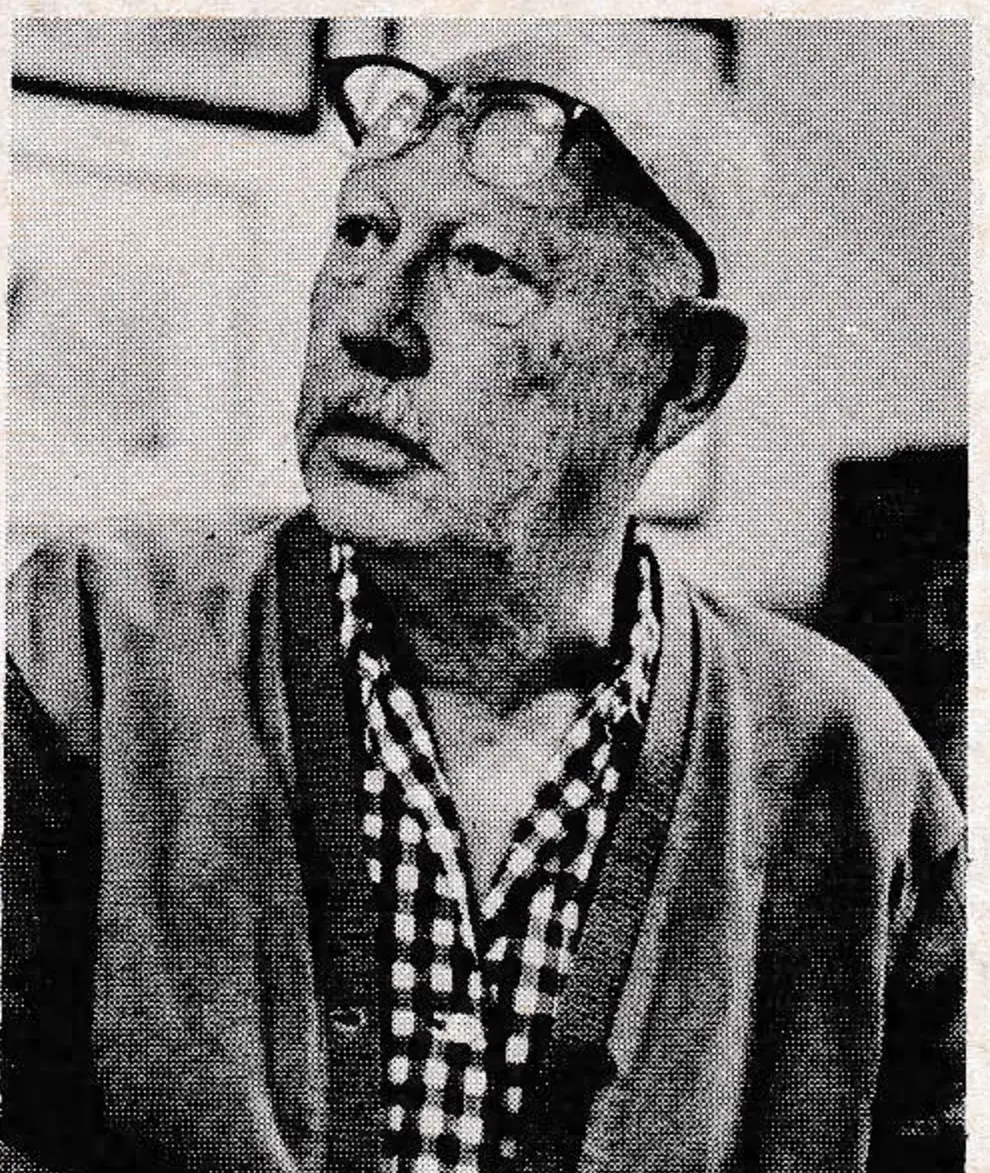
Fred has gone. No longer will the old buzzard be able to greet me with that familiar, “Come on in, you no-good limey sonofabitch. Pour yourself a drink.” And how I’ll miss it!
The first time I met Fred Pabst was in 1949. I had come down to Bromley on the maiden advertising selling trip of my career with Ski Magazine. The mission: put together a co-op ad between Big Bromley and the half dozen lodges that served it then. First target was Fred Pabst, the legendary resident ogre of Bromley, known far and wide for his inclination to eat salesmen alive—especially advertising salesmen.
The man lived up to his advance billing. It was a terrifying experience as he batted me back and forth, probing and challenging. When I finally slunk from his office, I felt miserable. I had blown it. And I didn’t look forward to appearing later in the day before the group of lodge owners who were gathering to hear my program.
“Well,” said the chairman of the group, “we’ve all had phone calls from Fred Pabst about your visit…” (Damn! Why does he have to rub it in? The pit of my already bruised stomach clutched again.) “…I guess you did quite a job, because he wants to go along with your program and is urging us to do likewise.”
I learned that day that Fred’s bark, magnificently intimidating though it was, did not necessarily come with a bite. And over the years I came to know that he worked hard at camouflaging and concealing a heart as big as the mountain he developed.
But that’s a personal evaluation. Let me stick to the record.
In the Fall of 1963 SAM ran an article on Fred Pabst and his Bromley. I quote at length from this article because, though written 14 years ago, it covers much of the essence of what Pabst will be remembered for by the ski industry.
“…At one point he had ski areas like a sultan has wives. Seventeen were going at one time, from Canada to New Hampshire to Vermont to New York to Michigan and to his native Wisconsin. It was one thing to start these areas; it was quite another matter to fill them with skiers…Despite heroic efforts (pioneering many of the promotional devices used today), it proved impossible to keep all these areas going, and in the early forties Fred settled on…a Vermont mountain called Bromley.
“Much of what is today solemnly propounded by the self-styled experts and consultants as “basic” was pioneered by Pabst:
“You must give the skier service. That seems basic enough today, but it was not long ago that this concept was revolutionary, if not downright effete. The skier was supposed to ‘rough it.’ It took the character out of the sport to pamper the skier with decent wash rooms and decent food.
“You must have capacity. At a time when most areas thought in terms of catering to a few rugged individualists, Pabst foresaw the growth of the sport and became the first truly high-capacity area in the east.
“You must be able to offer skiing on minimum snow cover. For eastern and midwestern areas this is doctrine today. But it was only a handful of years ago that heads were shaken in disbelief at the demented Pabst who was, poor man, trying to to remove the good Vermont granite from acres of slope, and then actually grade, seed and mow it!
“You must cater to the family with children. Until it can be demonstrated otherwise, Big Bromley can claim the first real supervised nursery set-up…
“You must run a ski area like a business.…With his earlier business training in the family brewing and farming enterprises, Pabst has a healthy respect for what an invested dollar should do, and a profane disrespect for what he calls ‘the Roosevelt dollar.’ But whatever sort of a dollar it is, Pabst is acutely aware of the need for a sharp pencil and no-nonsense cost analysis.
“All of this is not to ascribe any sort of infallibility to Pabst. He would readily admit that…he has also written the book on errors. But then hindsight is always easier, and the industry has probably benefited as much from Pabst’s pioneering errors as it has from his successes.”
The article went on to quote an anonymous Bromley skier: “It is a wonderful sight to arrive late Friday night after a long, hard drive from New York through the snow, and see those unearthly lights creep all over the mountain. You know then that you’re going to have a good day’s skiing, and that the drive was worth it.” Those who may think that today’s snow farming and slope preparation represent recent developments might well reflect on the sophisticated night grooming that Pabst was doing more than 14 years ago!
Fred Pabst was an individualist, and not strong as an association man. But that did not mean a lack of support. When the very first mailing on NSAA went out in 1962 inviting ski areas to join, the very first check that came in was signed by Fred Pabst. “The sonsofbitches’ll never believe it if you tell ’em that this mean old bastard signed right up,” Fred roared over the phone to me when I called to thank him. “It may help you sell the others,” he added. And he was right. This sort of support Fred could, and did, give.
A heart condition slowed Fred down in his later years, and he resented it mightily. But he was not about to let it dampen his zest for life for very long. However, when he could no longer cover the mountain himself, and had to rely on reports rather than his own inspection; and when he realized that he was being “taken” by various concessionaires and managerial types, Fred decided it was time to sell. But it wasn’t going to be to any sonofabitch who might come and louse up his mountain. He took his time, backing away from several deals that looked good, but which left him uneasy.
His eventual sale to Stig Albertsson was the capstone to his ski career. He had at last found a man for the next Bromley generation, and it pleased him.
Just as Fred organized his final affairs on earth, I like to think that this sometime ski jumper, big game hunter, climber, farmer, brewer, race car driver and ski area operator extraordinary has already got things humming on some celestial slope. And I’ll guarantee you that there’ll be a J-bar there for old times sake, serving a Lord’s Prayer. And there won’t be a stone on that slope bigger than a robin’s egg. Fred will be there, of course, regaling a crowd with still another of his outrageous and profane stories…
Yes, Fred, we’ll miss you.
David Rowan
Roland Palmedo — The Renaissance Man on Skis
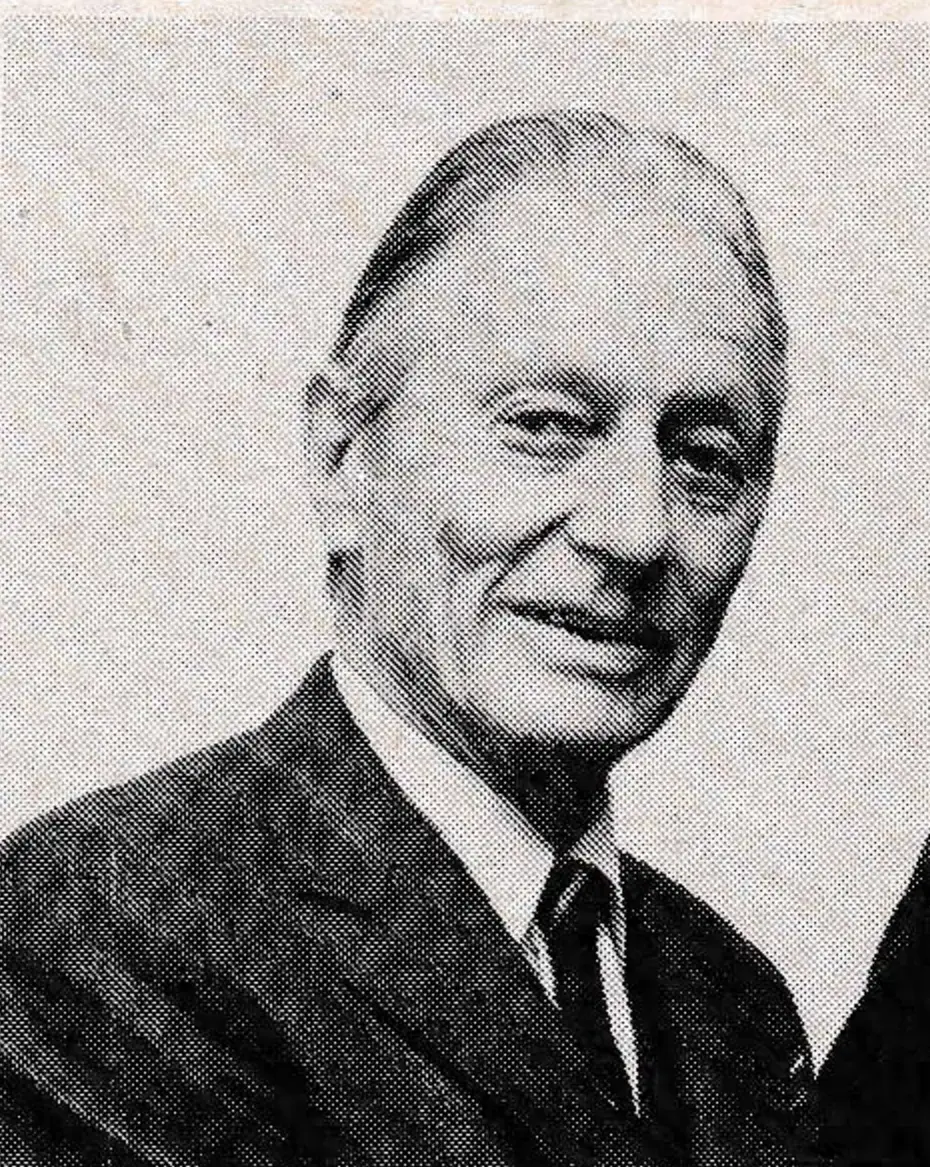
At presstime I learned of the death of still another of the dwindling brand of ski area industry pioneers, Roland Palmedo.
An outdoorsman all his life, Roland’s involvement with skiing dates from 1916 when he founded the Williams Outing Club while still an undergraduate. Later, he was one of the founders of the Mt. Mansfield Company at Stowe, Vt., and after a falling-out with his associates there, he went down the road and started Mad River Glen.
The list of ski organizations in which he played leadership roles is too long to list, and includes international organizations, (FIS, Kandahar Club etc.), amateur oriented (Eastern Ski Association, Amateur Ski Club of New York etc.) and industry organizations (Eastern Ski Areas Sssociation and NSAA).
He was a prolific ski author, as well as a translator of Austrian technique books which profoundly affected the growth of the sport. He was also a co-founder of the National Ski Patrol, and held Badge No. 2 in that organization.
Though skiing was his first love, it was by no means his only outdoor activity. He was a superb kayaker, and organized countless competitions, especially in Vermont. He was one of the originators of kayak slalom racing. He also was an enthusiastic mountain climber all his life, and in his 70’s, when most people have hung up their crampons, Roland was still on tough high-mountain climbs in the Andes.
Truly a giant of a figure in the ski world, we shall not see his likes again. Skiing today is too diffused for any one man to exercise the sort of influence that Palmedo did on every facet of a growing sport and industry. We are all the beneficiaries of his enthusiasm, vision and total dedication to everything which is good and wholesome about our sport. He was, in the very best sense of the word, a ski aristocrat.
I will miss him as a friend, as a wise counselor, marvelous conversationalist and as an incomparable skiing companion.
David Rowan
Was Stratton stupid ?
Two recent unrelated conversations have given us an uneasy feeling about lift ticket pricing. The first was with our friend Garry Mitchell, the very able President of Colorado Ski Country USA. “Among the things we should find out,” Garry said, “is why people who have the means and will to spend thousands of dollars on ski equipment, transportation and lodging for their ski experience, balk at a $2 increase in lift tickets.”

The other conversation was with the similarly very able manager of a top Vermont ski resort. “They blew it,” he said, and went on to explain that Stratton had failed to jack up its day ticket during the school vacation period in February. “That’s money they could have easily had,and they’ve lost it.”
We nodded our agreement sagely, but later, that conversation with Mitchell returned to haunt. And then we read the manuscript on lift ticket cheating (see Page 50) about how otherwise respectable people, who wouldn’t dream of shoplifting, will gleefully try to ski free by cheating on their lift tickets.
Was Stratton stupid in not taking advantage of that high-demand, high-season week to up their weekday ticket prices? After all, you’ve got to make it when you can! And hell, skiers don’t give much of a damn about the areas when they have no snow. And anyway, it’s just supply and demand and the marketplace.
But we wonder. There are high season and low season rates in the Caribbean. Theatre tickets cost more on Friday and Saturday nights than they do Monday through Thursday. But do the Caribbean resorts charge an extra premium over Christmas? No. Does Radio City Music Hall charge more over the Holiday period when all those kids are out of school and the box office line is 3½ blocks long? No.
And we wonder whether it really is so smart to lean on the family skier whose one chance to take his whole family skiing may be over that Washington’s Birthday school vacation week. And is it really smart to charge a premium for what is inevitably a lower quality ski experience because of the long lift lines and crowded restaurants?
Is it, perhaps, in this sort of experience that the endemic skier resentment towards ski areas is born? And if so, is that extra revenue really worth it?
We honestly don’t know. But we think it is worth thinking about.
A SAM Editorial
Some Thoughts on Model Legislation
At this time, when the industry is considering an approach to the various state legislatures in an attempt to influence the passage of legislation favorable to the ski industry, I feel that it is appropriate to reflect upon the form that this legislation could take, having in mind the realities of legislative review.
First of all, it is, in my opinion, inappropriate and would result in a waste of time for the ski industry to attempt a change in the American judicial system. By this I refer to the often expressed view that “we should adopt the English system which requires an unsuccessful plaintiff to bear the costs of the defendant in defending the claim.” As desirable as this would be, it goes far beyond the scope of any campaign that could be mounted by the ski industry. This would be an attack on an institution that has become an ingrained part of the “American Way”, namely the unlimited right of plaintiffs to sue. Any change in this institution would require a far-reaching change in the social order and while the ski industry could and should join in any broader efforts to bring about such change, it would be tilting at windmills for the ski industry to attack it singlehanded.
I think that any attempt to have a special statute of limitations enacted shorter than that applicable to liability suits in general would be similarly fated. As huge and as burdensome as the problem seems to those of us involved with the ski industry, it is in reality a tiny segment of the overall problem faced by defendants in general and their insurance carriers.
In considering the problem, therefore, let us take the pragmatic approach. Let us try to propose legislation that would be acceptable to the state legislatures, having in mind the fact that they are largely comprised of attorneys, many of them plaintiffs’ attorneys. Let us try to take some small steps before we undertake the giant step that would revolutionize the entire field of liability law. Bear in mind that by legislation we cannot protect the negligent area operator. If, in fact, the lift operator was untrained and thus caused or contributed to the injury, a lawsuit will be brought and a recovery will probably be had. If, in fact, the equipment was improperly maintained so that the lift failed, the same results will obtain. The negligence involved in these is not peculiar to skiing and the standard Statute of Limitations, Rules of Evidence, legal precedents, etc. will and should apply.
Legislative relief is needed in the large and growing area where the skier’s actions involve him in an accident which causes injury to himself or others. It is here that the legislatures could help by defining the extent of the responsibility assumed by the skier in undertaking this unique and sometimes hazardous sport. It is difficult to convey to a sedentary judge and jury that a large part of the thrill of skiing is found in pushing oneself to the limits of control. This is a flexible standard, but one which is equally applicable to the novice snowplowing and to the schussing veteran. Each has a limit of control and each exceeds that limit at his peril. This is the concept that should be stated and defined by law.
Many suits are brought against ski areas just before the expiration of the three-year Statute of Limitations. Leaving aside for the moment the merit, or lack thereof, of the suit, it is often difficult, if not impossible, given the peculiar circumstances of the skiing industry, for the area operator to prepare a defense. I believe that it is entirely reasonable to request legislative assistance to require any potential plaintiff to give notice of his intent to file a claim, and the grounds on which he intends to make it, within a shorter period of time. This is not asking a special favor for the ski industry just because it would be nice to have, but rather is recognizing some of the realities of our industry, such as the constantly changing conditions and the turnover of personnel who may have knowledge of the incident complained of. These are substantive arguments in favor of a requirement of notice of claim short of the existing Statute of Limitations.
It is unreasonable today to think that any legislative body will grant special consideration for a particular industry without some sort of a quid pro quo. This would probably take the form of tighter control over operational and maintainence standards by the authority involved. With full knowledge of how unwelcome additional controls would be to most operators, I would submit that in the aftermath of some of the more publicized accidents of recent years, where glaring deficiencies in maintainence or operational standards have come to light, additional controls will be sought by the authorities in any event. Would it not perhaps be sound from a tactical point of view to anticipate this and to tie the controls into a package along with some of the beneficial measures outlined above?
In summary, therefore, I believe that the industry, operating in the various states through the local associations, should adopt a strictly pragmatic approach. It should not go after the pie in the sky legislation which will solve all of its ills; it should not seek special treatment in the courts that would favor this industry over others; and it should not expect to receive these favors without paying some sort of a legislative price for them.
An analysis of the NSAA Insurance Program’s claim history points clearly at the fact that the worst claims in recent years, both in terms of frequency and of dollar amounts, have been the result of skier accidents where the skier himself was out of control and where, in pressing his claim, he asked the court to impose full responsibility upon the area operator, assuming none himself. This, then, is where legislative assistance is needed. A shorter period of notice would be helpful and would assist the areas in enabling them or their insurance carriers to prepare a defense; but such a measure does not, in my opinion, go to the heart of the problem. Finally such relief as is sought should be packaged in such a way that the legislators can swallow it, perhaps without even knowing they have done so.
Rufus Barringer
Farmington, Ct.
On accidents, insurance and remedies
The headline read, “Dozen Skiers Are Injured As Chairlift Plunges Wildly Downhill.” It was not in a sensation-seeking publication, but in the gray old New York Times, and it was typical of the sort of attention which the sport attracts today, and which is making the insurance industry understandably twitchy. The very words “plunge” and “wild” are surely basic to the lexicon of any successful plaintiff’s attorney.
Then the chairlift accident at Vail—always a high profile area—was front-page news across the country; and if the accident at New York’s state-owned Belleayre wasn’t national news, it nonetheless made a big splash regionally.
If we haven’t done so already, we had better get used to the idea that we are capable of making news—all-too-often big, bad news. We cherish the favorable press which our growing sport now gets, but there is nothing in the world we can do about the downers except to do everything possible to make sure that the accident which can produce these headlines doesn’t happen.
This brings us to a couple of these accidents. In a word, too damn many of them are preventable, and stem from human error and—worse yet—from management failure. As an industry, we like to congratulate ourselves on how much we do for skier safety, how good we are about developing lift codes and so forth. But the truth of the matter is that our skyrocketing insurance costs substantially reflect jury awards, and to a degree these reflect our industry’s unwillingness or inability to police itself. There is not an area in the country which won’t, in one way or another, pay more because of the accident at Jiminy Peak, Mass., in which the operator, for starters, was issued four citations for violations of safety regulations (see news story elsewhere).
We don’t mean to dump on one area, because, in truth, virtually every area can be a horror story on the point of happening, and if it didn’t happen at your area you should be thankful for your good fortune.
When, for instance, was the last time you tested your back-up engine, fully-loaded and under adverse weather conditions? One area found out the hard way that theirs did not perform, and a frigid (below zero) hour later, started evacuation procedures only to find that someone had “borrowed” all but two of the evacuation ropes.
Are you sure this sort of thing couldn’t happen at your area? The point is that things like this do happen, and ultimately we all suffer when they do.
Another truth of the matter is that in a number of states with skilift legislation on the books the engineering inspection will be either perfunctory or inexpert; and in almost every case there will be no operations standards or inspections. When an area suffers from a combination of low or negative profits, an aging lift system and a poorly-funded and/or unskilled state inspection, then watch out, because an accident is in the making. In fact, watch out if you have even two out of the three ingredients. A fourth ingredient, careless or inept management, is hard to pin-point, but is another deadly additive to the disaster formula.
There are no solutions—only approaches to solutions. One involves a commitment by our industry to the self-policing of operational safety. A seminal and positive step in this direction was taken by three Colorado areas—Copper, Steamboat and Winter Park—when they jointly retained a safety consultant “to implement and direct a comprehensive safety program for the three areas.” Cooper’s Chuck Lewis said, “The industry had better begin regulating itself in areas of public safety, and can undoubtedly do the best job of it. This is the best way to begin the process.”
What about expanding that program? Why shouldn’t regional associations inaugurate such programs? Why shouldn’t NSAA encourage their development by building a substantial material incentive into its dues structure?
A strong self-policing program would certainly reduce accidents, and eventually this cushions the insurance costs. A by-product is that, in this consumeristic age, there can be a visible assurance to the skiing public that its safety and comfort are primary concerns of the areas that serve them. This, too, can have a beneficial effect on the overall climate for litigation.
Secondly, we believe an industry-sponsored traveling lift operations clinic should be organized. Very often, programs like this attract the areas which need the help the least, while those which need it the most stay at home. So we again urge the donkey-and-carrot technique on NSAA. Where a kick in the butt is often counter-productive, a financial nudge may do the trick.
We should add that the excellent lift maintenance workshops (details on one in Colorado and another in Massachusetts elsewhere in this issue) currently offered simply cannot reach enough people.
On the other side of our industry an extremely effective program was organized some years ago by Skiing Magazine now called “The Skiing Mechanics & Managers Workshops.” This has educated thousands of ski shop personnel in, among other things, the mechanics of ski bindings. This one program alone has had an immense and favorable impact on accident statistics—obviously also to the benefit of the ski area industry.
Can we do less in the training of our personnel who daily hold the safety of thousands of skiers in their hands?
A SAM editorial
Vail and the need for silence
We mention elsewhere the high media visibility of the ski sport, and the exceptionally high profile of a place like Vail. This is well illustrated by the broad national coverage given to a chairlift accident this past winter. Also by the coverage given to the details of a countersuit filed by Bell Engineering against Vail in connection with their gondola accident in March 1976.
We sympathize with the dilemma Vail faces, and which is well expressed in the open letter Vail management wrote to the people of Vail. We reprint it here because we think our readership—the ski area industry—should understand.
During the last few weeks there has been a series of headlines, news stories, and television and radio reports, and probably an avalanche of rumors, regarding the circumstances surrounding the Vail gondola accident of March 26, 1976.
At the same time, the gondola accident has been, and will continue to be, the subject of official investigations and legal proceedings to which Vail Associates is, of course, a party.
The allegations being made in the media with regard to the gondola accident are serious, and involve not only Vail Associates as a corporation, but many fine individuals as well. As a corporation we naturally would like to respond, to utilize the media to answer these charges, and to answer the questions which logically arise in the minds of our Vail neighbors, and of the skiing public.
We believe, however, that such course of action would under present circumstances be improper because the matters under discussion are presently before a number of courts for resolution. In this regard, we stand ready to have these matters currently being discussed in the media settled fairly and equitably in courts of law. We believe this is nothing less than a fundamental American principle and right and at the same time we are unalterably opposed to the insidious process of trial by rumor and innuendo, whether it is of ourselves or of any other party.
We do not criticize the press for reporting those events which it, probably correctly, considers to be newsworthy; however, we cannot in good conscience lend ourselves to the debate of these issues in the public press. We trust our friends will understand our position in this regard.
Peter Seibert
Richard Peterson