
Craig Badami
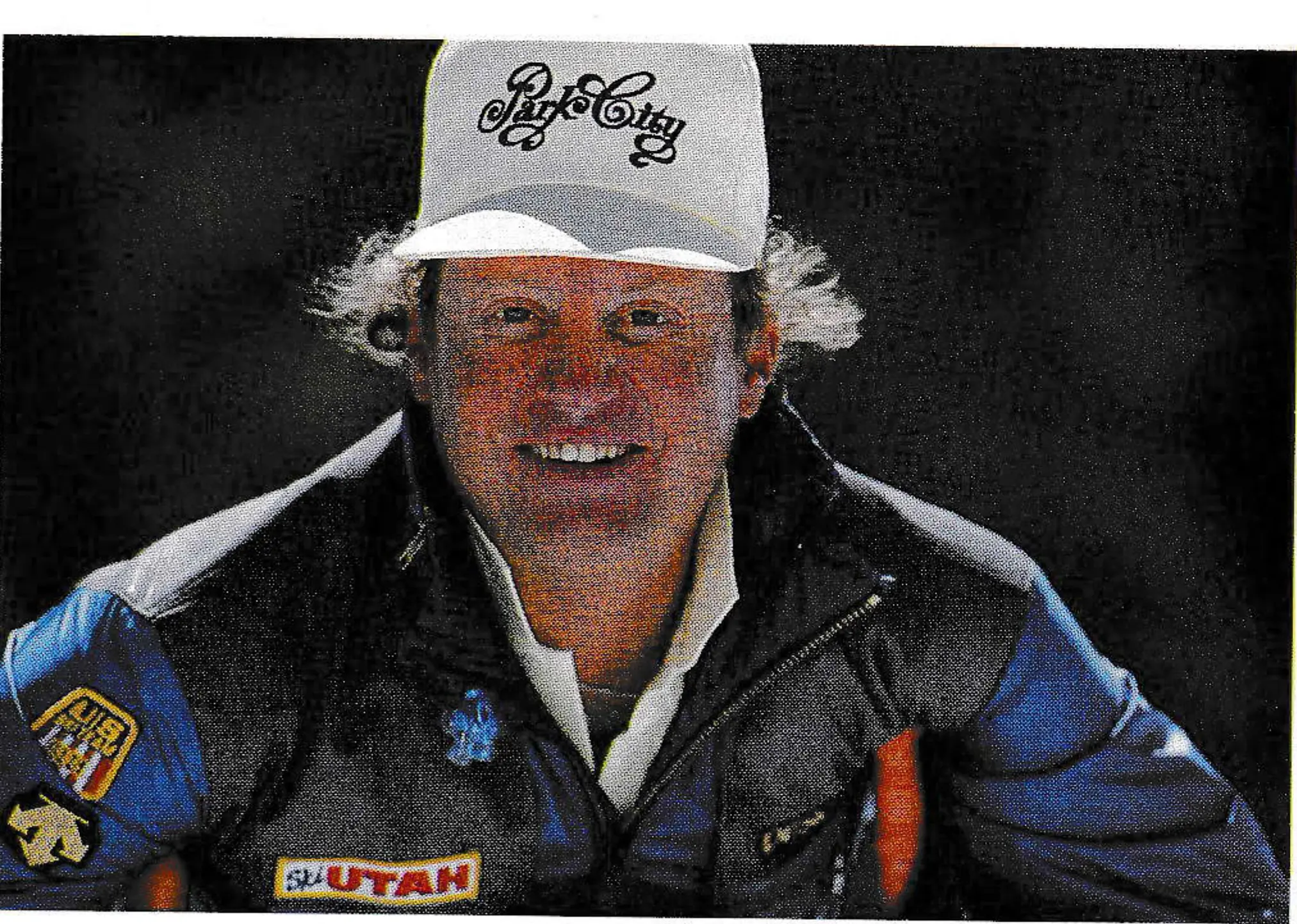
The Ski Team members will not soon forget this dynamo, who made so many good things happen for them. And the industry has lost an original, creative, bravura impresario. We can now only wonder what the Utah Winter Olympics would have been like if he had been around to orchestrate. Certainly we should remember, when those games are awarded to Utah, that the excitement he created about and for the U.S. Ski Team was an important part of how Utah originally got the U.S. Olympic Committee nod.
We express our deepest sympathy to Craig’s parents, Nick and Avis Badami, whose involvements in our industry, like their son’s, has been so warm and welcome.
— A SAM editorial
INDUSTRY REPORT CARD:
1. Off to a good start
The industry marketing program is off to a rousing good start. It is much too early to get reaction, let alone measure results. Also, it’s fair to say that there are legitimate areas where people may disagree with the message, with the media mix chosen, even with the need for the whole program in the first place.
But what is incontrovertible is that our industry has come together in a self-help program and has really done itself proud. Up until this, it has been hard to generate $250,000 of industry muscle for anything; and now we are administering a program that has more than $6 million in hard cash behind it, and even more impressively, regional tie-in programs on a scale it was impossible to even dream about only a year ago. The whole effort seems to have created an energy surge of its own. It seems to be self-generating.
Well done to us all! Well, almost all.
2. Not even in the starting gate
While our industry has, so far, performed superbly in its marketing program, we are dead on our feet in the vital arena of environmental issues.
It is so abundantly clear that these issues will play a dominant role in our industry’s affairs in the decade ahead, yet we sit, twiddling our thumbs, collectively crying over our role as environmental bad guys, but not doing anything about it.
An NSAA Task Force has gone exactly nowhere in some two years of wheel-spinning. A basic, first-step direction was established, it is true, but to date there is only an unfunded budget for its execution.
The USIA board must show some leadership here. It won’t be easy, and it won’t be cheap. It will be difficult for the SIA side to relate to. Furthermore, the whole leadership and area membership will have to start viewing and understanding the situation as a global and societal one, and not just as another round of resort-by-resort trench warfare.
Until our industry gets a sense of purpose and direction, and develops the professional tools to cope with the problems ahead, we are going to get slapped around, and pretty badly at that, by opposition forces that do have a sense of purpose and direction, and who have developed powerful tools, which they use with considerable skill.
The cost of this to our industry dwarfs any gains we may or not make through the marketing efforts that so engross us now. It’s time to wake up. No, it’s past that time.
— A SAM editorial
Communicating the essence of skiing
Excerpted from a speech by Ed Pitoniak, senior editor of Ski Magazine, that introduced a panel session on ski advertising at Ski Magazine Week in December.
When I began skiing some 25 years ago, at a rope tow area in the Berkshires, many of the people I admired I knew through the articles and advertisements in the skiing magazines, through ABC’s Wide World of Sports, through the ski movies of John Jay, Dick Barrymore and Warren Miller. My heroes were the likes of Stein Eriksen and Jean-Claude Killy, Billy Kidd and Jimmie Heuga, Nancy Greene and Marielle Goitschel.
I admired these peole not so much for their accomplishments, but because for me they personified what the sport of skiing was all about. They personified the romance, the worldliness, the adventurousness of skiing. They educated me to what a real skier feels: how he relates to the mountain, to his equipment, to other skiers.

Much of this education, much of this personification took place in ski advertisements. Nothing sells like personification. It certainly sold me on skiing, and I’m convinced it helped attract millions of others who began skiing in the 1960s. But now we come to the end of the Eighties, and it seems that we no longer have a clear sense of the ski personality, of the ski sensibility. We’ve confused demographics with people. Who is a skier? We no longer answer that question by talking about the skier’s spirit. We talk too much about income levels, spending patterns, psychographic profiles and other MBA hogwash that obscure the elemental relationship of skier to mountain. Whose fault is this? It’s hard to say. There’s no doubt we magazine editors must do a much better job of seeking out and presenting those skiers who epitomized what our sport is all about.
In the Nineties, the decade to come, ski advertising must also play a big part in presenting the essence of ski culture. As a ski magazine editor, I look at ski advertisements not as competition for, or distraction from, editorial. In fact, I see them, ideally, as the quintessence of editorial. While we ski editors will be trying to communicate the essence of skiing in the Nineties, I suggest that advertisers, too, should be trying to do the same thing. If it comes to pass, it will be a radical change from the ski advertising to which we’ve become accustomed — the vapid images of vapid ski models having stereotypical fun, as well as the ads that are full of technical mumbo jumbo.
I find the new series of Rossignol ads rejuvenating, because they restore, at least for me, our essential feelings about skiing. “30 Degrees Fahrenheit. Accumulation of seven inches. Severe storm watch in effect. It’s going to be a beautiful day.” This copy couldn’t be simpler. Its effect on the consumer couldn’t be more direct. It speaks straight to his skiing heart.
The “Aspens” advertisements, too, remind us why we ski, why we travel to hard-to-get-to ski towns in the middle of winter. We make the effort because of the sensual, emotional and social pleasures that await us when we’re amid mountains in winter.
Such advertisements distill the essence of skiing, evoking a truly personal feel for the ski experience. You might even say these are “classical” advertisements, centering as they do on the classic qualities of skiing.
The kids of the Echo Boom and their parents represent our greatest chance for growth in the Nineties. These newcomers will want to be initiated into skiing’s time-honored traditions and values. We had no real ski heroes in the Eighties — no Stein Eriksens — because everyone was too “mature” and even cynical to allow for heroism. But the new skiers of the Nineties won’t be nearly so cynical.
It is time for all of us who communicate with skiers, editors and advertisers, to help indoctrinate these newcomers into the sport, educating them in subtle, sophisticated ways to what skiing is all about, bringing to life the essence of skiing passion. Who a real skier is. What a real skier feels.
— Ed Pitoniak
On calling in sick
The site was a major interstate running through a major New England city. The letters on the billboard were 10 feet high, and the message was simple: “Go Ahead — Call in sick!” The only other element was the name of the major resort which sponsored the message. We spare them the embarrassment of identification.
The local reaction was predictable and swift. The doctors, lawyers, bankers, engineers and business executives who comprise much of this resort’s clientele were outraged, and said so. The important regional TV station had a field day recording public reaction. Letters on the subject appeared in the newapapers.
It’s hard to imagine how this smart-ass idea ever got approved. It cost this resort; it cost the sport.
— A SAM editorial