White Pass, WA
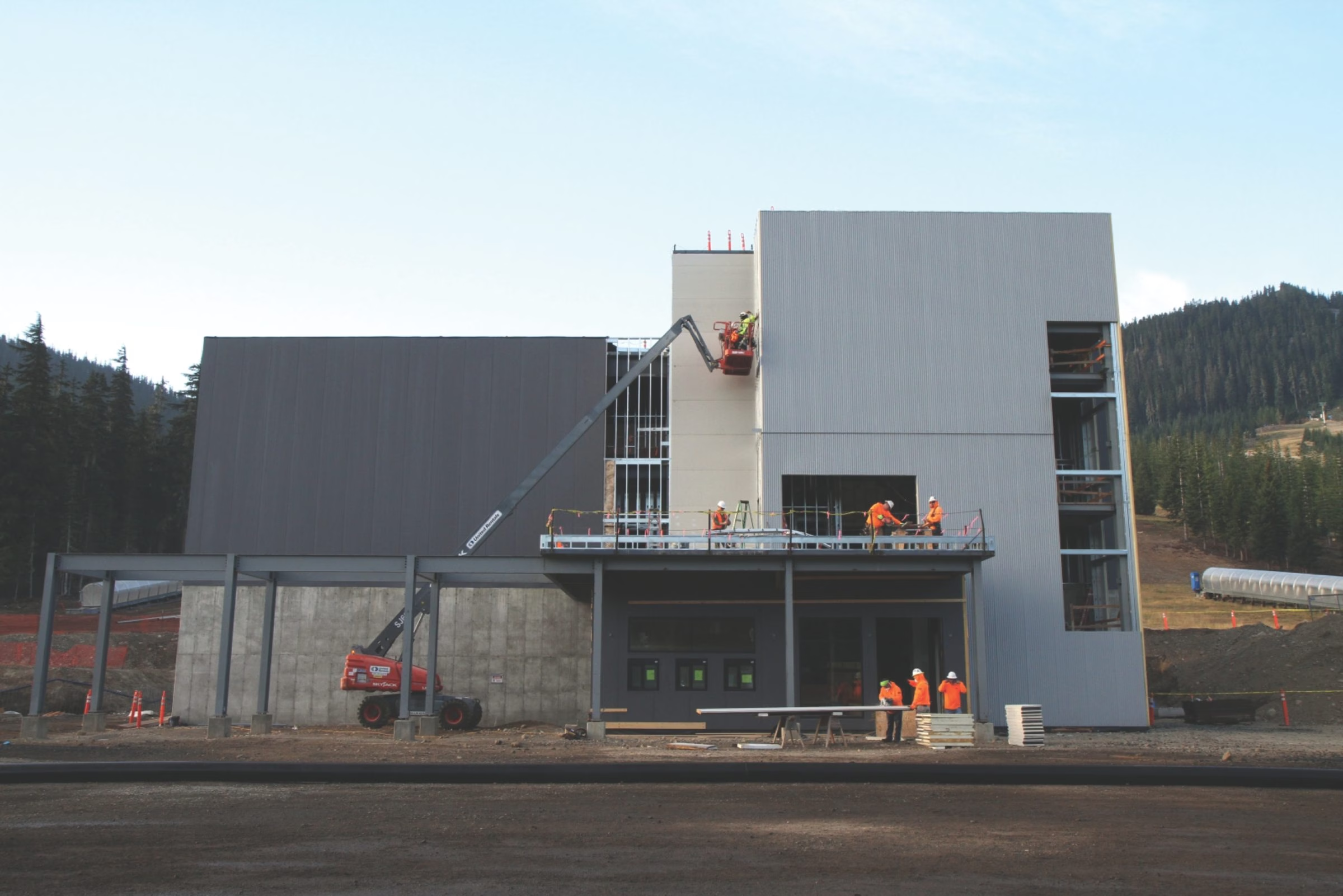
This summer, White Pass worked to complete Base Camp, a 21,624-square-foot learning center, 1,600 feet away from the hustle and bustle of the main base lodge, with its own dedicated parking lot. The first of three floors will house ski school check in, mechanical space and a restroom. A main, slopeside level includes guest services, ticketing, rentals, a coffee bar, lounge, cubby storage and more restrooms. Finally, the upper level encompasses a full restaurant, production kitchen and decks, along with yet more restrooms. An elevator will connect all three levels—a first for White Pass.
Unlike the resort’s other Bavarian-style buildings, architect Brad Kessinger designed the new lodge to be modern and functional. Mountain States Construction Company began site work in summer 2025. This part of the ski area had essentially no building infrastructure, so the project required new septic, water, propane, fire line, stormwater infrastructure and a generator bunker. Then crews formed the cast-in-place foundation and lower level walls before installing a structural steel frame and composite metal decks with concrete topping on the main and upper floors. The building was fully enclosed by August 2026 with trades continuing interior work as of September. White Pass also moved three existing conveyors closer to the new facility; all are covered and different lengths to serve a progressive terrain-based learning zone.
“My favorite part of this building is that we’ve moved everything a beginner needs into one location,” said GM Rikki Cooper, a mom of three. “I’ve struggled through all of the challenges of teaching kids and friends to ski, and I really wanted this building to fix the things that make an already intimidating first day harder than it needs to be.” She added, “Large windows face the learning terrain so families can stay connected to what’s happening outside, and the building itself will become a clear arrival point for new guests.”
Aspen Mountain and Snowmass, CO
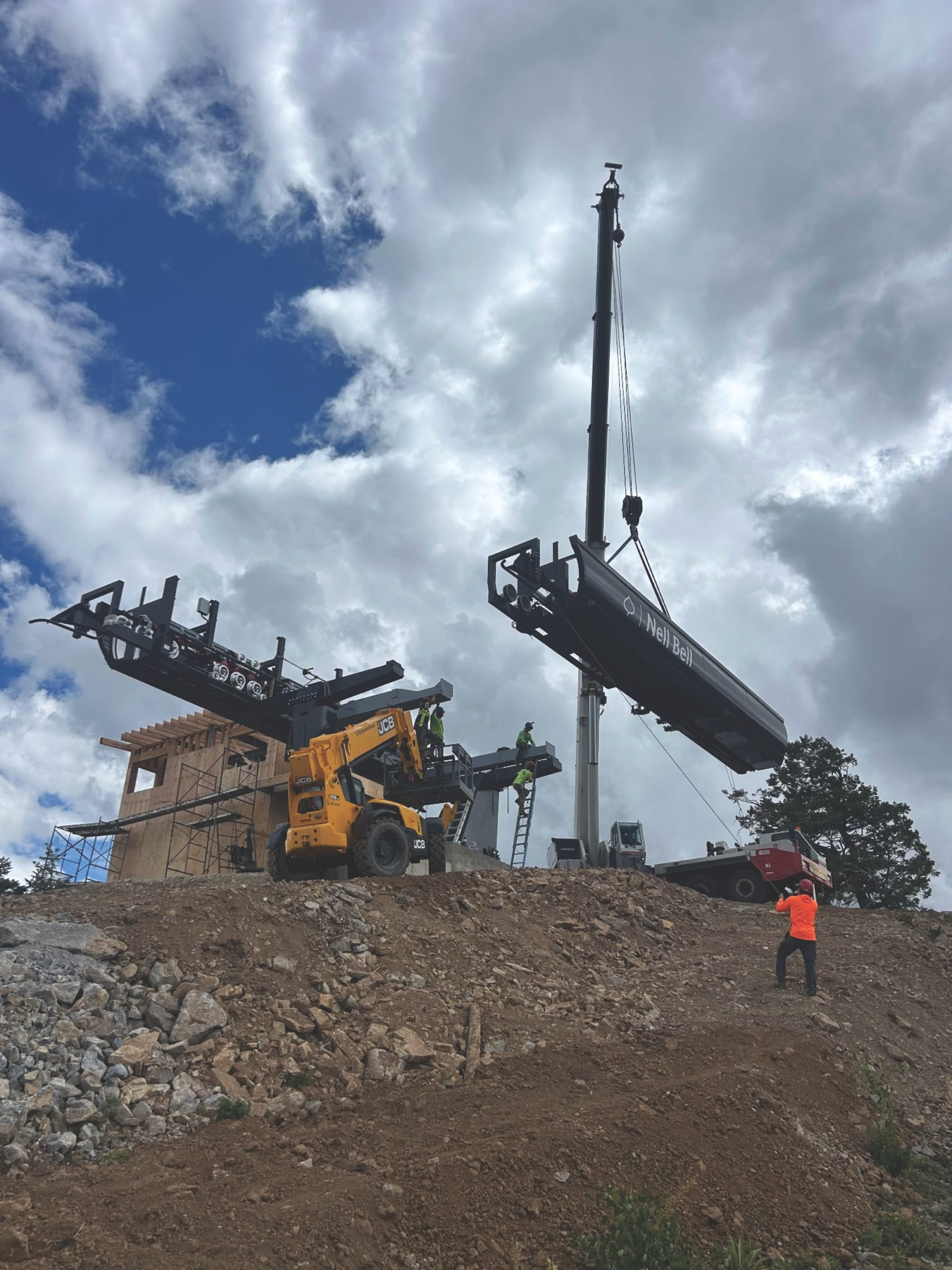
Two of Aspen’s four mountains saw major investment this summer. On Aspen Mountain, three aging fixed-grip chairs were removed, with a Leitner-Poma detachable quad taking the place of two. Crews removed the Bell Mountain double and Little Nell quad by early spring. They had served Ajax for a combined 109 years and reached end-of-life. Appropriately named Nell Bell, the new 8,712-foot high-speed quad runs from the gondola plaza to the top of Bell Mountain, ascending 2,656 vertical feet in 8.7 minutes. A mid-station was considered near where Little Nell once ended, but nixed due to topography and anticipated minimal demand.
Nell Bell’s bottom terminal sits next to the Silver Queen Gondola, so early work was focused there to avoid impacting summer ops. The steep lift line required a spider excavator and several helicopter days for the tower foundations, culminating with tower fly-in by mid-September. Simultaneously, two outside developers began construction of real estate projects nearby that necessitated removal of the third aging fixed-grip, Lift 1A.
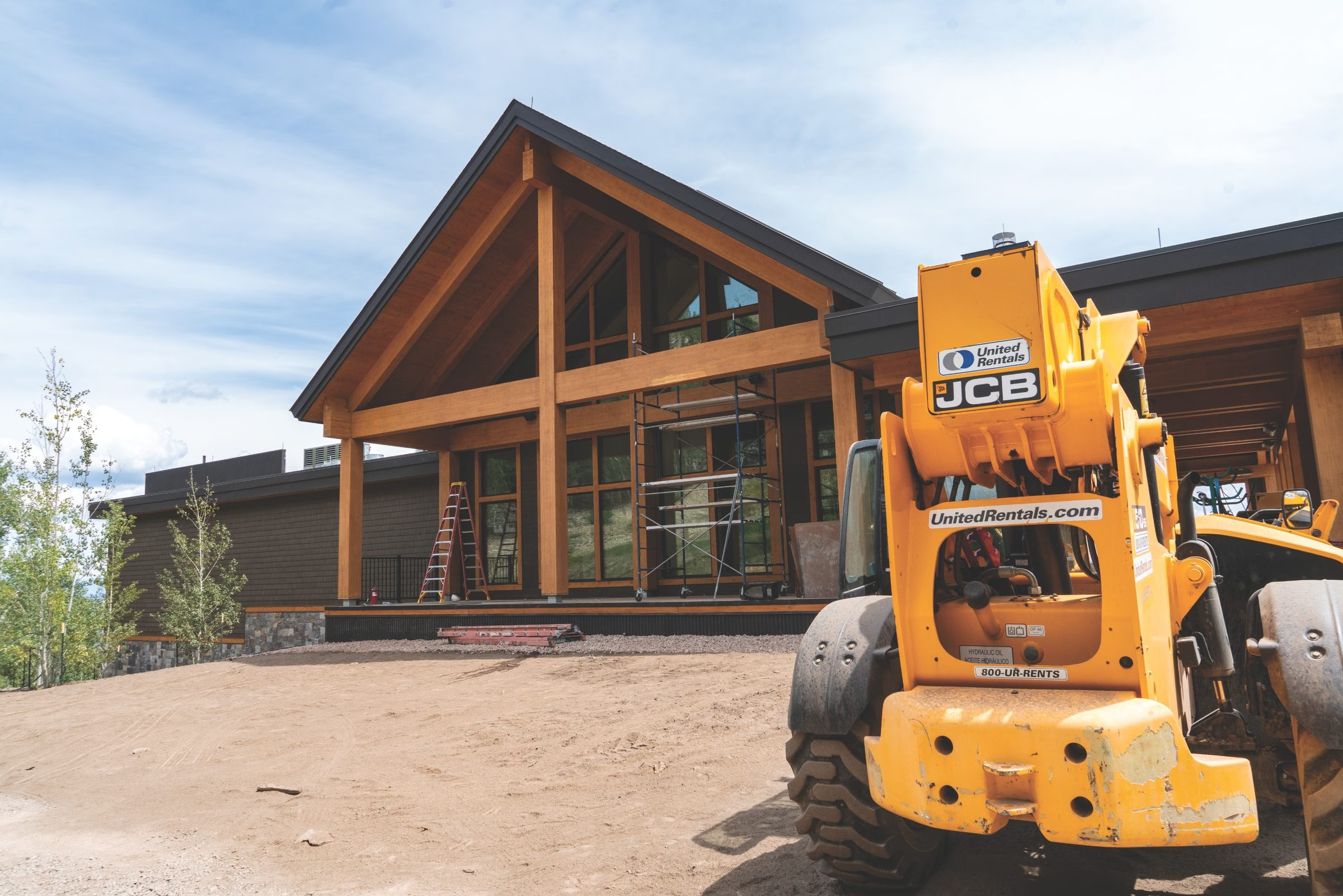
At Snowmass, Shaw Construction worked on the mid-mountain Ullrhof Restaurant, replacing an older structure. The 26,115-square-foot lodge will seat 425 people inside, up from 220. The two-year build commenced in May 2025 with the foundation system and primary wood structure. The design uses cross-laminated timber with engineered glulams, a sustainably-sourced, carbon-efficient alternative to steel and concrete. By Nov. 1, 2025, Shaw completed the outer shell. Mechanical, electrical and plumbing subcontractors worked through the winter, accessing the site via snowcat. By late ski season, mechanical, electrical and painters wrapped up interior finishes. Vehicular access returned in May 2026, enabling final landscaping and grading.
Ullrhof will be Aspen One’s first all-electric on-mountain restaurant, with net zero emissions from day one. The building envelope exceeds code-required insulation by 15 percent, thanks to triple glazed windows and a highly efficient heat pump hot water system along with a heat recovery unit. Both the Nell Bell chairlift and Ullrhof are expected to open to skiers in December.
Mont Sutton, QC
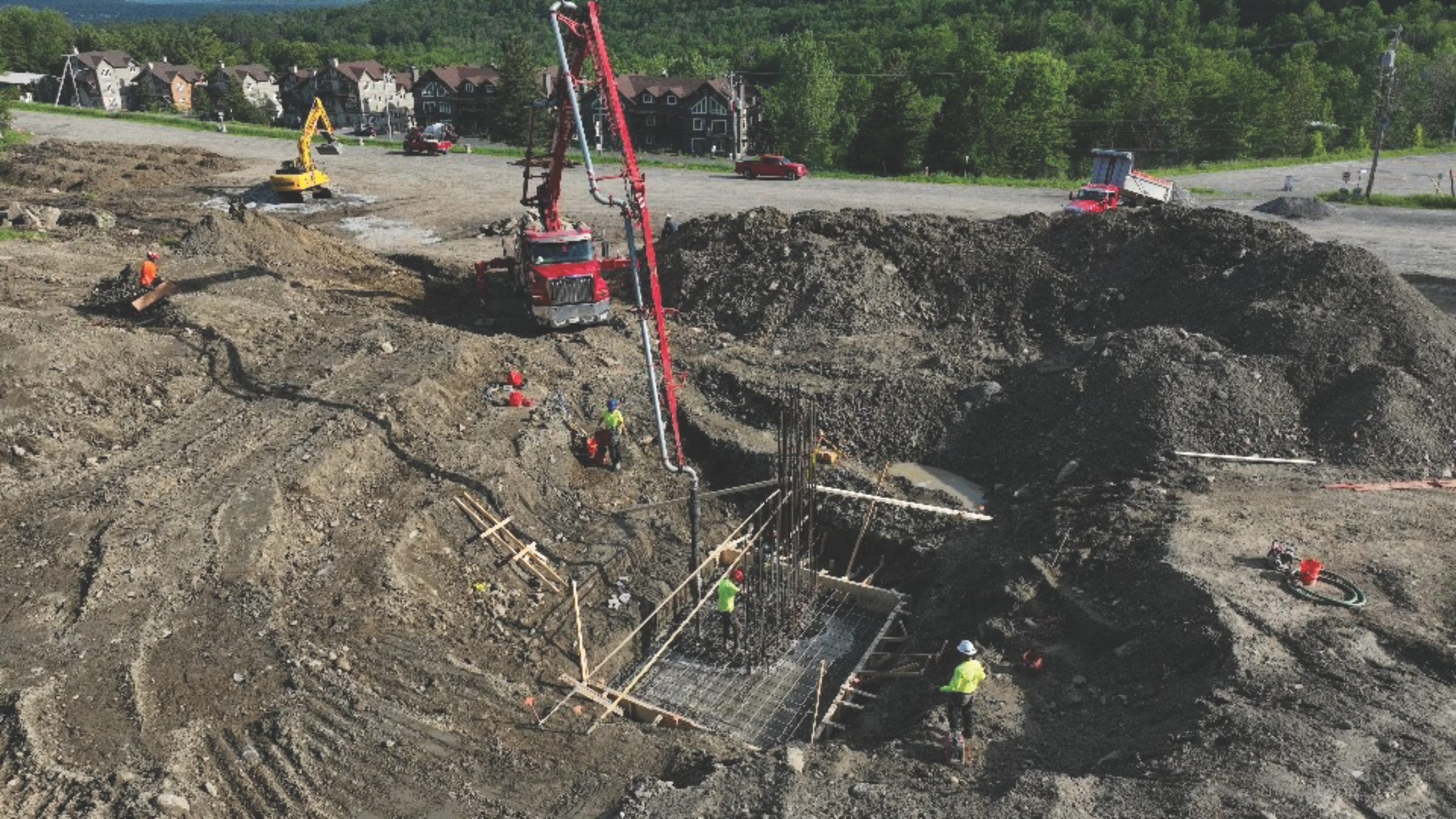
In the Eastern Townships of Quebec, Mont Sutton replaced three aging Mueller doubles with a single Skytrac quad. Sutton partnered with Ecosign to identify a 3,684-foot alignment that optimizes both access and vertical rise (751 feet). Sutton also sought to minimize tree clearing, and replanted more trees elsewhere on the mountain than it had removed. The new lift is the first Skytrac in Quebec and features a loading conveyor at the drive station.
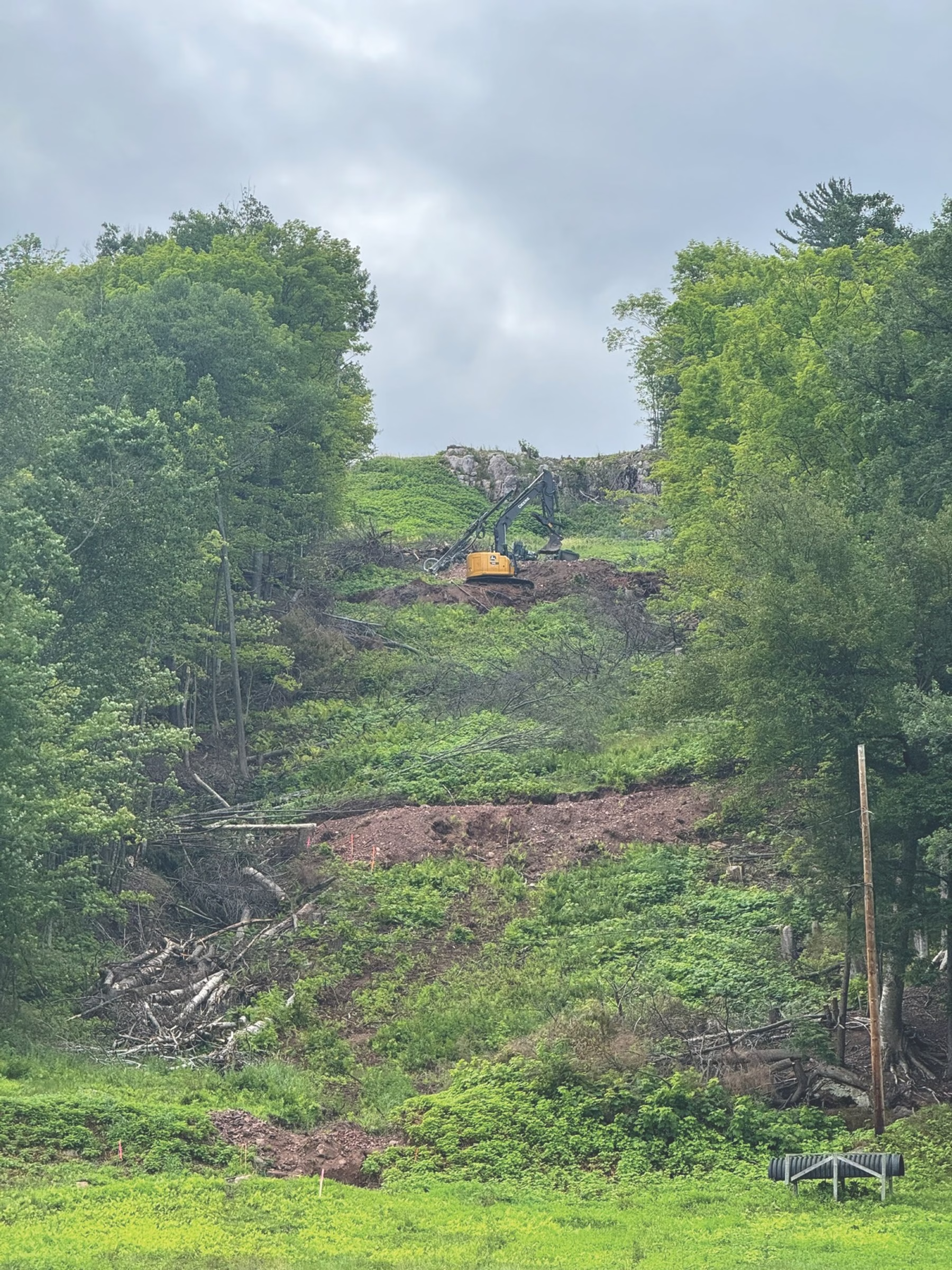
Leitner-Poma Canada sold and installed the lift with support from Skytrac. All three outgoing lifts concluded service in April, with their chairs sold to the public. Crews removed dozens of lattice towers through early spring. Leitner-Poma began tower and terminal excavation in late May as deliveries began from Salt Lake City. A Sikorsky helicopter visited July 9-10 to fly concrete for several of 16 new towers. Four towers along with the top return station required blasting due to bedrock. Leitner-Poma set the first tower on Aug. 24, utilizing a Prinoth Panther and telehandler.
Skytrac delivered most of the parts before new tariffs took effect on Sept. 8, including the 300-horsepower drive platform. As of late September, the project was on track for November completion. The lift’s 145 carriers will move 2,400 skiers per hour at 2.5 meters per second, about the same capacity as the three old lifts combined.
Marquette Mountain, MI
Marquette Mountain didn’t originally plan to build a lift in 2026. But after installing a new haul rope on a Riblet double last November, staff discovered bullwheel bearing issues at the top drive terminal. After replacing the bearings, Marquette discovered the issue actually originated in the lift’s gearbox. With snow on the ground, snowmaking underway, and the box in a 20-foot-deep vault, Marquette decided not to operate the lift. GM Kaet Johnson then sought quotes for a gearbox rebuild, gearbox replacement, or a new lift. After reviewing the options, ownership selected Doppelmayr to engineer and supply an all-new triple.
In spring, Johnson’s crew got to work clearing copious amounts of snow, cutting a new 2,200-foot lift line and marking terminal/tower locations. While the Riblet lift loaded next to the chalet, the new one would load out front. Once the ground could support equipment, Marquette roughed in roads and prepared work sites utilizing an excavator, front-end loader and medium dozer. Several large dump trucks transported road aggregate up the mountain and a D-8 dozer later assisted bringing concrete to the top terminal site. A local blasting company drilled and blasted for the top terminal as well as five of eight tower locations. “The tight and short planning timeframe has been challenging, yet everything is coming together nicely,” noted Johnson midsummer. “Doppelmayr and our other contractors have been excellent to work with and are invested in the project.”

As of September, major components were set to arrive soon, with Doppelmayr utilizing a crane and/or boom truck to set each tower. The completed bottom drive, bottom tension Alpenstar fixed-grip will move 1,507 skiers per hour, with the option to go to 1,789 eventually. Vertical rise totals 488 feet, with 50 percent download capacity. The machine has a 221-horsepower main drive with a 27-horsepower Kubota evacuation drive.
Powderhorn, CO
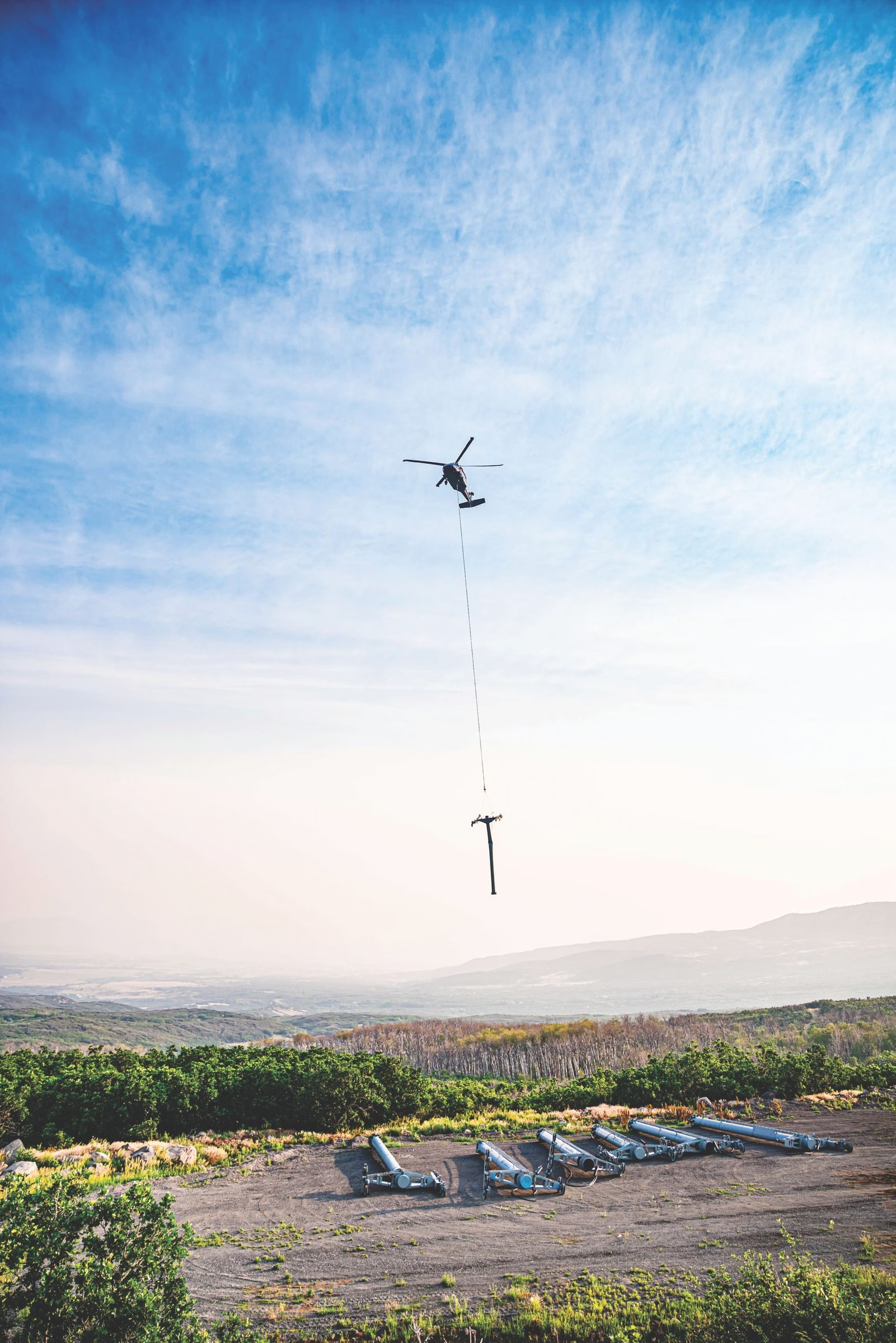
Powderhorn retired its venerable West End double in March. The 1972 Heron-Poma ranked among Colorado’s 10 oldest lifts and stretched 7,000 feet long, with a nearly 15 minute ride. To replace it, Powderhorn considered both fixed and detachable options as well as new versus used. It settled on a slightly longer detachable quad, recently retired by nearby Aspen Snowmass. The 1995 Poma had been well maintained and made sense economically, said Powderhorn GM Ryan Schramm.
With a year between removal and resurrection, Leitner-Poma gave the machinery a complete overhaul at LPOA’s Grand Junction, Colo., plant, including disassembly, cleaning, painting, re-galvanizing, and general refurbishment. Leitner-Poma designed a new control system and modified a few towers to fit the new profile. All 98 grips were nondestructive tested and rebuilt with new parts. The lift’s APU (auxiliary power unit) was overhauled and filled with new fluids.
Alpine Cable & Construction assisted with removal of the old lift. Working around an elk calving closure, crews assembled rebar cages for new tower foundations in the parking lot. Powderhorn slightly widened the lift corridor to quad gauge. Alpine poured the first concrete in late June, and Grand Valley Power bolstered the electrical infrastructure for a 700-horsepower lift, up from 250.
Conventional equipment was used to complete most of the 22 tower foundations, but a few required a spider excavator. Crews set the like-new return terminal the week of Aug. 15. Then Leitner-Poma and Alpine poured 150 yards of concrete in a single day, completing foundations for hard-to reach towers. As of September, towers were next to fly, with the 6,928-foot lift set for completion in November. This winter, Powderhorn expects to move 2,000 passengers per hour on Wild West, double the old lift’s uphill capacity. Vertical rise remains exactly the same at 1,652 feet—it’ll just be reached a whole lot faster.
Okemo, VT
One of the largest projects in Vail Resorts’ $215-million-plus 2026 capital improvement program was a major snowmaking upgrade at Okemo. Approximately 700 new guns were installed, a mix of 270 HKD Impulse R4 tower guns, 30 portable tripod-mounted R5 Phazers and 310 fixed-flow tower guns. Differing models were matched to places on the mountain based on specific needs, with an eye toward efficiency.
To make this Vail Resorts’ largest emissions reduction project this year, Okemo worked with Efficiency Vermont, Ludlow Electric Light Department, and the Vermont Public Power Supply Authority (VPPSA) to increase power supply to the mountain and move away from diesel. Two Ingersoll Rand Turbo-Air NX5000 electric air compressors were installed, replacing 15 diesel compressors. On the water side, nine ABB AC880 variable frequency drive motors will improve the overall efficiency of Okemo’s primary pump station.
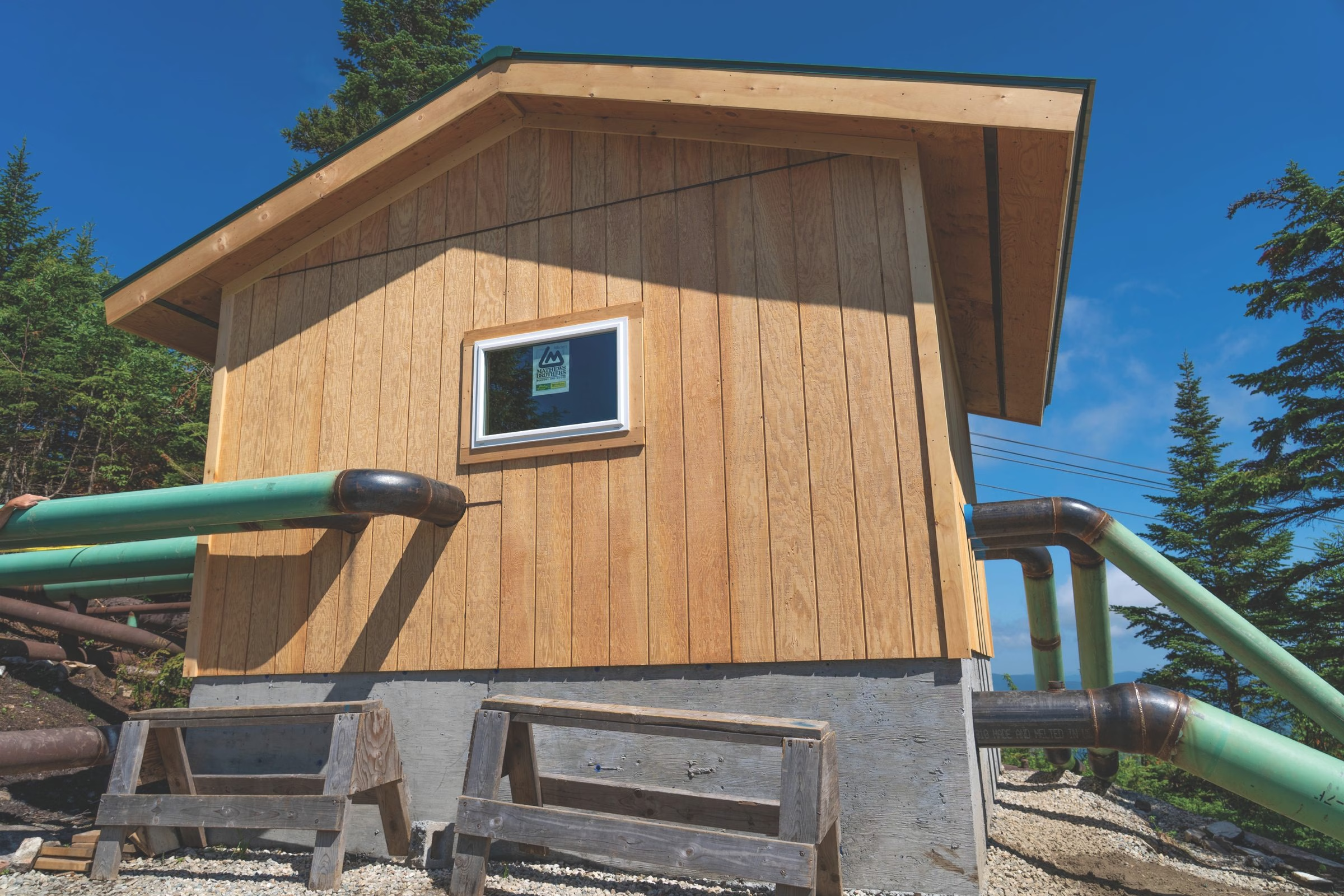
At the summit, three existing valve houses were demolished and replaced with one 14-foot-by-16-foot centralized station. New higher-pressure valving and additional charge valves will improve system reliability and save Okemo’s team valuable time when firing up and adjusting the snowmaking system, especially during the early season. Okemo expects the new snow guns and infrastructure will support a broader operating range, with substantially more opportunities to make snow during marginal weather conditions.