
Lit, Noise-Making Park Feature
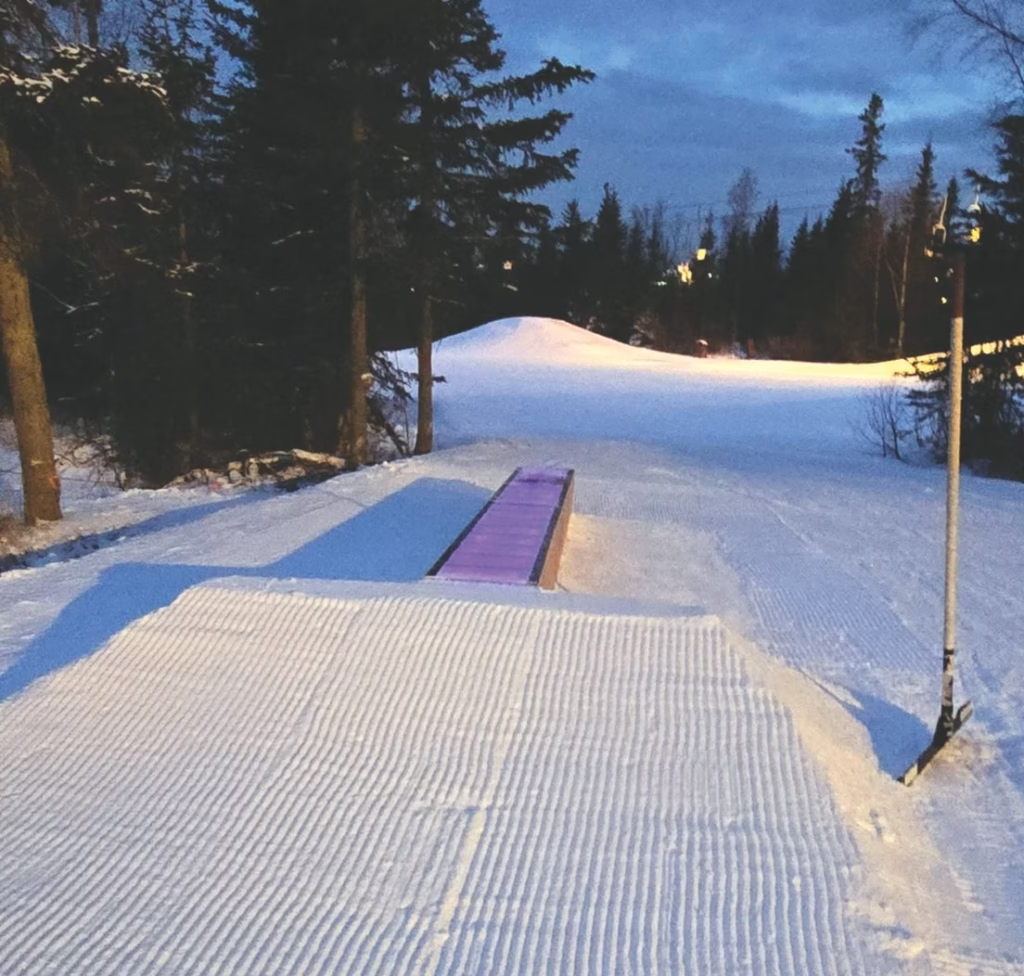
Hilltop Ski Area terrain park supervisor Josh Martinez thought it would be cool to have a box feature with color-changing lights—like the Aurora Borealis that often lights up the night sky in Alaska, where Hilltop is located.
Martinez worked with fabricator Lane Knaak, who coincidentally had built a similar feature previously and already had the list of equipment and wiring layout. All the area needed to do was modify the plan to work with the 16-foot-long box they built from scratch in-house.
But lights are just one feature of the Aurora Box, as Hilltop calls it. The other is a motion-activated speaker installed inside that plays sounds when a sensor—which points out of a hole at the landing end of the box—is tripped. The speaker can be plugged into a computer and loaded with any .mps sound file. They’ve had it make cheering, clapping, airhorn, fart, and explosion noises, says Martinez.
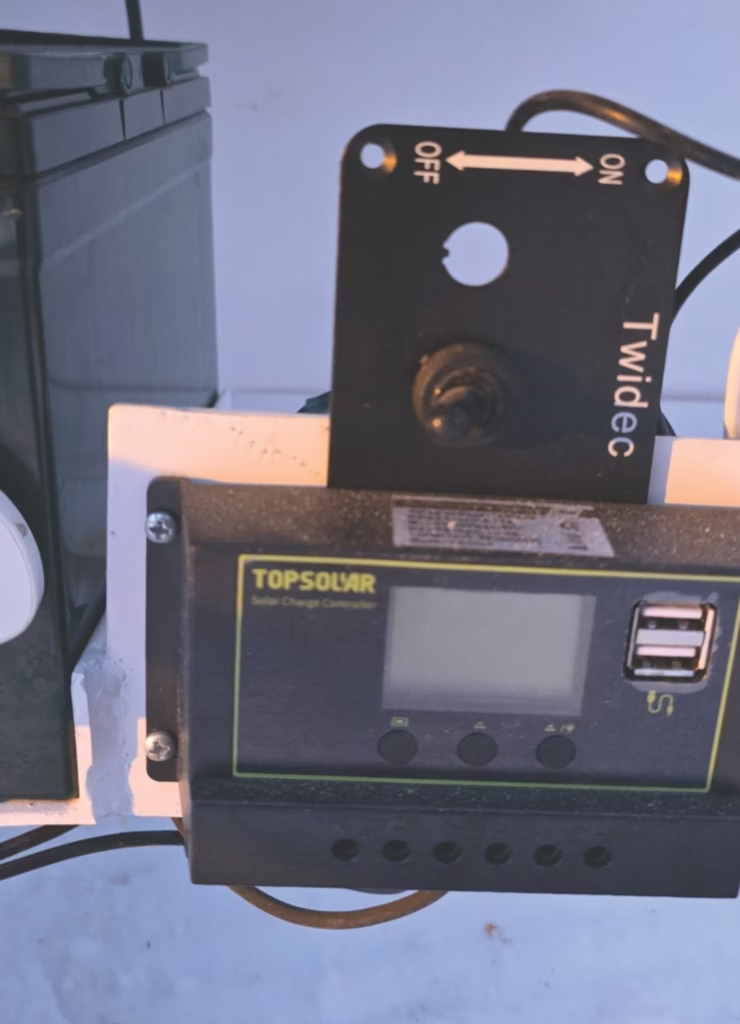
The LED outdoor lights, installed inside the box under the clear Lexan sliding surface, can be adjusted using a remote control or phone app. It’s all powered by a 12-volt battery and solar panel connected to a central terminal and power switch inside, all of which are waterproof or outdoor compatible. The electrical components cost about $250 in total. Martinez occasionally needs to swap out the battery or replace a strand of lights, but otherwise the electronics are sound.
“It’s an extremely popular feature. Fun for all, but especially loved by groms,” says Hilltop general manager Trevor Bird.
Trail Progression Matrix
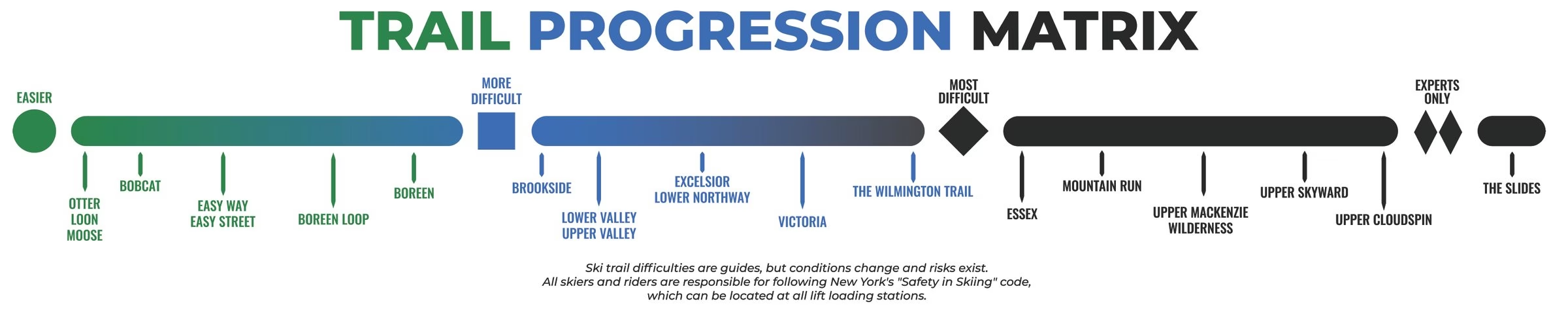
The limitations of standard trail difficulty designations—green circle = easiest, blue square = more difficult, and black diamond = most difficult, plus the double-black diamond “experts only”—can lead to a somewhat skewed scale of actual difficulty, especially at large ski areas like Whiteface Mountain, N.Y., which has the greatest vertical drop east of the Rocky Mountains at 3,430 feet.
“Two trails carrying the same difficulty designation can provide very different experiences depending on length, pitch, terrain, width, exposure, and available points of egress,” says Whiteface health and safety manager Justin Rodda.
To help guests understand how trails compare in difficulty beyond the standard designations, Rodda and guest services manager Jake Sporn developed the Trail Progression Matrix.

The matrix goes from left to right, starting with an example of the easiest green trail up to an example of the most difficult double-black trail. Flagship trails that best represent the difficulty progression—about a quarter of Whiteface’s 94 trails—are named across the scale. More difficult greens fade to blue; more difficult blues fade to black.
The matrix is posted around the resort, on paper trail maps, the website, and shared on social media. It successfully serves as a safety program, a guest service, and a risk management tool.
Rodda says the guest feedback has been overwhelmingly positive.
“We’re not simply providing another warning or another restriction,” he says. “We’re giving guests better information and allowing them to make better decisions for themselves.”
Rodda hopes to create similar matrices for terrain parks and glades as well.