


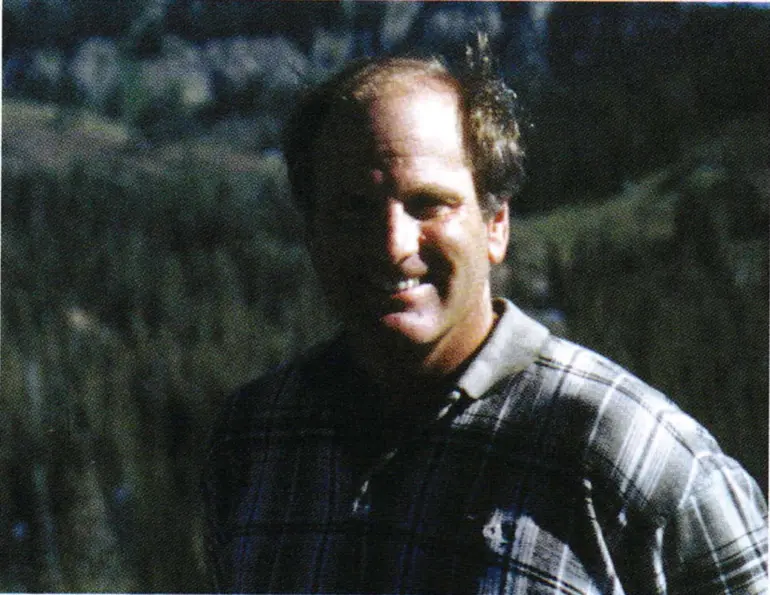
Rob Kautz, the 53-year-old CEO of California’s Sugar Bowl resort and new chair of the National Ski Areas Association (NSAA), embodies the NSAA’s goals as well and as completely as any CEO in the country. Consider: He’s an ops guy who sees customer service as his resort’s top priority. He’s building a $3.6 million learning center that will grant VIP treatment to never-evers. He manages a growing, mid-sized resort amid giant competitors, in an environmentally sensitive region surrounded by one of the most diverse population mixes in the U.S. He has managed to not only carve out a niche for his resort, but modernize and broaden the appeal of one of America’s oldest ski areas.
Long before he ascended to his new position, Kautz had made NSAA’s key goals his own. In fact, many of his guiding principles first sprouted at NSAA conventions. For example, his realization about the importance of customer service grew out of the Charleston convention, itself the far-sighted project of another former ops guy, NSAA president Michael Berry.
So Kautz comes by his support for the organization naturally. When he talks about NSAA’s priorities—the Growth Initiative, the Environmental Charter and safety education—it’s difficult to separate the organization from his resort. “I’m a huge supporter of the Growth Model,” says Kautz, “especially given the changing demographics. The aging boomers will exit over the next 10 years, so we have to replace them. Our goal is to retain more than 20 percent of first-timers. That’s why we’re spending $3.6 million on learning center at Sugar Bowl; that’s what’s needed for us and for the ski business.”
In order to understand Kautz’s vision for the future of NSAA, you need to look at his past.
From Ops to the Top
Kautz grew up as a self-proclaimed beach boy in Southern California. He began skiing in college, got hooked, and began to take winters off to ski bum—first at China Peak, then two years at Park City. While bartending his way through graduate school, he met Sugar Bowl’s GM, who invited him to the resort. He started as a patroller in 1975, and eventually ran grooming, lift operations, and mountain ops. From there, he became assistant GM and GM before assuming the presidency in 1987. He became president just as Sugar Bowl was preparing a new master plan, which was completed in 1988, and his tenure has coincided with the area’s rebirth. Kautz was named CEO in 1998.
During this time, Sugar Bowl went from being a funky, snow-laden area, which could only be accessed via a gondola from the highway, to a family-driven area, complete with base-area parking. In the last five years, Sugar Bowl has averaged 300,000 skier visits, an increase of more than 80 percent over the previous five seasons.
In getting to those numbers, Sugar Bowl has built 1,000 slopeside parking spaces for easy access to convenient, compact facilities in the base area, and detachable chairlifts within 200 feet of the new lodge. Sugar Bowl’s new learning center, to be completed two years from now, will provide VIP-like service. Never-evers will get preferred parking right at the learning center, which will house rental, ticket and day-care facilities. “So if you’re a day skier, you can park right at the building and get everything at the center,” Kautz says.
But Kautz didn’t just stop with the “If you build it, they will come” mentality. He also focused on customer service. “We have worked very, very hard on it,” says Kautz. “We start in May of each year talking about how we can be better. We meet all through spring and summer, talking about how we can get a better applicant pool, train our employees better, improve as managers.
“The first step is to get manager buy-in. When you as a manager embrace it, it happens. We have a slogan, ‘Keep the sugar in Sugar Bowl.’ Once you integrate this message into every department, it gets easier. Smile, have fun, be in uniform, greet customers, anticipate and satisfy needs quickly. Always have a positive interaction with guests. When I’m walking around the property, I make eye contact and say hello.”
Kautz is so fanatical about customer service that he is willing to pay for it. “We reward employees based on customer service. We do surveys weekly; bonuses are based on survey results. We reward managers for providing great customer service. We deploy 250 mystery shoppers a year to keep tabs on how we’re doing.”
Proof that it works: The Reno Gazette rates Sugar Bowl as having the friendliest employees at Tahoe, Kautz says.
An Environmental Education
As it is for many managers, environmentalism is a moving target for Kautz. “We’re committed to being a good steward. Over our 63 years, environmental practices haven’t always been great. We’re working to make amends for the sins of the past.” Kautz embraces the Environmental Charter for the entire industry, but acknowledges that it will be hard work for many areas as they clean up old mistakes as well as concentrate on the future. For example, at Sugar Bowl, “We’ve had to clean up numerous sites where we had fuel oil in the soil. Old-style development meant we bulldozed roads to install lifts; we have eliminated many of those, and have worked to ensure we are minimizing erosion and have revegetated with native plants.”

Now, revegetation has become a normal part of lift and trail construction at Sugar Bowl, Kautz says. The area is also building a new recycling program and site for cardboard as well as bottles. An energy audit has led to conversion to more efficient systems.
Kautz encourages the industry to get involved with the Charter and to take it a step at a time. “Initially, we didn’t score well on the Environmental Charter, so we’ve made that a priority. I have to confess, when I completed the first survey. I was embarrassed by how little we were actually achieving. We found that to move forward and adopt the principles, we had to devote more management time to them. I subscribe to a thin staffing process, but we realized that we couldn’t achieve better practices without the addition of an environmental practices coordinator. We still have inefficiencies, but we scored much higher this year than two years ago, and we’re looking to improve next year. It really takes hard dollars to achieve—that, plus a commitment that must be communicated to management.”
Selling Safety
“For us to see growth, winter sports have to be seen as safe,” Kautz says. “We need to ensure that our sports are accurately portrayed in the media, especially in light of the fact that snowboarding and skiing are safer than many other active sports. The folks at NSAA do a great job of getting the facts out there.
“It’s especially hard with the growth of snowboarding. Lots of these newcomers don’t have the education we did 30 years ago, like lift tower signs with the skier’s responsibility code. As part of our beginner’s program, we make sure our coaches impart the basics of etiquette and safety.
Where Do We Go From Here?
Kautz agrees with those who predict that, as Boomers retire from skiing and the American population becomes multi-cultural, growth will come from new markets. Including ethnic ones. “We see it at Sugar Bowl—we’ve had substantial growth, especially in the Asian market. Over the past 10 years, the Asian market has doubled, from a couple of percent to four or five. We’re talking about how to market more effectively; do we have to do anything different to cater to these groups?” So far, Sugar Bowl has not seen much increase in the African-American or Hispanic populations, “but with the growing ethnic middle class, we expect to see growth there,” Kautz adds.
Another area of change: employee education. Kautz is a proponent of using the Internet to educate employees, at all levels. “This has huge potential. Michael Berry and I have spoken about it, and he supports the distance learning concept too. Major ski areas generally have better training; it’s hard for smaller resorts to afford it. NSAA has created some excellent training programs; but they could be updated, and made more available, especially online.”
The combination of pragmatism and vision stems from Kautz’s management philosophy:
- Insure that core values are integrated into core operations.
- Plan well. You need a map of where you want the company to go.
- Create a sense of urgency all the time.
- Never get complacent, always move forward.
- Encourage creativity and let your staff know that creative failure is okay.
- And ensure that you have excellent financial controls.
Spoken like a true ops man.

