

“High-quality Internet recruiting can be achieved for zero to minimal monetary costs,” says Barbara Ling, author of “Poor Richard’s Internet Recruiting,” published by Top Floor (http://topfloor.com). An online HR recruitment specialist, Ling says it’s crucial that every Internet recruitment effort sport the following features:
Market your resort, not just the job. Given the competition for qualified employees, your recruitment area must sell every positive facet of your organization. “Look beyond money and perks—benefits could also include the opportunity to work in a dynamic, cutting-edge atmosphere, community involvement, mentoring younger people, being on the forefront of innovation, and the like,” Ling says. It also helps to include photos (hopefully flattering) representing the full range of people who already work at the company.
Winter resorts should make the most of the fun/adventure aspects of working for them. For example, Angel Fire Resort (www.angelfireresort.com) in New Mexico details the free ski passes, hotel discounts and similar perks that come with the job. Two other online examples are Alpine Valley Resort (www.alpinevalleyresort.com), in Wisconsin, and The Canyons (www.the-canyons.com) in Utah.
Make sure your job postings sound like fun. Many online job posts are downright lousy, Ling says. “At its heart, a job post is an advertisement for your company. Yet many job descriptions simply reek of ‘We’re boring.’” If your own job posts make you yawn, they’ll do the same to potential recruits.
Keep it simple. Make it easy for a job applicant to start the ball rolling. Put up applications or offer a dedicated email. The web is a good place to sort through applicants before the interview process, so get as much information as possible up front. For example, Loveland Ski Area (www.skiloveland.com) in Colorado offers a simple-to-complete online application form.
Link to your jobs domain from your home page. There’s no sense investing time and money in your recruitment domain if no one can find it. Provide a link from the home page for those people who come to your site looking for work.
Seed every listing with keywords. Job listings and recruitment domains should be seeded with the right keywords, Ling says, so that your site will pop up when a user searches for “jobs at a ski area” at any of the various search engines. Your web designer should know how to insert the proper keywords on your recruitment pages. If not, programs such as Web Position Gold (www.webposition.com) and Web Site Traffic Builder (www.intelliquis.com) can help.
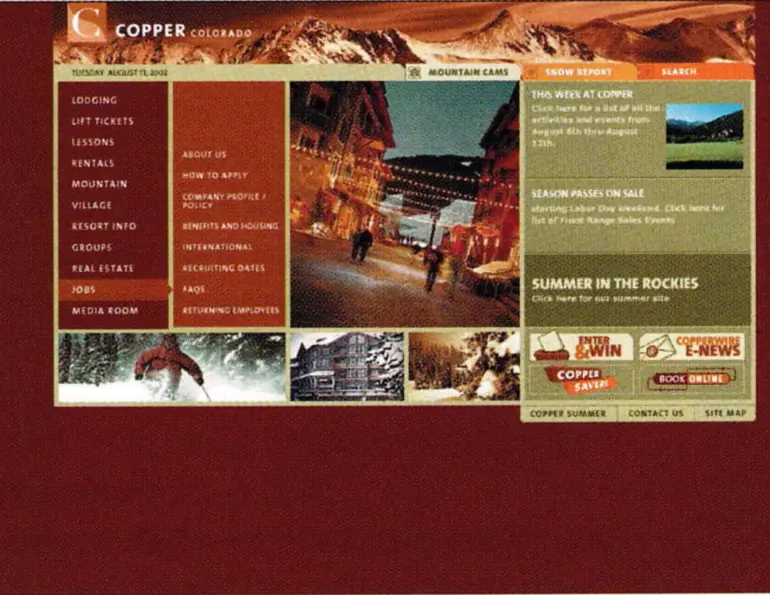
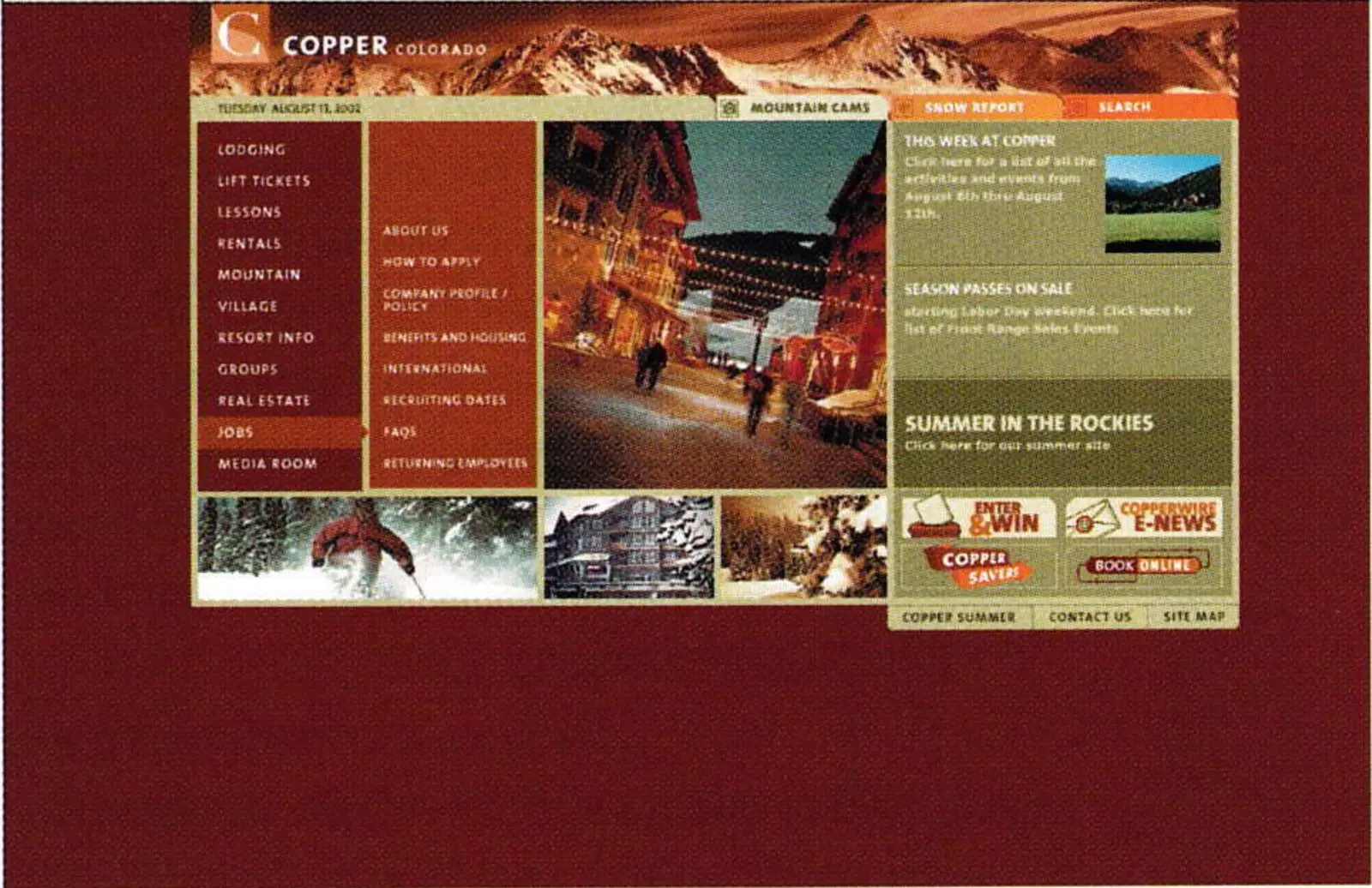
Create a search engine for multiple listings. If your jobs domain includes lots of openings, provide a search engine so job hunters can quickly drill down to the jobs they’re seeking. For example, Copper Mountain (www.coppercolorado.com) enables jobhunters to search by job type—executive, managerial or internship—and job category.
Post once, populate a zillion times. Once your recruitment domain and job listings are all set, promote company openings Web-wide. “Many services offer a ‘post once/populate a zillion times’ option—i.e., post your job one time, and it will be broadcast out to hundreds of career-oriented sites,” Ling says.
For starters, Ling recommends Jobvertise (www.jobvertise.com), which enables users to post job listings for free. This service automatically formats job listings. Simply post a listing and include a link from your recruitment domain directly to Jobvertise.
Other job posting services Ling recommends: XiTech Staffing (www.xitechstaffing.com), Ad-Cast (www.ad-cast.com), Recruit USA (www.recruitusa.com), eQuest (www.equest.com) and Rapid Design Service (www.rapid.com). Rapid Design links to one of the largest job boards on the Web, Monster.com (www.monster.com).
Post at association/organization sites. Many associations include job listings on their sites. For example, Tahoe Donner (www.tahoedonner.com), in Truckee, California, advertises in the classifieds section of the Cross County Ski Areas site (www.xcski.org). These sites can generate solid inquiries, and offer great bargains, too: Some associations post industry job openings for as little as $50 per month.

Post in an industry directory. Given that many of the people visiting industry directories are highly motivated people, with a hunger for more insight and knowledge on their specific career path, you can often attract a higher caliber of employee from these sites. A good place to start is Ski Central (www.skicentral.com), which offers dozens of links to ski industry jobs with the keyword “jobs,” as well as a button that links to Coolworks.com, a seasonal job site that already features several winter resorts.
Post at state and city job banks. Given that geographic location is extremely important to most job hunters, post openings with as many regional web job boards as possible. NJ.com (www.nj.com), for example, offers a career classifieds domain, as do other state-oriented websites. Some, such as TexasJobs (www.texasjobs.com) and ArizonaJobs (www.arizonajobs.com) focus specifically on job openings.
A number of search engines specialize in tracking regional job sites. Ling recommends Quintessential Careers (www.quintcareers.com/geores.html), Eagle’s Resume Service (www.richmond.infi.net/~leeann/stater.htm) and About.com’s Job Listings and Classifieds (http://jobsearch.about.com/jobs/jobsearch/msubmenuloc.htm).
Round up the likely suspects. Many of the tools that you use to promote your website can also be used to promote your jobs domain. For example, you can post job openings in appropriate forums on the Usenet Newsgroups (www.google.com/grphp?hl=en), and use mailing lists like those found at Topica (www.topica.com), Yahoo! (http://groups.yahoo.com) and Microsoft Network (http://communities.msn.com).
Warning: Be sure that you follow the accepted mode of behavior when you’re posting to a mailing list or forum. Some allow blatant commercial advertising, others tolerate discreet, understated business promotion only. The best way to find out what’s acceptable is to check out the group’s FAQ (frequently asked questions). It’s also a good idea to “lurk” for awhile, simply reading posts and getting a feel for what’s permitted before you begin posting.
“Follow the guidelines set by the creator,” Ling says. “Don’t just jump in with your ads. Instead, become a valued resource first, and the references and quality reputation will follow.”
Shoot for the moon. For difficult-to-fill positions, enlist the help of a well-established, high profile jobs board, such as Monster.com (www.monster.com), Career Mosaic (www.careermosaic.com), CareerBuilder (www.careerbuilder.com) and Hotjobs (www.hotjobs.com). These sites often attract millions of hits, offer a large selection of tools, aids, articles and discussion boards for the job hunter—and consequently charge a premium to employers. But hey—fish where the fish are. And premium sites are good resources for resort job hunters. Monster.com, for example, returned more than 80 openings recently with the keyword “ski.”
At a time when it is becoming difficult to attract top-quality employees, the web can help. There’s a world full of potential employees looking for a way to live the mountain lifestyle, and nearly all of them, sooner or later, look on the web.
Joe Dysart is an Internet speaker and business consultant based in Thousand Oaks, Calif.