Genting Highlands, a jungle theme park and resort complex, complete with casino, is a popular destination for short holiday breaks and day-trippers from the nearby Malaysian capital of Kuala Lumpur. In the past, visitors had to negotiate a steep access road with gradients worthy of an Alpine pass to cover the almost 3,000 feet of vertical. After a tropical downpour or whenever there was a lot of traffic, some of the bends could be very hazardous.
To solve the problem, the resort operators decided to build a modern gondola link through the jungle that would serve as a fast, safe and eco-friendly transportation system as well as a visitor attraction in its own right. In 1993, the Leitner ropeway engineering company had built a six-seater pulse gondola installation across an artificial lake within the Genting Highlands complex. The success of that project, with the contract signed in June and the acceptance tests completed in December of the same year, meant that the ropeway engineers from South Tyrol (Italy) were a good choice for this two-and-a-quarter-mile-long high-speed gondola. The contract was signed in October 1995.
To cope with the difficult climatic conditions to be encountered at Genting Highlands, Leitner designed a special tropical version of its standard eight-seat detachable gondola, an attractive design with a sturdy steel frame and fiberglass body. It included a double roof with integrated ventilation and aerodynamically shaped tinted glazing beneath a projecting roof canopy to protect riders from the heat of the tropical sun and the frequent heavy rains. The use of two separate entry doors for the gondolas ensures fast loading and unloading for effective capacity utilization, while the back-to-back seating provides panoramic views of the jungle and its tropical vegetation during the ride. The cabins are also equipped with state-of-the-art communications—a one-way radio transmitting system. In addition, the resort operators requested two VIP cabins for themselves and special guests complete with radio and CD player, a bar and a capacity of only four.
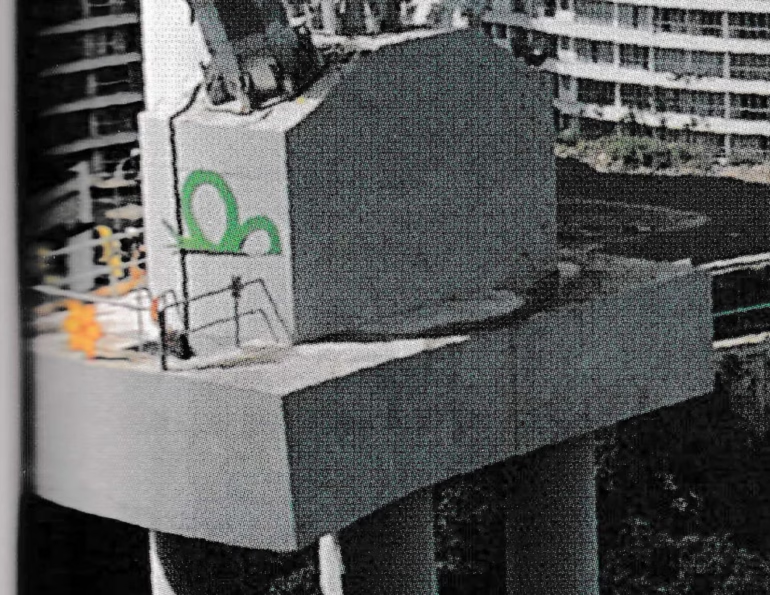
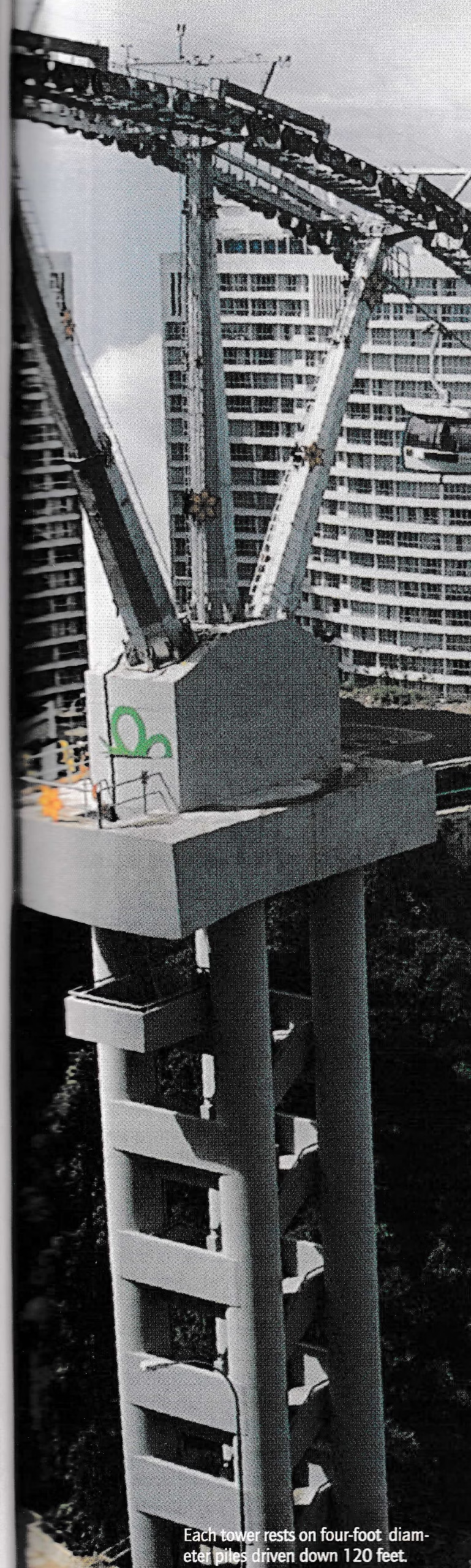
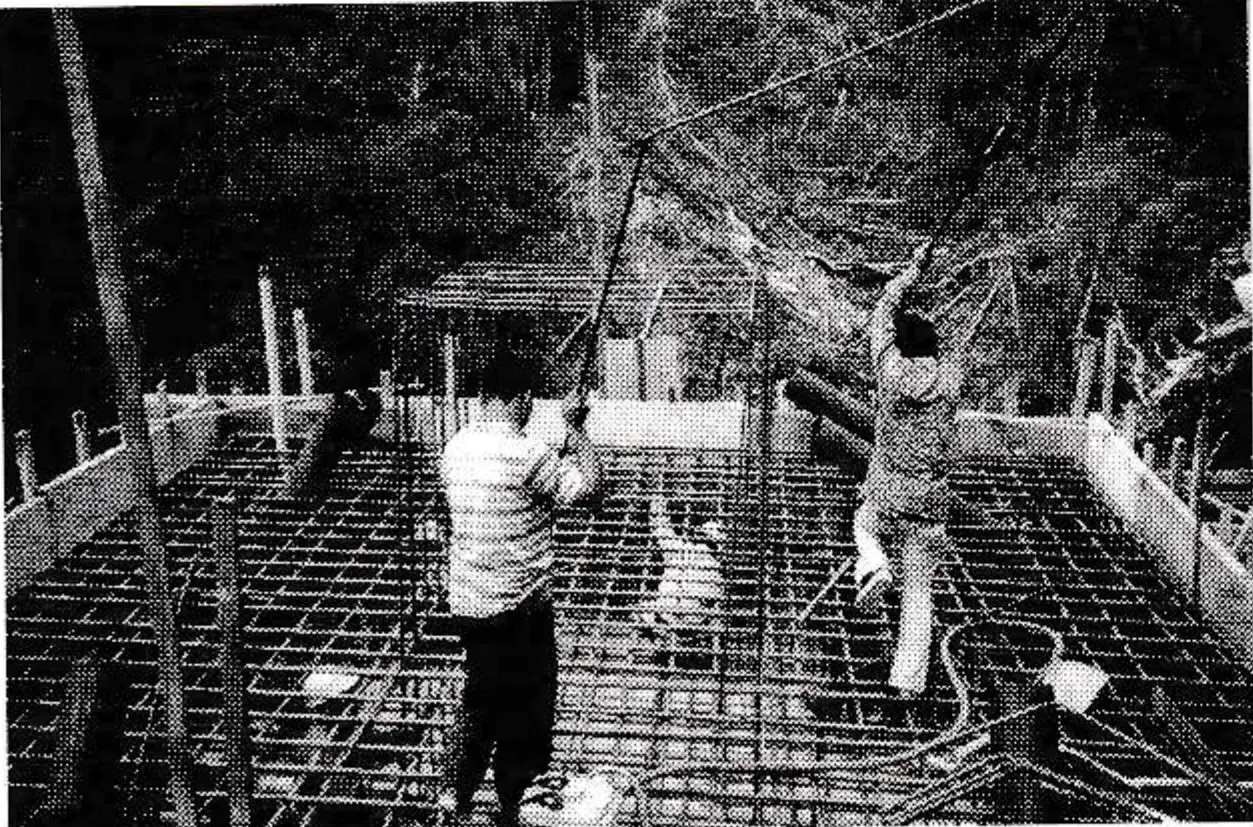
The geology of the Malaysian site, with unstable foundation soils interspersed with huge boulders and up to 10-foot cavities that had escaped detection during the initial planning stage presented a major challenge to the Leitner engineers during the construction work. Most significant, the poor load-bearing capacity of the subsoil made it necessary to use pile foundations for the towers. With each footing resting on four-foot diameter piles driven to a depth of 120 feet and all the work performed on steep slopes in the heart of the jungle, the lift became a civil engineering achievement all of its own.
Because of the high shipping costs from Europe, the 24 line towers were fabricated in Malaysia and Leitner flew out a chief welder to train the local workforce in the correct welding techniques needed to meet the company’s standard. In view of the considerable weight of the towers and the impassable terrain, a five-ton lifting capacity Russian helicopter was hired for the delicate tower placement and sheave train assembly.
Quality was a key concern at all times. The tendering procedures were based on the Swiss regulations and all works were subjected to quality controls by a well-known firm of Swiss consulting engineers hired by the resort operators. The gondolas, too, are in full compliance with the Swiss safety regulations and feature Leitner’s patented grip.
Almost all system components—the terminal mechanisms and drive units, the gondolas, and all the electrical equipment and electronics, including color monitors for fault finding, the controller and a fail-safe PLC—were engineered at the Leitner plant in Sterzing in South Tyrol and shipped to Malaysia. In fact, the monitors, the controller and the PLC were developed specially for the Malaysia project at the Sterzing plant where they were pre-assembled and tested prior to shipping and installation.

The various climatic, geological and topographic difficulties of the Genting Highlands project were a real incentive to Leitner engineers to show what they can do. And they did it all in record-breaking time. Only six months after the footings for the line works had been completed, the whole system was up and running and the acceptance tests completed under the watchful eye of the Swiss consulting engineers.
Since then, the Leitner Genting Highlands gondola, which is the longest ropeway in Asia, has been put through the test, having been operating daily from 8 a.m. to 11 p.m. since February 1997 under the gruelling conditions of the jungle with nothing but rain forest along the line. With 106 gondolas travelling at 1,200 feet per minute and a line length of 11,800 feet, the system has a transport capacity of 2400 persons per hour. During the first operating weekend, no less than 48,000 riders tried out the new facility on a single day—an impressive figure in view of the 1996 visitor total at Genting Highlands of nine million.
Another interesting feature of the gondola is the design of the stations. The top terminal, with the drive system and fully automatic camer parking for 20 gondolas, is located at an elevation of 5,750 feet above sea-level and the terminal enters on the fifth floor of a 5,000-bed hotel. Passengers can disembark from their gondola and proceed straight to the reception area. The twin drive units are located one level below with sophisticated sound insulation measures taken to protect the quality of the hotel experience for residents. The system is also designed to permit operations at reduced capacity with just one drive running.
The hydraulic tensioning system and the main parking rails for 90 gondolas are located in the base station at 2,890 feet above sea-level on the third floor of a multi-story car park for 800 cars and 100 busses. The building also incorporates a shopping mall and restaurants, and was built specially to serve the ropeway in order to take pressure off the other carparks in the resort.
| Item | Specification |
|---|---|
| Top Terminal | 5,750 feet |
| Lower Terminal | 2,890 feet |
| Drive Location | top |
| Tension Location | bottom |
| Vertical Rise | 2,860 feet |
| Slope Length | 11,735 feet |
| Speed | 1,200 ft/min |
| Carrier Spacing | 240 feet |
| Carrier Interval | 12.0 seconds |
| No. of Carriers | 106 |
| Carrier Capacity | 8 passenger |
| Transport Capacity | 2400 pph |
| Primary Mover | 2 x 800 H.P. |
| Auxiliary drive | 450 H.P. |
| Towers | 24 |
| Line Sheaves | 516 |
| Sheave Diameter | 19.8 inch |
| Line Gauge | 18 feet |
| Rope Size | 2.2 inch |
| Rope Tension | 34000 daN |
| Max. Tower Span | 990 feet |
| Max. Tower Height | 165 feet |