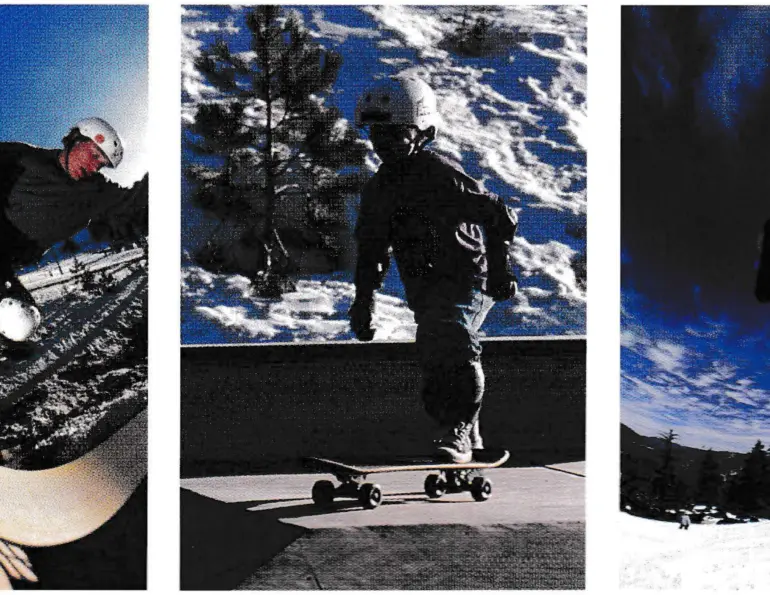
As a “ski resort” it lagged far behind the leaders in the region. The 10-year average for skier visits at Snow Valley was about 170,000, yet it was ranked fourth among seven areas near Los Angeles. Now that’s changing. Within the past year, Snow Valley has made several changes that have differentiated it from the competition and from ski resorts as a whole, for that matter. With a focus on youth marketing and a diversification of the products and services offered, Snow Valley has become “The Mountain of Youth.”
Some history is needed to understand the creation of this enterprise. In the 1970s, Snow Valley was the market leader in Southern California. But as competitors and consumers became more sophisticated, the resort lost a lot of its luster. Nearby Snow Summit created a superior product with advanced snowmaking and an exceptionally high level of service and, as a result, captured the loyalty of Southern California skiers.
In the late 1980s, another local resort, Goldmine, was acquired by S-K-1, renamed Bear Mountain and realized tremendous capital improvements followed by immediate growth. Snow Valley was lost in the shuffle.
As the competition heated up and the ski industry flattened, Southern California ski areas began to sell elevation, size and snowmaking to ever-critical consumers. Although many skiers held a warm spot for Snow Valley, few seemed to understand that Snow Valley was comparable to these areas.
But there was more. Snow Valley had no apparent focus, targeting strategy or mission. The resort had placed internal development of both the physical plant and corporate culture ahead of external marketing, which was the right thing to do at the time. Although one might not know it from driving by, the resort had real charm. The services had been improving, but the word wasn’t getting out.
Like many resorts, Snow Valley was proclaiming itself to be a “family resort.” But what exactly is a “family resort?” During the eighties, day care was a necessity even at day resorts, junior ski schools were busting at the seams and the sheer size of the family market was obvious. Marketing brochures seemed to share the same images of four and five year olds playing with their instructors in cartoon-filled ski school environments. Everything focused on the family unit, with the message directed at parents.
Then came the 1990s. It was obvious that there was another big population wave coming over the horizon—the Baby Boomer’s babies.
For Snow Valley it was a perfect opportunity to rewrite the rules. The resort made a dramatic move away from the norm and targeted the youth market, but not just the teenagers only.
The children of the Baby Boomers are roughly between the ages of 5 and 19. There are about 72 million of them, which is almost the same size as the original Baby Boomer population. Snow Valley’s marketing starts with young college students who are the nucleus of today’s youth-oriented attitudes, values and lifestyles. But we all know that high school kids are growing up and close behind them are the “groms” (a slang word for “grommets” or “cool little kids”). The groms are our true target audience. This is the group that Snow Valley wants to attract because they’re influencing the entire family’s buying decisions in a very big way—more than any generation of kids before them.
The object is to get kids to bring their parents rather than parents to bring the kids. And it’s working very well for a number of reasons: 1) Parents today are much more hip, which reduces the generation gap that existed in the past. Today’s parents are also much more active. In the past, we saw a huge decline in skiing participation once people reached the age of 50, but now this trend seems to be softening. Parents today are healthier and, as a result, much more active. 2) Snow Valley is not only targeting the youth market with advertising, the resort built a unique mountain sports park just for them with activities and features that appeal to a whole new lifestyle. 3) Snow Valley has also adopted a new service motto: “Respect the Kids!” Parents and kids alike love this approach. Because kids are so much more prominent in today’s society and because of their high level of sophistication (they’re teaching their parents how to use computers every day) they are being recognized as individuals in their own right.
By building a mountain sports park, Snow Valley has been able to diversify products and services and realize more revenue-generating opportunities. It also opened new marketing channels, addressing skateboarders, in-line skaters and the music industry.
The Musical Thread
Most ski areas don’t recognize the importance of music as part of the contemporary recreational experience. Snow Valley is making music a part of the experience no matter where guests are at the resort and the music is appropriate in genre for the locale and the clientele. For example, contemporary “unplugged” or soft alternative rock is piped in to the parking lots. In the skatepark, the rock, ska, hip hop and alternative music genres, which are all starting to melt together, produce a respectable sound. In the terrain park it’s mainstream modern rock. At the on-mountain party bar for 25 to 35 year olds, classic rock is dominant. The junior ski school is submerged in a sea of children’s music. The sit-down restaurant has background sounds, but in softer tones.
This musical thread has become as big a part of the resort as snowmaking and grooming. In the summer, Snow Valley uses a natural amphitheater setting on the mountain to further the concept. Beginning with Organic ’96, an all-night event that drew close to 10,000 kids, cutting-edge music festivals are becoming regular summer attractions. The goal is to draw large national acts and big shows with a few country and western shows injected for local politics. But the primary focus is on modern music for modern kids.
The Lot Skatepark
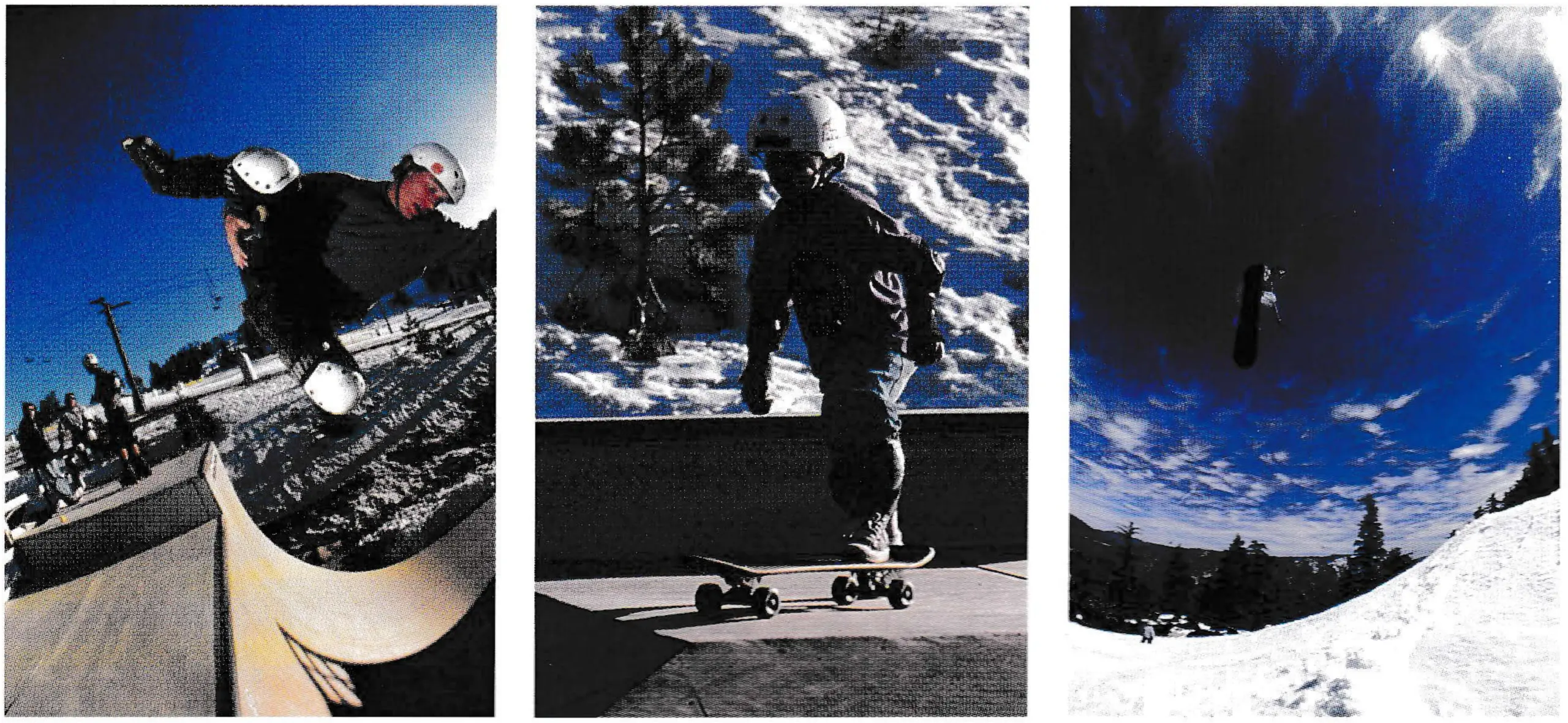
In Southern California, it’s difficult to find an eight year old who doesn’t have a skateboard. In the summer of 1996, Snow Valley built what is regarded as one of the finest skateparks in the country.
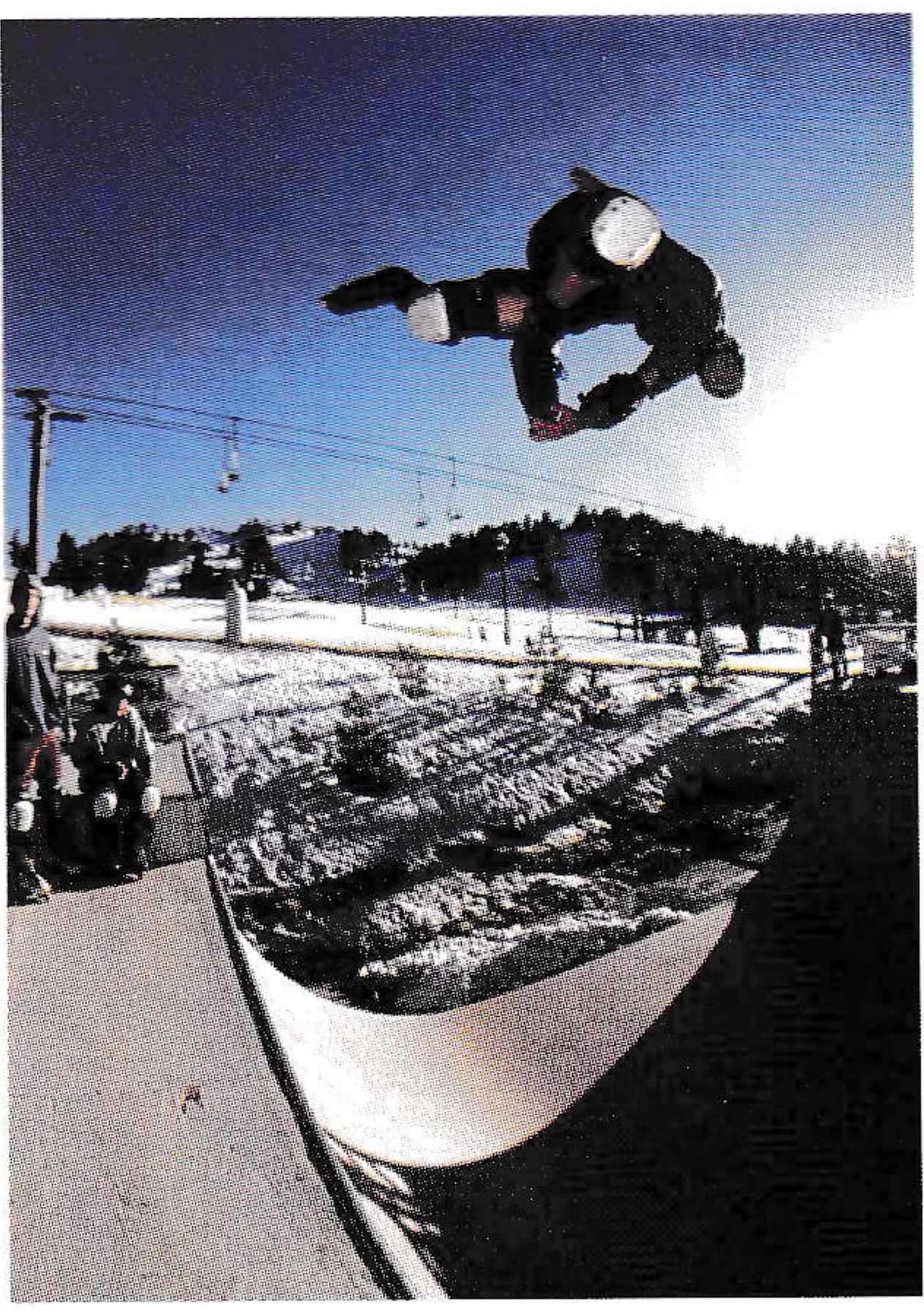
Constructed by nationally-acclaimed ramp builder, Tim Payne, The Lot skatepark is open year-round. The Sk8 terrain covers a 40,000-square-foot area and features a 32-foot-wide vert ramp, a six-foot-high mini ramp and a street course with seven different features. Last spring, Snow Valley added another feature: a clover-leaf triple bowl, which users call one of the best wooden bowls ever built. All features are constructed out of pressure-treated wood with a 12-gauge steel surface attached. The park has withstood the elements quite well and, except for tightening a few loose screws, a periodic paint job and an annual sealant on the asphalt, maintenance is minimal. After a snowfall, the park is cleared and is skate-ready within a few days. Even during the winter months, The Lot skatepark is at capacity every weekend.

Not only does The Lot fit perfectly into Snow Valley’s youth-marketing program, it has contributed to a substantial shift in the region’s snowboard market share. To date, the cost for the skate park has been about $100,000, but it has nearly paid for itself with the revenue from the daily fee of $7.50. The entry fee revenue, however, is nothing compared to the media, events and corporate sponsors who are charging in and embracing this effort.
This year, Snow Valley also developed a summer skate camp for kids between the ages of 8 and 17, which sold out several sessions drawing skaters from as far away as Belgium, London, Canada and France. Like many summer camps for kids, housing and meals for five days were provided. But the project was relatively easy to create because facilities were in place for food and beverage, there was space in the Chalet to bring in a pool table and video games, dorms were constructed by gutting the junior ski center and bringing in bunk beds, and showers were added to the existing bathrooms. The fee was $495 per kid plus $100 extra if he or she needed shuttle service from the airport. Over 80 percent of the kids ended up flying in.
In addition to skating, Snow Valley offered a myriad of other activities like mountain biking, all-terrain boarding, volleyball, swimming, fishing, rock climbing and horseback riding, plus environmental seminars by the Forest Service naturalists. Pro skateboarders and in-line skaters, in abundance in Southern California, were recruited to work with the kids as counselors. The plan for next season is to try to get up to 100 kids a week for a 10-week period. At $500 per camper, that’s $500,000 in summer revenue that was never realized before.
The Lot has also been a great venue for skate/ music festivals and events. A 600-square-foot stage was built to host music events, such as Common Sense, Super 8, Voodoo Glow Skulls, Buck-O-Nine, Humble Gods and The Phunk Junkeez. (You may not recognize any of the names, but if you ask the average 17 year old, these bands are da’ bomb [extremely good].)
One of the best features about The Lot is that it’s open year-round. A lift ticket to ski or snowboard in the winter gets admission to The Lot for free. The Sk8 terrain is treated like any other terrain on the hill, but instead of cutting down trees to build a trail, Snow Valley built ramps in the parking lot.
Schighridj Terrain Park
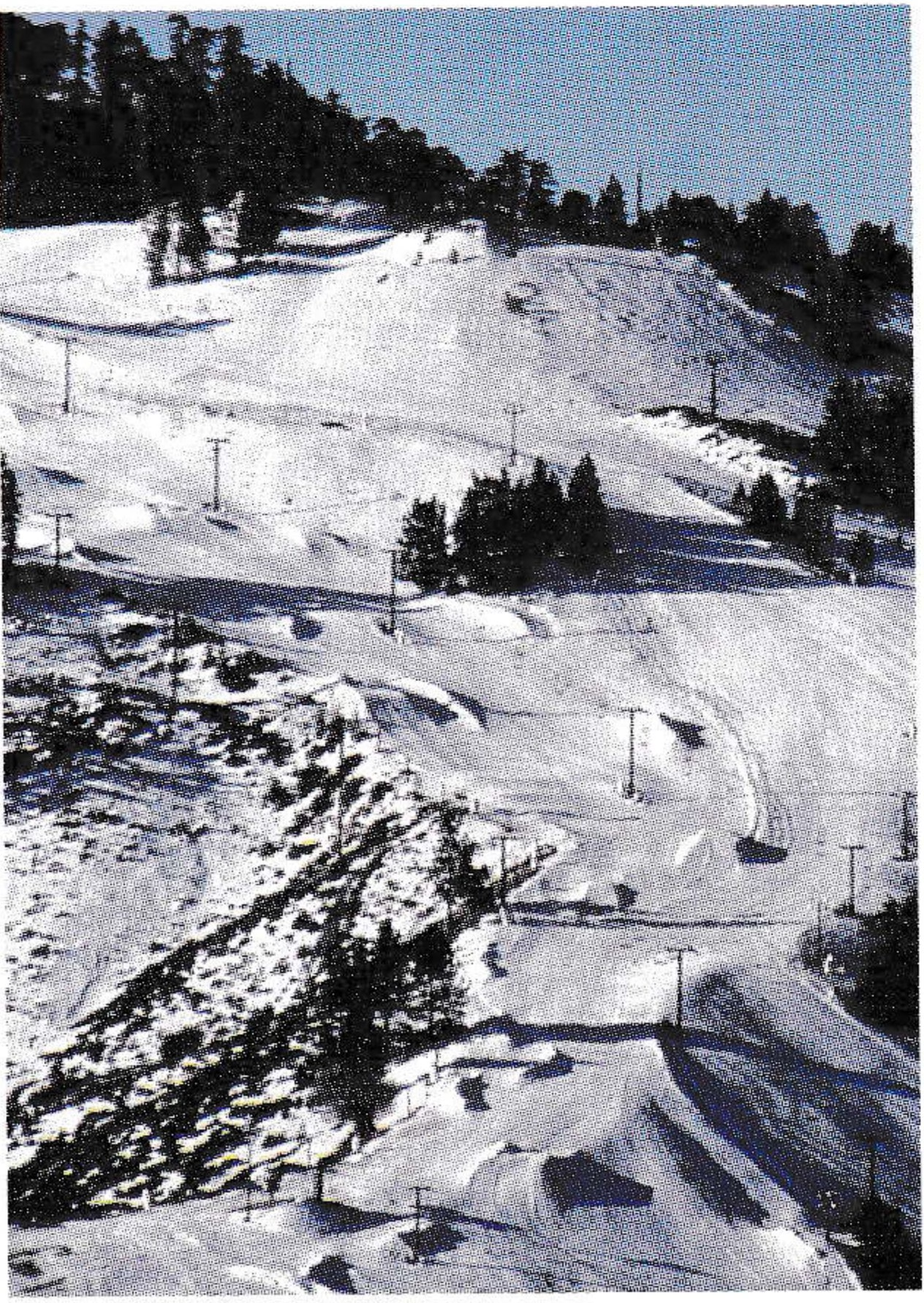
Schighridj (pronounced sky-ridge) terrain park is credited with establishing a new approach to snowboarding in Southern California. Because the local resorts are not as big as many nearby destinations, Snow Valley put more emphasis on terrain. Designed by pro snowboarder, Josh Chauvet, Schighridj became a terrain park that really flowed.
When kids talk about whether they like a park or not, their answers have a lot more to them than takeoffs and landings. As is seen in many ski resorts, kids tend to sit on the hill in big packs waiting their turn to jump off a terrain feature. Because Schighridj had better flow, the kids weren’t sitting on the hill in big packs. They went with the flow.
Schighridj terrain park was designed so that one hit leads directly to the next. There are several different lines through the park and each one is different. Smaller hits, medium hits and larger hits were arranged in such a way that riders of all abilities can enjoy the area together. Congestion is not an issue. Rather than stopping for each jump, kids ride top to bottom non-stop, and traffic moves almost gracefully through the park.
The Schighridj terrain park area is about three quarters of a mile in length and, believe it or not, houses from 50 to 60 hits at any given time. This year, with the help of a new Kassbohrer Pipe Shredder, Snow Valley added two new halfpipes to the park, one of which is serviced by its own chairlift.
The DURT All Terrain Boarding Park
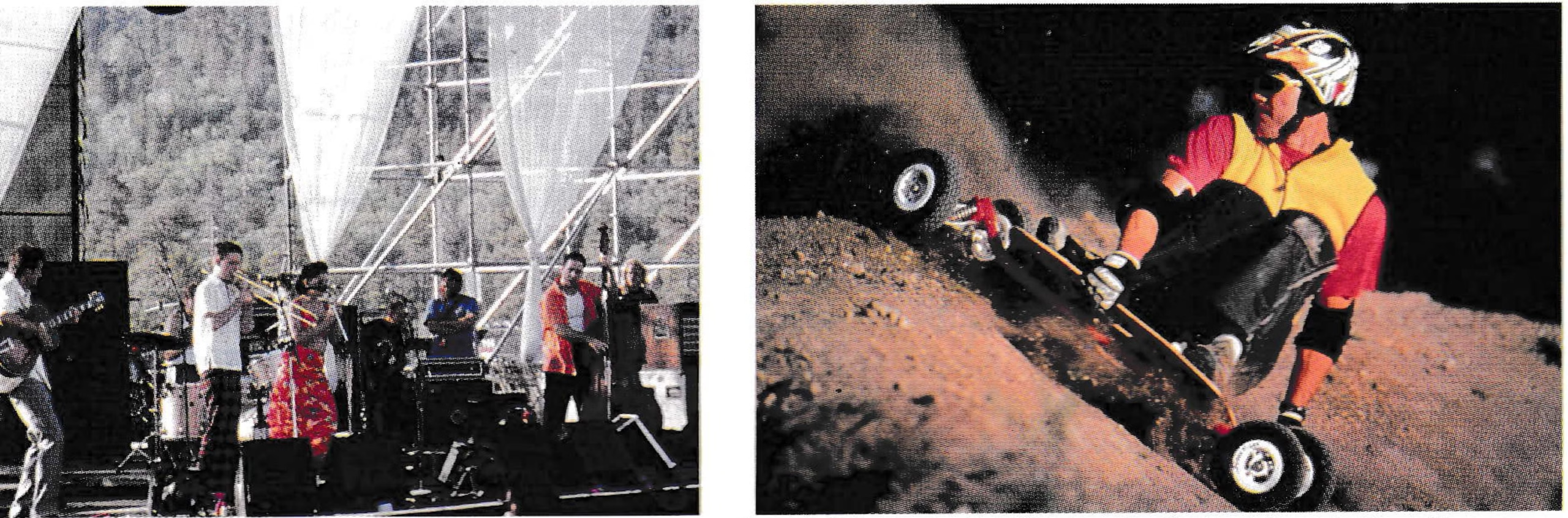
All-Terrain Boarding is taking the skate/snow/surf industries by storm. Under the guidance of MountainBoard Sports, Snow Valley constructed the world’s first all-terrain boarding park. This Colorado-based manufacturer then made the Snow Valley Mountain Sports Park an exclusive showcase venue from which to bring this dynamic new sport into Southern California. All-terrain boarding is best described as a cross between surfing, snowboarding, wakeboarding and skateboarding. The 3-1/2-foot boards are equipped with six-inch inflatable tires and foot straps, and they run over just about anything in their path. The kids in the summer skate camps had the chance to ride these boards and the feedback was outstanding.
Although there are a few resorts in the U.S. that rent boards and about 50 resorts in Japan that offer riding down grass slopes, The DURT is the first snowboard-park-inspired terrain park constructed out of dirt and serviced by a chairlift. The media hype surrounding this sport is impressive with interest from MTV Sports, the ESPN X-Games and Fox Sports, to name a few. The 1st Annual All-Terrain Boarding Championships were held in August with a turnout of almost 100 racers from Colorado, Washington and Lake Tahoe, as well as a team of 10 from Japan and a single competitor from France. MountainBoard Sports, while the most established manufacturer of all-terrain boards, was not the only company represented and several new concepts and techniques were unveiled.
Although the area is focused on youth marketing, Snow Valley is still a family resort with presentations that are clean and appealing to parents. At Snow Valley Mountain Sports Park, skiing, snowboarding, mountain biking, all-terrain boarding, skating and concerts share equal billing. “The Mountain of Youth” is a hot concept in an ideal location. Snow Valley is re-defining the ski business.