
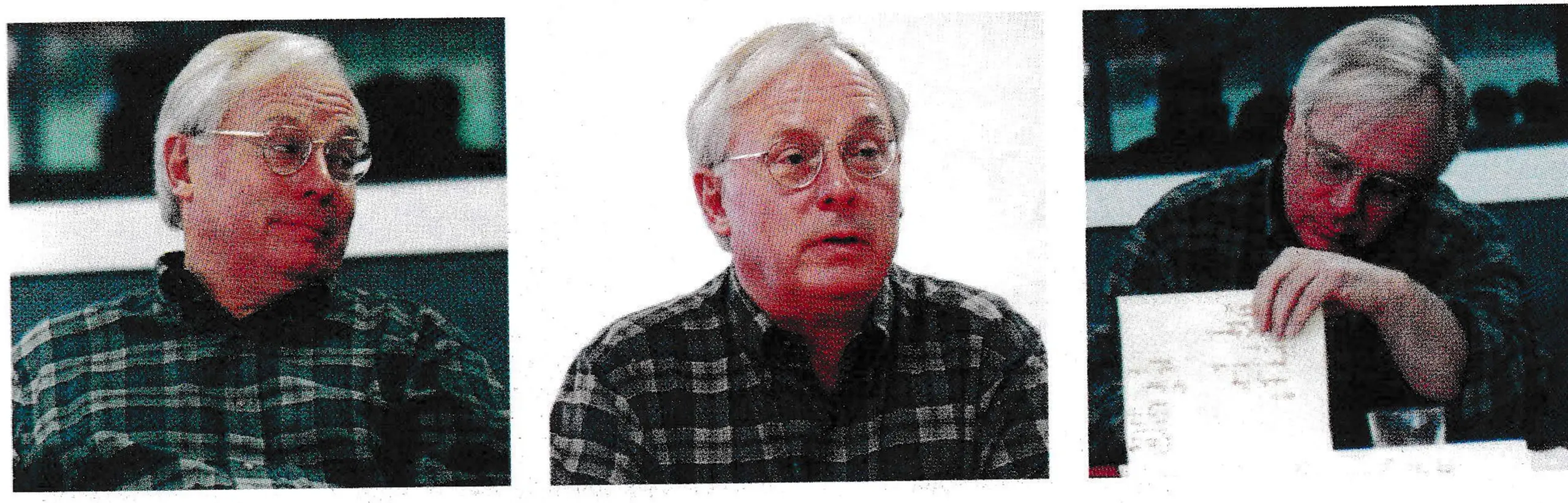
Photos by Sidney Brown
To predict his dance, look to what he has done well before in identifying market niches. Look also at the four sons he is including in the business, all of them solidly of Generation X.
“It was always a dream” to get back into the ski industry, Gillett says, alluding to his plunge into bankruptcy in 1992 caused by an ill-timed overextension into major television properties.
In September, Gillett entered into an agreement to buy Fibreboard Corporation’s California resorts of Northstar-at-Tahoe, Sierra-at-Tahoe and Bear Mountain. That transaction is scheduled to close by November 30. The announcement of that $127 million deal came only a week after his agreement to buy New Hampshire’s Waterville Valley and Mount Cranmore. Price of that transaction was estimated at $17 million.
Although declining to explain details of his financing for the record, Gillett claims it is as solid as any found in “second-tier” ski operations in terms of debt-equity, with a plan that acknowledges the sporadic need for bulging capital to make improvements.
He professes no illusions that his new ski resorts are in the same league as Vail, a resort Gillett owned from 1985 until the Apollo Group, headed by Leon Black, took control in 1992. During that era he rapidly added detachable quads and opened up new terrain while attentively responding to consumer needs.
But unlike Vail, where totals of international visitors approached those of local and Colorado skiers during the latter days of his ownership, Gillett sees proximity to major markets being the greatest strengths of his new resorts.
Describing this positioning, he recalls being a drag-racer while growing up on a Wisconsin farm. After ogling fancier dragsters, the motto was “you run what you brung,” he says. With his five new resorts, he will be running ski operations with little deferred maintenance. Among them: $30 to $40 million in capital improvements were made during the last five years, with $13 million alone last summer at the California resorts.
More important than capital-intensive improvements, such as snowmaking, Gillett indicates, is the market research that will be launched this winter to better identify needs of guests.
At the same time, Gillett stresses he will apply no cookie-cutter to the resorts. “I would be very surprised—shocked—if our research told us we should have the same strategy in all five markets,” he says.
Moreover, they will not be “Gilletized.” Existing general managers will remain and be under the direction of CEO Bill Jensen, who had been in charge of Fibreboard’s resort operations and point man on their acquisitions. He has had “no conversations and will have no conversations now and into the foreseeable future” with existing Vail executives or managers about positions with his company, Booth Creek Partners, Inc., he says.

Gillett does, however, sense synergy among the five resorts he purchased. Combined operations will benefit in purchasing, particularly of capital items and insurance. Advertising rates can be knocked down when buying in national publications. A larger group can afford management of broader-based skills and market research can be done on multiple levels. The more breadth of research, the more telling the results, he says. And finally, innovations can be applied on one area without do-or-die consequences, with the experiment extended to the other four areas if it works. As an example, Gillett is particularly excited about the growth potential for the Club Vertical frequent-skier program pioneered by Jensen at Northstar-at-Tahoe.
Gillett and sons will probably visit the resorts frequently during the next year or two to add “spice to the mix—a sense of excitement and urgency.” He’ll retain Vail as his base, at least for the intermediate term, but he neither confirms nor discounts ambitions of acquiring a Colorado ski operation. “I’m not aware of anything available,” he says simply.
After sitting largely on the sidelines for four years, Gillett, 57, sees good days ahead for the snow and resort industry built around the attractive demographics of the large Echo Boom. With 78 million young people, active and energetic, he describes the population bulge as the most attractive for the ski industry since robust 15 percent growth rates of the late 1960s and early 1970s.
As for the young adult generation of Gen-Xers, they are accustomed to the two-income households that tend to result in shorter vacations scheduled only a few days in advance. Low-cost transportation has become “extraordinarily important,” he explains. “While income and material things were symbols of success to their parents, Gen-Xers value experiences more—particularly nature-related experience.” He points to the resurgence of Alta as evidence that “people are very, very interested in the visceral experience,” and he characterizes the expansion plans by Vail Associates for a more gladed, less groomed experience as “very healthy.” However, he concludes, you can’t define Generation X and shut the door.
In creating terrain diversity, Gillett will have ample room for expansion at several of his areas. Northstar-at-Tahoe has 6,500 acres of private land, with expansion potential to make it rival Squaw Valley in size and terrain. Cranmore’s terrain could potentially be tripled. Waterville Valley also has expansion potential. As was the case at Beaver Creek, real estate sales could be linked to the resort product. Northstar comes with a golf course and 550 acres previously zoned for housing, with potential density of 2,500 units.
Road to Recovery
Gillett escaped bankruptcy with a couple of silver spoons, not the least of which was a $1.5 million annual salary (through next year) paid him by Vail’s new owners, the Apollo Group, for service as board chairman of Vail Associates. In addition, in 1994 the Apollo Group made possible his “first shaky step” back into business ownerships, selling him and an investor the meat-packing business he had originally bought in 1975. They also provided him opportunities to buy back into Vail, which he has done to the tune of 786,000 shares of stock that some observers think could net him as much as $40 million in Vail’s upcoming IPO.
More important than the money, he says, was the psychological boost given him by the Apollo Group at a time when, if there is a bottom of the barrel, he was looking up at it.
In his latest venture into skiing, Gillett is being financed by a major and “extraordinarily strong financial institution,” he says, without identifying the source. He adds that the terms acknowledge the uneven capitalization needs of resort businesses. The Boston-based John Hancock Life Insurance Company, which had previously been an investor in his various businesses, has been reported elsewhere as a source for this financing.