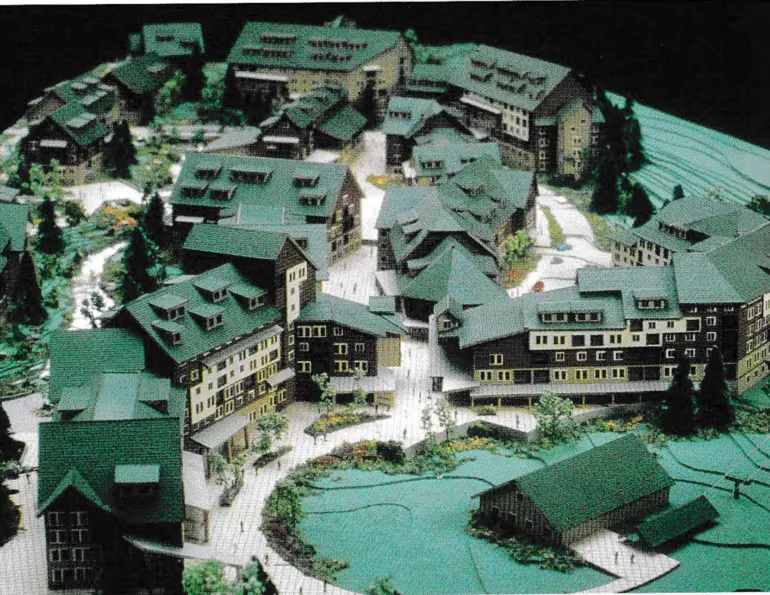
In traveling to 116 ski resorts last winter, I was amazed at the number of resorts of all sizes that have some form of a base village on their drawing boards. Most appear to have a decent chance for success from a real estate developer’s viewpoint, but I have a concern about how these developments are being structured and marketed.
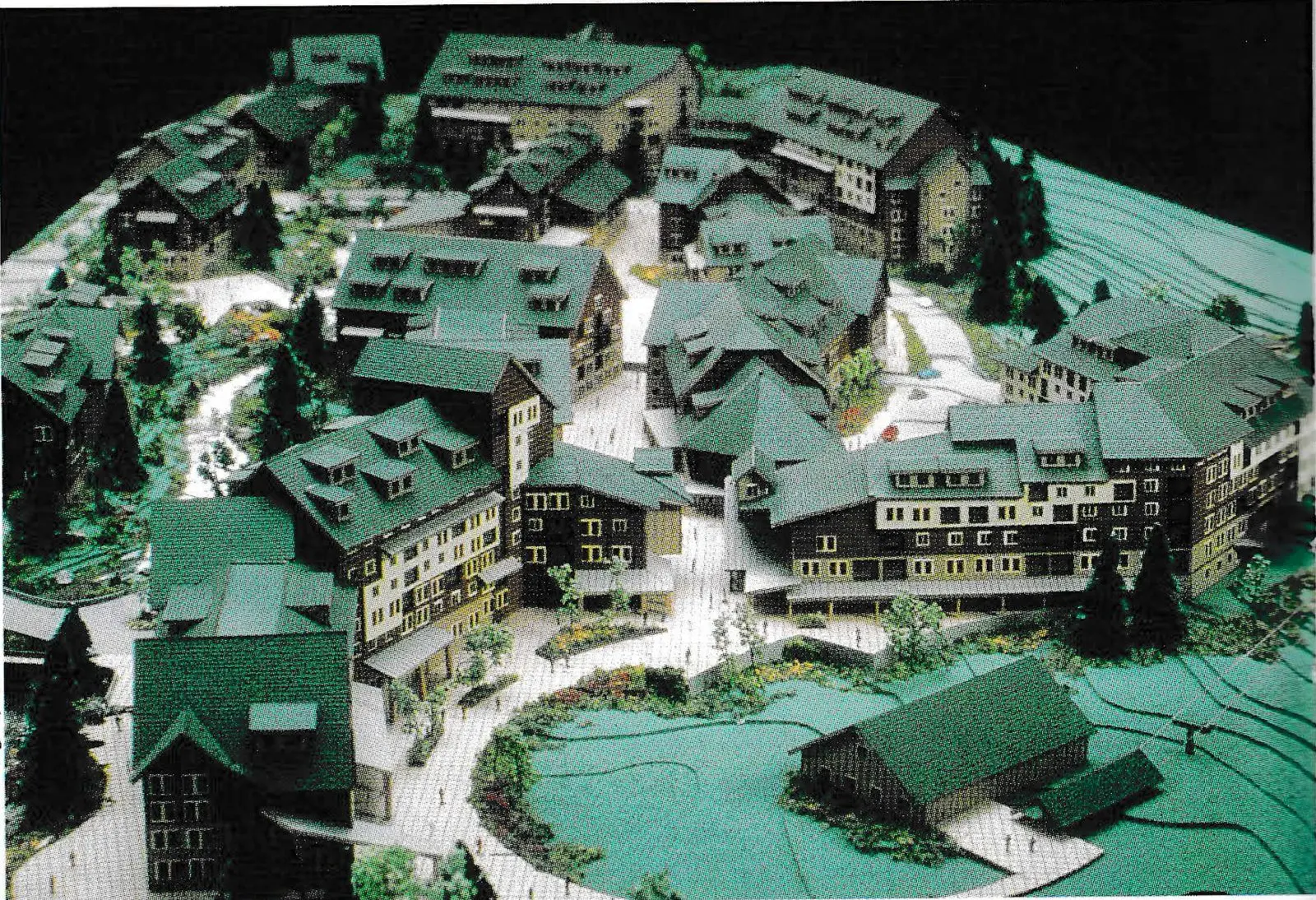
Sudmeier Photography
Neither the world nor the ski industry needs more dark or unoccupied villages with virtually no hot pillows, failing commercial space and lots of starter castles. At one stage, that was a description of the now-successful Beaver Creek in Colorado.
For those unfamiliar with developer-speak, hot pillows are the part of a resort’s bed base that is used much of the season by lift ticket-buying skiers and boarders, as compared to the cold beds of condos and starter castles that are used infrequently by their owners and are not in the rental pool. Starter castles are those huge residences in many ski communities—statements of achievement in an affluent society—where the lights may be dark for 70 percent of a season.
What is experience telling us about avoiding these big pitfalls? There seem to be some rules, but following them may require a willingness to forgo the quick return from outright sales of developable base area lands in order to realize the greater long-term goal of getting rentable pillows and sustainably successful commercial space.
Resist the Temptation
One concern is that base villages will be successful for the real estate developer and fail to address the critical needs of the resort or its operator. While the developer and the operator may be the same party, there is still a chance that they will succeed on the one hand and fail on the other.
Of course, the capital infusion from a real estate sale can be significant for the ski resort operation. Even a casual observer of developments like Bachelor Gulch next to Beaver Creek, or the Telluride Mountain Village, has to be impressed with what has happened to lands that relatively recently had agricultural uses and values. I wonder, though, if the long-term interests of the operator and the industry are being effectively addressed.
Far be it for me to criticize such successes, but it seems to me the challenge is to develop the long-term viability of the resort—to maximize visitor nights. The challenge is to avoid the exchange of irreplaceable, valuable lands for a short-term cash infusion, but cold pillows. I truly believe the number of visitor nights that result from any base area development will be the ultimate determination of success.
Price Points
When appealing to customers who will make commitments to the resort, the total purchase price seems to be the most critical issue in determining whether the resort will enjoy a high level of rentals. Too high, regardless of value, and the likelihood of the unit going into the rental pool diminishes. There actually seems to be an inverse relationship: the higher the price, the fewer the rentals.
Some developers think the breaking point of price points and rental activity is in the range of $150,000 to $175,000 for a whole ownership interest. Going above that range seems to dramatically diminish the likelihood of rental activity. While I have not been able to confirm the number in any way and, while it will vary significantly by region and by resort, I am convinced the theory is correct.
A price point that is too low—admittedly hard to imagine—will undoubtedly have the same impact. This can be seen when time-share developments sell small units, such as single weeks. The purchaser doesn’t need the financial help, so the unit often will not go into the rental pool.
The very attractive base area village at Stratton Mountain, Vt., is an example of the price-point problem. It really does not work. Intrawest inherited it with its purchase of the operation and is taking rather extreme steps to remedy the problem of critical real estate sitting dark even on busy weekends in winter.
What can be done to keep the price point in line when construction costs continue to escalate? Think about the size of the units being offered. There is no real logic in building what amounts to a replacement for the owner’s primary residence. Whether owners or renters, you want the occupants out of the unit and involved in resort activities. A single bedroom unit of 800 sq. ft. is a lot of space, and cost and sale prices are necessarily based on the number of square feet in the unit. A 500 sq. ft., one-bedroom unit can be adequate, readily saleable and just that change in size drops the price point by about 35 percent—as well as the likelihood of the unit being rented.
Intrawest uses a rule of thumb for the size of units. In their condo hotels, square footage is 450 for studio units, 575 for one-bedroom units and 800 for two-bedroom, two-bath units. The standard American Skiing Company (ASC) one-bedroom unit with a lock-off is in the range of 600 sq. ft. At Winter Park, the size of units varies, but they are larger on average than in most other projects.
Unit Mix
The mix of units is obviously going to be important if size, and therefore cost, will determine how many units will go into rentals. The Intrawest rule of thumb is 60 percent one-bedroom, 20 to 25 percent two-bedroom and the balance in studios. ASC has no rule, but prefers units that will accommodate six people. As an example, the hotel at Jordan Bowl in Sunday River has predominantly 580 to 672 sq. ft., one-bedroom units with lock-offs.
The Winter Park/Hines project has basically 40 percent one-bedroom units, 40 percent two-bedroom units and the balance in three-bedroom or bigger.

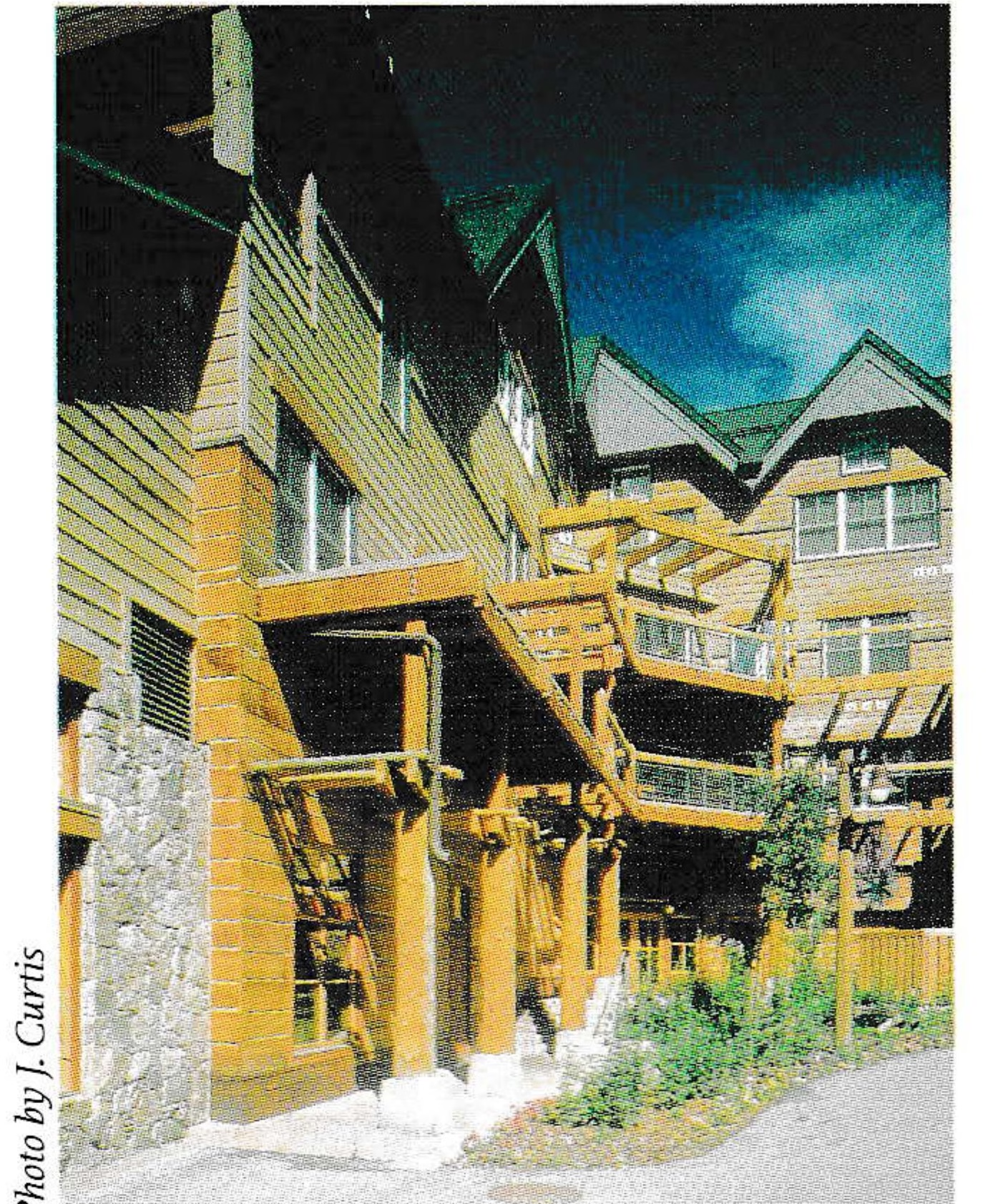
Photo by J. Curtis
Lock-offs
The lack of lock-offs in bigger units results in lost opportunity. (A lock-off, also called lock-out, is the ability to divide a single unit into several rental components.) A two-bedroom unit rented to two people could accommodate at least two, possibly four, more skiing guests given lock-off capability.
However, Gary Raymond, president of Intrawest’s Resort Development Group, makes the valid point that in order to make lock-offs viable, the size of the unit must increase and that takes you right back into the price point quandary. ASC has done well with lock-offs. The Grand Summit Hotel at Sunday River’s Jordan Bowl has 145 units and 195 doors. The size of the units is probably the secret to success. In addition, these lock-offs are in a hotel configuration with plenty of amenities to make up for the lack of kitchen space or area in which to relax. It is important for the lock-off to have separate phones and TV available.
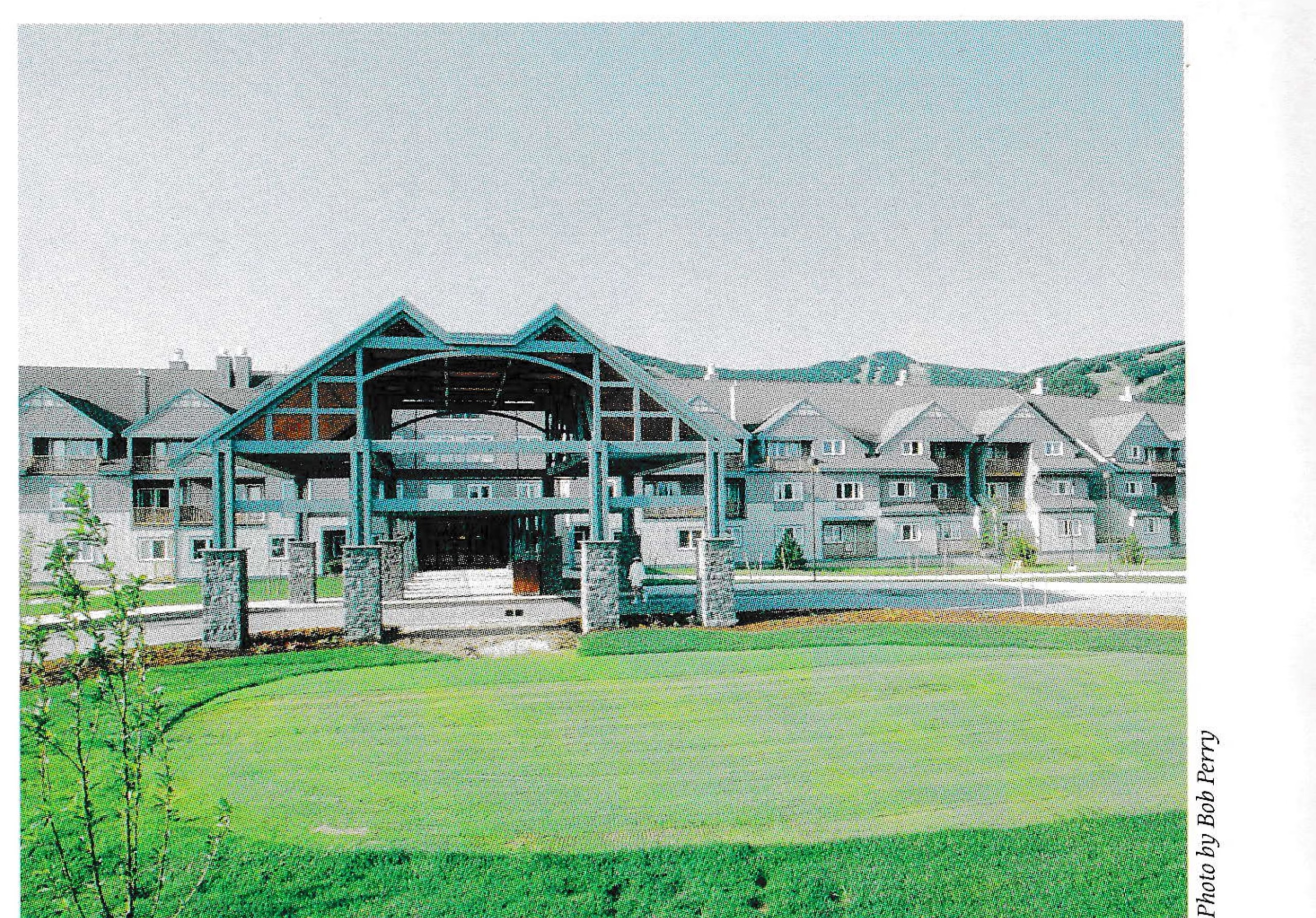
Photo by Bob Perry
Undivided Interests
I think serious consideration should be given to selling less-than-full interests in an effort to generate rental units. ASC’s units at Jordan Bowl, carrying a basic sale price of $300 per square foot, are sold as one-quarter shares at about $420 per square foot. While sales costs increase with divided interests, the end result can still be a higher return for the seller, with a dramatic and beneficial impact on rentals.
While I have never been a proponent of the classic time-share approach, the one-quarter share approach presents some unique and beneficial opportunities that create turn-over and occupancy. The growth and success of vacation clubs is something any resort owner/developer should study carefully. The ability to trade weeks in one resort for weeks in another can have a strong influence on sales. I should mention, however, that Raymond will tell you that vacation clubs are not for the faint of heart! Only recently has Intrawest begun to see a return on their investments in this type of development.
Second Home Impact
The geographic proximity to the resort of where the units are marketed can have an impact on rental potential. A purchaser from a nearby metropolitan center is likely to use the condominium as a second home, occupying it only on weekends and holidays and not putting it in the rental pool. Remote owners of reasonably-priced units or of divided interests will be much better candidates for a rental pool.
Hotel Amenities
How the common or public areas in a building and in the village are dealt with can have a major impact on rental pool participation. Among others, Keystone, Snowmass, Whistler and the Summit Hotel configurations demonstrate the importance of amenities in providing the right mix. Amenities include the presence of a 24-hour hotel-like desk, meeting facilities, restaurants, small convenience stores, libraries and other features for transient guests.
Commercial Space Ownership
A simple piece of advice to the resort owner/operator—no doubt expensive and difficult to follow: Retain ownership and control of commercial space in any base area village. It not only gives the resort the return on that investment, but the very important control over tenant mix and location—especially important if the resort is in any corollary businesses, such as rentals or retail.
Central Reservations and Property Management
Resort operators should look to the base area villages as an opportunity to be involved in a central-reservations and property-management business. Each can be a source of income from their operations; each can be an opportunity to exercise quality control for the benefit of the guests the resort attracted in the first place. Whether this is accomplished or not, serious consideration should be given to whether the layout of the village provides the kind and quantity of space needed for management operations. There should be on-site management for cleaning and servicing rented units; even laundry and storage facilities are logically included.
Starter Castles
Starter castles on prime developable land do not serve the real interest of the operator. The issue is not to preclude their construction, but rather to make sure they are located in such a way that they do not disrupt base village development.
Conclusion
In many cases, base area villages, whether built by the resort operator or not, will be key to survival in our increasingly competitive world. The needs of the resort owner must be understood and carefully articulated in the planning because they will be dramatically different from those of a developer not involved in the resort.
There is a community of interest here that must be explored and developed to ensure a mutually successful development. The challenge is to align the interests of the resort owner/operator with those of the real estate developer in such a way as to maximize the economic opportunity for each.
Jerry Groswold spent 22 years as president and CEO of Winter Park, retiring in 1997.