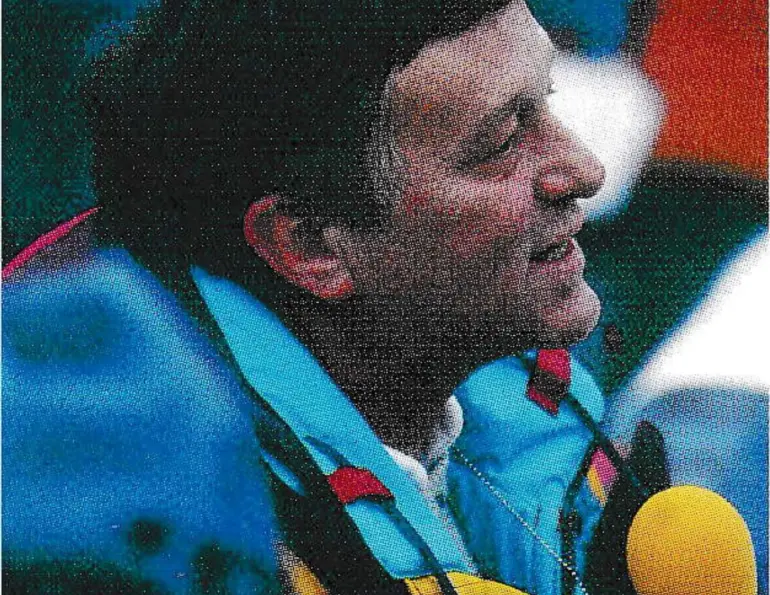
After 47 years as president of the International Ski Federation (FIS)—the governing body of alpine racing, freestyle, cross-country, jumping and Olympic snowboarding—Marc Hodler, 79, has retired. A Swiss lawyer, Hodler became the FIS’s president in 1951. His presidency was the longest in the history of international sports organizations, and he remains on the powerful executive committee of the International Olympic Committee.
Hodler is succeeded by a St. Moritz native, Gian Franco Kasper, 54, who for the past 23 years has been secretary general of the FIS. Unlike Hodler, Kasper will be a full-time president. The organization needs it. The flagship FIS Alpine World Cup circuit has been hammered for lacking new ideas. The FIS Council doesn’t include a single woman. Snowboarders resent its governance. I recently asked Kasper what he will do.
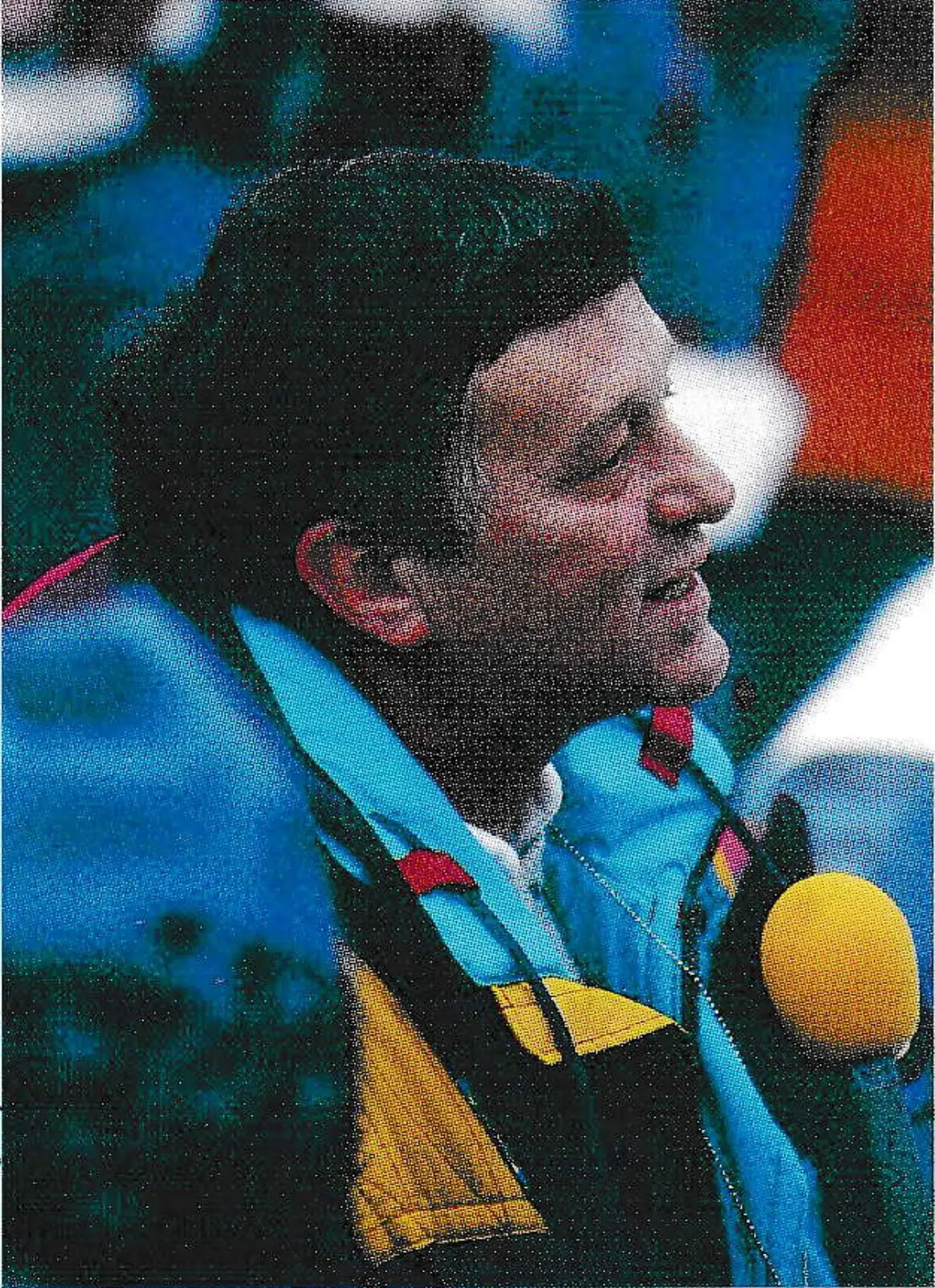
Photo by Sports File/Heather Black
Q. The FIS has been criticized for the way it runs World Cup races, for allowing politics to influence the selection of resorts, and more. What will you do?
A. We need to modernize the federation, which hasn’t changed much in 70 years. We’ve often been too political and bureaucratic. We need to shorten decision-making time. Committees need competent experts who can act quickly. We are trying to get a woman elected to the governing Council. As president, I will devote 100 percent of my time to the job, while Marc Hodler could only volunteer a small percentage of his time.
Q. What about the pressure, particularly from America, to have more World Cup races?
A. We have 98 nations in the FIS, and as many as 25 are interested in hosting World Cup alpine races. The U.S. wants more races. Liechtenstein wants more. Everyone advocates the idea of fewer races, but no one wants to give one up. The downhillers train 12 months a year for only eight races, so even canceling one is a crisis for them. My view is that we’re not here to prohibit skiing, but to promote it, and what we must do is to create the best possible races. For the spectator in front of a TV, where the race is held is not as important as that it be exciting to watch.
Q. How does the size of the television audience for skiing in Europe compare to the U.S., where ratings are typically low?
A. It’s ten times larger in Europe. For example, 60 percent of all Swiss households tune into the Lauberhorn race. U.S. television was once very important financially to the FIS. Now, if we get $100,000 from U.S. World Championship rights, we get more than $10 million from Europe. It used to be the other way around.
Q. Can the FIS do anything to correct the generally weak commentary and interviews that skiers find in superficial U.S. broadcast coverage of the sport?
A. That’s exactly one of the weaknesses, maybe the biggest. In Europe, we organize television seminars. We invite program directors to see what other countries do, what technical improvements are coming, what spectators want to see. We could never have such a seminar in the U.S. No one would come.

Q. There still appears to be a lot of unhappiness in the snowboard world about FIS governance. The world’s number one snowboarder, a Norwegian, did not go to Nagano to compete, and his protest was supported by the world’s largest snowboard manufacturer.
A. No doubt, they are not happy with our system, where you have to start at a certain time in the morning and if you’re a team member you have to fulfill obligations. They don’t like that. I understand. It’s not the free life they enjoy. The Norwegian says he never wants to go to an event where he has to hold the Norwegian flag. He says the IOC is fascistic. That’s up to him. But we can live together.
Q. Do you have any advice for the U.S. on how to climb out of ninth place in the alpine Nations Cup team standings?
A. You need more kids competing at the base, more local ski clubs. When you have only the top of a pyramid, you can’t survive. Can you imagine? The little Dutch ski federation has 300,000 members who compete in skiing events of some kind. The USSA has 30,000.
Q. What is your greatest challenge?
A. Competition from other sports for television time and sponsor-created events that are here one year, gone the next. Genuine ski racing now competes against events like extreme snowboarding at Mt. Everest or a freestyle event inside a tent in Paris.
We’re working to make genuine ski competition more appealing. This coming winter, we’ll hold the first nighttime giant slalom. In slalom we’re asking, why two runs with a combined time? Why not three runs, with just the fastest run counting? We’re experimenting with the equivalent of tennis mixed doubles—a relay race on parallel courses, with a top-seeded man and woman from each country making up a team. In cross-country, we will hold a mass-start, 1.5 kilometer sprint inside a stadium.
We have to try new things. Whatever is good we’ll keep, the rest will disappear.