
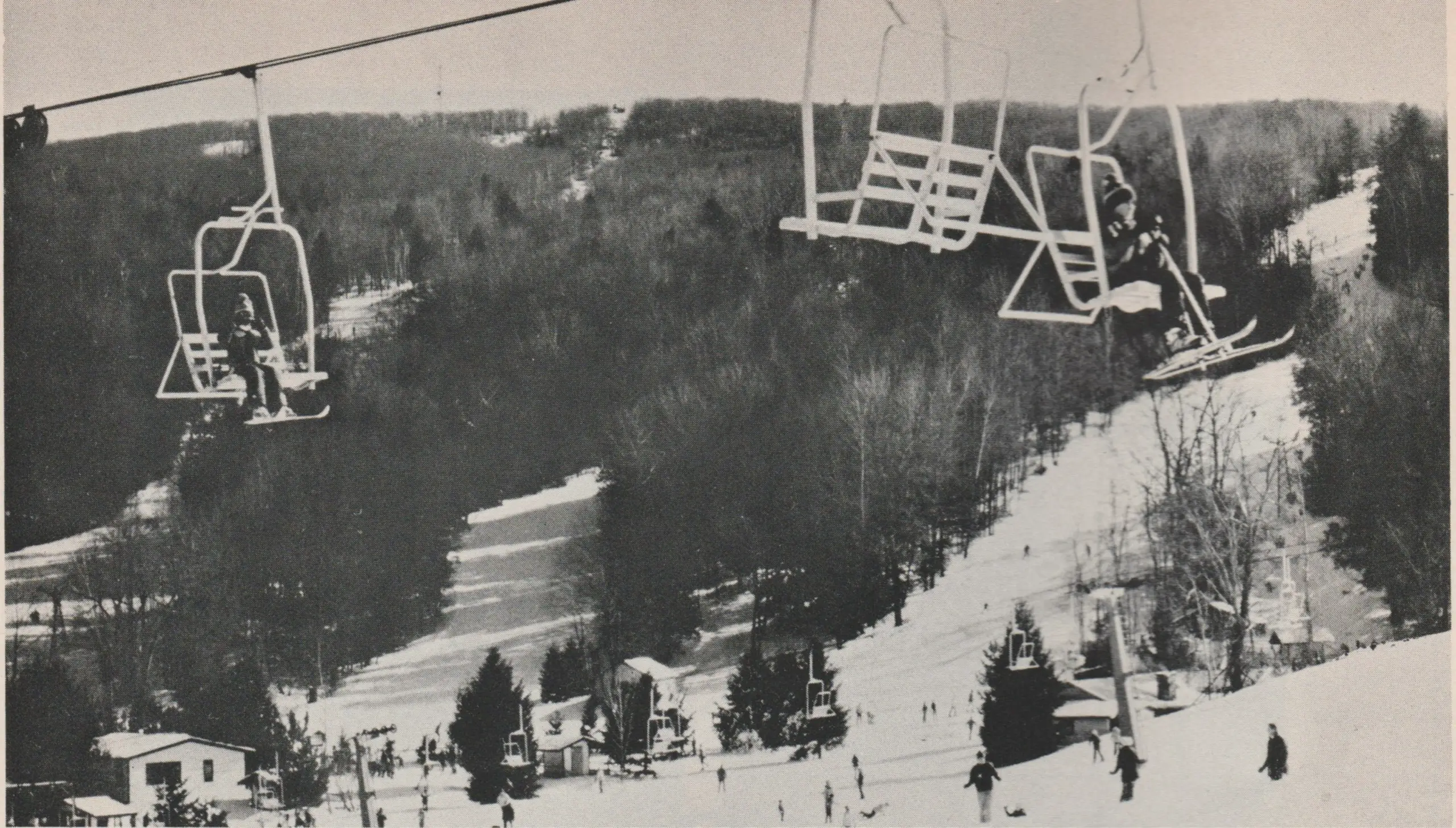
When you have neither the mountains nor the snowmaking, the slopeside lodging nor the sizzling apres ski scene of a Killington or Sugarbush, yet you still made money a year ago when snow was a myth in the East, it means someone is pushing the right buttons. So, meet Channing Murdock, buttonmeister since the day he shook hands with Walt Schoenknecht and left to recycle an abandoned dude ranch into a ski area in the rolling, gentle Berkshires of western Massachusetts.
Murdock and his wife Jane, who were married just a week after he graduated from Middlebury College, in 1956, not only have transformed the rundown G-Bar-S Ranch into a pearl named Butternut Basin, but they have made it the premier ski area in Massachusetts and one of the most successful medium-size areas in the country. It’s a textbook example of how heavy doses of hard work mixed with keen judgment became a winning combination.
Others in his region may have more vertical drop (Brodie, Berkshire East and Jiminy Peak all top Butternut’s thousand-foot vertical) or more night skiing (Butternut is the lone major Berkshires area without lights), but no area has more snowmaking and grooming oomph, and no area is as widely regarded—by skiers and other operators—as the 17-trail layout on Route 23, a couple of miles east of Great Barrington.
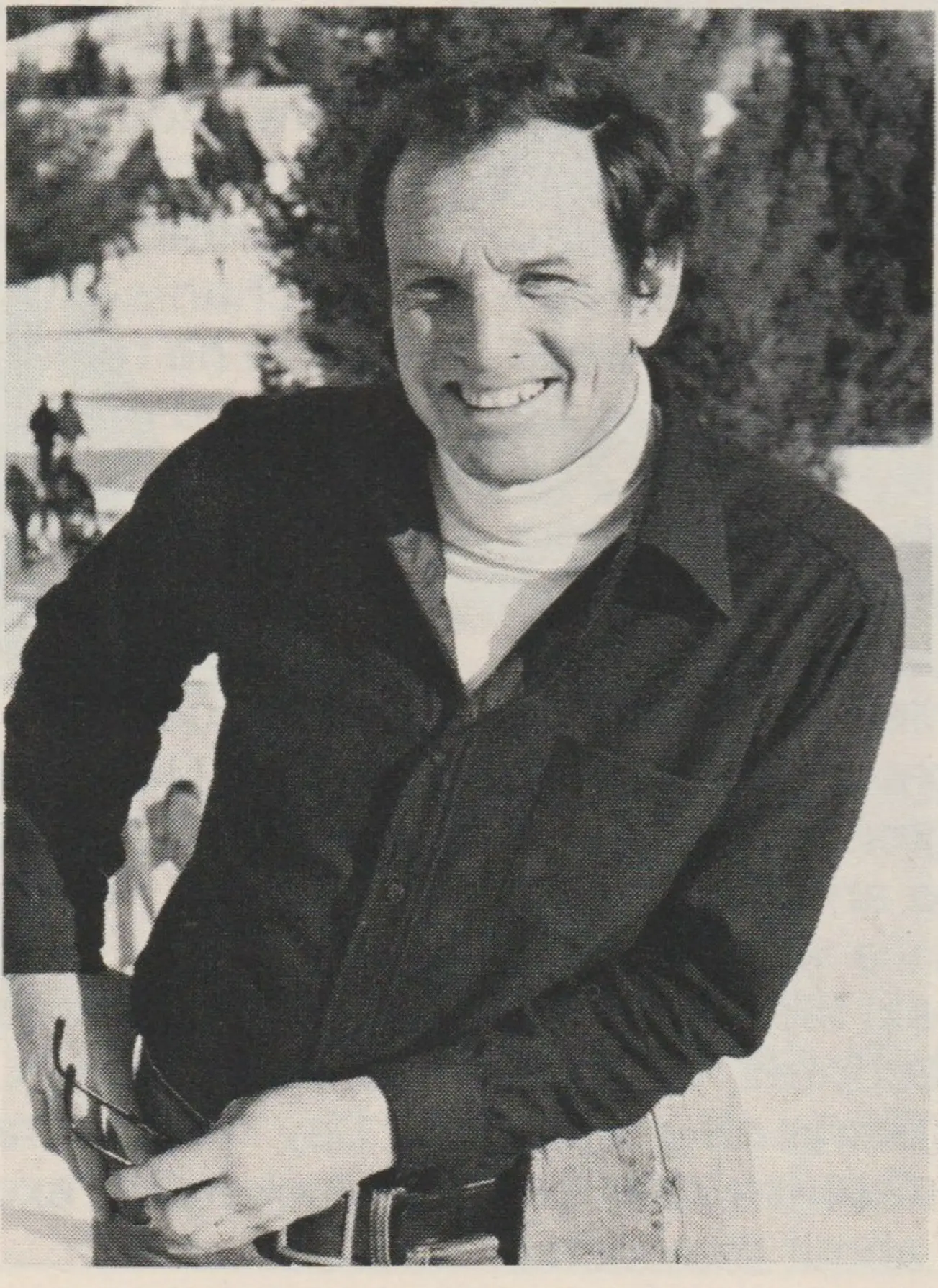
“He just runs a nice shop,” says one operator. Adds another: “How can you be jealous of Chan? He has a quality operation. He doesn’t cut corners, he gives his skiers their money’s worth and he and Jane have worked their butts off to be where they are today.”
“That’s nice to hear,” says Murdock, who turned 46 in mid-February, “but it wasn’t always that way. We started this place on an absolute shoestring and although we’ve only had one or two years in which we didn’t make money—we even made money our first year and we made money last winter, which kind of surprised me—it’s taken a lot of time and effort. But it’s also been worth it.”
Murdock’s ski industry career started in 1960 when he went to work for Walt Schoenknecht down at Mohawk in western Connecticut. “It was the best thing that could have happened to me because Walt gave me the chance to do everything, since he also was tied up with Mount Snow. I did everything, just everything . . . great experience . . . it was a bitch at the time but it gave me the experience I needed. It was exactly what I would have to do when Jane and I started Butternut.”
After his second season at Mohawk, Murdock went to a SAM trade show at Jug End, a small Berkshires resort a few miles from Butternut. Goodbye Mohawk, hello Butternut.
“I saw this hill. There were no signs, the place was all over-grown. It had been an active dude ranch from the mid-’30s and had put in a half dozen rope tows for skiing. They met the snow trains which used to come to Pittsfield (about 20 miles off) but there were several fires during the 1950s and the place went under.
“We scraped together enough dough, about $20,000, and tried to borrow another $40,000 from the bank. The president turned me down but I went to his board; they accepted my loan application after listening to my presentation. We also registered with the SEC for a Reg A offering and we wound up with a lot of local people as stockholders, plus some skiers from Mohawk. We didn’t sell any more than five shares to anyone from outside.”
(The Murdocks have been buying back those shares in Butternut during recent years and now own about 65% of the corporation with a standing offer to buy back any other shares from anyone at any time. Forty-seven people own the remaining 35% of Butternut Basin, he says.)
Jane and Chan created a reserve of “sweat equity” by doing as much as possible themselves, from driving nails to designing buildings. Chan still shoots all of his own photography—color and B/W—and lays out the area’s good-looking, understated brochure, but that’s as much a reflection of his fascination with cameras and graphics as with pennypinching. (His other chief form of relaxation comes in the summer when the entire Murdock family—which includes sons Jeff, 24, and Timmy, 17—competes in bike races.)
“Cost has always been a major factor, right from the start and it still is,” he says. “All of our building has been done on a profit basis. We don’t have any borrowed debt and I’ll bet we haven’t got $5,000 left in our mortgage, either. The first carpentry was done, for instance, with a chainsaw and a couple of the older buildings still have a stucco exterior because we’re not real carpenters and stucco was the easiest stuff to put up.”
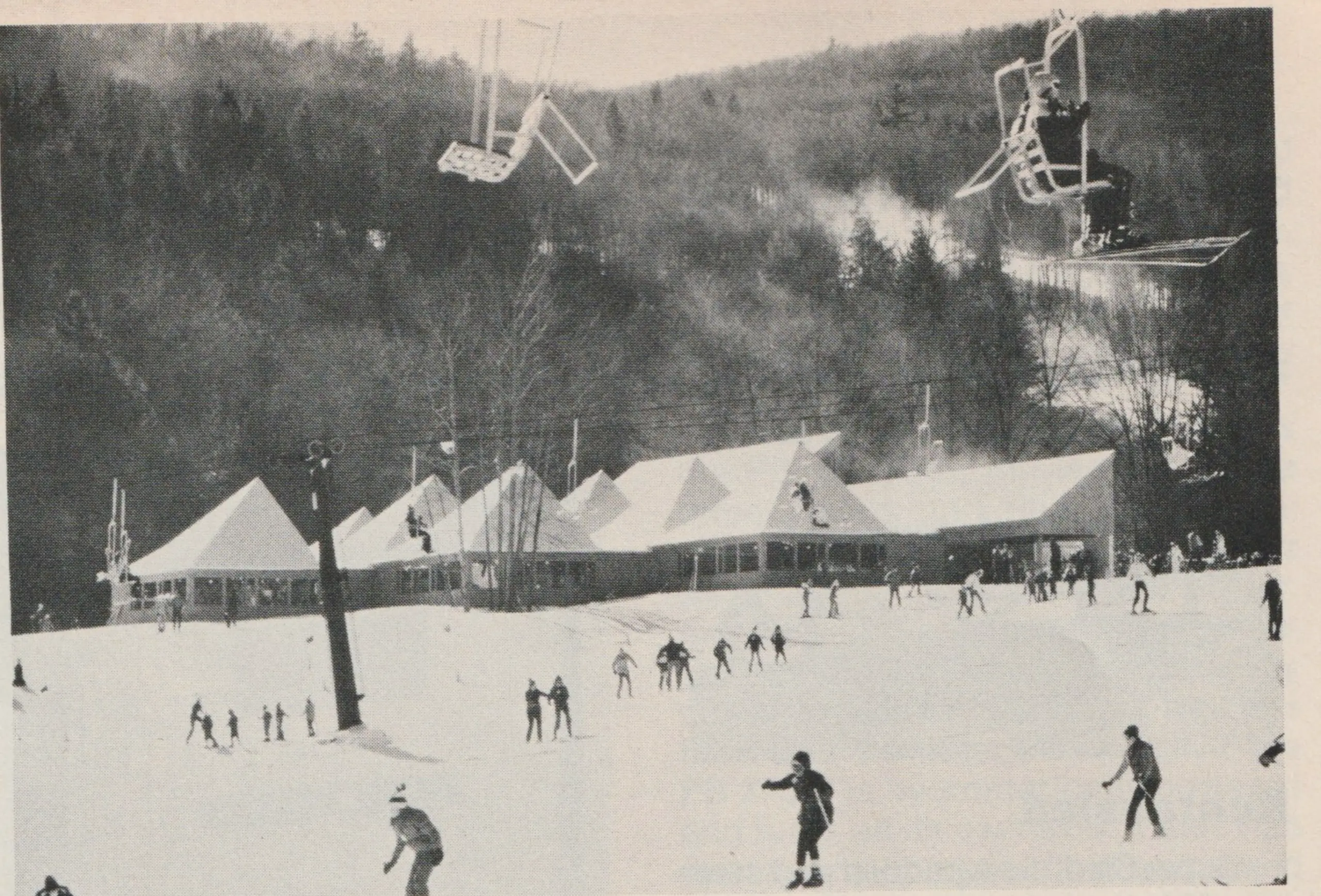
However, a couple of years ago when Butternut put in a $700,000 base lodge as part of a major expansion (including snowmaking, trails and lifts), Murdock finally surrendered his right to the blueprints and “went up-town.” He hired a New York architect to design the lodge, then brought in an outside contractor to build it, picking up a couple of environmental awards for its design.
One way Murdock has kept Butternut Basin on an even financial keel is his mix of facilities and equipment; three of the area’s seven lifts, for instance, are second-hand, and last summer he bought a Hydromaster 3700 from Killington, completely tore it down and rebuilt it, saving upwards of $50,000 on the purchase price. He built the towers for a beginner’s area chairlift he learned about, and which cost $5,000.
Last fall, tipped of to its location by longtime friend Paul Bousquet, operator of Bousquet’s Ski Area in Pittsfield, he trekked back into the woods near Tanglewood and unearthed an abandoned Poma lift at an old ski area. Murdock plunked down $500, pulled the lift out of the weeds and brush, and erected it for a new race course.
“There are ways to save money but you have to work at it,” according to Murdock. “If we can get good equipment second-hand, that’s fine because we can do a lot of the maintenance work or repairs ourselves. But, when we go with something new, we go with the best. We put in a Carlevaro-Savio lift when we started, and that wasn’t the cheapest, and we installed a Thiokol three-seater a couple of seasons back during that expansion. We’ve been very pleased with both of ’em.”
Murdock is quick to credit his maintenance and snowmaking teams for shaving many of the potential bills for heavy work at Butternut. “Pete Prelli runs the maintenance end and he comes from a heavy construction background. He’s a real wizard. The light stuff is duck soup for him and he hardly slows down for the other stuff, either. Russ Funk is our lift foreman and head snowmaker; he’s been at it 20 years and that kind of experience is invaluable because if we don’t have snow, we don’t have any skiers . . . or any business.”
Butternut is not in a natural snow pocket and has to count on its snowmaking. The area has seven Hedcos and two SMI units to lay down its new nightly cover.
The area has a 2½-acre snowmaking pond which holds about 4-million gallons of water and supplements that with a well which pumps about 900 gallons a minute. But in a dry year like this, water is a problem. “The well is a big help,” Murdock says, “but if I draw on that, I can lower the water table for the whole area, so we’re working on drilling a couple of other wells. Maybe we can pipe some water in from Lake Buhl, about two or three miles away.”
One of the keys to the area’ success, according to Murdock—and his competition—is his personal involvement. He was there hacking away the overgrowth nearly two decades ago and he is still on the job daily. He and Jane may have reduced their investment in the summer day camp which Butternut conducts—ski school chief Einar Aas now guides the camp—but they still live in a modest home just off to one side of the parking lot and keep their hands very much on the pulse of the area.
“Nobody buys anything without talking it over with me,” he says. “I want to know where everything is going, so I’m here every day and have my finger(s) in everything.” He points to Arlene Duquette, his chief aide de camp, as traffic cop for calls, appointments, meetings and everything else that helps keep him organized in running an area that hits a peak of 200 employees in winter and pays about $300,000 in taxes.
| VERTICAL RISE | 1000′ |
| TOP ELEVATION | 1800′ |
| NUMBER OF LIFTS OF EACH TYPE | T-bar 1 Poma lift 1 Double chairlift 4 Triple chairlift 1 |
| AREA CAPACITY | (vertical transport feet per hour) 3,564,000 uphill capacity 7200 PPH |
| SNOWMAKING CAPACITY | 2700 cu. ft. of air; 7 Hedco’s; 2 SMI’s |
| GROOMING FLEET | 2 Thiokol 3700’s; 3 Thiokol 2100’s; 2 Thiokol 1200’s; 1 Tucker Snocat; 1 Thiokol power tiller; 2 snow tillers; 3 powder makers; 3 rollers; 1 compactor bar; 1 Mogul planer. |
| AMOUNT OF TERRAIN | 90 acres |
| LIFT TICKET PRICES | Both weekend and weekday, adult $15, junior $12 |
| SEASON PASS PRICE | Adult individual $220 Junior individual $165 |
| NUMBER OF EMPLOYEES | (full time) 9; (winter seasonal) 112; (summer seasonal) 25 |
| NUMBER OF INSTRUCTORS | (full time) 10; (part time) 40 |
| CROSS COUNTRY TRAILS | 17 km. |
| FACILITY MANAGEMENT | Area owned: rental shop; restaurant; bar; nursery |
| CONCESSIONS | Ski school, ski shop, ski touring. |
The Murdocks own the food concession, having taken over that side of the business after the first couple of years from an outside vendor, but they have sold the ski school and shop operation to Aas.
Butternut includes 110 acres which are privately held and 450 acres leased from the state. Murdock also has an option to buy another couple of hundred acres adjoining the site which would double the size of the area.

So, how did Butternut pull off an in-the-black season last year when there was so little snow for Eastern areas to be in-the-white?
“Snowmaking was one obvious reason and we kept a tight rein on the payroll. John Reilly, our personnel man—as well as buildings and grounds supervisor in summer—simply didn’t bring in anyone every day unless we needed them. Nobody’s ever around here and doing nothing. Payroll can kill you in a bad year unless you keep it tight,” Murdock says.
“And as crucial as our snowmaking is, it’s also the conditioning that goes into it which keeps our skiers happy. You can make snow but if you don’t condition it, well . . . we feel it’s the conditioning that makes the difference.”
Quite a difference, too. Through the end of January, Butternut was about 30% ahead of its best year ever—not because of any great dumps of snow in the East this season but because of the ongoing snowmaking and, just as important, the ongoing conditioning, Murdock says.
Perhaps one of the ironies to all of the success which Butternut enjoys is that Murdock keeps such a tight lid on marketing expenditures. His marketing staff consists of those 100,000 skiers who come to Butternut every winter, passing the word about the quality experience when they return home.
He ducks the impulse to go hustle groups, preferring to maintain a family atmosphere. Except for occasional school groups, there are precious few ski group buses in the Butternut parking lot, regardless of the revenue potential of group business.
“We tried ads a long time ago but for six or seven years we didn’t do anything until last year, and then we spent maybe $15,000 in metropolitan New York, Long Island, lower Connecticut and the Hartford area. We did it with radio, some 30-second spots—15 seconds of intro and ending sandwiched around me giving the updated daily snow conditions. We ran them in January, hitting on Wednesdays, Thursdays and Fridays . . . and they did bring in skiers. They had a very positive effect.”
So positive, in fact, Murdock is repeating the formula this winter and has added a small Thursday morning ad in The New York Times giving the latest snow conditions.
His role in the radio spots is similar to his role in creating the brochure: it’s central to the product. He designs and lays out the brochure, which includes his copy and his photos. It’s not an executive ego trip, merely one businessman exerting his control, bringing his feel to promoting his product.
“I know what I want to say, so I do the copy, and we’ve got thousands of pictures. I don’t have a marketing background but I talk to those experts in that field, and I look at other ads and other brochures. If something grabs my eye, I’m not afraid to see how I might adapt that to Butternut.”
Butternut was one of the first ski areas to get beyond the one-season, one-sport (with scenic chairlift rides in summer) mind-set, establishing a day camp during its first summer, 1964.
The camp has tennis courts, swimming, crafts and the usual round of activities. In an ironic note, the one-time dude ranch now rents horses for its summer program.
He says the potential for additional summer business is as lucrative as the winter “but, frankly, we didn’t look into an Alpine Slide, for instance, for the same reason we haven’t put in a lot of condominiums: Jane and I live here and we just don’t want a lot of people around all the time.
“We’ve been fortunate enough so we haven’t been stampeded into real estate development, so we haven’t gone that route, regardless of how profitable it might have been. There’s more to life than a dollar sign.”
At the same time, Murdock is a shrewd enough businessman to recognize the possibilities for some limited realty growth if he decides to go ahead with the expansion down the road.
If that sounds like someone who has a cozy setup, someone with a wind-up operation where all he has to do is hand out the “Open” sign, it’s an understandable—if erroneous—view of Butternut Basin. It’s a far cry from that first season when the area collected about $90,000—“we damn near hit our pro forma of about $100,000 right on the head that first year,” Murdock says with pride—after finally convincing that local bank the ski area was feasible.
Now, if he opts to push on with the expansion, he says, “It’s nice to know I can go to the bank and won’t have any problem getting the money I need.”